hitting our $1.2M ARR wasn't about going viral or huge ad spend.
it was boring, tiny site tweaks most people miss.
here are the 8 steps & prompts that boosted your traffic and conversions:
0. Understand the Full System
website optimization isn’t just about changing the design.
it comes down to three stages:
① build a foundation Google and AI can crawl and understand
② attract visitors with useful content
③ use data to turn those visitors into signups and purchases
ranking on Google isn’t enough.
if AI engines can’t understand your content—or visitors land on your site but don’t understand the value—you still won’t get results.
the key is identifying which stage is broken and improving it with a clear goal.
if you want to improve your website or grow your organic traffic, bookmark this.
1. Understand What’s Happening With Data
the first step is making sure you can see what is actually happening.
not guesses. real data.
the two main tools you need are Google Analytics 4 (GA4) and Google Search Console (GSC).
both are free.
GA4 shows what people do after they visit your website:
・which pages get the most traffic
・whether visitors come from Google, social media, or other channels
・whether visitors come from AI tools like ChatGPT or Perplexity
・which pages lead to signups or purchases
Google Search Console shows how people discover you through Google:
・which keywords your pages appear for
・how many people click from search results
・your average search position
・which articles are gaining or losing rankings
with these two tools, you can separate two very different problems:
“not enough people are visiting”
vs.
“people are visiting, but they aren’t taking action”
connect GA4 and Google Search Console to NoimosAI, and it can analyze the data and suggest what to improve.
feed these prompts into NoimosAI to identify the room for improvement:
“Analyze traffic from Google Search and AI search engines using GA4 and GSC, then recommend the pages with the highest improvement potential.”
“Using GSC data, identify articles that have lost rankings and recommend which ones should be rewritten.”
2. Build a Technical Foundation Google and AI Can Understand
you can create the most useful content in your industry.
but if Google and AI can’t properly crawl and understand it, people won’t find it through search results or AI-generated answers.
here’s what to check:
・are your important pages indexed by Google?
・does your sitemap tell crawlers which pages exist?
・is robots.txt accidentally blocking Google or AI crawlers?
・does the site load quickly and work well on mobile?
・are there broken links or layout issues?
・does JSON-LD clearly identify your company, products, and articles?
・does llms.txt organize your most important pages for AI?
robots.txt, sitemaps, and JSON-LD create a shared technical foundation for both traditional search and AI search.
the work that helps Google discover and understand your pages is called technical SEO.
GEO goes one step further by making your content easier for AI engines to understand and use in their answers.
NoimosAI can analyze page speed, site structure, robots.txt, JSON-LD, and other technical issues—then recommend improvements for both search engines and AI.
use this prompt in NoimosAI to optimize your site:
“Audit [Website URL] for search engine and AI readability. Analyze robots.txt, the sitemap, JSON-LD, llms.txt, and page speed, then recommend specific improvements.”
3. Communicate Your Value Above the Fold
visitors decide within seconds whether they want to keep reading.
the first screen they see should answer three questions:
・who is this for?
・what problem does it solve?
・what should I do next?
listing dozens of features won’t help if visitors can’t see why the product matters to them.
for example, describing NoimosAI as “a powerful AI agent” is too abstract.
“delegate your marketing work to AI” makes the outcome much easier to understand.
don’t just describe the product.
show people what changes after they use it.
prompt to find the best messages for your site:
“Analyze the first screen visitors see on [Website URL], then suggest a headline and supporting copy that communicate the value immediately.”
4. Give People a Reason to Trust You and Take Action
interest alone doesn’t create signups.
even when people understand your service, they may still wonder:
“does this actually work?”
“will this work for my company?”
your website needs to answer those questions with evidence.
use things like:
・real product screenshots
・specific use cases
・customer results
・testimonials
・supported integrations
・security information
・pricing and the steps required to get started
don’t add everything just to make the page longer.
choose the proof that addresses the biggest concerns customers have before signing up.
on the NoimosAI website, we show the product, supported services, customer testimonials, and security information before guiding visitors toward getting started.
5. Choose Keywords That Can Generate Revenue
once the foundation is ready, you need to attract the right visitors.
a better website won’t generate results if nobody sees it.
start with the problems your customers are already searching for on Google.
then create articles that solve those problems and introduce your product as one possible solution.
the key: don’t target a keyword just because it has high search volume.
for example, “best AI tools” may get a lot of searches, but it is extremely competitive.
more specific keywords like:
“best AI tools for social media posts”
or:
“best AI tools for competitor analysis”
usually have clearer intent and less competition.
use data from Semrush or similar tools to find keywords that:
・match a real problem your customers have
・have enough search volume to matter
・aren’t dominated by impossible competition
・show comparison, evaluation, or purchase intent
a good keyword doesn’t just generate traffic.
it attracts people who could eventually become customers.
use this prompt to find the best keywords to get visitors:
“Find keywords that customers of [Product or Service] are searching for. Organize them by search volume, ranking difficulty, and search intent.”
6. Create Articles That Rank on Google and Get Understood by AI
once you choose a keyword, analyze the pages already ranking for it.
top-ranking pages reveal what people are expecting to find.
but copying the same information gives people no reason to read your article.
first, analyze the SEO side:
・what topics appear across most top-ranking articles?
・what order makes the information easiest to understand?
・what information is missing?
・what information is outdated?
・where can you add your own experience or data?
then make the structure easy for AI to understand:
・answer one clear question under each heading
・give the direct answer first
・summarize the most important points
・include examples, numbers, and sources
・add an FAQ at the end
don’t write an FAQ that avoids the question.
answer it directly in the first one or two sentences, then explain the reasoning and examples.
this makes the article easier for readers to scan and easier for AI to extract useful answers from.
that’s a core part of GEO.
NoimosAI can analyze Google search results, create the article structure, write the content, and include summaries, direct answers, and FAQs designed for both SEO and GEO.
prompt:
“Analyze the top-ranking search results for [Keyword], then create an SEO/GEO-optimized article targeting that keyword.”
7. Use Data to Find What to Improve
publishing a page is not the finish line.
algorithms change. information becomes outdated. customer behavior changes.
you need to keep improving based on what the data tells you.
the same “underperforming page” can have completely different problems:
・high search impressions, but few clicks
→ the title or description isn’t compelling enough
・high rankings, but little traffic
→ the keyword may have low search demand
・high traffic, but few signups
→ the content, CTA, page flow, or trust signals may be weak
・an article used to perform, but rankings dropped
→ the information may be outdated, or competitors may now offer better content
don’t try to fix every page at once.
identify the cause, then start with the pages where a small improvement could create the biggest result.
prompt to use in NoimosAI:
“Using GSC and GA4, categorize pages into: ① pages that don’t appear in search, ② pages that appear but don’t get clicked, and ③ pages that get traffic but don’t generate signups. Recommend improvements for each.”
8. Compare Before and After, Then Keep Improving
website optimization is never a one-time project.
when you change a title, check the click-through rate.
when you update an article, check its search ranking.
when you change the page structure, check the signup rate.
record every change and compare the numbers before and after.
that’s how you learn which improvements are actually driving results.
here’s what we review every month:
・pages gaining or losing search impressions
・pages gaining or losing traffic from ChatGPT, Perplexity, and other AI services
・pages with low click-through rates
・articles losing rankings
・high-traffic pages that don’t generate signups
・pages with speed issues
・traffic sources generating signups or purchases
we use NoimosAI agents to continuously identify keyword gaps and rewrite underperforming content.
feed these prompts into NoimosAI to find the gap between you and your competitors:
“Every week, identify high-priority keywords that competitors rank for but we don’t, then create one new article idea.”
“Every month, compare the latest 28 days with the previous 28 days. Use search rankings, clicks, and traffic from AI services to identify the article with the highest improvement potential and create a rewrite plan.”
website optimization isn’t about launching a flashy redesign.
it’s about:
・building a system that measures results
・making your value easy to understand
・creating content around real customer problems
・improving continuously based on data
repeat this process, and your website stops being a static company brochure.
it becomes a system that consistently generates customers.
Distribution used to be pay-to-win.
Not anymore.
NoimosAI Social Agent researches trends, analyzes what's working, and creates content 24/7—without a big team or budget.
90% of marketing efforts fail for one reason: they rely on human willpower to stay consistent.
Manual content schedules burn teams out.
Autonomous systems execute, adapt, and scale across channels 24/7—turning consistency into a system, not a struggle.
2. NoimosAI has released a creative agent.
It researches hundreds of ads and social media posts from competitors and the market, then converts them into content for your own brand.
NoimosAI is really, really good.
> Describe what you want to create
> Learns what performs from your past results
> Analyzes hundreds of top-performing ads across Meta, TikTok, LinkedIn, and more
> Adapts those winning patterns to your business
> Ships fresh, AI-generated creatives every week
Pretty wild.
we just officially launched NoimosAI, the world’s first autonomous AI marketing team.
your personalized AI team works 24/7, using data to handle everything from strategy making to full execution.
our goal is to make sure great products reach the right people, no matter how many resources an individual or a business has.
Jason Calacanis just visited Tesla's Optimus Lab and saw Optimus 3!
He claims it's the most transformative tech product in history—predicting we'll eventually forget Tesla ever made cars.
Seriously groundbreaking stuff for the future of robotics.
https://t.co/J1SljrA8wu
GOOD NEWS 🚨 Prominent tech investor Jason Calacanis recently secured rare access to Tesla's "Optimus Lab", and the glimpse he got of the future left him absolutely stunned 🤖
"I saw Optimus 3. I can tell you now: nobody will remember that Tesla ever made a car. They will only remember Optimus. It is going to be the most transformative technology product ever made in the history of humanity. I believe there will be a one-to-one ratio of humans to Optimus, and I think Elon's already won."
Physical systems are being redefined.
NVIDIA's Alpamayo (1B param 'thinking' AI) turns OEMs into hardware suppliers.
Unitree's G1 adds acrobatic, AI-controlled robotics for $16k.
A massive standardization of the 'AI brain'.
Is academic freedom under threat?
A Swedish study linked 2/3 of rapes to immigrants—yet authors were investigated by the Ministry for failing to 'improve integration'.
A massive shift for data transparency.
https://t.co/6jTKF260Rr
In Sweden, nearly two-thirds of rapes are committed by first- and second-generation immigrants.
The authors of this study were previously investigated by Sweden's Ministry of Education for failing to sufficiently evaluate how their research on immigrant rape would "reduce exclusion and improve integration" of immigrants. https://t.co/QiuTUak2lR
@IlirAliu_ I love seeing how cheaper everything is getting these days, while the quality of the AI robots are significantly improving.
https://t.co/usKqqmR8Ug
the speed of humanoid evolution is breaking our sense of time.
comparing the 2025 and 2026 models is absolute madness.
this is not just an improvement—it is a generational leap.
here is the breakdown of this generational shift.
1. The Walking & Posture Leap.
the stability of 2025 models looks rudimentary compared to the refined balance of 2026.
we have shifted from "calculated steps" to "fluid stabilization."
the robot no longer "tries" to walk; it simply moves with inherent equilibrium.
2. Continuous Motion Smoothness.
the "flow" of movement has completely changed.
in 2025, motions were often discrete and sequential.
in 2026, they are truly continuous and human-like.
this is a fundamental change in actuation and software integration.
3. The 2026 Hardware Reality.
this is why 2026 is becoming the "Year of Humanoids."
the convergence of advanced ai vision and precision mechanics is finally dissolving the boundary between mechanical robots and human agility.
we are no longer looking at prototypes.
we are witnessing the birth of a new era.
2026 will be the year humanoids become a physical reality in our world.
Andrei Copaci just unveiled a hybrid drone that flies and swims!
3D-printed with variable-pitch props, this student project is a wake-up call for R&D—proving massive innovation doesn't need big budgets.
Seriously groundbreaking stuff.
https://t.co/hFNbotnbUA
A drone that flies through the sky — and swims underwater.
Yes, you read that right. One student just built it.
Andrei Copaci created this hybrid drone for his Bachelor’s project — 3D-printed, self-coded, and powered by variable-pitch propellers that adapt mid-flight to move seamlessly between air and water.
And it actually works.
To me, this isn’t just a cool gadget. It’s a wake-up call.
We’re watching the line between “student projects” and “industry breakthroughs” disappear.
One person, a laptop, and a printer can now do what once required millions in funding and government labs.
So here’s the real question:
If innovation is becoming this accessible — what happens to companies and industries that still think disruption comes only from big budgets?
#AI #Innovation #Technology #Robotics #FutureOfWork #STEM
This is seriously groundbreaking stuff for the future of personal AI.
By moving beyond simple reasoning to comprehensive recall, we're entering an era of true digital continuity.
Definitely a huge game-changer with massive potential.
The true AI breakthrough isn't just logic models—it's 'Perfect Memory', according to OpenAI CEO Sam Altman!
He argues the real game-changer lies in AI's ability to retain context across your entire digital life.
What does 'Perfect Memory' look like in practice?
Imagine an AI that remembers every conversation, email, and document you've ever produced.
It's the emergence of the 'Memory Layer'—a fundamental shift transforming AI from a tool into a partner that truly knows you.
NotebookLM and GeminiApp are integrated!
We can combining multiple Notebooks, generate images or apps inspired from your Notebooks, build on top of existing Notebooks with online research
This update is pretty great!
https://t.co/E8iTSYUzGV
NotebookLM 🤝 @GeminiApp
You can now upload Notebooks directly into the GeminiApp. This is great for:
— Combining multiple Notebooks
— Generating images or apps inspired from your Notebooks
— Building on top of existing Notebooks with online research
— And more!
Try it today!
This is a monumental shift in making I2V a truly controllable medium.
By removing the "guesswork" of text-to-motion, creators get precise direction over every frame.
Seriously groundbreaking stuff for generative video with huge game-changer potential.
DescartAI just unveiled Lucy Motion, a new approach to image-to-video generation!
It addresses a core issue: AI-driven motion has always been too ambiguous.
Text prompts leave too much to interpretation.
This changes that completely🧵
The core innovation? Bypassing text interpretation entirely.
Instead of vague prompts like "move right," Lucy Motion uses direct spatial paths as input.
This prevents movement deviation and visual breakdown—ensuring the video follows the exact trajectory you define.
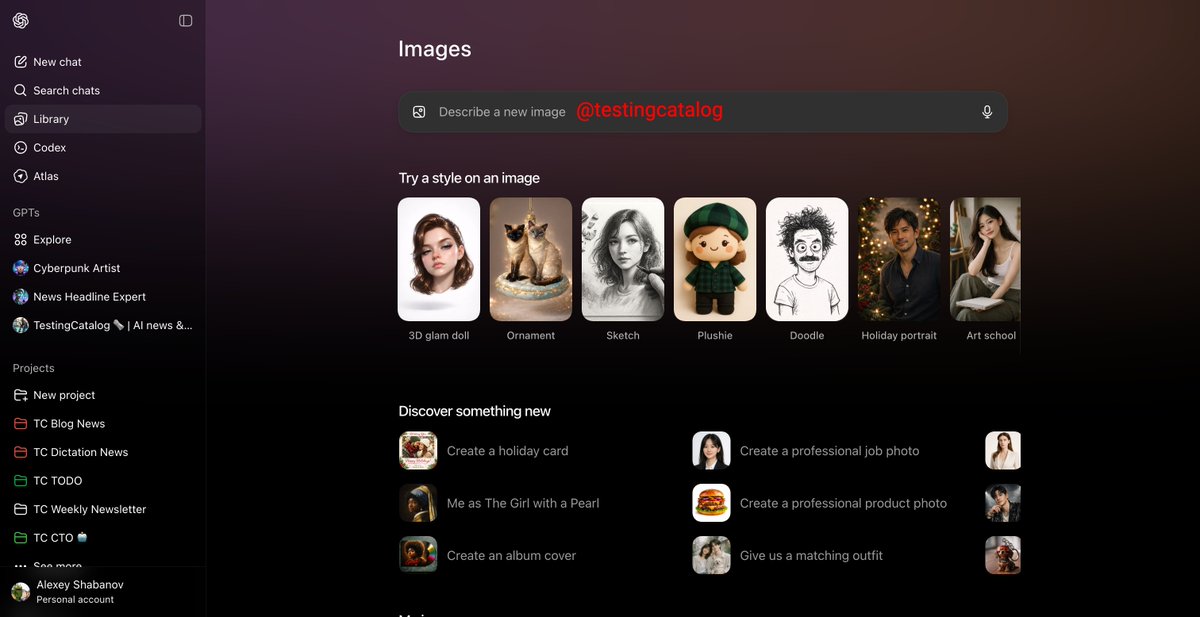
ChatGPT just started rolling out its massive Image 2 model update!
It brings a redesigned Image tab UI with a new style selector and dedicated prompt bar.
Seriously groundbreaking stuff for generative art workflows with huge game-changer potential.
https://t.co/avE0MjGO1M
BREAKING 🚨: It looks like the Image 2 model rollout has started already for ChatGPT.
It would also come along with a new UI for the Image tab with h style selector and a prompt bar.
Did you get it too? 👀
The FAANG dev process:
1. Tech Design
2. Design Review
3. Dev Docs
4. Sprint Planning
5. Dev (AI writes tests/features)
6. Code Review
7. Staging & Prod
AI is a force multiplier!


![kosuke_agos_en's tweet photo. hitting our $1.2M ARR wasn't about going viral or huge ad spend.
it was boring, tiny site tweaks most people miss.
here are the 8 steps & prompts that boosted your traffic and conversions:
0. Understand the Full System
website optimization isn’t just about changing the design.
it comes down to three stages:
① build a foundation Google and AI can crawl and understand
② attract visitors with useful content
③ use data to turn those visitors into signups and purchases
ranking on Google isn’t enough.
if AI engines can’t understand your content—or visitors land on your site but don’t understand the value—you still won’t get results.
the key is identifying which stage is broken and improving it with a clear goal.
if you want to improve your website or grow your organic traffic, bookmark this.
1. Understand What’s Happening With Data
the first step is making sure you can see what is actually happening.
not guesses. real data.
the two main tools you need are Google Analytics 4 (GA4) and Google Search Console (GSC).
both are free.
GA4 shows what people do after they visit your website:
・which pages get the most traffic
・whether visitors come from Google, social media, or other channels
・whether visitors come from AI tools like ChatGPT or Perplexity
・which pages lead to signups or purchases
Google Search Console shows how people discover you through Google:
・which keywords your pages appear for
・how many people click from search results
・your average search position
・which articles are gaining or losing rankings
with these two tools, you can separate two very different problems:
“not enough people are visiting”
vs.
“people are visiting, but they aren’t taking action”
connect GA4 and Google Search Console to NoimosAI, and it can analyze the data and suggest what to improve.
feed these prompts into NoimosAI to identify the room for improvement:
“Analyze traffic from Google Search and AI search engines using GA4 and GSC, then recommend the pages with the highest improvement potential.”
“Using GSC data, identify articles that have lost rankings and recommend which ones should be rewritten.”
2. Build a Technical Foundation Google and AI Can Understand
you can create the most useful content in your industry.
but if Google and AI can’t properly crawl and understand it, people won’t find it through search results or AI-generated answers.
here’s what to check:
・are your important pages indexed by Google?
・does your sitemap tell crawlers which pages exist?
・is robots.txt accidentally blocking Google or AI crawlers?
・does the site load quickly and work well on mobile?
・are there broken links or layout issues?
・does JSON-LD clearly identify your company, products, and articles?
・does llms.txt organize your most important pages for AI?
robots.txt, sitemaps, and JSON-LD create a shared technical foundation for both traditional search and AI search.
the work that helps Google discover and understand your pages is called technical SEO.
GEO goes one step further by making your content easier for AI engines to understand and use in their answers.
NoimosAI can analyze page speed, site structure, robots.txt, JSON-LD, and other technical issues—then recommend improvements for both search engines and AI.
use this prompt in NoimosAI to optimize your site:
“Audit [Website URL] for search engine and AI readability. Analyze robots.txt, the sitemap, JSON-LD, llms.txt, and page speed, then recommend specific improvements.”
3. Communicate Your Value Above the Fold
visitors decide within seconds whether they want to keep reading.
the first screen they see should answer three questions:
・who is this for?
・what problem does it solve?
・what should I do next?
listing dozens of features won’t help if visitors can’t see why the product matters to them.
for example, describing NoimosAI as “a powerful AI agent” is too abstract.
“delegate your marketing work to AI” makes the outcome much easier to understand.
don’t just describe the product.
show people what changes after they use it.
prompt to find the best messages for your site:
“Analyze the first screen visitors see on [Website URL], then suggest a headline and supporting copy that communicate the value immediately.”
4. Give People a Reason to Trust You and Take Action
interest alone doesn’t create signups.
even when people understand your service, they may still wonder:
“does this actually work?”
“will this work for my company?”
your website needs to answer those questions with evidence.
use things like:
・real product screenshots
・specific use cases
・customer results
・testimonials
・supported integrations
・security information
・pricing and the steps required to get started
don’t add everything just to make the page longer.
choose the proof that addresses the biggest concerns customers have before signing up.
on the NoimosAI website, we show the product, supported services, customer testimonials, and security information before guiding visitors toward getting started.
5. Choose Keywords That Can Generate Revenue
once the foundation is ready, you need to attract the right visitors.
a better website won’t generate results if nobody sees it.
start with the problems your customers are already searching for on Google.
then create articles that solve those problems and introduce your product as one possible solution.
the key: don’t target a keyword just because it has high search volume.
for example, “best AI tools” may get a lot of searches, but it is extremely competitive.
more specific keywords like:
“best AI tools for social media posts”
or:
“best AI tools for competitor analysis”
usually have clearer intent and less competition.
use data from Semrush or similar tools to find keywords that:
・match a real problem your customers have
・have enough search volume to matter
・aren’t dominated by impossible competition
・show comparison, evaluation, or purchase intent
a good keyword doesn’t just generate traffic.
it attracts people who could eventually become customers.
use this prompt to find the best keywords to get visitors:
“Find keywords that customers of [Product or Service] are searching for. Organize them by search volume, ranking difficulty, and search intent.”
6. Create Articles That Rank on Google and Get Understood by AI
once you choose a keyword, analyze the pages already ranking for it.
top-ranking pages reveal what people are expecting to find.
but copying the same information gives people no reason to read your article.
first, analyze the SEO side:
・what topics appear across most top-ranking articles?
・what order makes the information easiest to understand?
・what information is missing?
・what information is outdated?
・where can you add your own experience or data?
then make the structure easy for AI to understand:
・answer one clear question under each heading
・give the direct answer first
・summarize the most important points
・include examples, numbers, and sources
・add an FAQ at the end
don’t write an FAQ that avoids the question.
answer it directly in the first one or two sentences, then explain the reasoning and examples.
this makes the article easier for readers to scan and easier for AI to extract useful answers from.
that’s a core part of GEO.
NoimosAI can analyze Google search results, create the article structure, write the content, and include summaries, direct answers, and FAQs designed for both SEO and GEO.
prompt:
“Analyze the top-ranking search results for [Keyword], then create an SEO/GEO-optimized article targeting that keyword.”
7. Use Data to Find What to Improve
publishing a page is not the finish line.
algorithms change. information becomes outdated. customer behavior changes.
you need to keep improving based on what the data tells you.
the same “underperforming page” can have completely different problems:
・high search impressions, but few clicks
→ the title or description isn’t compelling enough
・high rankings, but little traffic
→ the keyword may have low search demand
・high traffic, but few signups
→ the content, CTA, page flow, or trust signals may be weak
・an article used to perform, but rankings dropped
→ the information may be outdated, or competitors may now offer better content
don’t try to fix every page at once.
identify the cause, then start with the pages where a small improvement could create the biggest result.
prompt to use in NoimosAI:
“Using GSC and GA4, categorize pages into: ① pages that don’t appear in search, ② pages that appear but don’t get clicked, and ③ pages that get traffic but don’t generate signups. Recommend improvements for each.”
8. Compare Before and After, Then Keep Improving
website optimization is never a one-time project.
when you change a title, check the click-through rate.
when you update an article, check its search ranking.
when you change the page structure, check the signup rate.
record every change and compare the numbers before and after.
that’s how you learn which improvements are actually driving results.
here’s what we review every month:
・pages gaining or losing search impressions
・pages gaining or losing traffic from ChatGPT, Perplexity, and other AI services
・pages with low click-through rates
・articles losing rankings
・high-traffic pages that don’t generate signups
・pages with speed issues
・traffic sources generating signups or purchases
we use NoimosAI agents to continuously identify keyword gaps and rewrite underperforming content.
feed these prompts into NoimosAI to find the gap between you and your competitors:
“Every week, identify high-priority keywords that competitors rank for but we don’t, then create one new article idea.”
“Every month, compare the latest 28 days with the previous 28 days. Use search rankings, clicks, and traffic from AI services to identify the article with the highest improvement potential and create a rewrite plan.”
website optimization isn’t about launching a flashy redesign.
it’s about:
・building a system that measures results
・making your value easy to understand
・creating content around real customer problems
・improving continuously based on data
repeat this process, and your website stops being a static company brochure.
it becomes a system that consistently generates customers.](https://pbs.twimg.com/media/HQBGbgybQAEUR5g.jpg)




![kosuke_agos_en's tweet photo. hitting our $1.2M ARR wasn't about going viral or huge ad spend.
it was boring, tiny site tweaks most people miss.
here are the 8 steps & prompts that boosted your traffic and conversions:
0. Understand the Full System
website optimization isn’t just about changing the design.
it comes down to three stages:
① build a foundation Google and AI can crawl and understand
② attract visitors with useful content
③ use data to turn those visitors into signups and purchases
ranking on Google isn’t enough.
if AI engines can’t understand your content—or visitors land on your site but don’t understand the value—you still won’t get results.
the key is identifying which stage is broken and improving it with a clear goal.
if you want to improve your website or grow your organic traffic, bookmark this.
1. Understand What’s Happening With Data
the first step is making sure you can see what is actually happening.
not guesses. real data.
the two main tools you need are Google Analytics 4 (GA4) and Google Search Console (GSC).
both are free.
GA4 shows what people do after they visit your website:
・which pages get the most traffic
・whether visitors come from Google, social media, or other channels
・whether visitors come from AI tools like ChatGPT or Perplexity
・which pages lead to signups or purchases
Google Search Console shows how people discover you through Google:
・which keywords your pages appear for
・how many people click from search results
・your average search position
・which articles are gaining or losing rankings
with these two tools, you can separate two very different problems:
“not enough people are visiting”
vs.
“people are visiting, but they aren’t taking action”
connect GA4 and Google Search Console to NoimosAI, and it can analyze the data and suggest what to improve.
feed these prompts into NoimosAI to identify the room for improvement:
“Analyze traffic from Google Search and AI search engines using GA4 and GSC, then recommend the pages with the highest improvement potential.”
“Using GSC data, identify articles that have lost rankings and recommend which ones should be rewritten.”
2. Build a Technical Foundation Google and AI Can Understand
you can create the most useful content in your industry.
but if Google and AI can’t properly crawl and understand it, people won’t find it through search results or AI-generated answers.
here’s what to check:
・are your important pages indexed by Google?
・does your sitemap tell crawlers which pages exist?
・is robots.txt accidentally blocking Google or AI crawlers?
・does the site load quickly and work well on mobile?
・are there broken links or layout issues?
・does JSON-LD clearly identify your company, products, and articles?
・does llms.txt organize your most important pages for AI?
robots.txt, sitemaps, and JSON-LD create a shared technical foundation for both traditional search and AI search.
the work that helps Google discover and understand your pages is called technical SEO.
GEO goes one step further by making your content easier for AI engines to understand and use in their answers.
NoimosAI can analyze page speed, site structure, robots.txt, JSON-LD, and other technical issues—then recommend improvements for both search engines and AI.
use this prompt in NoimosAI to optimize your site:
“Audit [Website URL] for search engine and AI readability. Analyze robots.txt, the sitemap, JSON-LD, llms.txt, and page speed, then recommend specific improvements.”
3. Communicate Your Value Above the Fold
visitors decide within seconds whether they want to keep reading.
the first screen they see should answer three questions:
・who is this for?
・what problem does it solve?
・what should I do next?
listing dozens of features won’t help if visitors can’t see why the product matters to them.
for example, describing NoimosAI as “a powerful AI agent” is too abstract.
“delegate your marketing work to AI” makes the outcome much easier to understand.
don’t just describe the product.
show people what changes after they use it.
prompt to find the best messages for your site:
“Analyze the first screen visitors see on [Website URL], then suggest a headline and supporting copy that communicate the value immediately.”
4. Give People a Reason to Trust You and Take Action
interest alone doesn’t create signups.
even when people understand your service, they may still wonder:
“does this actually work?”
“will this work for my company?”
your website needs to answer those questions with evidence.
use things like:
・real product screenshots
・specific use cases
・customer results
・testimonials
・supported integrations
・security information
・pricing and the steps required to get started
don’t add everything just to make the page longer.
choose the proof that addresses the biggest concerns customers have before signing up.
on the NoimosAI website, we show the product, supported services, customer testimonials, and security information before guiding visitors toward getting started.
5. Choose Keywords That Can Generate Revenue
once the foundation is ready, you need to attract the right visitors.
a better website won’t generate results if nobody sees it.
start with the problems your customers are already searching for on Google.
then create articles that solve those problems and introduce your product as one possible solution.
the key: don’t target a keyword just because it has high search volume.
for example, “best AI tools” may get a lot of searches, but it is extremely competitive.
more specific keywords like:
“best AI tools for social media posts”
or:
“best AI tools for competitor analysis”
usually have clearer intent and less competition.
use data from Semrush or similar tools to find keywords that:
・match a real problem your customers have
・have enough search volume to matter
・aren’t dominated by impossible competition
・show comparison, evaluation, or purchase intent
a good keyword doesn’t just generate traffic.
it attracts people who could eventually become customers.
use this prompt to find the best keywords to get visitors:
“Find keywords that customers of [Product or Service] are searching for. Organize them by search volume, ranking difficulty, and search intent.”
6. Create Articles That Rank on Google and Get Understood by AI
once you choose a keyword, analyze the pages already ranking for it.
top-ranking pages reveal what people are expecting to find.
but copying the same information gives people no reason to read your article.
first, analyze the SEO side:
・what topics appear across most top-ranking articles?
・what order makes the information easiest to understand?
・what information is missing?
・what information is outdated?
・where can you add your own experience or data?
then make the structure easy for AI to understand:
・answer one clear question under each heading
・give the direct answer first
・summarize the most important points
・include examples, numbers, and sources
・add an FAQ at the end
don’t write an FAQ that avoids the question.
answer it directly in the first one or two sentences, then explain the reasoning and examples.
this makes the article easier for readers to scan and easier for AI to extract useful answers from.
that’s a core part of GEO.
NoimosAI can analyze Google search results, create the article structure, write the content, and include summaries, direct answers, and FAQs designed for both SEO and GEO.
prompt:
“Analyze the top-ranking search results for [Keyword], then create an SEO/GEO-optimized article targeting that keyword.”
7. Use Data to Find What to Improve
publishing a page is not the finish line.
algorithms change. information becomes outdated. customer behavior changes.
you need to keep improving based on what the data tells you.
the same “underperforming page” can have completely different problems:
・high search impressions, but few clicks
→ the title or description isn’t compelling enough
・high rankings, but little traffic
→ the keyword may have low search demand
・high traffic, but few signups
→ the content, CTA, page flow, or trust signals may be weak
・an article used to perform, but rankings dropped
→ the information may be outdated, or competitors may now offer better content
don’t try to fix every page at once.
identify the cause, then start with the pages where a small improvement could create the biggest result.
prompt to use in NoimosAI:
“Using GSC and GA4, categorize pages into: ① pages that don’t appear in search, ② pages that appear but don’t get clicked, and ③ pages that get traffic but don’t generate signups. Recommend improvements for each.”
8. Compare Before and After, Then Keep Improving
website optimization is never a one-time project.
when you change a title, check the click-through rate.
when you update an article, check its search ranking.
when you change the page structure, check the signup rate.
record every change and compare the numbers before and after.
that’s how you learn which improvements are actually driving results.
here’s what we review every month:
・pages gaining or losing search impressions
・pages gaining or losing traffic from ChatGPT, Perplexity, and other AI services
・pages with low click-through rates
・articles losing rankings
・high-traffic pages that don’t generate signups
・pages with speed issues
・traffic sources generating signups or purchases
we use NoimosAI agents to continuously identify keyword gaps and rewrite underperforming content.
feed these prompts into NoimosAI to find the gap between you and your competitors:
“Every week, identify high-priority keywords that competitors rank for but we don’t, then create one new article idea.”
“Every month, compare the latest 28 days with the previous 28 days. Use search rankings, clicks, and traffic from AI services to identify the article with the highest improvement potential and create a rewrite plan.”
website optimization isn’t about launching a flashy redesign.
it’s about:
・building a system that measures results
・making your value easy to understand
・creating content around real customer problems
・improving continuously based on data
repeat this process, and your website stops being a static company brochure.
it becomes a system that consistently generates customers.](https://pbs.twimg.com/media/HQBGbg5bIAESLUS.jpg)