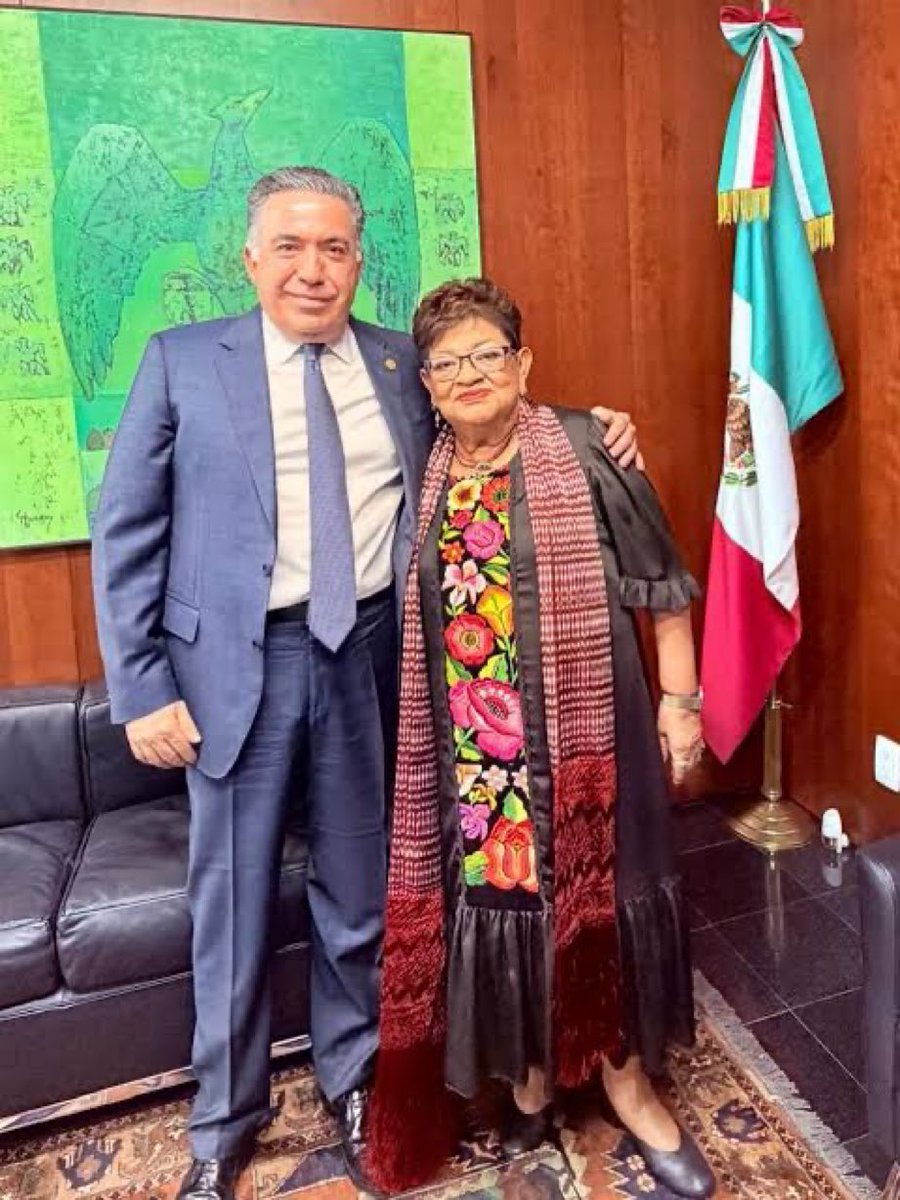
De no creerse las palabras de la Presidenta.
La 4ta transformación es en realidad una transformación de cuarta. Donde la mediocridad es la bandera y el conformismo es el escudo.
Excelente cartón de @CartonCalderon
Las democracias no empiezan a deteriorarse cuando cierran los tribunales. Empiezan antes: cuando cambian el significado de las palabras. Cuando la independencia se convierte en “privilegio”, la crítica en “traición”, la concentración de poder en “democratización” y la obediencia en “voluntad popular”. Ahí comienza el verdadero problema.
Nicolás Sartorius lo explica con claridad: el poder más eficaz no es el que impone por la fuerza, sino el que consigue que la sociedad hable su lenguaje. Porque quien define las palabras termina definiendo la realidad. Y quien define la realidad, termina definiendo los límites de lo que puede discutirse, cuestionarse o defenderse.
Por eso la defensa de la justicia empieza por defender el significado de las palabras. Cuando una sociedad deja de preguntarse qué esconden los discursos oficiales, los eslóganes sustituyen a los argumentos, las consignas a los hechos y la narrativa a la verdad. Y cuando eso ocurre, la libertad ya empezó a perder terreno, aunque todavía nadie lo note.
La Senadora de Morena que ocupa la FGR es quien está llamando a comparecer a @MaruCampos_G mientras posa muy contenta con Inzunza. El chiste se cuenta solo.
At this U.S. visit to China dinner banquet, the most eye-catching figure in the prime center seat between Musk and Cook was Lansi Technology founder Zhou Qunfei—from a rural factory girl to China's richest woman, with absolutely no background to rely on, building everything from scratch through her own grit. She was born in a small village in Hunan Province. At age 5, her mother passed away, and her father became disabled and blind from a work injury, leaving the family in dire poverty with nothing to their name. At 16, unable to afford school fees, she was forced to drop out and head to Guangdong to work in a factory, grinding glass on the assembly line—working days away during the day and furiously self-studying at night, earning certifications in accounting, computer operations, and other skills. That's how she spent a few years, until she scraped together 20,000 yuan from her wages, rallied eight relatives including her brother, sister, sister-in-law, and brother-in-law, and started a small workshop in Shenzhen doing watch glass processing. She handled machine repairs and sales runs single-handedly, grinding away like that for another four years.
By the 2000s, the mobile phone industry began booming on a massive scale. By a stroke of luck, her watch glass factory landed an order for TCL phone screens. She spotted the huge potential in the phone glass market and quickly founded Lansi Technology, specializing in the production, R&D, and sales of phone glass. At first, they only handled domestic phones and knockoffs, but everything changed when she went after a Motorola order—foreign companies had insanely strict quality standards. She bet nearly all her resources to meet Motorola's demands and snagged the V3 order, which sold over 100 million units worldwide, catapulting Lansi Technology straight to industry leadership. From there, she smoothly secured deals with Nokia, Samsung, and other foreign giants.
The pivotal turning point hit again in 2007, when Jobs unveiled the first iPhone, revolutionizing phones toward full-glass touchscreens. Jobs' obsessive craftsmanship demands left the whole world scrambling for a supplier that could meet them. Zhou Qunfei keenly sensed this was another massive opportunity, so she led her team in a three-month joint push with Apple engineers, breaking through key processes to mass-produce the first-generation iPhone glass panels. That locked in a long-term Apple contract, and soon after, nearly all Apple gear—from iPads to MacBooks—went to Lansi Technology for production. It also propelled Lansi to become the world's top player in touch glass panels.
That's why she got to sit next to Cook. But why was Musk right there beside her too?
After dominating global glass panels, Lansi Technology branched into more diverse smart devices, including car cockpits and robots. In autos, they've already locked in deals with 30 carmakers like Tesla, BMW, Mercedes, and Li Auto for windows, center consoles, and more. In robotics, they handle joints, sensors, and other components—areas with deep overlap in Musk's businesses.
A girl who dropped out at 15 with just a junior high diploma, emerging from rural Hunan to build an empire from nothing and become China's richest woman—forty years later, stepping into U.S.-China talks, seated between Musk and Cook. That's Zhou Qunfei's story.
- @hihongjie