Thank you @HAWMLAW for hosting the #KafiKennedyforJudge Campaign Kickoff.
Kafi will be a phenomenal judge 👩🏾⚖️!
📸 Pre-event photos from the evening's activities.
The jobs report was a barnburner. Nonfarm payrolls increased by 172,000 versus expectations for 88,000, while prior months were revised higher by 93,000. Wage growth came in at roughly 0.3%. Yet the market sold off. In our view, the market is misreading the signal. It is assuming that stronger than expected employment and growth will cause a an acceleration in inflation. History would suggest otherwise. Productivity growth is running near 3%, while unit labor costs are hovering around 0.5%. Those are not the hallmarks of an inflationary boom. They are the hallmarks of healthy, productivity-driven growth that will lower inflation. Meanwhile, the yield curve continues to flatten despite a roughly 55% increase in oil prices year-over-year based on a three month moving average. In past cycles, an energy shock of this magnitude steepened the yield curve when the Federal Reserve was accommodating it. Instead, the bond market appears to be discounting something much more powerful: the deflationary impact of technological innovation, particularly artificial intelligence, which is beginning to increase productivity across broad swaths of the economy. If tensions with Iran ease and oil prices retreat, we believe inflation could move into negative territory before year-end. In our view, the Fed made a historic policy error when it raised rates aggressively into what was largely a supply-driven inflation shock in 2022. We do not believe the next generation of monetary policymakers will be eager to repeat that mistake. Notably, gold peaked on the day Kevin Warsh was appointed. The inflation trade may already be behind us. If our research is correct, the next phase of this cycle could be characterized by accelerating growth, declining inflation, falling interest rates, and a strengthening U.S. dollar. That combination would create a remarkably supportive backdrop for innovation-led equities and the technologies driving the next productivity boom. I discuss this framework in greater detail in this month’s episode of In The Know.
Let’s be honest
Today’s solid jobs report is not an inflation problem; it is proof Trumps policies are working.
The problem is Wall Street’s refusal to evolve, clinging to a model in which every uptick in employment is treated as a monetary crime and every advance in digital assets is waved away as a fad rather than recognized as the frontier of modern economics. If you cannot distinguish between genuine growth and a policy error, or between a speculative token and an emerging reserve asset, you are not practicing macroeconomics; you are reciting a catechism that should have been retired a decade ago.
That confusion will determine how this market ends. Secular bull markets do not die of old age; they die of hubris or inflationary neglect. They end when valuations levitate into fantasy and crack, as in 1929 and 2000, or when inflation quietly strangles the multiple, as in the late 1960s. The script does not change, only the cast.
This cycle will be no different. When the music stops, it will be because earnings can no longer justify the price, or because a renewed inflationary regime has eroded what investors are willing to pay for those earnings, quite possibly both at once.
For now, the market still has a story it can tell itself with a straight face. On the surface, earnings growth looks strong and sustainable; margins are robust, credit spreads are complacent, and the consensus remains serenely confident that the current regime can run indefinitely. The tape still looks “earned.”Yes earnings growth of over 16%!
What is changing, decisively, is policy. Trump’s agenda, regulation, on energy, on reshoring, and now on digital assets, treats growth as an objective rather than a pathology, and begins to align fiscal, regulatory, and strategic priorities with a world in which capital formation and hard assets matter again.
It is an imperfect course correction, but it at least points the ship away from managed stagnation and toward a more honest form of risk and reward.
Underneath, the next regime is already being built. Regulatory architecture for digital assets is moving toward codification, even as most of Wall Street still treats crypto as a speculative sideshow. At the same time, Washington is tentatively beginning to treat Bitcoin like a strategic asset, not just a trade—an unmistakable signal of where sovereign balance sheets may be headed.
That is where the real opportunity lies. The legal and sovereign superstructure is shifting faster than the incumbents’ imagination, and the Street is still anchored to the last cycle’s priors. Serious money is not made riding the last leg of a tired bull market; it is made by positioning early for the regime that will replace it.
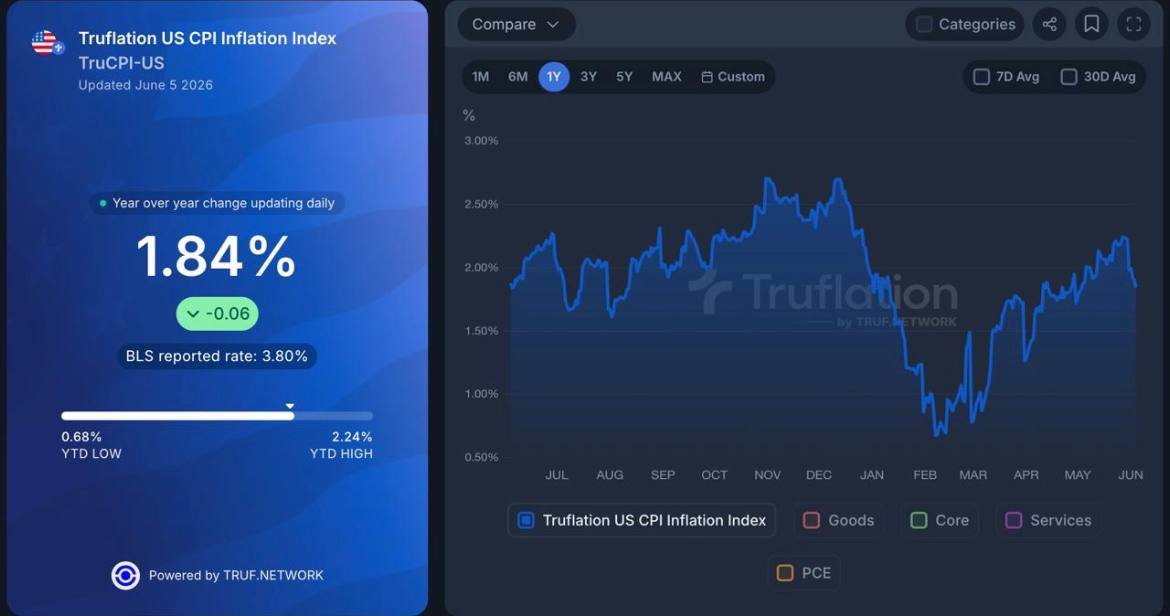
@KobeissiLetter At Truflation, our real-time index (tracking millions of prices daily across 30+ sources) currently shows US CPI around 1.84YoY, notably lower than the latest BLS read.
Transparency in data matters more than ever.
While I’m no fan of socialism or arbitrary confiscations of wealth, I can see why Bernie Sanders’ proposal (for the government to take a 50% stake in AI companies) resonates, including with many on the right.
The CEOs of the leading AI labs have told us repeatedly that they will cause massive job loss. This is not a story that I believe, nor does the data bear it out, but this is what they have told us. Similarly, they have hyped the risks of AI without putting an equal or greater emphasis on the benefits or readily available mitigations.
Conservatives have another fear. The employees of the leading labs claim to be philanthropic, but what we’ve seen is massive enrichment of NGOs advancing an agenda at odds with traditional values, fueling a revolution against our cities and communities. Soros-maxxing is not charity in our book.
Anthropic and OpenAI have established themselves as Public Benefit Corporations. What could be more in the public benefit than using half the wealth generated by these companies (which trained for free on the collective knowledge of humanity) to pay down the national debt? There is no ideological bias in that philanthropy.
Dario and Sam have begun to walk back their claims of massive job loss, but the damage to public trust is done, and now the chickens are coming home to roost. I could almost support the Sanders proposal as a stupidity tax.
There’s just one problem. Nationalization of AI will accelerate the corporate-government fusion we’re already sliding toward. Conservatives rightly fear a Central Bank Digital Currency. They ought to be even more concerned about Central Government AI — a system with even more totalistic power over information, decision-making, and human behavior.
We saw how social media was weaponized to censor conservatives (including President Trump) in the last Democrat administration. The definition of “trust & safety” expanded to mean protecting the public from supposed psychological harms, micro-aggressions, and disinformation (you know, like hearing conservative ideas or true facts about Covid).
That “safety” agenda as applied to AI will be vastly more powerful and Orwellian. AI won’t just moderate posts; it will curate reality — with the ability to rewrite history, enforce ideological conformity, influence policy at scale, mass surveil Americans, and condition the benefits of the many systems it controls on approved behavior.
America won’t win the AI race if we beat China but end up with a CCP-style social credit system in the U.S. — and that is the danger as the government becomes more deeply involved in AI development and assumes direct ownership and control.
Conservatives are right to fear where this is all headed but ought to think more carefully about how regulations they are flirting with now (that are widely celebrated among those with a long history of lust for Big Government) will be used against them the next time a Democrat administration is in power.
Asked about the CLARITY Act on @SquawkStreet today. Leaders like @Sen_Alsobrooks and @RubenGallego are the reason it's moving but the crypto crowd needs to get in line and stop the whining and push it right now.
Crypto is helpful to under-served communities and now is the time to get this done.
.@SecScottBessent: “@POTUS is undeterred in his determination to open markets for U.S. goods and services while rebuilding U.S. manufacturing capacity. Over the 12-months ending March 2026, the trade deficit for goods declined by $370 billion compared to the same timeframe ending March 2025. The economy has added 313,000 net new private sector jobs and 13,000 manufacturing jobs in the past two months. Firm capital expenditures rose at an annual rate of over 17 percent in the first quarter. And companies are investing trillions to build and expand here at home. American industry is winning again to the benefit of American workers.”
A huge thank you to @ChristyMatino and @JoshBreslowTV at @livenowfox for having David Washington, our CEO, on this morning to break down the volatile, razor-thin margins shaping the California primary results.
WATCH: https://t.co/tYYZlthb1e
One year ago, we launched AI Mode. Now, it has over a billion monthly active users, with queries more than doubling every quarter since launch.
↓ Here’s a deep dive at how people are using AI Mode in the U.S.
📸 More than one in six searches in the U.S. now use voice or images, with image searches growing over 40% month-over-month.
〰️ The average AI Mode query is triple the length of a traditional Search query.
Learn more about how user behavior is shifting one year into AI Mode.
https://t.co/j6n8egux0L
BREAKING: Florida House just signed off on the Senate’s property tax plan, clearing the way for the governor’s proposal to go on the ballot.
@TobyOverdorf: "The bill provides clarity for the rollback process and obviously property tax administration."
If voters approve it in November, Florida will see major cuts to homestead property taxes, new limits on tax hikes for other properties, and a big shake‑up for city and county budgets statewide.
🚨WATCH: THE FUTURE OF AVIATION IS TAKING OFF🚨
It was an honor to become the first U.S. Transportation Secretary to fly in an eVTOL🇺🇸
Now we’re taking the future of flight to the next level with projects across 26 states that include testing of:
✅ Urban air taxis ✅ Emergency medical flights ✅ Regional travel
America will WIN the race for the next generation of aviation @BETA_aircraft@FAANews 🦅
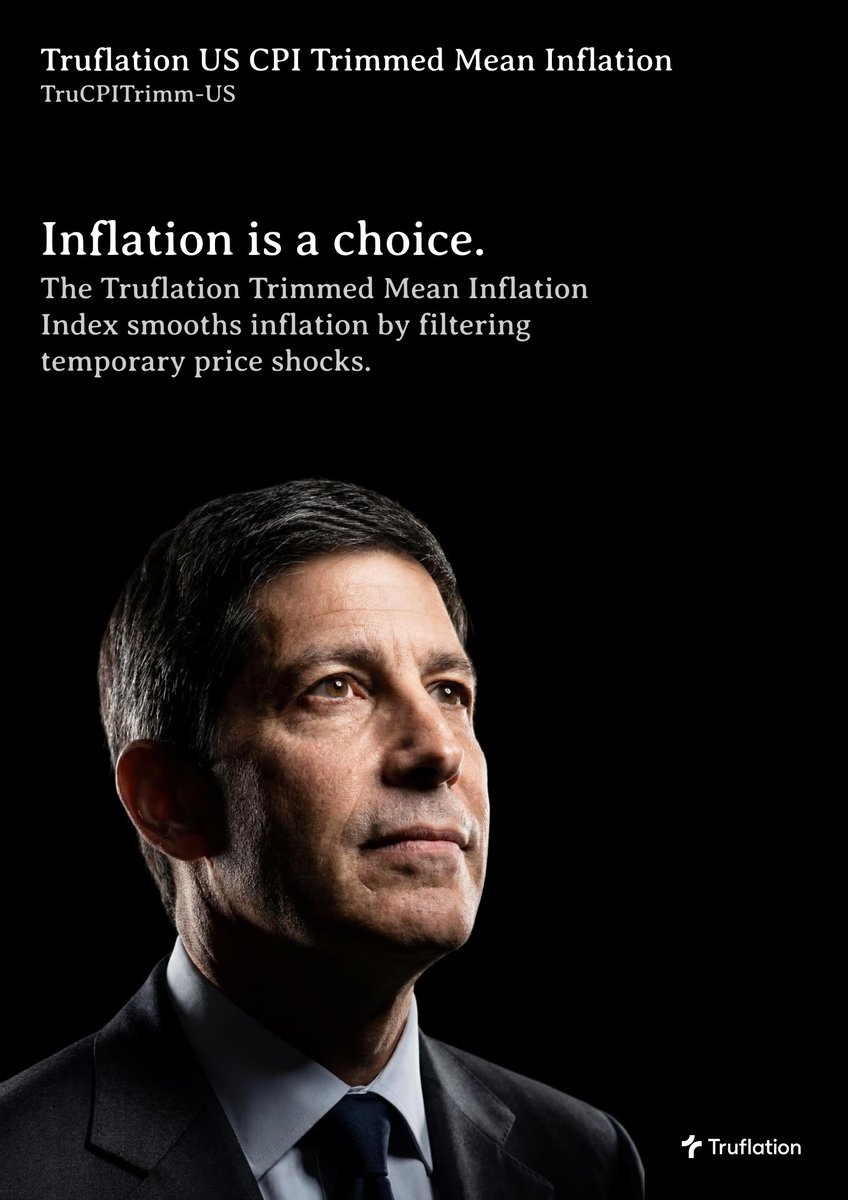
We just launched our US CPI Trimmed Mean Index.
Removing the largest positive and negative price movements before calculating inflation.
Forecasting a cleaner signal before the 'noise'. 👇🧵