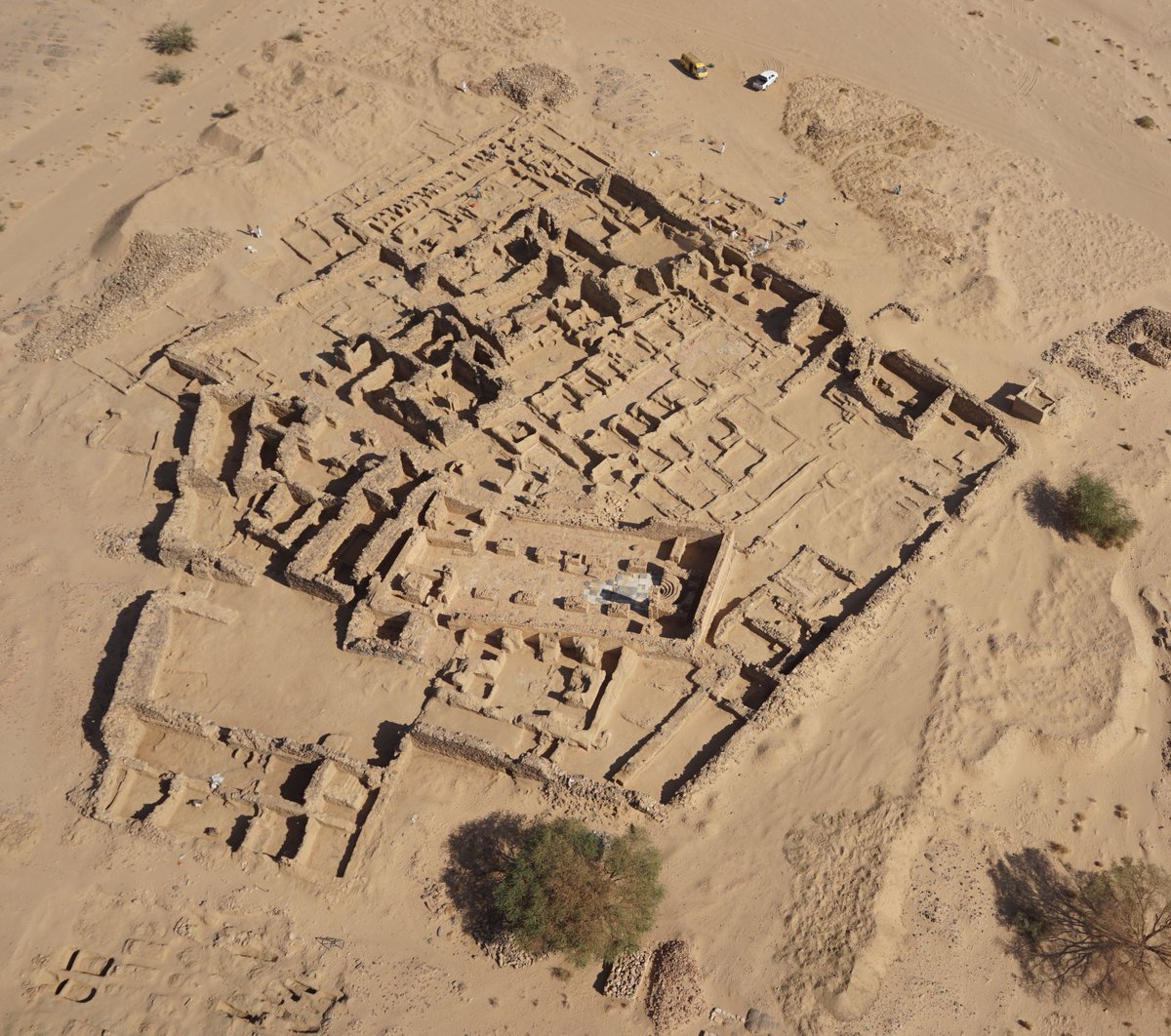
Very happy that my latest paper on the 3000 year old site of Diallowali is out with @J_AfricanArch!
https://t.co/QD031vE93q
It's a remarkable site, not just because it holds a unique record itself, but for what it can tell us about the 1st millennium BC West African world 🧵
📙#article in @J_AfricanArch by🔹Dr. Elsa Yvanez @texmeroe reports findings of the "Unravelling Nubian Funerary Practices" project conducted with us & supported by #ULAMgrant from @MSCActions & @NAWAPoland
👉 #Textiles in the funerary chaîne opératoire...
https://t.co/cVnU4IWmIp
📣📣 📣 Just published 🚨🚨🚨:
Restricted Access (but available inbox; just text me 😉)
Samba Yaye’s Tata: Archaeology and History of an Endogenous Fortification in Eastern Senegal.
https://t.co/VLFuVbedPu
Have you published a book, article, or chapter with Brill? Convert published books and chapters to Open Access at a reduced rate. The discount is based on the year of publication. Until December 31, 2022, we offer an additional discount of 20%
https://t.co/CdIf2MzQ58 #OpenAccess
Open Access Paper Alert!
Through use-trace analyses and ethnographic analogies, Desmond explores the relationship between corded basketry and bone tools in the North African Later Stone Age at Taforalt Cave, Morocco.
https://t.co/Q2jhd9bJCc
Open Access Paper Alert!
Mallen et al. present mitigation efforts to document rock art in Western Lesotho threatened in the wake of the Metolong Dam development. They identify four different art traditions and rock art sites still in use today!
https://t.co/cPWWgJXz70
Check out this new open-access paper in JAA from @micabryantjones and Ruth Tibesasa! They present new radiocarbon and faunal data for Kansyore fisher/hunter/gatherer sites in eastern Uganda, filling in huge gaps in the archaeological record. https://t.co/Q0gkjsNICD
Jerardino explores human response to climate change on the west coast of South Africa during the mid-Holocene Altithermal (MHA) from 8200–4200 cal BP, a climatic period characterized by hot, dry weather and a 1-3 m rise in sea level.
https://t.co/Mngw0LsZgQ
Groups did this by occupying large swaths of land in small groups, settling near water sources for short periods of time, and relying mostly on small bovids and other terrestrial game supplemented by marine resources for food.
These findings are in line with previous work done at the Hidden Valley village site and speak to patterns of increasingly intensive grass exploitation in the 9th–6th millennia BP.
Ugwuanyi and colleagues explore heritage conservation before, during, and after colonialism in Nigeria.
The authors call for a review of national practices/policy to challenge colonial holdovers and better accommodate local knowledge systems.
https://t.co/xBnvn3Gbjv