Good question! Fogo isn’t just Firedancer chain, it exists at a fundamentally different point in the tradeoff space of blockchains.
1. A chain can only run as its slowest client. If 80% of Solana ran Firedancer tomorrow, performance wouldn’t move at all because the other 20% still needs to keep up.
2. Even beyond the client, Fogo uses colocated consensus, and is 10X faster than Solana (in terms of block times and finality) than Solana. This isn’t a client issue, it’s a consequence of the laws of physics and speed of light.
Mainnet genesis has occurred. USDC transfers are open.
In the quiet corners of the ether (not that one), a spark was lit.
Infrastructure and validators have been onboarding behind the scenes in preparation.
Not because it’s easy, but because it’s hard 🧵
Worthwhile blog post read on what Fogo will look like Day 1 vs the longer term strategic vision.
As stated, we’ve prioritized launching fast, adapting to changing market dynamics/competitors, and feedback from our DEX’s/apps over any kind of dogma. Crypto moves fast and you gotta adapt to new realities. And we’ll always be transparent as to the “why” of any changes.
Have a read and I’ll put out some more posts drilling down more on some of these:
https://t.co/3z4BoGK19e
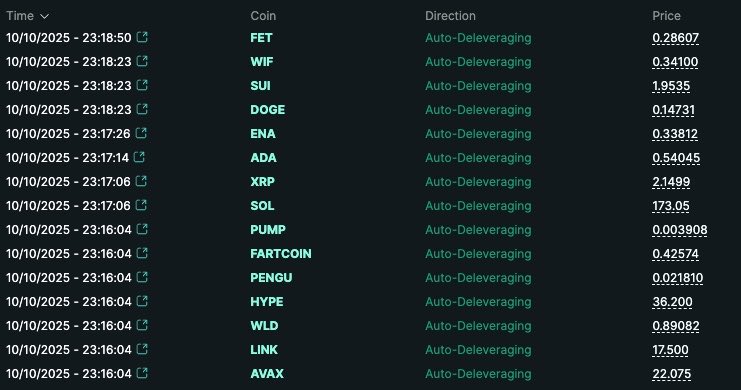
1/ Since a lot of people are waking up to see their perps positions closed and wondering what the hell “Auto-Deleveraging” means, here’s a quick and dirty primer.
What is ADL? How does it work? And why does it exist?
I want to start by thanking the incredible team and partners at Fenwick & West for their support from Day 1. When it was just me and an idea – they believed in the Fogo vision and took us on. We wouldn’t be here without them.
I’m also thrilled to share that Jon is joining as General Counsel of the Fogo Foundation. Jon has been an invaluable partner as external counsel, and bringing him in-house is one of the most important additions we’ve made to our team. Beyond his deep expertise – Jon is one of the most driven, hardworking, and thoughtful people I’ve had the privilege to work with.
He elevates our approach to legal, risk, and compliance with a new level of maturity – and I couldn’t be more excited to continue this journey with him.
The Fogo Foundation welcomes Jonathan Edwards as the General Counsel at Fogo Foundation US.
Previously, Jonathan was at Fenwick & West LLP, where he worked exclusively with cryptocurrency clients across the industry and throughout their lifecycle 🧵
It has been one month since @FogoChain testnet went live and the chain has been nothing but active. From new tokens to nonstop transactions, the growth is wild.
This monthly recap is here to look back at the milestones we hit and the community power that made it all possible.
The United States has adopted federal legislation creating a new stablecoin licensing regime. We could soon see a wave of innovation for products and services that can make use of a programmable dollar.
https://t.co/hvj84rb378
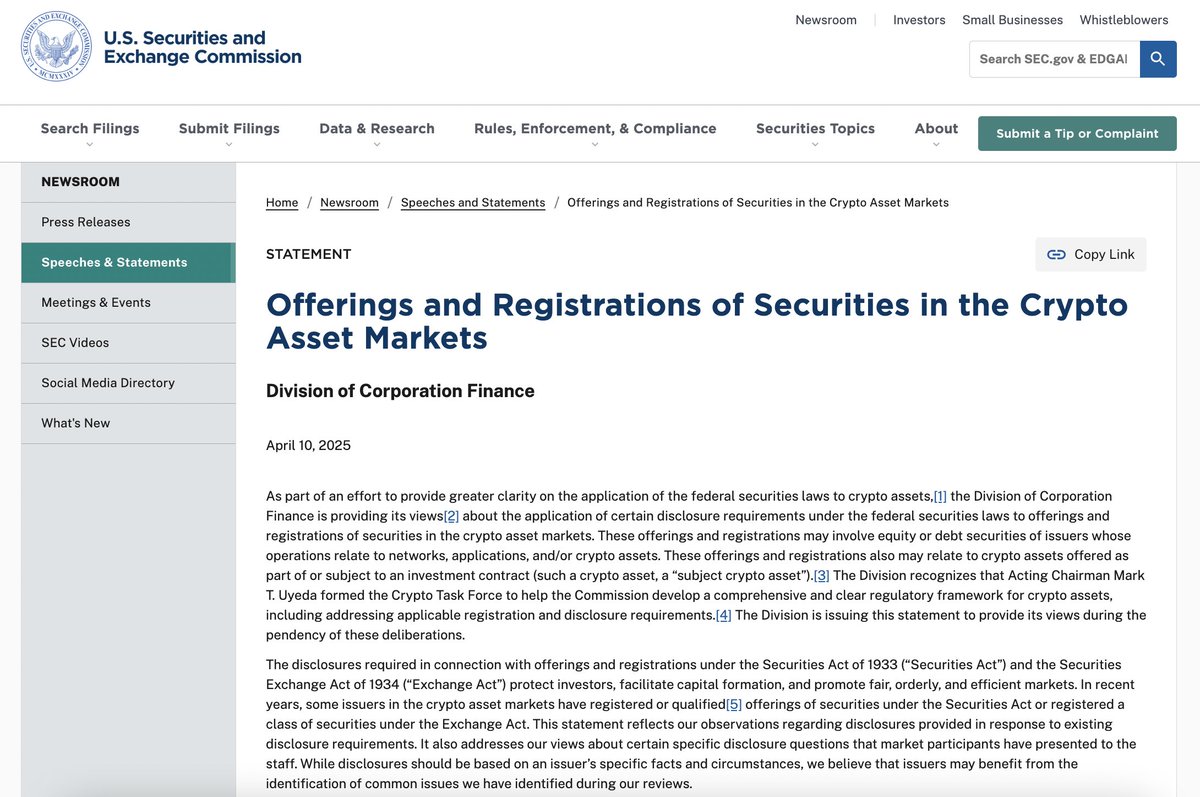
The SEC’s Division of Corporation Finance issued detailed guidance on securities disclosure requirements for securities in the crypto asset markets. Learn what it means for crypto asset issuers navigating registration and compliance in our latest client alert. 👇
🇺🇸 NEW: The SEC’s Division of Corporate Finance released new guidance on how federal securities laws could apply to crypto and how industry players should make disclosures.
The OCC has rescinded interpretive guidance that previously discouraged banks from engaging in crypto asset activities. Retail crypto custody could soon be offered by national banks.
Today, @coinbase filed our brief asking the Court to dismiss the SEC’s case against us. Our core argument is simple — we do not offer "investment contracts" as that term has been construed by decades of Supreme Court and other binding precedent. 1/3 https://t.co/r2EkDgkEuc
Getting lots of questions re stablecoins & SEC: Facts & circumstances of course, but SEC should defer to Congress, which is actively considering the issue. In the meantime, we & other regulators could hold public roundtables. Enforcement actions aren't the way to write the rules.
1/ As the web3 space continues to expand, approaches to decentralization need to evolve.
Today, I published this piece for web3 builders on the principles and models of web3 decentralization. Here's a quick guide. 🧵
https://t.co/eiS9bPE6hJ