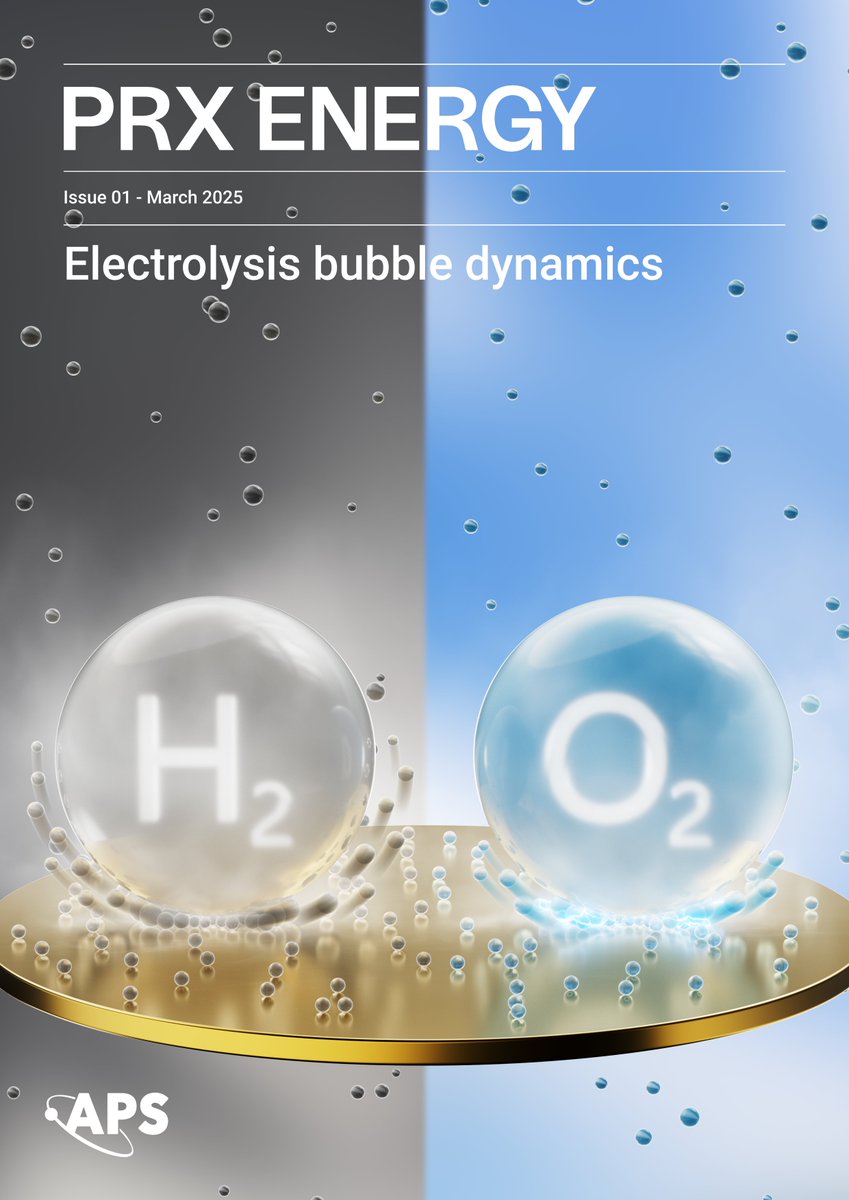
On the cover of our latest issue: experiments reveal differences in H2 and O2 bubble evolution in an acidic environment, findings that could enable more efficient electrochemical water splitting.
Read the paper: https://t.co/CtRAcvbNqG
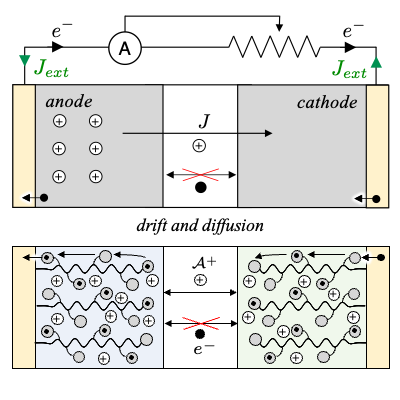
The drift-diffusion framework, typically used to describe semiconductor devices, is expanded towards describing the ionic and electronic properties of alkali-ion batteries.
Read the paper: https://t.co/tLBwwjCoRT
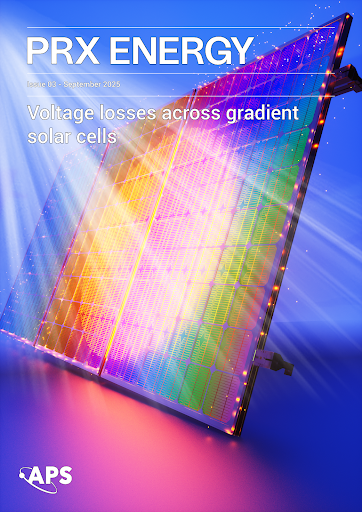
On the cover of our latest issue: Using advanced spectroscopy and modeling, researchers show that band-gap gradients in solar cells — meant to reduce non-radiative losses — are a key source of radiative open-circuit voltage loss.
Read the paper: https://t.co/o7mYP9XCF0
🚨New #JournalClub alert! 🚨
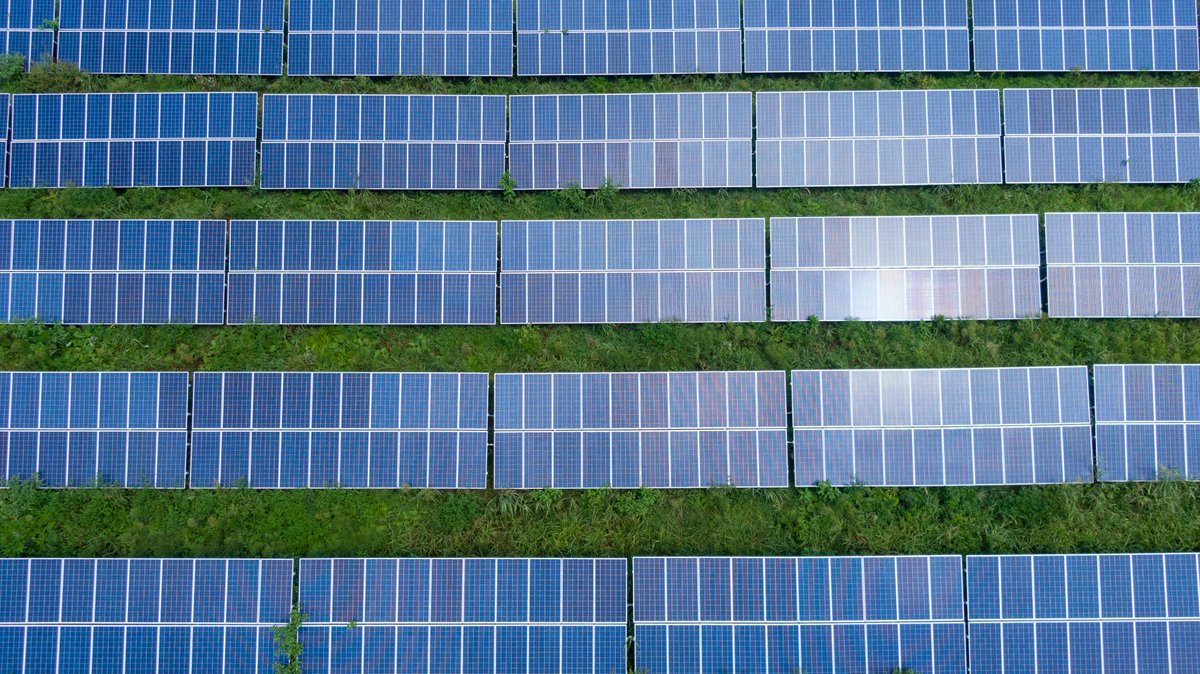
Check out our editors’ picks for some of the most compelling #energy research of the month: the impacts of solar power on reducing #CO2 emissions, more efficient organic solar cells, and more.
Let’s get started! 🧵👇
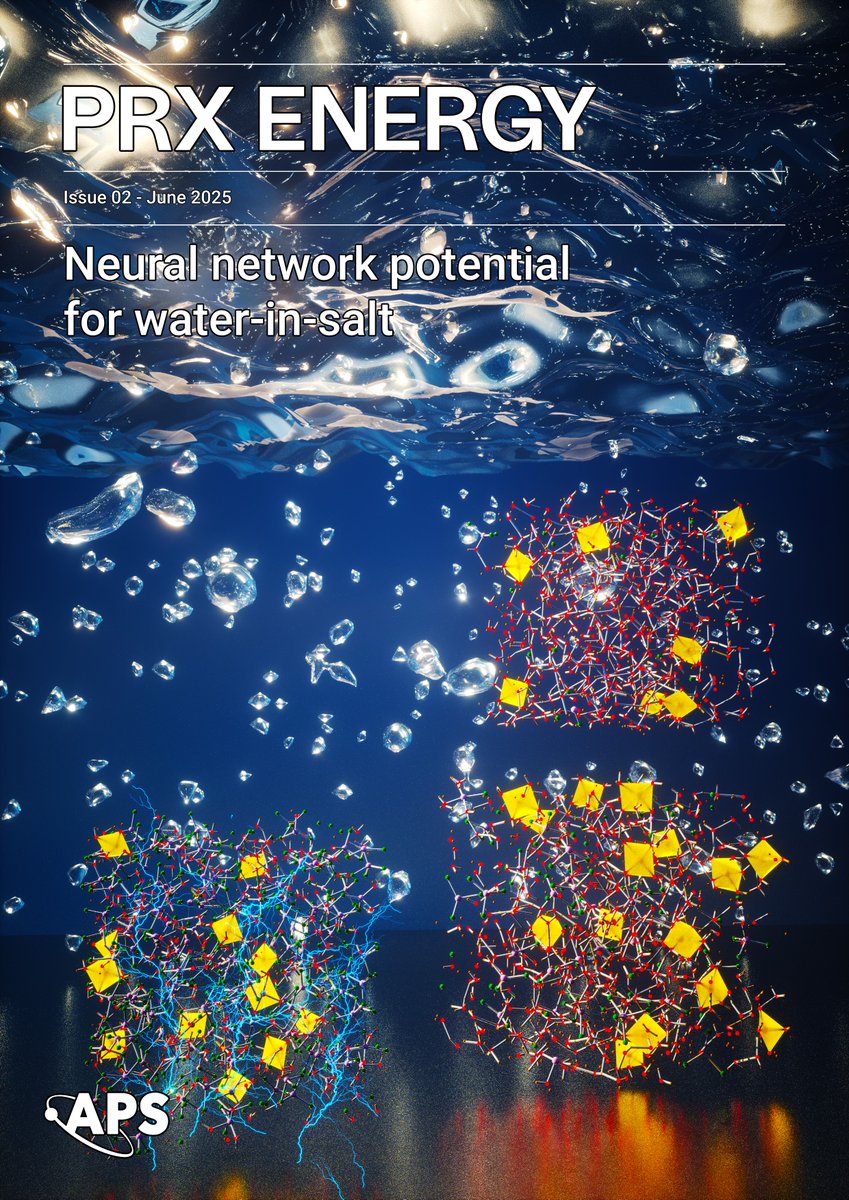
The study featured on the cover of our latest issue combines experiments with simulations to probe the structural and dynamic properties of ZnCl2 electrolytes from salt-in-water through water-in-salt regimes.
Check it out: https://t.co/QHP4a54N7T
This study was conducted by Xiu-Fen Ma, Hong-Yi Li, Fusheng Pan, and colleagues at @CQU1929, Xie Zhang at @NPUofChina, and collaborators at @ucsantabarbara.
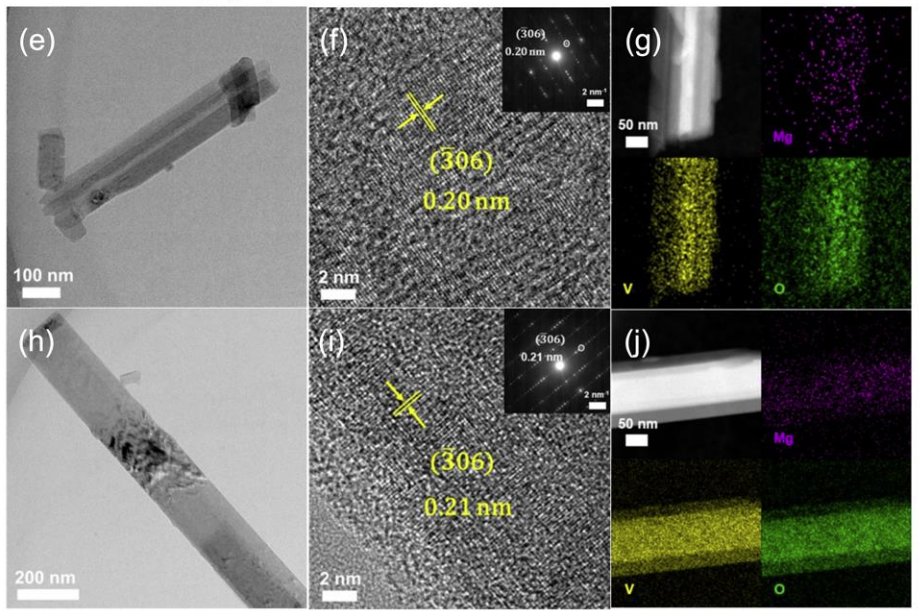
Experiments and first-principles calculations of V2O5 layered cathodes pre-intercalated with water and Mg2+ demonstrate that modulating V 3d orbital splitting promotes the electronic conductivity and electron-accepting capability of V2O5.
https://t.co/DOdNwu6n7T
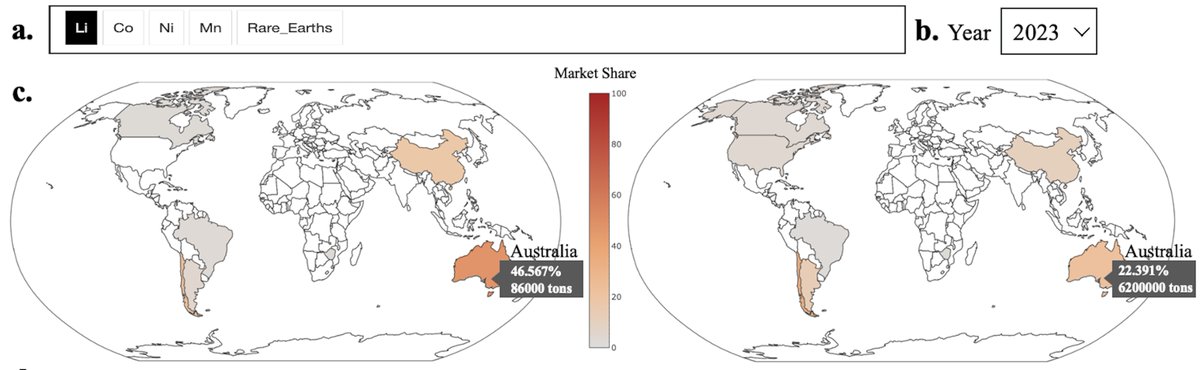
Researchers present https://t.co/FKYoTZmzaF, an online application that combs through the 10 most recent years of data from @USGS to provide comprehensive information on global mineral commodities and actionable, country-specific insights.
Read the paper: https://t.co/zOIROmMRq8
The first SCOAP3 assessment of open science practices gave our journals high marks. A review of @PhysRevLett, @PhysRevC, and @PhysRevD earned nearly double the total score of the next-highest publisher, showing our commitment to #OpenScience.
Learn more: https://t.co/AiiLuC4FZB
@CERN
🚨New #JournalClub alert! 🚨
Check out our editors’ picks for some of the most compelling #energy research of the month: #WaterSplitting devices, indoor light harvesting, zinc batteries, and more.
Let’s get started. 🧵👇
💧⚡ New Cover: Bubble Dynamics in Electrolysis 🫧
We created this @PRX_Energy cover for a new study by Alexander Babich, Kerstin Eckert, and collaborators from @tudresden_de, @utwenteEN, @TUBerlin and @HZDR_Dresden.
Using electrochemical and optical techniques, researchers compare #hydrogen and #oxygen bubble growth during water #electrolysis. They revealed that oxygen bubbles cause stronger fluid motion (Marangoni convection) and more local heating, impacting efficiency.
These insights could lead to better #electrolyzer designs by improving bubble removal and electrode performance!⚡
Read more here: https://t.co/QCfMBz4Awj
#sciart #science #scientific_illustration #chemistry #ellamaru #sciencegirl #sci_artist #sci_design #cover #scientific_cover #phd #phdlife
On the cover of our latest issue: experiments reveal differences in H2 and O2 bubble evolution in an acidic environment, findings that could enable more efficient electrochemical water splitting.
Read the paper: https://t.co/CtRAcvbNqG
#ICYMI: Using high-speed shadowgraphy, particle tracking velocimetry, and schlieren imaging, experiments reveal differences in H2 and O2 bubble evolution in an acidic environment, findings that could enable more efficient electrochemical water splitting.
🔗 https://t.co/zDWYZal6YG
Using an ab initio framework and a unified heat transport theory, scientists study thermal transport in the orthorhombic phase of the Ag8SnSe6 and find that it exhibits glass-like thermal transport with nearly temperature-independent thermal conductivity.
https://t.co/sBraNWrON0
By using molecular dynamics simulations to investigate the behavior of aqueous electrolytes in porous, carbon-based electrochemical devices under voltage, new research reveals the impact of electrode flexibility on ion adsorption and capacitance.
🔗 https://t.co/cJGHTOcdhP
🚨New #JournalClub alert! 🚨
Check out our editors’ picks for some of the most compelling #energy research of the month: thermoelectric 3D printing inks, in-tandem #DirectAirCapture and #solar fuel conversion, and more.
Let’s get started! 🧵👇
By studying the role of partial exciton condensation on energy transport in light-harvesting complex 2 of purple bacteria, this paper shows that an exciton-condensate-like state is linked with enhanced energy transport efficiency under ambient conditions.
https://t.co/X90yd9Eb67
Our cover for @PRX_Energy! 🌬️ Exploring Wind Power in Corridor Terrains 🌬️
The article by Yan Wang, ye li and colleagues from @iLZU1909, @SUSTechSZ dives deep into the physics of wind energy in long #corridor_terrains, like the Hexi Corridor in Gansu, China. These landscapes hold immense potential for #wind_energy but come with unique challenges due to turbulence effects. This work opens new possibilities for improving wind-turbine performance in these regions, addressing issues like large-scale motion and turbulence that impact power output.
✨ The flowing orange and blue streams on the image represent the turbulence and energy fluctuations discussed in the study!
Learn more 👉 https://t.co/GvCgM2T9hL
#sciart #science #scientific_illustration #chemistry #medicine #ellamaru #sciencegirl #sci_artist #sci_design #cover #scientific_cover #medicalartist #phd #phdlife
“Let us embrace this opportunity for the well-being of our planet and generations to come.” — @Dan_L_Sanchez in a guest editorial about the report.
🔗 https://t.co/DlMr2PbGNq