Due to overwhelming number of complaints about projects that either parrot $TRAC utility token's name, or use deceivingly designed logos resembling the one of @origin_trail, we say:
MAKE SURE TO STAY ON THE RIGHT $TRAC(K)
👉https://t.co/nAREkoGYdD
Smash the share button🩷
@varunram It’s a power move no doubt. I feel your tribalism towards meta and against Apple undermined the very quality of neutrality you admired in zucks video.
This is Apples 1st headset. The game just started. You’re ready to call a winner? Imagine if people did for Meta quest 1.
#Bitcoin to $200,000 or $500,000 in this bull cycle?
It's the institutional cycle.
This means that an influx of money, which the markets haven't seen before, is coming to the markets. The recent inflow in the ETF has shown interest.
What does that mean? Where's the top? ⬇️
In this long read, I'll provide some of my first-hand thoughts on the upcoming years for crypto and where we might be looking for a potential top of this cycle.
I'll be going through a few important topics, which are numbered.
1⃣ - Diminishing returns
This topic has been discussed a lot in the past few months, but it essentially means that the markets will have a lower peak this time because the returns in previous bull cycles have been 'diminishing.'
Diminishing means the previous peak had a more considerable % gain than the current peak. For example, the peak in 2021 had a percentage gain of 2,000%, while the peak in 2017 had a percentage gain of 12,000% compared to the cycle low.
However, if I'm reading those arguments, I have some concerns regarding this theory.
- Diminishing returns would be possible, through which this cycle could also give 1,900% as a potential return, equalling a peak of $300,000. But why remain focused on diminishing returns? What's valid behind that theory?
- If we discuss diminishing returns, why are technological stocks going through the roof after their 2008 cycle and bear market. Bitcoin is a technological advancement, being able to explore a larger magnitude of cash flowing into the asset, which makes the theory behind diminishing returns look weak.
- If the previous cycle was indeed pushed back with FTX forcing the markets to stop at $69,000 as the primary market maker, what if the price of Bitcoin has rallied to $80,000, $100,000, or even $120,000? Such a rally would mean the ballpark will be way higher this bull cycle.
Ultimately, it's relatively flawed to suggest that there should constantly be diminishing returns. As a matter of fact, we'll be able to erase that theory.
2⃣ - Four-Year Cycle
This is another key concept of the markets that have been moving in the previous cycles.
In that aspect, the impact of the underlying supply and demand shock has been giving a positive push to the price action of Bitcoin, but that was during a period where the macro-economic playing field didn't play such a significant role as it would right now. Why? Different factors are taken into account while investing in Bitcoin.
New participants have joined the markets, which generally don't care about a halving happening in 60 days; they need to rotate funds at some point if the risk is skewed towards one side or another.
On the other hand, the halving will have a magnificent impact on the markets, but I'll discuss that briefly.
Second, halving itself has a relatively lower impact on the number of cycles happening, as the price of mining one Bitcoin and the value of one are relatively far away from each other, hence why other factors will take their role.
To my current thought process, we'll be seeing the final 'four-year cycle' happening at this point, which means that it will probably be hard to break the upcoming all-time high in the years after.
3⃣ - The approval of the ETF
Now, this is where things get interesting. The Spot Bitcoin ETF, which has recently been approved, has a magnitude of an impact on the markets, which is not priced in. By a mile.
Much interest was shown in the first few weeks as a few $ billions flowed into the ETFs.
More importantly, the combination of a potential hedge against the US dollar (for multiple reasons) is an argument that many institutions will use to adopt an investment-based approach to having Bitcoin.
In that aspect, the ETF has enabled a bull cycle we won't see for a long time. It's the final 'easy bubble' we'll experience.
❔ Where is Bitcoin heading?
Bitcoin is heading towards validity across the world and towards a level of safety. The fact that institutions are betting on Bitcoin and are looking to allocate funds towards Bitcoin is not because they truly believe in the actual asset; they rather don't believe in their own financial system or currency.
Remind yourself that the existence of Bitcoin wasn't even a topic if the financial system was as ethical and as fair as it should be. It isn't.
There is a current existential risk of inflation across 3rd world countries leading towards a large influx towards Bitcoin and Crypto as a whole, but there's also a slow, gradual increase of fear surrounding the debt levels of the US government and the potential failure of the financial system there.
That's the underlying fact that institutions are allocating towards Bitcoin (and Gold), and that's also why the Bitcoin halving and the fixed supply theory is a decision-maker to invest into those specific assets as it's safe.
In the previous bull cycles, the markets have anticipated an influx of several new participants. In fact, 2017 was the cycle where retail investors jumped into the markets. In 2021, we've had VCs.
Now, we've got the big boys jumping into the markets, the institutionals.
Where are we heading?
I think we're going into a cycle that we'd remember as the 'Crypto https://t.co/rFbY3kvwqF' bubble. A cycle where we're not using Crypto as a whole but where the world understands that crypto and Bitcoin are next.
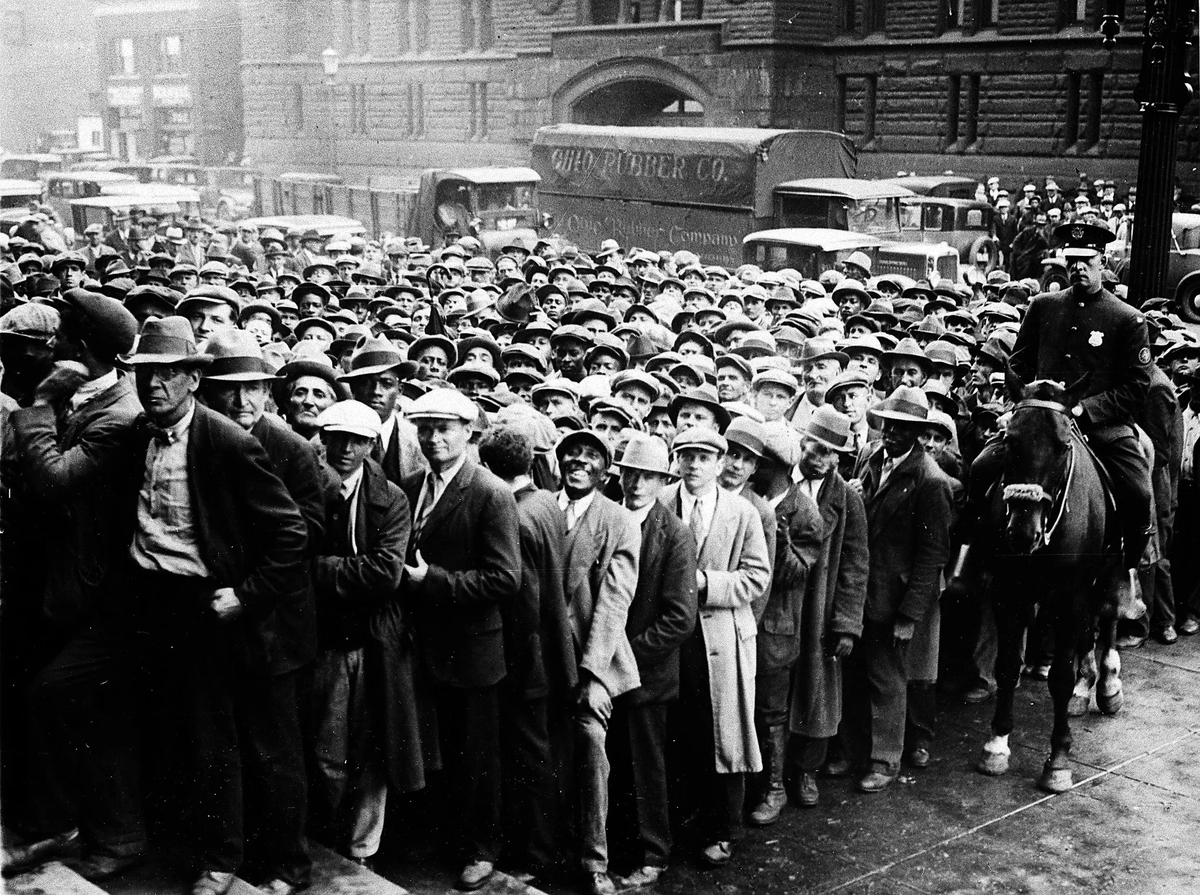
How long does this cycle last? I don't know. It's more a question of how long the liquidity cycle will last. The FED is required to lower the interest rates, so probably until that hits zero and stays there for a few months, the markets will go up. It feels like we're in 1928, when the markets also started to accelerate on thin air, trapping everyone in their decisions.
It could be that we're going to peak at $250,000 or at $600,000. I don't know. Most presumably I think you should erase the theories and expect the markets to go way higher than you think right now, as that's always how markets move.
How long will it last? In the most likely scenario, in Q3/Q4 2025, we'll peak, but if the liquidity remains valid, it might be reasonable to suggest that this bull cycle will last longer until 2026 or 2027.
After that, we'll get a destructive crisis and crash like we've seen in 1929 and 1930, leading towards a decade of deflationary rates, disruption of financial systems, still dealing with high debt levels, but the flight to safety with Bitcoin and Gold and the Bitcoin Standard.
Make as much Bitcoin as you can in this bull cycle. Jump away into cash for a little while when the liquidity crash happens, and jump back in Bitcoin after the 80% crash. Don't look at valuations in USD. Look at your purchasing power.
Stay safe.
This is utterly brilliant. A student accuses @jk_rowling of being transphobic. This teacher skilfully dissects the claim and challenges it by asking questions.
He teaches not what to think, but how to think critically.
Watch until the end.
You see the epiphany in real-time.
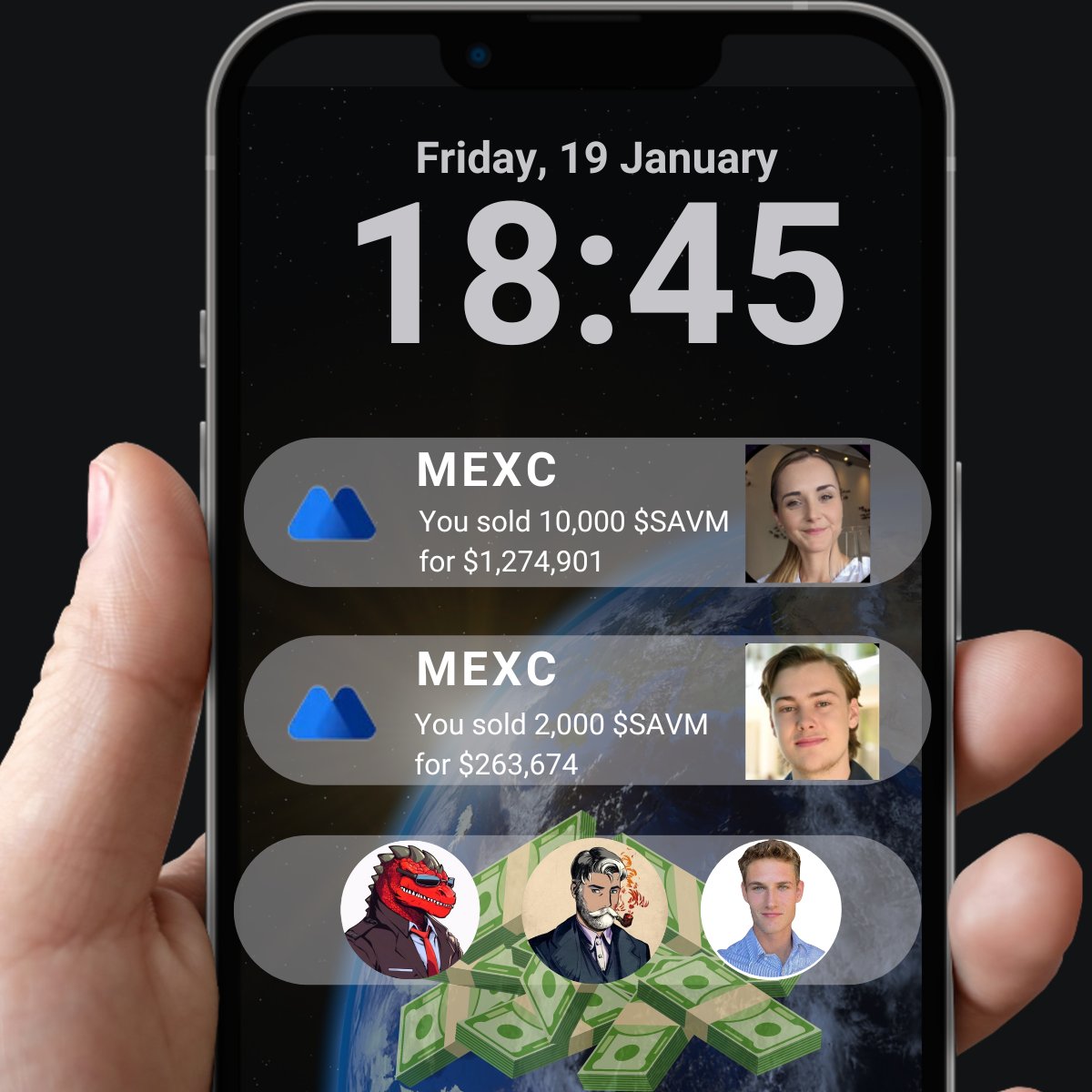
Creators of $SAVM and greedy influencers made millions 🐳
All they did was buying a token pre-launch at the right time.
These shills are the most disgusting form of exploitation of followers.
It's time to reveal the story behind the SAVM launch 🧵👇