A small introduction for new followers! I’m Jacob, and I’m a flight dynamics engineer at NASA working in flight operations for NASA’s Artemis missions. I work in ascent and abort operations and aspire to be an astronaut one day!
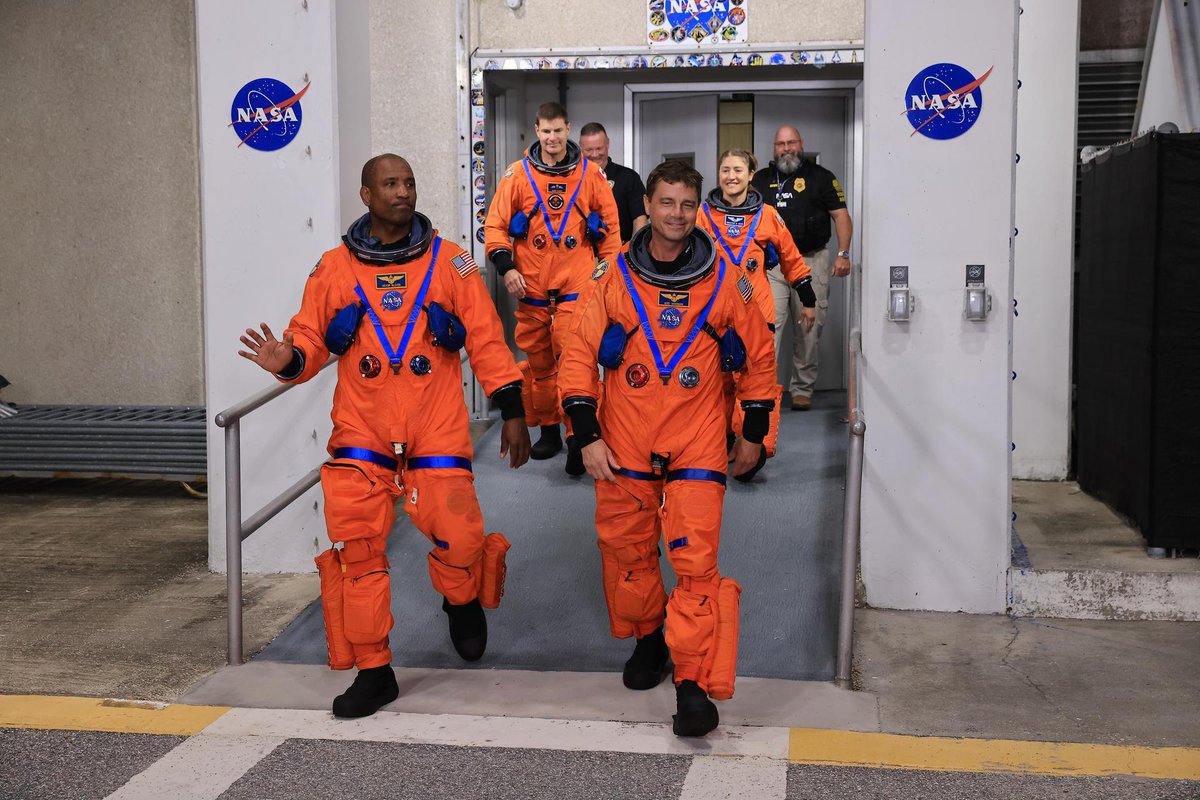
Want to see our Artemis II crew off on their trip around the Moon? Now is your chance!
We’re looking for social storytellers to attend our first crewed Artemis launch at @NASAKennedy. Apply to our #NASASocial by Monday, Nov. 24. https://t.co/rAYBkeeKSM
nobody gets to tell me, my family, or the tens of thousands of Purdue alumni who chose this tiny dot in a cornfield as home that we don't belong, or are any less worthy of America.
Hey, I was part of this at JSC! Part of my role on the flight control team is monitoring and planning for aborts, so I was part of the team that informs rescue forces of where to go in scenarios like this
Firing rooms 1 and 2 were bustling last week!
Exploration Ground Systems teams completed cryogenic and term count simulations, along with gaseous oxygen loading onto @NASA_Orion. Teams also completed a two-part safety abort demonstration to practice recovery operations in the unlikely event of a pad or in-flight abort scenario.
Learn more about the safety abort demonstration here: https://t.co/4ttCSmVpiX
@mhaskellphoto@IrateMaxwell No im not saying it’s not necessary. I’m saying it’s arbitrary. That’s just a fact.
There’s no threshold or metric a rocket surpasses to become “human rated”.
It’s crazy getting folks from the outside seeing and commenting on our off nominal training for the crew. If I had known I’d be getting to walk the Artemis II crew through aborts following scenarios like these, I wouldn’t have believed it!
A minute of chaos in the simulator when a thrust vector malfunction sent us out of control during the perigee raise maneuver. The system handled it as expected, shutdown the engine, and allowed us to safely return to Earth.