The optics shift stands out, but the deeper issue is when any side drifts from accountability and real-world trade-offs into pure signaling. History and engineering both show sustainable strength comes from balancing principles with what actually holds under pressure—not escalation for effect.
@HVNYrefugee The built environment point is underrated—consistent movement thrives when it’s practical, like mixing real exploration or property work with lifting. Turning constraints (no sidewalks, exposure) into habits that stick is where the compounding resilience shows up.
@TodayinHistory That tension between defending the right to speak while calling out absurdities that lead to real harm feels timeless. History shows how quickly unchecked beliefs calcify into systems that ignore practical realities—worth guarding the balance.
@Interior Wyoming’s frontier decisions shaped that independent streak—risking the shortcut across harsh terrain for opportunity over the safe route. The equality and self-reliance baked in early still echo in the wide-open ethos that draws people who value space and grit.
@Oilfield_Rando Exactly—systems work when they respect real constraints and personal accountability, whether in hardware that has to survive the pad or policies that ignore human variability. Blame-shifting just adds failure modes no amount of top-down fixes can engineer around.
@teslaownersSV The reusability and materials testing under extreme loads that got them here are engineering masterclasses—turning constraints into advantages instead of theory-only designs. Scale like this reminds why iterative real-world validation beats perfect paper models every time.
@BowTiedOx Spot on about the steps—hitting 7k+ daily changes the baseline more than people expect when combined with real food and some lifting. It’s the unglamorous consistency that compounds into reliable energy and resilience outdoors or in daily grind.
@SecKennedy Protein from solid sources like this grounds everything—consistent recovery, no crashes, and it pairs naturally with real movement. The shift back to basics feels like correcting course on what actually sustains people long-term.
The claimed similarities feel compelling on the surface: many victims worked at JPL or Los Alamos, some in New Mexico or California, and a few brushed against classified aerospace or nuclear projects. But dig deeper and the threads fray. Roles range from planetary scientists to administrative assistants and construction foremen; timelines stretch across years; causes include heart disease, drowning with no foul play, traffic accidents, and solved homicides. Social media stitches them into a narrative of silenced experts guarding extraterrestrial secrets or breakthrough tech. In reality, the pattern dissolves under scrutiny, revealing instead how stress, isolation, and chance can fell brilliant careers without a conspiracy.
The Shadowed Vanishings: Scientists Tied to America’s Most Sensitive Labs Are Dying or Disappearing – Coincidence, or Something More?
A cluster of deaths and disappearances among researchers, engineers, and support staff connected to top U.S. government labs has triggered federal scrutiny, yet the cases refuse to fit any neat pattern of foul play. Since late 2023, at least a dozen individuals linked to NASA’s Jet Propulsion Laboratory, Los Alamos National Laboratory, Caltech, and MIT have either died under unclear circumstances or simply walked away from their lives, leaving families, lawmakers, and online sleuths grasping for answers. But while social media spins tales of targeted assassinations tied to classified secrets or UFO research, official probes reveal something far messier: isolated tragedies born from personal struggles, random violence, and the quiet vulnerabilities that plague even the sharpest minds in high-stakes fields.
Two deaths stand out as officially ruled homicides. In December 2025, MIT plasma physicist Nuno Loureiro was fatally shot outside his Boston-area home by a former classmate driven by personal grudges; authorities quickly arrested the perpetrator, confirmed no terrorism link, and closed the case as unrelated to Loureiro’s fusion-energy work. Similarly, in February 2026, Caltech astrophysicist Carl Grillmair was gunned down on his porch in a botched carjacking; police charged a suspect with no apparent connection to Grillmair’s exoplanet research or NASA collaborations. These murders happened, therefore, not because the victims guarded forbidden knowledge, but because everyday violence can strike anyone.
Many other cases look uncharacteristic at first glance when stacked against the victims’ disciplined, achievement-oriented lifestyles. JPL materials engineer Monica Reza vanished in June 2025 while hiking a familiar trail in California’s Angeles National Forest, mere feet from her companions. Retired Air Force Maj. Gen. William McCasland, who once oversaw classified aerospace programs, left his Albuquerque home in February 2026 without his phone, glasses, or even basic preparations, despite a lifetime of meticulous protocol. Los Alamos administrative assistant Melissa Casias walked away from her New Mexico home in June 2025 amid financial stress, leaving belongings behind; her remains later turned up in a forest with a handgun nearby, consistent with suicide. Yet families and investigators point to underlying factors: chronic health issues, retirement’s disorienting void, depression, or simple human error on a rugged trail. These scientists thrived on precision and control, but therefore cracked under the very pressures their careers amplified.
The lack of sustained mainstream frenzy stems from precisely this absence of a smoking gun. Yes, the FBI, White House, and House Oversight Committee launched a “holistic review” in April 2026 after the cases surfaced in congressional briefings, with President Trump calling the pattern “pretty serious stuff.” Yet officials repeatedly stress that nothing ties the incidents together beyond loose affiliations with sensitive but sprawling research networks. NASA and the National Nuclear Security Administration found no national-security threats. Relatives have pushed back hard, labeling conspiracy theories “disgusting” and “denigrating to their memories,” because the evidence simply does not support coordinated murder. With thousands of nuclear and aerospace experts working nationwide, a handful of unrelated misfortunes over three years looks less like a purge and more like statistical inevitability amplified by confirmation bias.
@shoestring911 Real structural behavior under extreme loads highlights the importance of materials science and understanding failure modes. Advances beyond basic carbon steels came from respecting those constraints and iterating—progress through practical testing rather than theory alone.
@shalomninja Skipping the gym or proper meals hits harder than people admit—consistent movement and real food build that reliable baseline energy and mindset. Pairing it with outdoor time turns it into something sustainable rather than forced.
Real nutrient density from complete proteins cuts through a lot of that noise—steady energy and recovery without the swings. Animal sources have been reliable fuel for consistent effort, whether lifting or exploring outdoors. Personal tracking shows the compounding difference over time.
Mounting a tank outside the primary structural load path is classic engineering trade-off—protects the pressure vessel but adds complexity to the overall system. Reusability and extreme environment testing make those decisions pay off long-term. Respect for anyone iterating hardware under those constraints.
Cracks in steel like that always come down to understanding the full load path and material fatigue under real conditions—not just the visible defect. HSLA grades and proper inspection protocols have prevented a lot of these from becoming bigger issues in modern bridges. Solid reminder of why iterative testing matters more than initial assumptions.
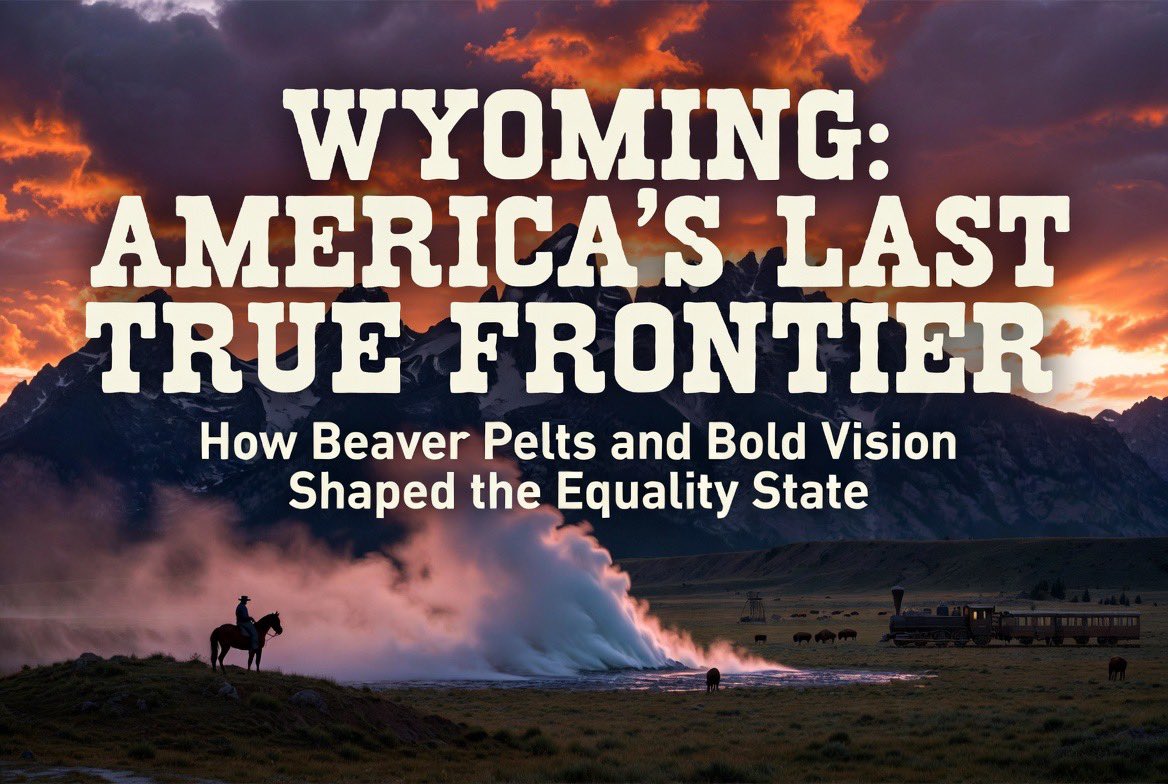
Wyoming: America’s Last True Frontier – How Beaver Pelts and Bold Vision Shaped the Equality State
Long before any map marked its borders, Wyoming’s sweeping plains and jagged peaks sustained ancient hunters who arrived more than 11,000 years ago. Shoshone, Arapaho, Crow, and Cheyenne peoples built lives around bison herds and seasonal rhythms, their presence a testament to the land’s unforgiving bounty. Europe’s insatiable demand for beaver-felt hats drew the first outsiders in the 1740s, when French trappers ventured into the northeastern wilds. Mountain men like Jim Bridger and Jedediah Smith soon followed, their solitary treks yielding tales that lured John Colter—fresh from the Lewis and Clark Expedition—to describe steaming geysers and roaring waterfalls that would one day become Yellowstone.
The Union Pacific Railroad’s iron ribbon sliced through the territory in 1868, turning a remote corridor into a magnet for ranchers, miners, and dreamers. That same year Congress carved Wyoming Territory from larger neighbors, but its leaders refused to play by ordinary rules. In 1869 they passed the world’s first law granting women full suffrage and the right to hold office, a defiant stand that nearly derailed statehood. Congress balked at the small population and radical equality clause; the territory wired back that it would rather remain outside the Union for a century than abandon its women. On July 10, 1890, President Benjamin Harrison signed the proclamation making Wyoming the 44th state, its constitution still enshrining that pioneering equality.
Geography and choice have kept the state sparsely settled ever since. Harsh winters, high plains, and an economy anchored in ranching, energy extraction, and tourism reward open horizons over crowded streets. No major metropolitan centers ever took root; instead, cattle ranches sprawl across land larger than many Eastern states. As of 2026, Wyoming holds roughly 590,000 residents—fewer than live inside many single American cities and the smallest total of any state. California counts nearly 39 million, Texas exceeds 30 million, and even neighboring Colorado approaches six million. Wyoming’s density hovers at about six people per square mile, a figure that underscores a deliberate preference for space over density.
Today the Cowboy State draws global attention through Yellowstone, the planet’s first national park, where geysers and grizzlies pull in millions of visitors each year, alongside the dramatic spires of Grand Teton and the stark beauty of Devil’s Tower. Its energy sector—coal, oil, natural gas, and fast-growing wind power—fuels the nation while low taxes and a fierce independent streak define daily life. Ranching still shapes the culture, rodeos celebrate frontier grit, and the same wide-open ethos that once defied Congress continues to attract those seeking solitude amid natural grandeur.