One more big challenge that all govts face when they enact policies to benefit industries, give incentives, tax breaks or anything that stimulates industrial development is,
How to account for our pathological trait of taking advantage of loopholes?
Because when we find a loophole, we don't only exploit it, we drive an 18 Tonne, 64 wheel Megatruck thru it.
Then we boast about it.
Then start a paid consultancy to teach others to exploit the same loophole.
That's why it is difficult for us to get policies which are simple and are taken for granted in other high trust economies
Take Credit Card Points for example. It works seamlessly across the world. It is simple you use card, you get points, you redeem it,
You win and credit card companies objective of you using their card is fulfilled.
Then the points came to India.
You suddenly had people discovering all sorts of loopholes in their usage.
All combinations of misuse that would trick credit card companies into giving you points were hunted down like Mumbai police hunted gangsters.
People did PhDs in exploiting innocent loopholes. Had they channelized the same efforts in say, transistors, we would have had our own chip by now.
And it became worse.
Those who exploited loopholes didn't keep it to themselves.
They started shouting from roof tops. They put reels on Insta, Posts on Twitter, TikToks when it was there, on how they thugged Credit card companies into giving them a seven star holiday with unlimited Alcohol in the Maldives
They even started paid consultancies, charging people by the hour, to tell how they can also exploit those loopholes and have fun.
I remember Mint writing a full page spread about them, as if they invented Cold Fusion
Result, we don't have good credit card points system now. Every card has been devalued.
And it is this attitude that goes from Credit Card points to big ticket schemes like PLI, Manufacturing subsidies, SEZs etc.
We want to exploit loopholes everywhere.
So the govt has to design painstakingly complicated programs and policies just to prevent this loophole exploitation.
This complication then becomes a roadblock which defeats the purpose of the policy or program.
We keep saying ease of business isn't happening
But sometimes we need to understand why it is so difficult to ease business in India
P:S: People in private companies who design policies also face the same conundrum.
If they implement an easy policy, people will ruthlessly exploit any loophole and then spread the word on that loophole.
So they go to the other extreme to make it loophole proof. Which increases the complication and difficulty in both understanding and adherence.
My take on Boom Supersonic's journey in building a jet engine and what India can learn from it. They still have a long way to go, but their path is clear.
Welcome all your comments and feedback. https://t.co/SC3hH0A9M4
@AuroraB_77@sssdefence Just the best optic in the world. We’re happy to make less money if it makes the force happy. Also they’re great friends of ours. And let me not forget, Kahles refused to give India their optics citing human f’ing rights violations in Kashmir.
He funded my dream of pursuing a master's in Germany in 2021 and later gave me my dream wedding, all while clearing our family's ₹1 crore debt.
Today, seeing him finally pursue his own dreams makes me so happy.
Couldn't be more proud to be your sister, @YashGargK! ❤️
Anthropic’s filing cites 5,300 PhDs on roll, each with 10–15 years of prior research in universities that sit on billions in cash, yet India struggles to finance even a ₹30–40 lakh unsecured loan at below 16–18%.
And Uday Kotak wonders why India can’t build an Anthropic?
Most people start their careers with some privilege, and many start from zero. I started from minus ₹1 crore, and I did not even know it until my second year at IIT Delhi.
Over the years, that debt took me from a failed placement day to Google, to a ₹2 crore side business, and finally to the startup I had always wanted to build. This is that story.
My father ran a real estate business, and he had invested in under-construction flats from builders like Jaypee and Wave, paying most of the price up front through home loans.
Years went by without the flats being delivered, but the banks still wanted their EMIs on time. So my parents borrowed from friends and relatives, and when that was not enough, from credit cards.
My parents carried all of this debt quietly and tried to shield me from it. I knew we owed money, but never how much.
Then in my second year, collection agents started coming to our house and sitting there, asking for payments we could not make. It stressed my mother a lot, and I could see it on her face every day.
𝗧𝗵𝗲 𝗹𝗶𝘀𝘁
One day, I sat my parents down and asked them a simple question: who exactly do we owe, and how much?
Then I took a sheet of paper and started writing down how much we owed, to every bank, every friend, every relative and every credit card.
The list kept getting longer, and by the time I finished, the principal alone was more than ₹1 crore.
I still remember how heavy it felt while writing each line. That day, I knew I had to grow up quickly and get my parents out of this situation.
I had joined IIT knowing exactly what I wanted to do after college, which was to build a startup. But that sheet of paper changed everything, and the dream would have to wait.
The new plan was to get a high-paying job, pay off everything on that list within two years so that my parents could finally breathe again, and only then pursue my dream of starting up.
𝗠𝘂𝗿𝗽𝗵𝘆'𝘀 𝗹𝗮𝘄
From my third year, everything I did was aimed at that one goal: getting a job at an HFT, which paid ₹50 lakh+ a year.
I was ranked 2nd in my department and had a CGPA of 9.7/10, so I genuinely believed I could get in.
Then day one of campus placements came. I prioritized Tower Research over the other companies, cleared three rounds, and was rejected in the final one.
I was so crushed that I could not perform at the others that had shortlisted me, and by evening, they were all gone.
That evening was really hard. Every rupee I was not going to earn meant my parents would have to carry that weight for longer.
On day two, I took an offer from Cohesity at ₹18 lakh a year. It was a good job, but nowhere near the number we needed.
In July 2019, I moved to Bangalore, stayed in a PG, kept my monthly expenses to under ₹20,000, ate meals at the office, and rarely went out with friends. Everything else, I sent back home.
My friends would talk about investing and going on trips, but I did none of that.
I soon realized that this salary would never be enough. So I set a new target: Google US. Whatever time I could find outside work went into competitive programming, and I soon became a Master on Codeforces.
In January 2020, I started applying to Google and other companies in the US and UK. A few weeks later, COVID hit, and overnight, companies stopped hiring overseas candidates.
The way out I had been working towards for months disappeared.
𝗪𝗵𝗲𝗿𝗲 𝗱𝗶𝗱 𝗮𝗹𝗹 𝘁𝗵𝗲 𝗺𝗼𝗻𝗲𝘆 𝗴𝗼?
Around the same time, I got an offer and joined Spotnana as a founding engineer. I really liked their vision, and I believed that growing with a young startup and holding equity in it could be the big break I needed.
About a year after I had started sending money home, I sat down to see where it had gone.
Almost my entire salary had been spent on interest for our credit card loans. We had not reduced the principal and had not saved anything either. After a full year of hard work and sacrifice, the list was exactly as long as the day I had written it.
That was one of the lowest points of my life. It felt like I was running as hard as I could, just to stay in the exact same place.
Meanwhile, I was giving Spotnana everything, working on weekdays and weekends, and was one of the top performers there.
But when appraisal season came, the raise was still not as high as I was hoping for. I was really disappointed. My equity, though promising, could not help us pay off the debt anytime soon.
I told my manager I would need something on the side to make up the difference. I created a programming YouTube channel and later learned Android development, but neither brought in any money.
𝗜 𝗰𝗼𝘂𝗹𝗱𝗻'𝘁 𝘀𝗹𝗲𝗲𝗽 𝘁𝗵𝗮𝘁 𝗻𝗶𝗴𝗵𝘁
During that time, I was talking to one of my college seniors who had joined Google. I told him everything, about the list, my plan and my belief that I could clear it all in two years.
He listened patiently and then told me the truth. If I stayed at Spotnana, it would not take two years, it would take more than four.
He said that instead of being emotional about the company, I needed to be tactical if I really wanted to solve my family's problem. He then referred me to Google.
The next four months were the most focused of my life, and every spare hour went into preparing for Google. When I got rejected from Uber and Coinbase, I was terrified about what would happen next.
But then, Google said yes.
The day the recruiter told me I had been selected for the Google Search team is still one of the best days of my life. That night, I couldn't sleep at all. I lay awake, too happy to close my eyes, thinking about how this would finally change things for my family.
For the first time since I wrote that list, I could actually see a way to clear it.
𝗧𝗵𝗲 ₹𝟮.𝟭 𝗹𝗮𝗸𝗵 𝗯𝗲𝘁
When I joined Google, the list still had ₹80 lakh left on it, and salary alone would take years to clear it.
But Google also gave me something I had not had before: time. So with Google's permission, I started a mobile apps business with my father, working nights and weekends.
In the first three months, we built a bunch of Android apps and games, but could not make any revenue. Then I analyzed iOS versus Android and decided we should build for iOS instead.
So we took the bet. I bought a MacBook Pro for a hefty ₹2.1 lakh, picked our most downloaded game on Android, built its Swift version in six days, and launched it on iOS.
Installs were high from day one, and within a couple of days we turned on monetization. I kept refreshing the dashboard as paying users came in, and within just a few days the game had paid back the cost of the laptop.
And that was just the beginning. Our revenue grew from ₹6 lakh in the first month to ₹24 lakh in the fourth, as we added more games.
I was working close to 100 hours a week between Google and our apps. Over a year and a half, our games crossed 200K downloads, with players mostly from the US, and brought in more than ₹2 crore in revenue.
𝗖𝗿𝗼𝘀𝘀𝗶𝗻𝗴 𝗼𝗳𝗳 𝘁𝗵𝗲 𝗹𝗶𝘀𝘁
With that revenue and my Google salary, we finally started crossing lines off the list. This time we were not just paying interest, we were paying back the principal, one line after another.
With every line we crossed off, the stress at home got a little lighter.
In June 2023, we paid off the last one.
The list I had written in my second year of college was finally empty. My parents were free, and after years of waiting, so was I.
As soon as the last loan was cleared, I put in my papers at Google. The apps had left me with enough savings to finally start my own company.
My last day at Google was the day before my 25th birthday, and on 21 July 2023, I woke up with no debt, no job, and for the first time in years, nothing standing between me and the thing I had always wanted to do.
𝗦𝗵𝗼𝘂𝗹𝗱 𝗜 𝗴𝗼 𝗯𝗮𝗰𝗸 𝘁𝗼 𝗮 𝗷𝗼𝗯?
Over the next four months, I built 12 new games, but month after month, none of them worked. And it was not just me. Apple's iOS privacy changes had broken the economics of hyper-casual games.
That November, I remember walking on my terrace, thinking about whether leaving my job had even been the right choice. My parents had started telling me to get a job again. But I had waited far too long for this chance to give it up.
I decided to shut the games business down and hard pivot into SaaS. I started with Shopify apps, only to realize a month later that I had no unique idea and the competition was intense.
I then analyzed around 70 B2B SaaS marketplaces to find the next Shopify app store, found monday, the project management platform, and started Super Workday, building apps for teams using it.
My first app there failed too, because it was too niche. For the next one, I went through the platform's feature requests and picked the biggest unsolved problem.
That one worked. In April 2024, after eight months without any revenue since leaving Google, I got my first paying customer.
I was so happy that day that I emailed him just to tell him he was my first customer. I still remember his name.
After that, I kept launching one new app every month, and the revenue grew sharply. Today, the business runs on autopilot, has 300+ paying customers, mostly in the US, and is close to $100K in ARR.
It also paid for my sister's wedding, and being able to do that for my family made me very happy and proud.
𝗧𝗵𝗲 𝘀𝘁𝗮𝗿𝘁𝘂𝗽
With that income stable, I finally felt ready to go after a venture-scale idea and started building an AI executive assistant.
In January 2025, South Park Commons, a Silicon Valley VC, invested $400K at a $5.7M valuation. I cannot explain what I felt the day their offer came. All those years of waiting finally made sense.
My startup journey is still early. Since then, there have been many more ups and downs, and there are still many things to figure out.
But for the first time, I am building the startup I always wanted to build, and I am ready for whatever comes next.
Nice. The Indian private sector is still led by “connection”khor elders, one step away from licensing. “Startup” youngsters take American/Chinese money and get amazing exits. Cannot blame the latter, though.
Bean-counting is the antithesis of risk taking and we stick with it still.
#Watch | A Kerala State Road Transport Corporation (KSRTC) driver bid an emotional farewell to his bus after completing his final trip ahead of retirement. Paul Kurian, a driver attached to the KSRTC Kumily depot in Idukki, completed his last duty on September 2. After parking the bus at the end of his shift, he kissed the steering wheel and saluted the vehicle before walking away. The video, shared by KSRTC officials, has drawn widespread attention, with many appreciating his dedication to the profession.
Video: Special arrangement
https://t.co/kZ16vaURN5
Our robots built this in the city of Almere: curved walls, different types of bricks and bonds, indented text.
Real world deployment, insane complexity, 100% of every brick done by our robots, with another 15 houses to come in the coming weeks.
The future of #ArtificialIntelligence is not pre-determined. As a technology developed by human beings, its future depends on the choices we make. We therefore have the responsibility to guide, change and, when necessary, reject its applications. A reliable system that serves the human person is of greater value than one that is exceptionally powerful but whose consequences cannot be adequately foreseen or controlled.
Rooting for you and manifesting a lavish house and life for you ! More power to you Girl 🙌
It makes me question if meritocracy really comprehends all the variables ?
The world is an open landscape for those who believe in the beauty of their dreams !! Sending you much love & luck ♥️
Now that the poverty numbers have been accepted globally, here’s another common question from critics: If poverty has fallen so dramatically, why do 80 crore Indians receive food subsidies?
Because social protection is not the same as poverty alleviation!
Public social spending (% of GDP):
🇫🇮 Finland: 31.4%
🇩🇰 Denmark: 26.4%
🇸🇪 Sweden: 26.1%
🇳🇴 Norway: 24.1%
🇬🇧 UK: 23%
India spends just 0.6% on food subsidies.
A welfare state is not merely a poverty-relief programme. #ViksitBharat🇮🇳
We trust our citizens. Officials can obtain details and issue NOCs on that basis. Only 5-7% cases to be checked later.
Our govt will make processes online. Repeated rounds to govt offices only breed delay. Our approach, for the convenience of Punjabis, will not only save time but put a total end to corruption.
Delhi has housed at least 18 empires & is dotted with their remains. The history nerd in me has always wanted to trace the kingdoms who built these monuments, where in Delhi were they built & where their remains stand today.
I've made a website for this: https://t.co/URWAZb7Aic
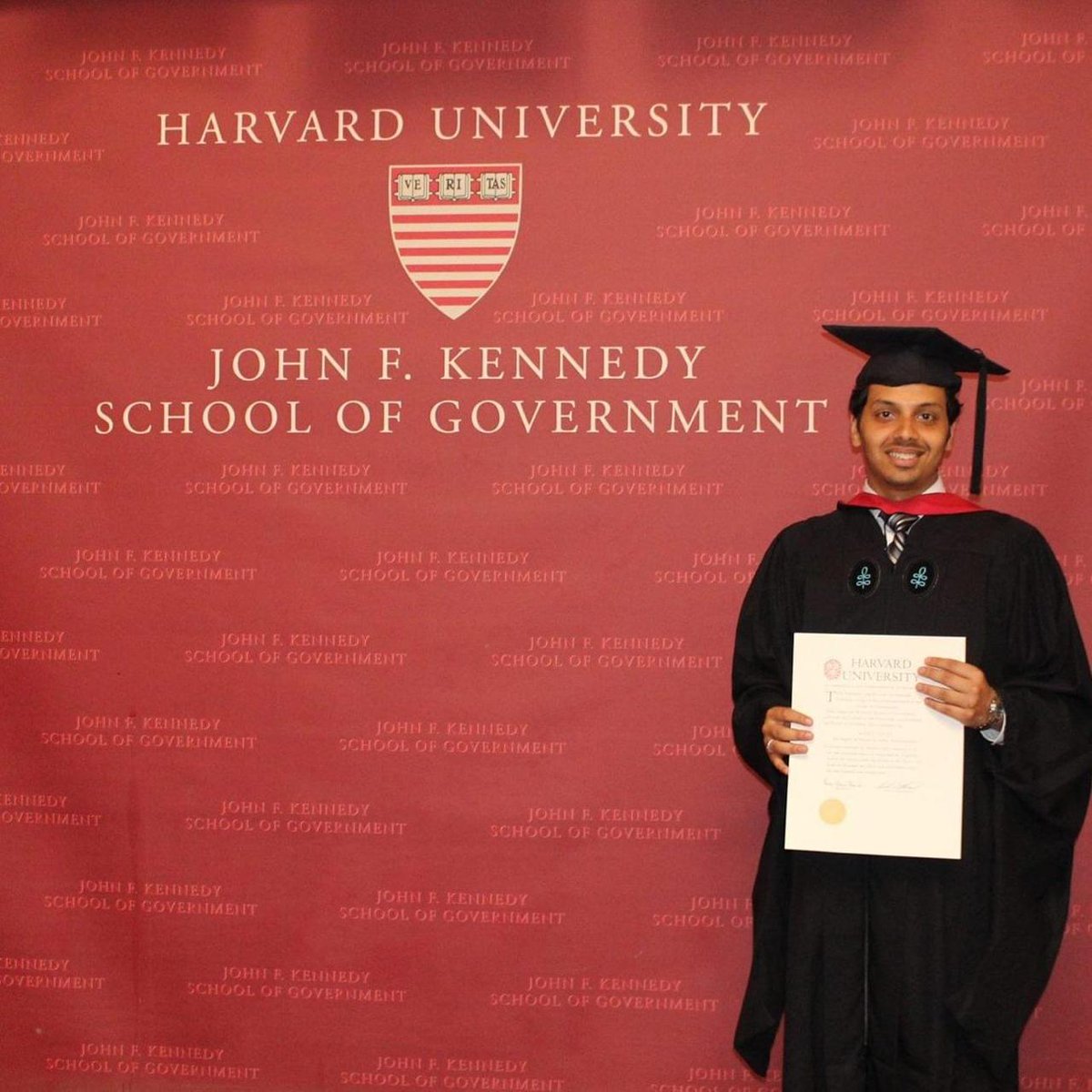
I graduated in Computer Science from IIT Kharagpur, with Economics as a Minor (first one to do that). I walked away from a McKinsey offer to build India’s first solar energy firm, finding my first professional high in lighting up villages in Rajasthan. I subsequently earned dual degrees - a Master in Public Admin (MPA) from Harvard Kennedy School and an MBA from MIT, in an exceptional competitive three-year arrangement that allowed me to pursue both passions.
Since 2015, my journey has been deeply political and deeply entrepreneurial. I served as the youngest adviser to the Chief Ministers of Jharkhand and Manipur, and contributed to various policy initiatives. Today, I have returned to my roots in science and engineering, building QuBeats, a deeptech defense venture.
I have never needed a resume to substitute for work, nor public validation to establish my worth. Criticise my politics, question my ideas, challenge my work. But partisan hostility cannot rewrite facts or erase a journey built on hardwork, risks and execution. I would rather build than broadcast. And I intend to keep building.
Delhi: Chief of Army Staff (COAS) General Dhiraj Seth on Monday highlighted the role played by Indian Army's Mission Olympic Wing in supporting talented sportspersons across the country, asserting that their strong performance in the recent Asian Games is an indication of their potential for the 2028 Los Angeles Olympics.
The Indian Army felicitated its medal winners from the continental meet at the Manekshaw Centre here. Army athletes won a total of 20 medals, including six gold, eight silver and six bronze at the Aichi-Nagoya Games.
@adgpi