Hey le CTFR 👋
Tu penses que Polkadot est mort ? Met ton masque de plongée et passe la tête sous l’eau avec moi !
Polkadot, c’est un iceberg : on voit le sommet, mais dans les profondeurs, une armée de projets construit l’avenir du Web3, à l’abri des regards.
Aujourd’hui je vais te présenter des projets en surface, d’autre qui barbote sur le bord mais aussi des projets qui commencent tout juste à se développer. Alors active le sonar, et partons sonder les profondeurs de l’écosystème !
This isn’t about an opinion here.
You’re publicly using people to push your own agenda, and you’re twisting Cédric’s words to support your point.
This is not an opinion, it’s a choice and I assure you it’s a shitty choice. But go on, you clearly love being at the center of drama and attention.
2026 will be about #Web3 products.
But products only become real once the underlying infrastructure is finished.
In 2025, @Polkadot 2.0 crossed that threshold with three upgrades that work as a system:
→ Agile Coretime
→ Asynchronous Backing
→ Elastic Scaling
What Async Backing actually unlocks:
- parachain blocks backed every ~6s (vs ~12s before)
- ~4× more execution time per block
- up to ~8× more usable blockspace for parachains
The key shift: from waiting to pipelining, meaning :
While one block is being checked, the next is already being built. This is similar to how modern CPUs increase throughput with parallel stages.
Then the other pieces complete the picture:
- Agile Coretime introduces a market for blockspace (reserve capacity predictably, or buy on-demand).
- Elastic Scaling determines how that capacity is allocated, that way a single parachain can use multiple cores and scale throughput as demand rises.
This is why #Polkadot starts to look less like a “single execution lane” and more like a multi-threaded computer built for real applications: DeFi, games, social, IoT ... really anything with spiky or real-time demand.
And it’s not just theory: @kusamanetwork (Polkadot’s canary network) sustained 143,000+ TPS in a Dec 2024 live stress test. And that was using only ~23 out of 100 cores, leaving significant headroom.
If 2025 was about finishing the foundation, 2026 is where the product era gets interesting.
Lets Build !
Célébrez avec nous la fin de l'année 2025 ainsi que l'annonce de la seconde extension de Diablo IV et tentez votre chance pour remporter un code de l'Ultimate Edition de Lord of Hatred ! 🔥
I am planning to apply in OpenGov to become the fifth Polkadot registrar.
Today, I’m releasing an all-in-one identity web application (beta version) for @Polkadot.
With this tool, you can:
- Transfer DOT to the People Chain
- Set, update, or clear your on-chain identity
- Request judgement (if my application is accepted)
- Review your own identities and browse all public identities on Polkadot
Everything in one place. Simple, fast, and intuitive.
-> https://t.co/xraQxqLwJp
Here is how to use it 👇
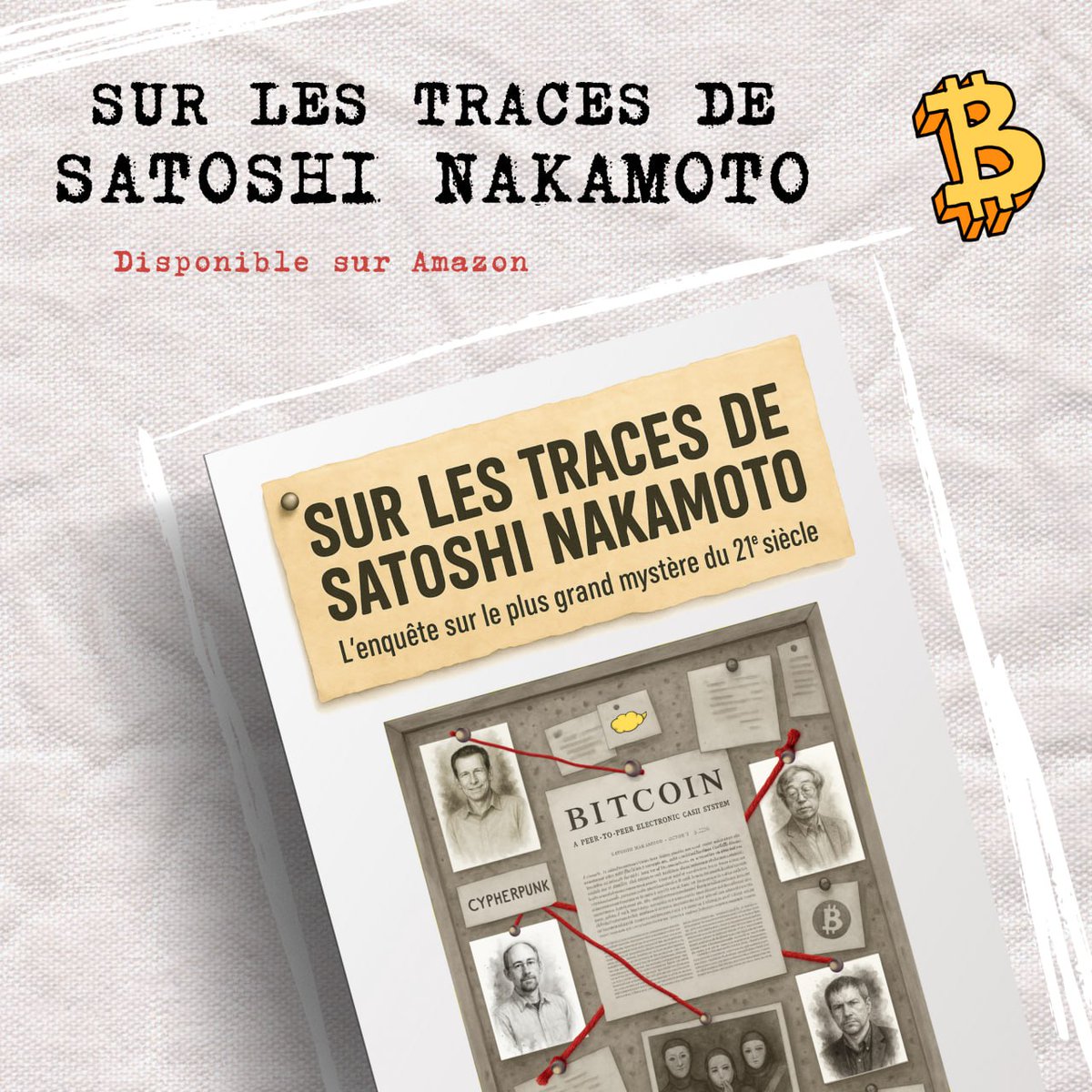
Des milliers d’articles, de vidéos et de threads ont tenté d’expliquer le mystère Satoshi Nakamoto.
Mais j’ai toujours eu l’impression qu’il manquait quelque chose.
On raconte l’histoire du Bitcoin, mais on oublie bien souvent l’homme derrière.
Alors j’ai fait une chose folle : j’ai décidé d’enquêter moi-même.
Pendant des mois, j’ai fouillé les archives les plus poussiéreuses du web.
J’ai remonté chaque piste, chaque mail, chaque forum et j’ai exploré des théories que personne n’ose aborder.
Peu à peu, cette enquête m’a saisie littéralement, alors je l’ai écrite...
Un mélange entre enquête, thriller et documentaire.
Une plongée dans les profondeurs d’Internet, là où les premières traces de Satoshi ont été gravées.
Et aujourd’hui, ce livre sort enfin !
Si vous aimez le Bitcoin, les mystères et les enquêtes qui font douter à chaque page… Alors vous allez adorer.
📘 Sur les traces de Satoshi Nakamoto
Disponible maintenant sur Amazon
https://t.co/DJ556FVtDE
Acheter ce livre, c'est aussi une manière de soutenir mon travail quotidien 🙏
Un livre dédicacé à gagner parmi les RT du post 👀
Hey le CTFR 👋
La première cohorte du Defi Builders Program est là !
Qu'est ce que le DBP ? C'est un programme intensif de 12 semaines imaginé pour aider les meilleures équipes à lancer et développer leurs projets DeFi dans les meilleures conditions.
Parmi plus de 75 candidatures venues du monde entier, 5 équipes ont été sélectionnées.
Elles vont bénéficier, pendant 12 semaines, d’un accompagnement complet mêlant :
⚙️ Aide technique directe des devs Polkadot
💸 Financement et partenariats de liquidité
🧱 Audits de sécurité
🚀 Conseils business et lancement sur le marché
Les 5 équipes seront accompagnées par les équipes de @velocitylabs, @paritytech et la @Web3foundation
Tout se terminera par un Investor Demo Day, où elles présenteront leurs avancées.
THREAD 👇
Notre 1er tutoriel 🥲
Partez à la découverte de @hydration_net, le DEX principal de l'écosystème @Polkadot à l'architecture unique (Omnipool).
Plus qu'un simple DEX, Hydration combine les 3 piliers DeFI:
- Swaps
- Marché Prêt/Emprunt
- Stablecoin collatéralisé
Wallets EVM ✅
Merci de m’avoir lu.
Le DeFi Builders Program, c’est plus qu’un incubateur.
C’est une rampe de lancement pour une nouvelle génération d’apps financières sur le Polkadot Hub !
Et si tu veux suivre de près tout ce qui se prépare dans l’écosystème Polkadot, je t’invite à rejoindre @lenexus_org
C’est LA DAO française qui rassemble les agents, les devs et les passionnés du réseau.
Hey le CTFR 👋
La première cohorte du Defi Builders Program est là !
Qu'est ce que le DBP ? C'est un programme intensif de 12 semaines imaginé pour aider les meilleures équipes à lancer et développer leurs projets DeFi dans les meilleures conditions.
Parmi plus de 75 candidatures venues du monde entier, 5 équipes ont été sélectionnées.
Elles vont bénéficier, pendant 12 semaines, d’un accompagnement complet mêlant :
⚙️ Aide technique directe des devs Polkadot
💸 Financement et partenariats de liquidité
🧱 Audits de sécurité
🚀 Conseils business et lancement sur le marché
Les 5 équipes seront accompagnées par les équipes de @velocitylabs, @paritytech et la @Web3foundation
Tout se terminera par un Investor Demo Day, où elles présenteront leurs avancées.
THREAD 👇
TIDALX
TidalX développe une plateforme de trading perpétuel (Perp DEX) ultra-rapide et pensée pour le grand public.
Leur mission : rendre le trading à effet de levier aussi intuitif qu’un swap.
Interface claire, exécution instantanée, sécurité vérifiée (plus de 250 000 $ d’audits déjà effectués).
Un projet calibré pour accueillir la prochaine vague d’utilisateurs DeFi.
La migration de Polkadot Relay Chain (compte, staking, gouvernance, trésorerie, bounties, etc) vers Polkadot Asset Hub est désormais complète à 100%
🔹 1,63 milliard $DOT migrés
🔹 +1,5 million de comptes transférés
🔹 Toutes les 19 pallets migrés avec succès
🔹 Aucune erreur XCM
Un nouveau jalon de franchi !
Hey le CTFR 👋
Depuis la migration de Kusama vers le Hub, finalisée le 7 octobre 2025, le mouvement est lancé : la Relay Chain laisse place à un système plus fluide, modulaire, et orienté vers la production.
Cette transition marque la fin du long chantier d’infrastructure.
Désormais, le travail se déplace vers les produits, les usages, et les partenariats concrets.
Place à la phase applicative.
Dernières news ⬇️
Je ne comprends pas cette quête de neutralité naïve 😅
Les médias ne sont pas neutres, les politiciens non plus, les publicités ne le sont pas, nous deux non plus. Nous avons tous nos biais, conscients ou non.
Pourquoi attend-on des influenceurs qu'ils soient ce que personne n'est ?
Dès lors que tu sais que c'est une collaboration commerciale, c'est à toi de faire un travail de sens critique, de recherche, de diversification des sources, de formation... en responsabilité.
Si tu ne le fais pas, c'est comme acheter un produit que t'as vu à la télé et venir pleurer ensuite car t'es déçu.
Et à l'ère de l'IA, des réseaux sociaux, du tout-trouvable gratuitement en 2 seconde (forums, Reddit, X, X Spaces, YouTube...), personne n'a d'excuse de ne pas faire ce travail.
Critiquer les influenceurs, c'est chercher un coupable de sa paresse et sa médiocrité.