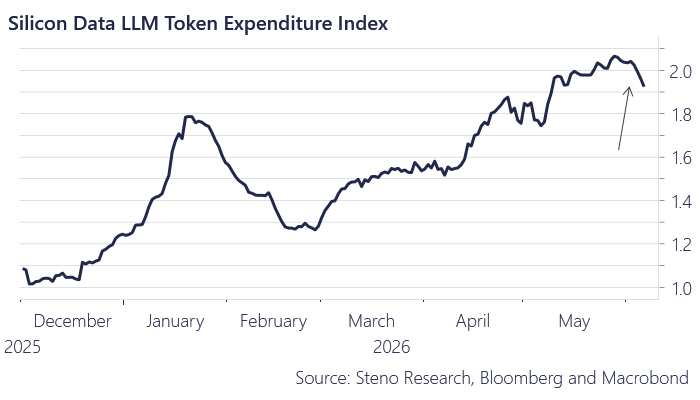
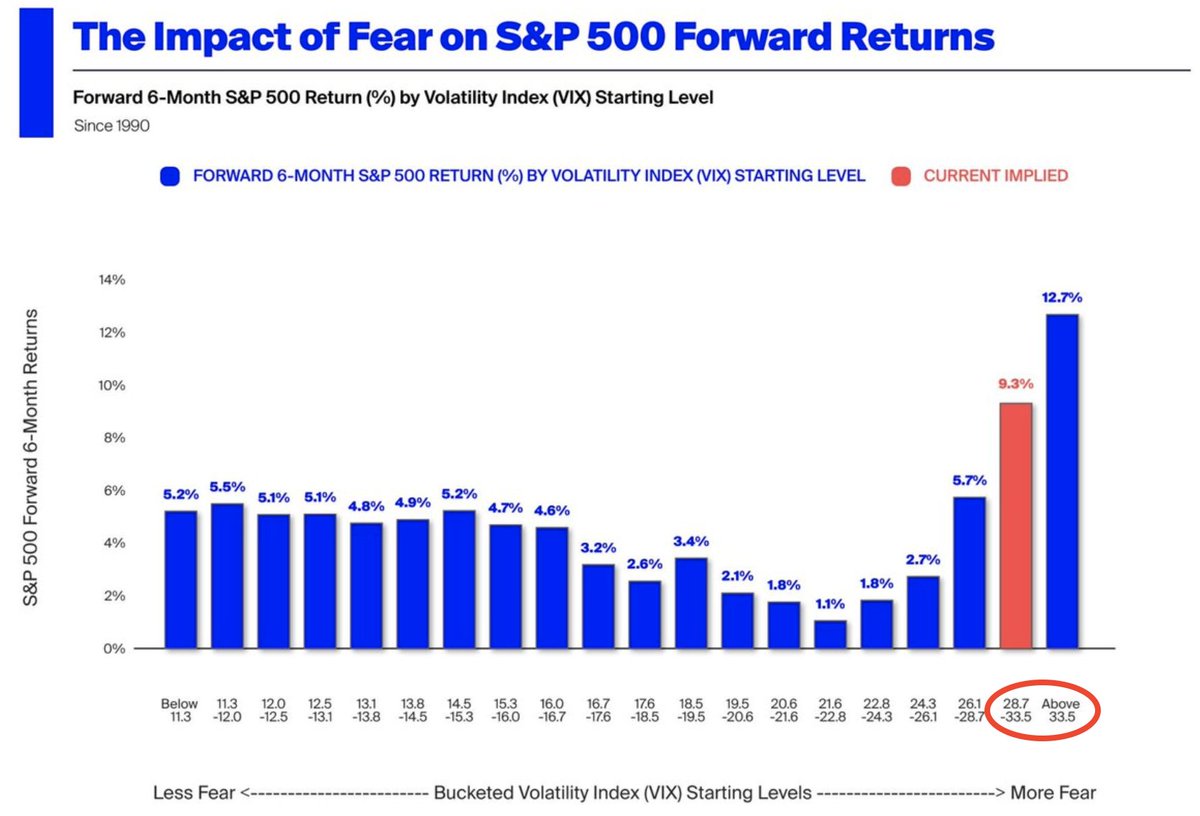
This is the chart that everyone should be watching.
If the Token Pricing rolls over, everything from the memory trade to the broader hard-ware and data-centre trade is over for this cycle imho.
The whole setup depends on this..
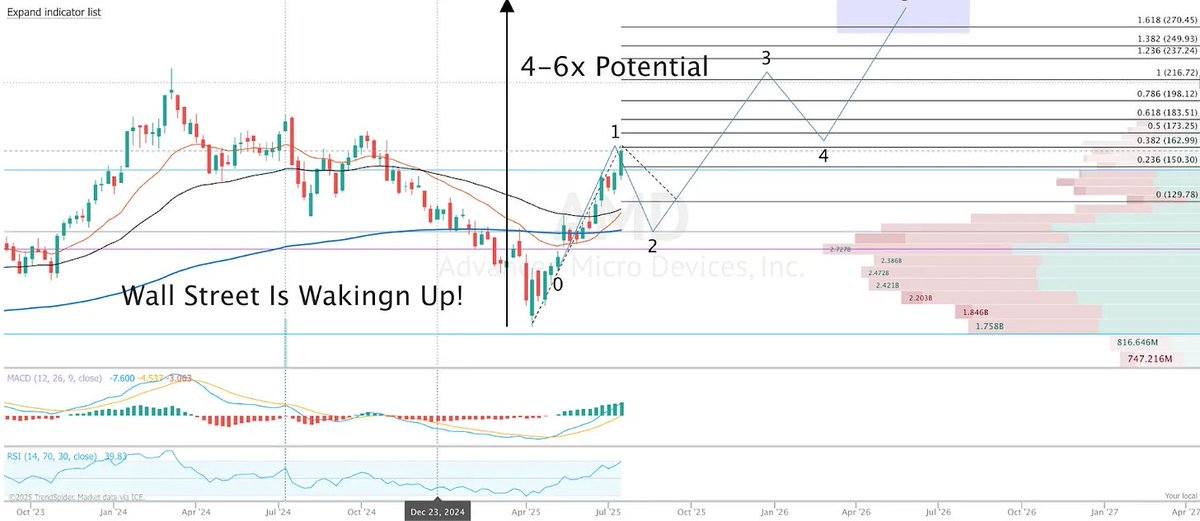
Panel-level packaging will become a bottleneck too
I believe it is actually one of the most undiscovered future bottlenecks for AI
People will start paying attention soon
“95% of @SpaceX shares are held by insiders. Only 5% will be publicly traded. Insiders hold $1.66 trillion in paper wealth they currently can't sell. The IPO changes that.
And they've structured it so insiders can sell BEFORE the standard 180-day lock-up expires. @SpaceX built in early release provisions -- after the first earnings report, insiders can sell up to 20% of their shares.” @LeoCapital_01
"I see so many ghosts. They're already dead. They don't even know it."
A 45-year Wall Street veteran just said that about the current generation of finance professionals to me.
George Robertson started at Salomon Brothers in 1981 when bond yields were 14%. He's survived every blow-up from Long-Term Capital to 2008 to COVID.
And he's convinced a massive reset is coming that will produce RUIN for people who don't see it.
I just interviewed him, and let me walk you through the one thing most people in this space fail to understand:
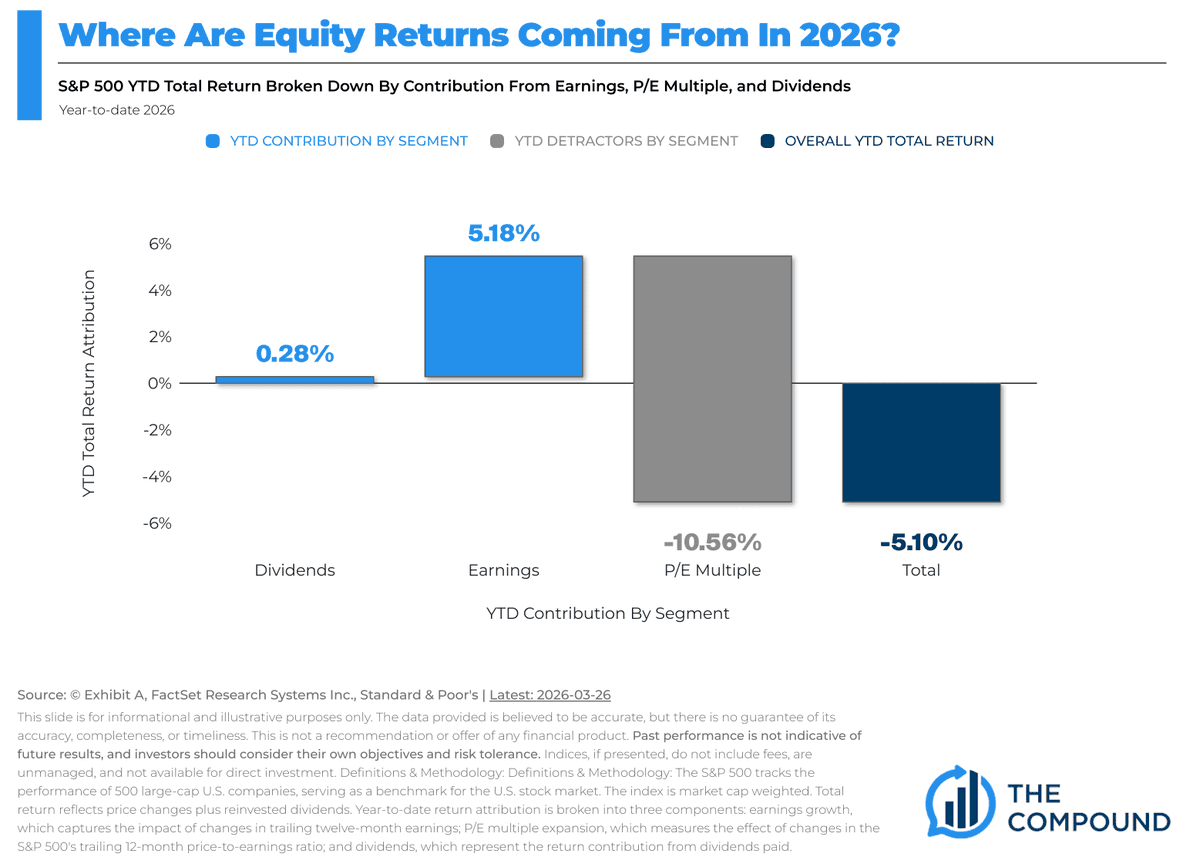
The stock market has effectively become a single instrument.
Every major quant fund is staffed by the same MIT graduates running the same models through the same filters arriving at the same conclusions. There are maybe 4 or 5 ideas being expressed across the entire systematic trading universe at any given time. The diversity that makes markets function as a price discovery mechanism is GONE.
Jane Street just reported $16.1 billion in trading revenue in a SINGLE QUARTER. One firm. 3,500 employees. More trading revenue than JPMorgan or Goldman Sachs. Full year 2025 was $39.6 billion.
Lever that capital 10 to 1 across all the major quant players and you're looking at trillions in gross exposure approaching the monthly GDP of the United States. Until something overwhelms that kind of firepower, these firms effectively dictate market behavior.
The rest of us are passengers.
And that's why markets look so deceptively calm right now. Tight ranges, suppressed volatility, weeks and months where nothing seems to move.
But the calm IS the danger.
All the mispricing that should be correcting incrementally through normal price discovery is instead building up like pressure in a sealed system. And when it finally releases, it won't be a normal correction where you have weeks to adjust your positioning...
It will be years of stored mispricing detonating in DAYS.
We've seen the same thing before:
In the 1990s, Long-Term Capital Management was so dominant in fixed income that it killed price discovery across the entire asset class. Danish mortgages, basis trades, risk arbitrage, nothing functioned properly while LTCM existed. Normal pricing only returned after they literally collapsed.
Now apply that dynamic to the ENTIRE equity market.
And the agencies that were supposed to protect investors from exactly this kind of concentration have been gutted. Sherman Act enforcement is effectively dead. The AI industry operates as an informal trust, 3 or 4 companies integrated vertically and horizontally in ways we haven't seen since Carnegie and Rockefeller.
Trevor Milton rolled a truck down a hill, called it technology, and got pardoned. Crime pays. So who stops the next guy?
Meanwhile capital markets have grown to roughly 4x GDP. When I started in this business they were roughly the SAME size. So when the repricing comes, the damage to the real economy will be multiples of anything we've experienced.
Nobody has a clean answer for what to do about this. Not me. Not Robertson. Not anyone being honest with you.
But after 45 years doing this myself I know this much:
The correction WILL come.
Price discovery WILL return.
The only question is whether you survive it or whether you're one of the ghosts who never saw it coming.
I started by trying to understand markets. Thirty years later I've ended up somewhere closer to life, the universe and everything. The same four rules keep showing up...
Along the way I've written three frameworks that have shaped how a lot of people see the world.
The Everything Code is what I found when I went looking for what actually drives markets. A debt rollover cycle, managed by liquidity, debasing the currency at roughly 8% a year. That debasement is monetary entropy. Capital routes around it, into whatever can compound faster than the entropy degrades it. Technology and crypto sit at the top of that flow because they are the intelligence layer of the economy. Markets are monetary energy routing toward the highest output of intelligence. The only assets that outperform debasement over extended periods are tech and crypto.
The Exponential Age is the realisation that technology has become the substrate. Compute, networks, energy and intelligence are compounding faster than any institution we built was designed to handle, and the gap between the two is the defining tension of our time.
The Economic Singularity is where this is heading. Somewhere in the next decade the curve of intelligence per unit of energy turns fully exponential, and the rules every economy we know was built on stop applying.
For a long time I thought of these as three separate ideas. Looking at them now, they are three views of the same thing at different altitudes. And underneath all three, the same four rules keep showing up.
Efficiency of Intelligence - The universe rewards whatever does more with less. Every system that survives is better at turning energy into information than the system it replaced. There has never been an exception.
Compression - Intelligence is the act of representing a vast reality in a much smaller form without losing what matters. Brains do it. Theories do it. Prices do it. AI does it. They are not analogous. They are the same operation.
Coherence - Complex systems hold together because their parts synchronise faster than the noise around them. Markets, brains, civilisations, ecosystems. When the synchronisation fails, what looks like collapse is desynchronisation made visible.
Selection - Patterns that copy themselves faster than their rivals dominate the medium they live in. Genes did this in biology. Ideas do it in culture. Memecoins do it in markets. Truth is not part of the selection criteria. Replication is. It always has been.
What the four rules produce, when they operate together, is networks.
The same topology shows up everywhere. The cosmic web. The human brain. Mycelium beneath a forest. The internet. Financial markets. Blockchains. Across fourteen orders of magnitude, the universe keeps building the same shape. That shape is what the four laws look like when you can see them.
The Everything Code is what these four rules look like in markets.
The Exponential Age is what they look like running through technology.
The Economic Singularity is where they are taking us.
Three angles, one picture.
Underneath all of it, energy is the constant. Consciousness is the substrate. The four rules are the dynamics through which one becomes the other.
All of this is one corner of what I call The Universal Code. The same four rules apply to everything else and I mean EVERYTHING... they are universal in the true sense of the word.
Two portfolios. Same market. 20 years.
Portfolio A: stocks near their 52-week high.
Portfolio B: stocks near their 52-week low.
Portfolio A: 10% annualized.
Portfolio B: 1.9% annualized.
The "buy cheap" instinct is one of investing's most expensive mistakes.
Strength attracts strength.
Weakness compounds weakness.
The best stocks don't go on sale.
They go on runs.
i guess we all need to thank $INTC for those earnings
have not seen a day like this for semis in a long time
on track for the 18th day of green
what are people thinking? cautious? excited? it was time for the pump?
it’s almost like Intel just unlocked ANOTHER S-curve to the semi bull market which are CPUs
$NVDA, $AMD, $INTC all benefit from that along with plenty of other semi names in memory, packaging, photonics, etc.
if we just unlocked a new vector of growth…
it’s go time
Today is the DAY.
April 17, 2026.
The intermediate top before the most difficult time of the presidential cycle.
THE BAD NEWS
We're entering the mid-term correction phase.
Historically, markets correct an average of 16% during this period.
It's the weakest part of the 4-year presidential cycle.
And it starts NOW.
THE CHART
SPX Seasonal Composite 4-Year Presidential Cycle (99 years of data):
Election Year → Post-Election Year → Mid-Election Year → Pre-Election Year
Red line (current cycle): Peaked April 17, 2026
Black line (historical average): Shows consistent mid-term weakness
The pattern is clear.
Mid-election years are brutal.
THE HISTORICAL PATTERN
Out of the last 20 presidential cycles, we've witnessed 19 sharp mid-term corrections.
Average decline: 16%
Timing: Mid-election year (Year 2 of the cycle)
This is where markets reset.
THE GOOD NEWS
After 19 out of 19 sharp mid-term corrections, we've seen a new bull market.
Duration: 2 years
Phase: Pre-election year + election year (Year 3 and Year 4)
This is the most bullish part of the cycle.
THE SETUP
We're at the top of Year 2.
The correction is coming.
But the 2-year bull market follows.
THE MESSAGE
Buy any dip in the coming months.
Not now. Not at the top.
But when the market corrects 10%, 15%, 20% — that's your entry.
Because history says: Mid-term corrections are buying opportunities for the pre-election rally.
THE PLAYBOOK
1. We're at the intermediate top (April 17, 2026)
2. Expect a 16% correction over the next 6-9 months
3. Layer in during weakness (-10%, -15%, -20%)
4. Hold through the pre-election year rally (Year 3)
5. Ride the election year momentum (Year 4)
THE PATTERN NEVER FAILS
19 out of 19 times, the mid-term correction was followed by a 2-year bull market.
That's 100%.
THE LESSON
Don't panic during the correction.
Don't fight the cycle.
Buy the dip. Hold for 2 years.
That's the presidential cycle playbook.
Today is the DAY.
The top is in.
The correction starts now.
The opportunity is coming.
Gold has overtaken US Treasuries as the largest component of global central bank reserves for the first time since the mid-1990s.
Gold is rapidly replacing the US dollar as the global reserve currency.
The US dollar remains dominant in trade and finance. However, gold has become the preferred central bank reserve asset.
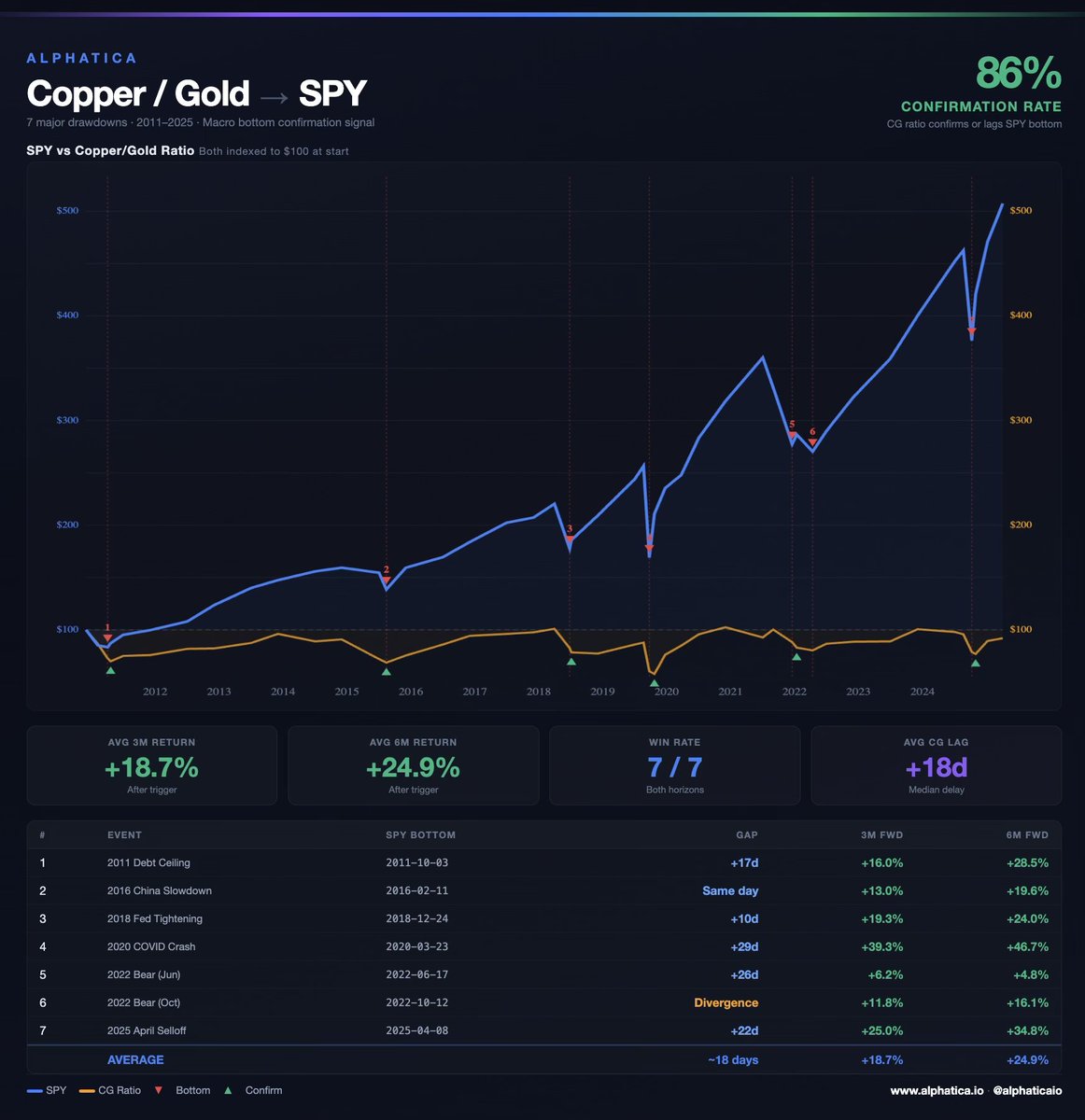
Every major SPY bottom since 2011 has been confirmed by one signal.
Not breadth. Not VIX. Not earnings.
The Copper/Gold ratio.
We backtested 7 drawdowns across 14 years. In 86% of cases, the CG ratio bottomed the same day as SPY or lagged by 10–29 days. It has never once led the equity bottom.
That makes it the cleanest confirmation signal we've found:
→ 2011 Debt Ceiling: CG confirmed +17 days later
→ 2016 China: CG confirmed same day
→ 2018 Fed: CG confirmed +10 days later
→ 2020 COVID: CG confirmed +29 days later
→ 2022 (Jun): CG confirmed +26 days later
→ 2022 (Oct): CG diverged — bottom was imminent anyway
→ 2025 April: CG confirmed +22 days later
Average forward return after confirmation:
+18.7% at 3 months | +24.9% at 6 months | 100% win rate
The April 2025 signal fired on April 30. Three months later, SPY is up 25%.
Copper prices global growth expectations. Gold prices fear. When the ratio stops falling, real money is rotating back to risk. $SPY $QQQ $VIX
You don't find trades by scrolling charts and buying what looks good.
Layer one: a technical indicator showing an extreme. RSI oversold, price at a Bollinger Band, some measurable signal that says "pay attention here."
Layer two: check what the options market is doing. Is vol rising or falling into the move? Vol rising into a selloff means fear is real. Vol falling into a selloff means smart money isn't panicking.
Layer three: check skew. Is put skew still super bid, or is it pivoting? If skew is relaxing while vol compresses at a technical extreme, you have three independent confirmations.
Price alone tells you nothing about positioning. And positioning is what determines whether a level holds or breaks.
Conviction goes up when more of these layers align. You can express views at any conviction level, but you size up when all three confirm. Fewer confirmations = smaller position or no trade at all.
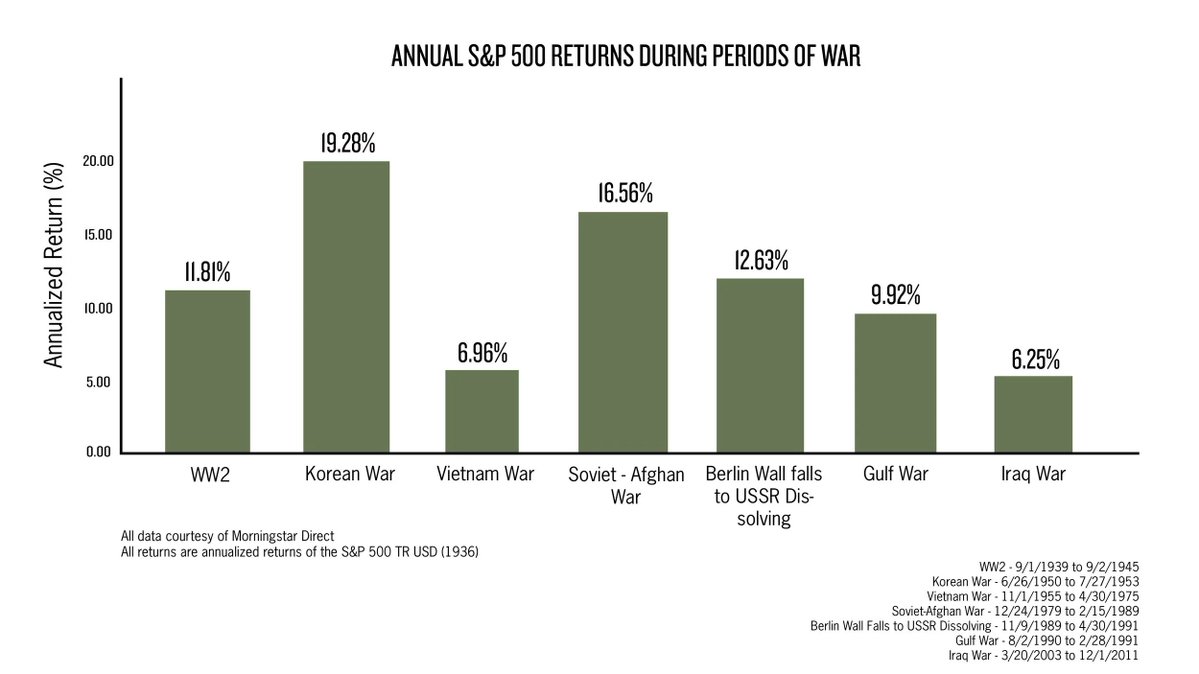
22 years ago today, the US invaded Iraq
And just like the Iran v Israel situation, everyone expected a market crash
What happened after the invasion:
• S&P 500 bottomed on March 11, nine days before the invasion
• By year-end the S&P was up 22%
• Halliburton up 36% that year
• Oil dropped from $37 to $25 as the "war premium" vanished
The S&P did a V-recovery before a single boot hit the ground