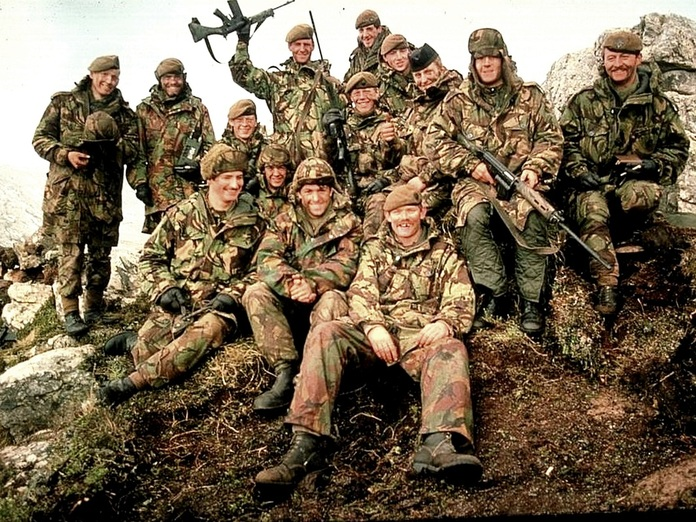
#OnthisDay in1982 #Falklands Battle of Tumbledown.
@scots_guards@war_fallen
Gdsm Derek Denholm, Gdsm Davie Malcolmson, LSgt Clark Mitchell, Gdsm Jim Reynolds, Sgt John Simeon, Gdsm Archie Stirling, Gdsm Ronnie Tanbini, D/Sgt Danny Wight & Cpl John Pashley RE. Remember them.
Tonight 13/14 June, it will be exactly 42 years since the 2nd Battalion Scots Guards fought bravely through the night to take Tumbledown mountain in the final battle of the Falklands war.
WE WILL REMEMBER THEM 🫡🇬🇧
Chuffed to make my @spectator debut on a subject close to me: the history all around us, in our buildings, street names, and statues, and our inability to read it. The past is a foreign country, but at present almost nobody seems to hold a passport.
With thanks to @michaelgove
In a single afternoon on May 22, 1941, the Royal Navy lost two cruisers and a destroyer off the coast of Crete to German dive bombers. The fleet commander was urged to withdraw what was left.
His reply has been quoted ever since, but the situation that produced it is less well known. By the morning of the 22nd, the German airborne invasion of Crete was four days old and on the brink of failure. Of the seven thousand paratroopers Kurt Student had dropped on the first day, roughly half were already dead. The Germans had taken huge losses trying to capture Maleme airfield in the west of the island. Without an airfield, no reinforcements could land. Without reinforcements, the invasion would collapse.
What the Germans needed was a seaborne convoy of mountain troops, heavy weapons, and ammunition. Two such convoys were assembled in Greek ports and put to sea under Italian destroyer escort, hoping to slip across the Aegean to Crete.
The Royal Navy intercepted the first convoy on the night of May 21. In a confused action in the dark, British cruisers and destroyers tore through a fleet of small Greek caïques crammed with German soldiers. Roughly three hundred Germans drowned. The convoy was destroyed.
But by morning the Royal Navy was south of Crete in clear daylight, within range of the Luftwaffe's Fliegerkorps VIII, the most experienced and lethal dive-bomber force in the world. And the British ships were running low on anti-aircraft ammunition because they had spent most of it sinking the convoy.
The Stukas came in waves. The cruiser Gloucester took two direct hits and capsized, taking 722 men with her. The cruiser Fiji was hit by a single bomb that ruptured her hull. She sank slowly, with most of her crew getting off, but 241 men were lost. The destroyer Greyhound was bombed and went down in fifteen minutes. The battleships Warspite and Valiant were both damaged, Warspite badly enough that she had to go to the United States for repairs.
By nightfall on May 22, Admiral Andrew Cunningham, commanding the Mediterranean Fleet from Alexandria, was looking at a casualty list that included two cruisers, a destroyer, two damaged battleships, and roughly fifteen hundred dead British sailors. The army on Crete was asking for naval evacuation. The army on Crete also had thirty two thousand troops on it.
Cunningham's staff, looking at what the Luftwaffe had done in a single afternoon, urged him not to commit the rest of the fleet. He could not protect transports from Stukas in daylight. Anything he sent into the waters north of Crete would be sunk. The navy had taken enough.
Cunningham listened, and then he gave the order that is still quoted at Dartmouth Naval College.
"It takes the Navy three years to build a ship," he said. "It would take three hundred years to build a tradition. The evacuation will continue."
The fleet went back. Between May 28 and June 1, the Royal Navy evacuated 16,500 men from the south coast of Crete under continuous air attack. They lost three more cruisers and six more destroyers doing it. Thousands of British soldiers were left behind and became prisoners. But the navy did not abandon the army.
The German victory at Crete was so expensive that Hitler never authorized another major airborne operation for the rest of the war. The paratroopers had taken the island, but the airborne arm as a strategic weapon was effectively destroyed in the process.
Cunningham's decision was not a calculation about morale. It was a statement about what kind of institution the Royal Navy was, made in the moment when the institution was being tested. He was sixty years old. He had spent forty four years at sea. He understood, in a way that staff officers in London did not, that an institution that abandoned its soldiers in 1941 would still be remembered for it in 2041.
Three hundred years to build a tradition. Eighty five years ago today, the bill came due, and Cunningham paid it.
Deputy Prime Minister of Sweden, Ebba Busch, proposed a burqa ban:
“Islam must adapt to Sweden. It cannot be practiced the same way it is in Muslim countries.
This is why I propose banning the burqa and niqab in all public places across the country.”
🇸🇪
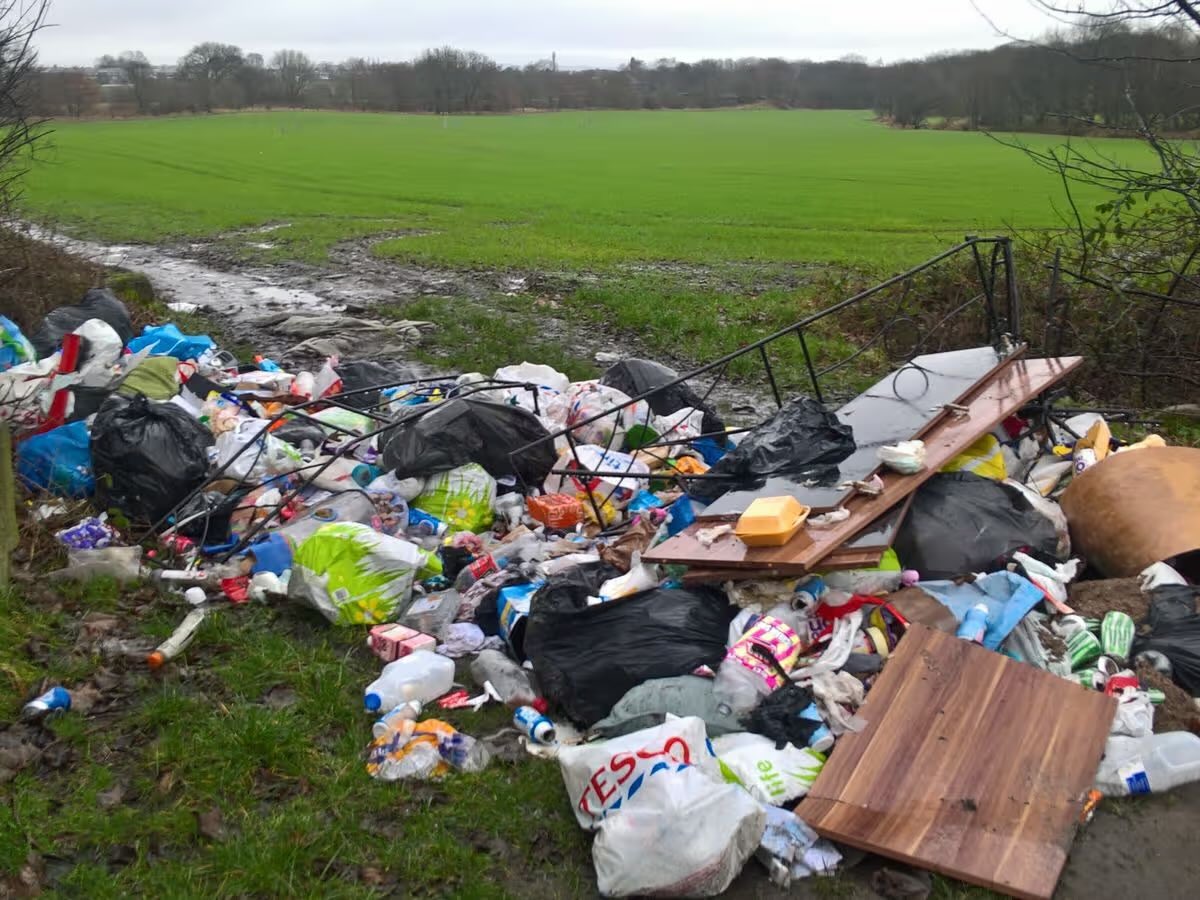
We’re paying people on benefits to do nothing while our parks and streets look like this.
Instead of just handing out cash, give them community jobs cleaning litter, fixing local areas, pay them in vouchers.
It builds dignity, cleans Britain, and saves taxpayer money
Thoughts?