Hi folks- advance reader copies of my book are available for free until May 13th: Mental Foraging and the Evolution of Memory: an updated model of clinical hypnosis. https://t.co/HZQSQ3QE3M
It's rare when someone outside of neuroscience takes the time and effort (6 years!) to synthesize theoretical neuroscience ideas to explain how something works. James @JamesMHarrison_ knows clinical hypnosis works, and wanted to understand why.
https://t.co/IobOnexW9z
@micahgallen Why am I…not surprised…! I’ll see myself out. 😀It makes sense that context (and the scope of the context) carries a lot of weight. The social brain at work…
@AJamesMcCarthy@Marduk21@astro_reid My favorite movie as a kid growing up in Florida was ‘Stowaway to the Moon’, just saying…. I think it’s on YouTube, I’m going to hunt for it.
Clinical hypnosis can be thought of as applied phenomenology, distinct from psychotherapy as a way of unbinding physiology and affect, and returning phenomenological control to an individual. https://t.co/NBSUPje3lm
@RubenLaukkonen Ok, I did it! Your team’s paper is the final paper in the final chapter of Mental Foraging, because it fits the narrative perfectly. Phenomenology has come a long way as we find new ways to measure subjective experience. I think of clinical hypnosis as applied phenomenology.
@RubenLaukkonen Hi Ruben, I’m happy to say this paper will be the last paper in my book, as my final chapter is called ‘the structure of epiphanies’ in honor of Wm James. I’d be grateful if you have a link to the full text. I’m no longer working in Big Medical so my library access is no more.
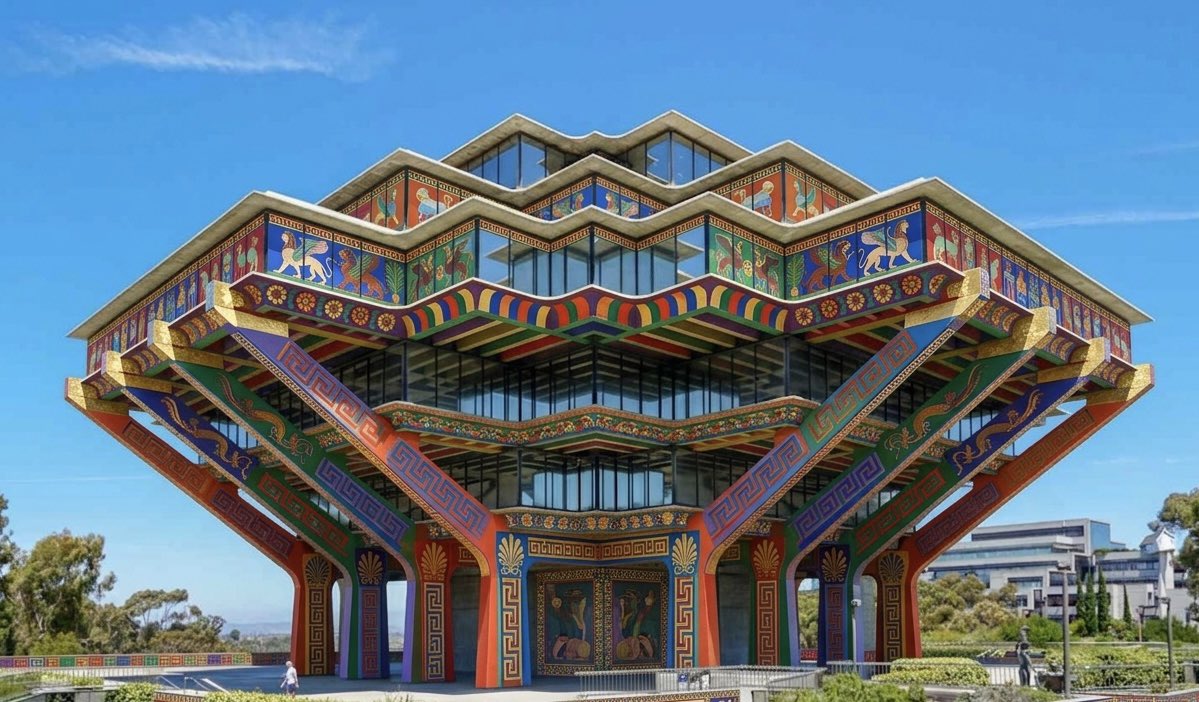
There's a common misconception that Brutalist buildings were unpainted, but thanks to microscopic analysis of the exteriors we can now recreate what they looked like in their prime.