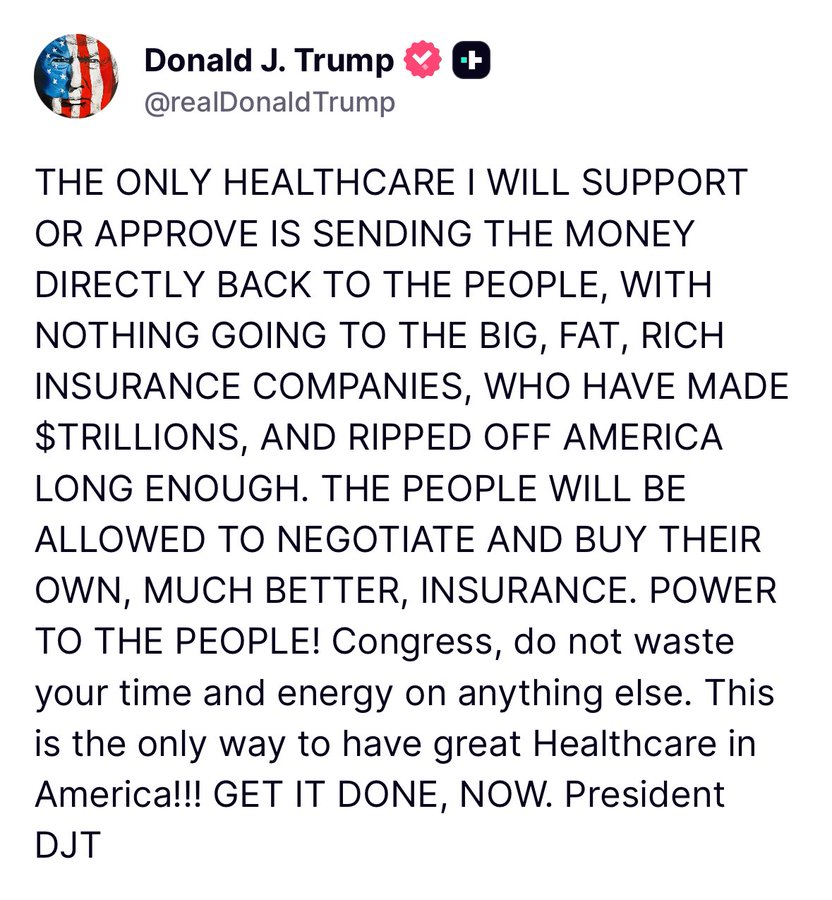
How in the world are CMS and HHS paying a subsidiary of the large insurance company in the country to give them research
Because The Lewin Group is a wholly-owned subsidiary of Optum (itself a subsidiary of UnitedHealth Group), it does not release a standalone public annual report or balance sheet. Its specific revenues and profits are "rolled up" into Optum’s financial reporting, effectively hiding its precise profit margins from the public eye.
However, because they are a major federal contractor, their cash flow can be tracked through public government spending databases.
1. Financial Status & Revenue Estimates
* Corporate Classification: Subsidiary (Private).
* Parent Unit: They operate within Optum Serve, the federal health services division of Optum.
, The Lewin Group is a boutique consulting outfit. Based on their federal contract history, their annual revenue is estimated to be in the $50 million – $100 million range.
2. Major Federal Contracts (The "Hard" Numbers)
The bulk of The Lewin Group's identifiable revenue comes from the Centers for Medicare & Medicaid Services (CMS). Below are recent high-value contract awards that illustrate their financial scale:
| Contract / Project Name | Agency | Total Value (Est.) | Description |
|---|---|---|---|
| AHEAD Model Implementation | CMS | ~$95 Million | A 10-year contract (awarded ~2024) to support the "States Advancing All-Payer Health Equity Approaches and Development" model. This is a massive policy implementation project. |
| GUIDE Model | CMS | ~$75 Million | Implementation and monitoring for the "Guiding an Improved Dementia Experience" (GUIDE) Model. |
| PERM Statistical Contractor | CMS | ~$43 Million | "Payment Error Rate Measurement." Lewin acts as the statistical auditor to estimate improper payment rates in Medicaid and CHIP. |
| MIDS IDIQ | CMS | (Shared Pool) | Lewin is one of several awardees on a $1.6 Billion Indefinite Delivery/Indefinite Quantity (IDIQ) contract for "Measure and Instrument Development and Support." They compete for task orders within this massive pot. |
Summary Analysis
The Lewin Group acts as a high-revenue service provider to the very agency (CMS) that regulates its parent company (UnitedHealth).
* Flow of Funds: Taxpayer money \rightarrow CMS \rightarrow The Lewin Group \rightarrow Optum \rightarrow UnitedHealth Group.
* Financial Leverage: While their direct revenue is small, the value of the data they access (Medicare claims data, error rates, model designs) is incalculable for a parent company that insures 50+ million
Arkansas started using premium alignment (Silver loading) for 2026, and has the largest Silver load (46%) that I've seen. This is good for consumers, because it makes subsidies larger.
@CitizenCohn@larry_levitt@BulwarkOnline This is going to be too late. People are basing their plan selections and cost sharing plans based off of the current subsidies given. No one will be allowed to change their coverage after the January 15 deadline unless there’s a special enrollment period extended to everyone.
The average cost of giving birth without insurance is $18,865.
Cancer patients spend an average of $150,000 on treatment.
Insurance plans cost $4400 - $14000 per year.
Giving people $1,000 per year towards healthcare and saying “good luck!” isn’t a healthcare solution.
GOP Sen. Josh Hawley warning his party: “I just don't know how Republicans would explain that to 24 million Americans whose premiums are gonna double…We need to think about the human cost of this. And Republicans need to offer an alternative solution.”
Yes. We must extend the ACA tax credits so that over 20 million Americans don't see a doubling in their health premiums, on average. But we must do more. We cannot remain the only major country not to guarantee health care for all as a human right.
We must pass Medicare for All.
@DrewAltman@larry_levitt 1 year extension with a promise to come up with a solution and intact plan to fix it afterwards is all they really need to do. Rug pulling Americans before Christmas on their healthcare is not ideal.
Doubling of out-of-pocket premiums for ACA enrollees isn’t hypothetical. We estimate premium payments will rise by an average of 114%, or $1,016, next year if the enhanced tax credits end.
@larry_levitt Consumers are choosing bronze plans because it's what they can afford for next year instead of going with what they actually need, silver CSR plans because of unaffordability.
If extensions are passed, this has to trigger a more extended open enrollment.
@larry_levitt Not only that but because of a lack of decision/vote, consumers are basing their insurance choices on enhanced tax credits going away. Scheduled medical procedures for January could end up costing consumers way more than it needs to. Surgeries will cost 10k instead of 2k.
@SenMullin@SquawkCNBC@JoeSquawk I really wish Republicans would stop spreading lies on this.
1. Subsidies are income-based tax credits that lower people’s prems, not giveaways to insurers
2. We already choose our own ACA plans
3. A healthy 25-year-old doesn’t pay the same — and often pays $0 with credits
@larry_levitt The craziest thing about all this is the immediate issue of extending these credits must be done first at least for a year. Everyone is trying to come up with a quick fix plan when they can actually win twice by putting a longer thought into the big picture this way
Vouchers don’t work when cancer treatment costs $200,000 a year. Trump’s plan only works for people who never get sick. No family can negotiate chemo or surgery bills. Trump’s plan collapses the moment real illness enters the story.