As others (@OwenWntr, MiC etc) have noted, social attitudes cut by financial security is quite a neat prism. Financially insecure social liberals going Green, financially insecure conservatives Reform. Lab & LD left with financially secure liberals. Con higher with secure cons.
I spent years organising local elections. I am glad that I am out of the game, but there are some things I miss:
- Running on the final heady fuel that kept me going, furious animosity towards the Lib Dems
- The frenzied & often touching camaraderie of a polling day operation
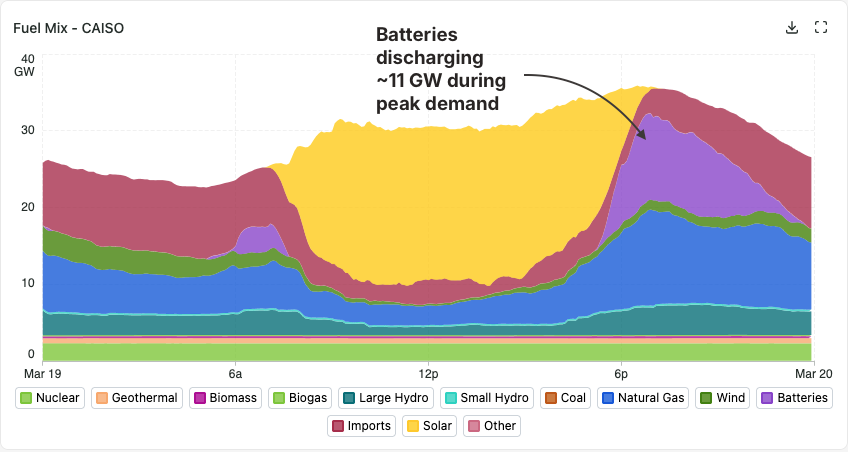
44% of evening peak met by batteries. In California, world’s 4th largest economy. Not some tiny pilot project or a niche experiment, a global industrial powerhouse
If you’re still sitting in boardrooms or parliament banging on about baseload and the intermittency of renewables, you’re not just wrong, you’re a dinosaur
California's 44% isn't an anomaly. It's a preview of the 2027-2030 reality for every major grid overbuilding renewables
The "technical barriers" the fossil fuel lobby loves to cry about are gone. We are shifting solar and wind into the night at a massive, industrial scale. We don't need expensive, inflexible coal or gas to keep the lights on; we need more storage and we need it now - everywhere
https://t.co/geHZpe7hNA
@jamesd_graham Shifting from bills to taxation makes energy costs more accountable. Treasury officials pay a LOT more attention to the impact of policy cost creep than DESNZ. It’s one reason the energy sector has long been split on this - subsidy beneficiaries worry about what HMT will notice.
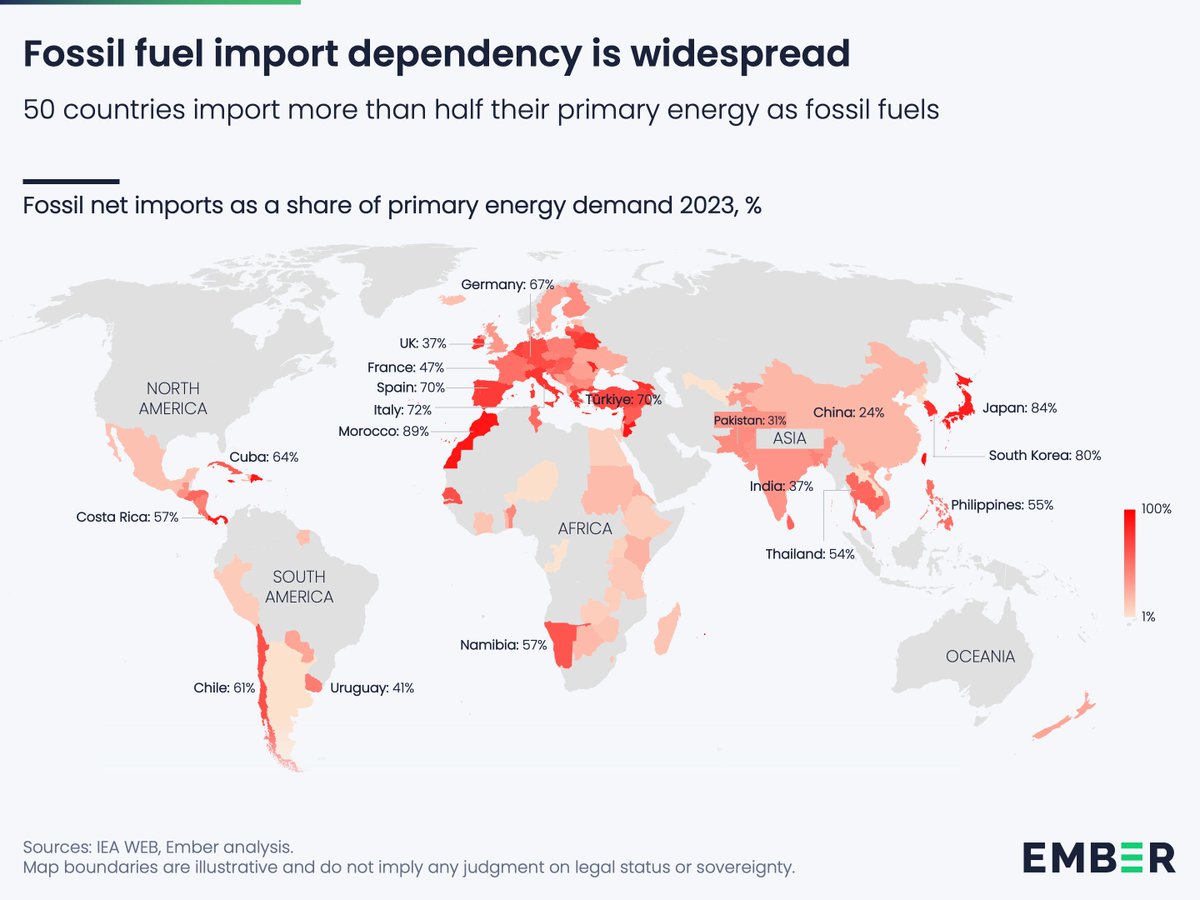
Unlike the 1970s oil crises, there are now better alternatives:
🔌 EVs + renewables + heat pumps could cut fossil fuel imports by 70%
🚗 EVs alone: $600bn/year in savings
Every country has the potential to be energy independent with electrotech.
🔗https://t.co/oarHwiCSv9
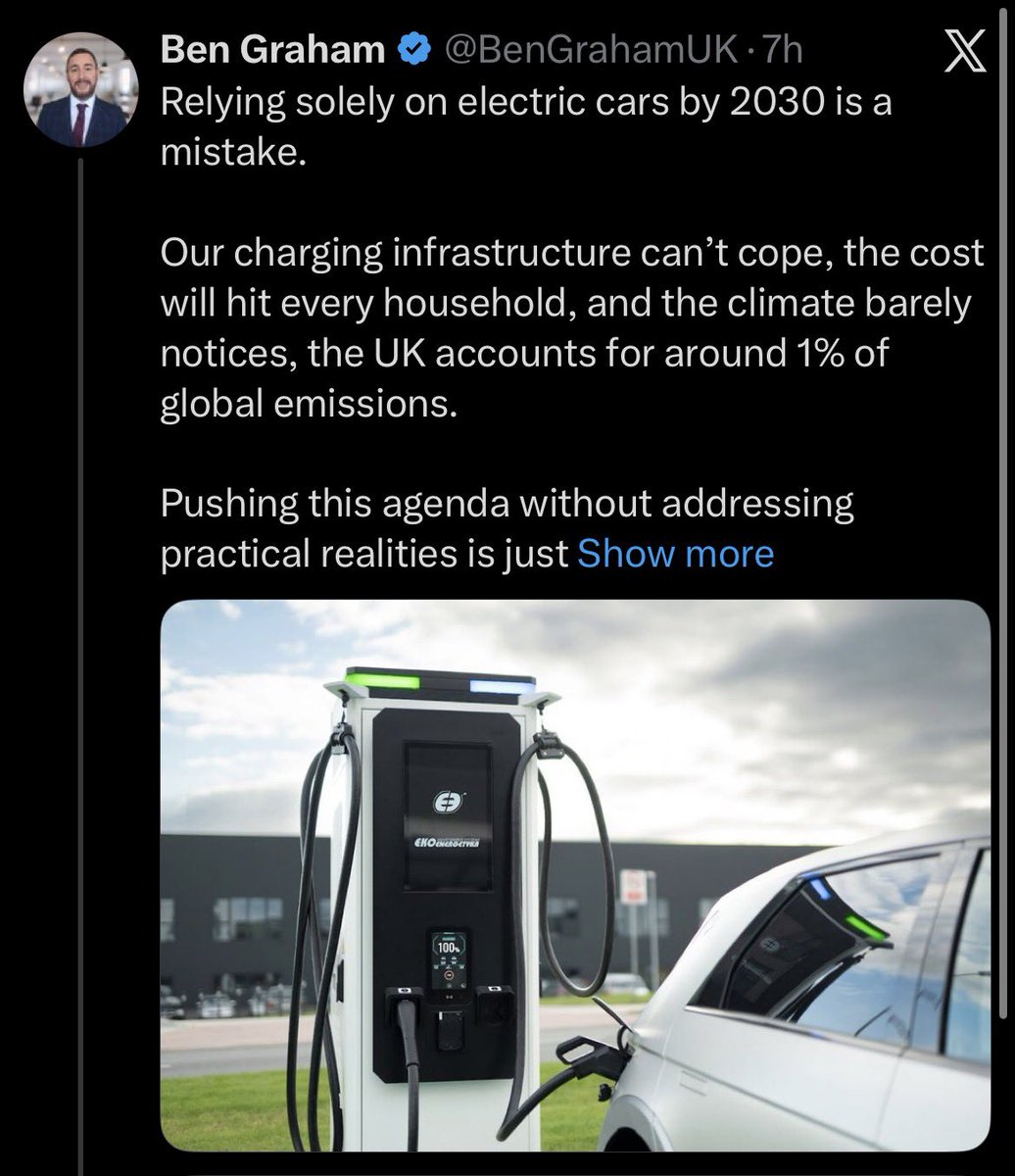
Classic EV misinfo from @BenGrahamUK here
No, we will not be “relying solely on EVs by 2030”
1 - you can buy a new car with an engine in until 2035 i.e. hybrids
2 - you can buy a 2nd hand petrol car for as long as you’d like, absolutely no phase out date in place…
1/2
75% of the world lives in fossil fuel importing countries. Every $10 oil price rise adds $160bn/year to the global import bill.
The single biggest fix: EVs replacing imported oil in transport could save importers $600bn/year.
Read the report:
🔗https://t.co/oarHwiCSv9
https://t.co/BxYxMzy8MQ
EV pay-per-mile tax could cost fleets £260m a year in admin alone. Pay-per-mile is the wrong policy at the wrong time, and this is just the latest in a long line of unforeseen issues, govt should have a serious rethink and properly consult with industry.
It's time for a Plunge Pricing event in the UK! 🇬🇧🌿 Get 15% off today (25/03) at all Osprey Charging Network, @InstaVoltUK, IONITY, @RawCharging, @GeniePointEV & @BeEV_Charging locations when you start a charge using the Octopus Electroverse app or charging card (Electrocard) between 10:00 - 14:00! 🤩🔌 Want to learn more about Plunge Pricing? Head to the Electroverse blog here: https://t.co/du69fIrvtA 🔗
EXC Does your council wrongly block projects, and have to pay millions in council tax when the decisions are overturned?
We reveal what's going wrong.
Investigation by @JoeCookJ and me, interrogating everyone planning council in England
Octopus have long pushed for reforms to give people cheap electricity rather than *paying wind farms to switch off* so I’m pleased to see this but…
trials are hugely ineffective. Permanent changes would mean you could buy an electric car, or a heat pump or batteries to use power when it’s cheap. Or build a data center, or hydrogen electrolysers or kilns or…. (Of course it’s not windy all the time but average elec costs would be much lower)
These would all shift demand far more effectively than we will see in any trial. Indeed, trials could be pretty ineffective without this.
The rejection of zonal was to favour generators but giving them certainty.
Trials do the exact opposite for users. No certainty so consumers of electricity can’t invest.
Which is a shame because an energy transition would see 6x more investment on the consumption side than the generation side, but that side bears far more uncertainty than generators, grids and networks.
So - great to see all this “zonal by the back door” stuff - but why not make it permanent immediately so we can have confidence in investing in electrification, and why not go the whole hog and do zonal properly
Battery storage has proven itself invaluable during California's record-breaking spring heatwave.
During peak demand, grid batteries delivered ~11 GW – a third of demand.
They kept power price spikes lower and short-lived.
Chart for March 19
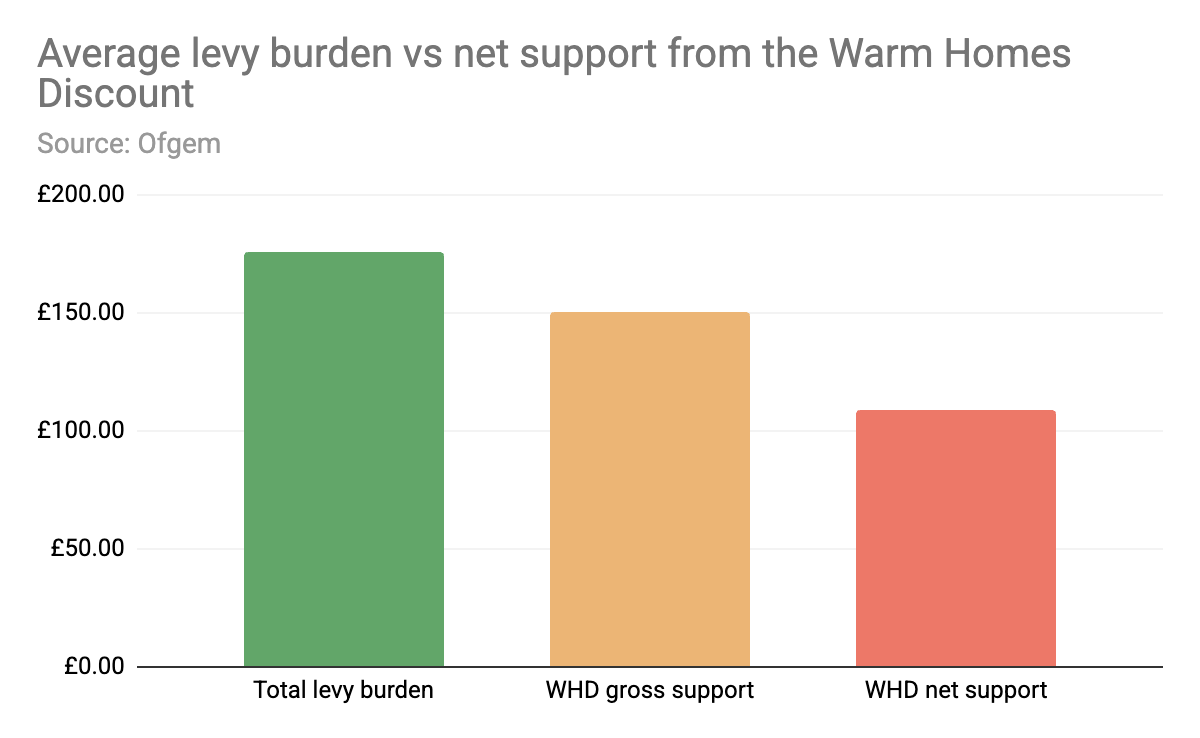
I've written part two of my two blogs on levy reform. Cutting levies is the only option left on the table for the government to really make a lasting, noticeable difference on bills, beyond more subsidies.
https://t.co/DELMaoKwtO
Moronic observation. Nissan, Mitsubishi and Tesla gave birth to modern EVs. Early investment in Japan, UK and US gave an unassailable lead to the West in the EV technology including gigafactories in U.K. Sunderland and US. Yet poor management and poor Government support, often flic-flak regulations caused the west to waste its lead while China stayed the course and invested. Car making is all about economies of scale, and that is what China created and Europe didn’t. After that it’s about technological leadership; EVs are the future and you can’t put that genie back in the lamp!
I've written the first of two posts about levy reform. We need people to use more electricity, if only to get electricity costs down. Therefore, we should stop taxing the f--k out of it.
https://t.co/lAqwlhdTYs
Always worth reading past headline- thanks @edking_I
Key point is that we need to reduce our dependency on gas through efficiency & electrification. Wind, solar, batteries good, nukes ok.
While we do use gas, I'm happy if it comes from the N Sea rather than half way round world
Norway - sells oil & gas, but uses electricity mainly from renewables. 97% of new cars are electric and heat pumps are main source of heating.
They're barely affected by what's happening in Iran.
Their electricity costs going up 17%, ours going up 60% because we are so much more dependent on gas.
On @BBCr4today this morning Stellantis' UK Director said the following:
"EV sales continue to grow...but not at the level demanded by the government's budget legislation. Remember, we're tasked to achieve 28% this year"
This is inaccurate - here's why:
https://t.co/V8VEiLyO30