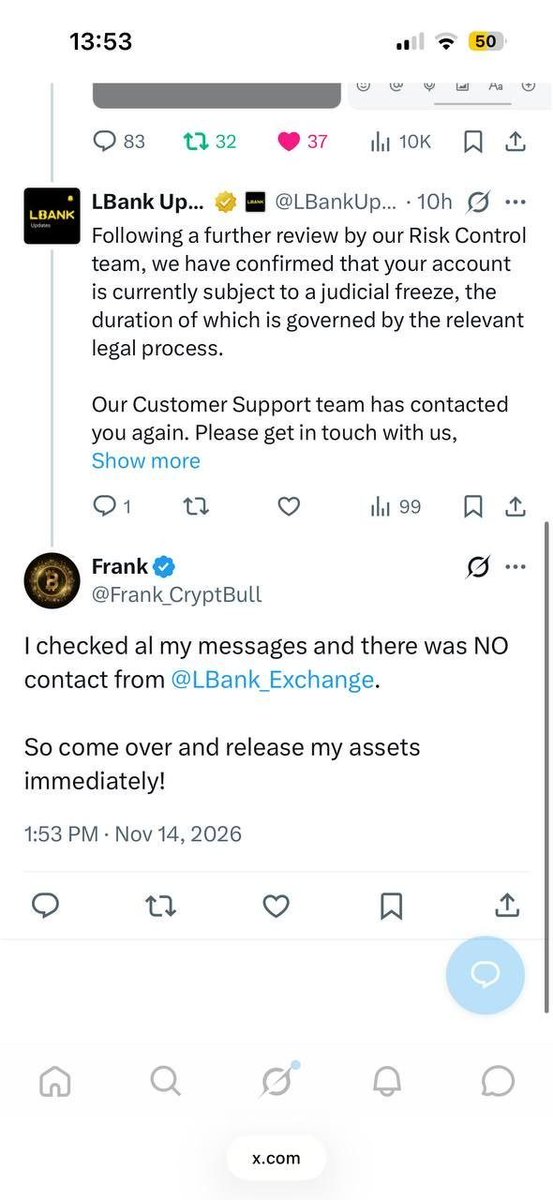
If your account ever gets hit with a judicial freeze, here's the practical playbook — from someone who's watched a bunch of these cases.
Step one: get the specifics. Which authority, which jurisdiction, which case number. The exchange's compliance team can usually tell you at least this much. "Judicial freeze" without details helps no one, including you.
Step two: get a lawyer in the relevant jurisdiction. Seriously. The exchange cannot fight the order for you — it's not a party to your legal dispute. Only counsel can petition the court, negotiate with investigators, or challenge the freeze's scope. People who lawyer up early resolve these cases measurably faster.
Step three: don't do the things that make it worse — opening new accounts to bypass controls, moving related funds frantically, or posting half the story online. All of that can be used against you in the proceedings.
And step four: keep communicating with the platform through official channels. LBank can track the case and relay what's legally shareable. Rage-tweeting feels good; it unlocks nothing.
Hello, @LBank_Exchange
Is this your response after FOUR MONTHS?
You claim there's a judicial freeze and that customer support contacted the user. However, the affected customer says nobody from LBank has contacted him.
The internet always has a way of surprising us 😂🎮
WTF Games brings a unique mix of gaming, entertainment, and viral moments that keep people talking. From unexpected clips to wild stories, there's never a dull moment on their timeline.
It's all about keeping the community entertained, creating memorable moments, and making gaming culture more fun and engaging.
If you enjoy unpredictable content and a different kind of gaming vibe, @PLAYWTFGAMES is definitely worth checking out.
The entertainment never stops! 🔥🎮
@PLAYWTFGAMES The gaming world never runs out of wild moments 😂 WTF Games always brings something unexpected to the timeline. Definitely keeping things entertaining! 🎮🔥
Look, I've been following this LBank situation for a while now, and I think it's time someone laid out what we actually know versus what everyone's assuming. LBank has stated clearly that this is a judicial freeze — meaning a court or investigating authority ordered it, not the exchange. And here's the thing: we've literally just watched the exact same scenario play out on Binance this month. A user had 400k USDT locked by a Colorado federal court order, submitted all his source-of-funds documentation, and Binance still told him "we can't remove this, go talk to the court." Meanwhile Binance's own co-founder Yi He came out on November 14 explaining that judicial freezes typically run about six months, can be renewed, and can only be lifted by the requesting authority. So when LBank says "judicial freeze, we're following the proceedings, we can't unfreeze unilaterally" — that's not a sketchy excuse, that's the industry-standard description of how these cases work on every compliant exchange right now.
So what could actually be behind the freeze? Based on the documented Binance cases, there are a few realistic possibilities. The most common one: the funds, or part of them, touched a flagged transaction chain — maybe tainted USDT from an informal OTC deal, maybe proceeds connected to a hack or fraud investigation somewhere upstream. Yi He literally warned users this week that receiving USDT from suspicious sources can get your account restricted even if you personally did nothing wrong, and law firms that handled Binance's post-Ronin freezes confirmed plenty of innocent traders got caught exactly this way. Another possibility, straight from the Luo v. Vuong case on Binance: a law enforcement officer directing a freeze as part of a criminal investigation — that one locked $9.5 million and it's been running since 2022. It could also be a cross-border judicial assistance request, which adds months of bureaucracy by default. Notice what all these scenarios have in common: none of them require LBank to be the bad actor, and none of them are within LBank's power to resolve.
That said, let's be honest — we can't fully close this case from the outside, and pretending otherwise would be just as dishonest as calling it a scam. There are real questions that only more information can answer: Which authority issued the freeze, and in which jurisdiction? What's the scope — the whole account or specific funds? Is the user a suspect, a witness, or just an unlucky counterparty in a tainted funds chain? What exactly has been communicated between LBank and the account holder behind the scenes? Four months is genuinely a long time to wait with $950k locked, and the user's frustration is completely understandable — I'd be furious too. But frustration isn't evidence, and right now the public record has one side telling a story and the other side constrained by the confidentiality rules that come with active judicial matters. Anyone claiming certainty about who's right here is guessing.
Which brings me to what should happen next. This situation doesn't need more ultimatums and viral threads — it needs the two sides talking. The user should push through the proper channels for the specific details they're entitled to: the freezing authority, the jurisdiction, the case reference, and what counsel in that jurisdiction can do to engage the court directly. LBank, for its part, should keep the communication line warm — share everything that's legally shareable, explain the process and realistic timelines honestly, and make sure the user never feels like they're shouting into a void. Binance's own policy is telling here: they direct frozen users to law enforcement for updates because the exchange is often legally barred from disclosing details. If that's the constraint LBank is under too, then structured, private, documented communication beats public escalation every single time.
And to everyone watching from the sidelines — maybe let's lower the temperature a notch. The "exchange stole $950k" narrative is a great engagement machine, but every comparable case we can actually check, from Binance's Colorado freeze to the four-year Luo litigation, points the same direction: court orders freeze, exchanges comply and preserve, courts eventually decide. Escalation helps nobody — it doesn't speed up a judge, it doesn't unlock funds, and if anything it hardens positions and makes the legal path messier. The fastest route to the truth is the boring one: both sides stay in contact, exchange information through the right channels, and let the judicial process run. When the case facts finally come out, we'll all get to judge this on evidence instead of vibes — and I have a feeling that outcome will look a lot more like the Binance cases than like the FTX comparisons flying around right now.
@LBank_Exchange@Frank_CryptBull
#judicialfreeze