18 days before the World Cup began, someone said that this tournament was going to expose how much of a “shithole” the US really is Well… a few weeks deep into the World Cup, we’ve seen that not only is America not a living hellhole, but this has brought everyone more together
@Reuters@ReutersBiz@SangamoTx
$SGMO Post-Mortem: They had 12 chances. They took none of them.
Twelve offers, two bidders so committed they returned nine and three times, respectively, begging for the deal. The SGMO Board, in its infinite wisdom, rejected all twelve, setting an unrealistic imaginative price.
What was the reward for that unwavering conviction? Astellas carefully selecting the remains at a distressed bankruptcy auction.
Bravo. Truly. It takes a rare & special kind of leadership to take a market-competitive bidding process, twelve separate chances to simply say yes, & steer it directly into bankruptcy court. Most boards couldn’t fail that thoroughly if they tried. This one made it look effortless.
Well done, SGMO Board of Directors, you wasted twelve chances to be heroes & turned them all into creditor claims.
An Aussie discovers Texas Road House for the first time. Epic!
The World Cup needs to be permanently held in the US. It offers the most for the teams and the fans. 🤣🇺🇸🇦🇺
$SGMO – There’s still loads of potential there, Isavec!
Newborn screening is highly effective in identifying boys with $Fabry disease at an early stage, thereby enabling timely treatment. However, girls are often missed by the current enzyme-based method, meaning that they are frequently not diagnosed until years later or only through the screening of family members. The study therefore advocates further development of screening strategies.
https://t.co/WdXs0ymINw
@MartinShkreli Here it is:
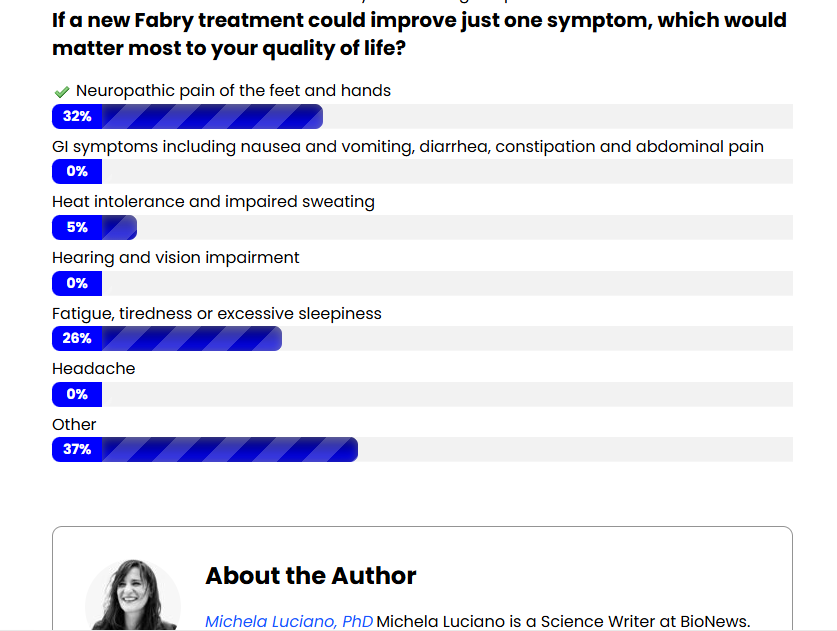
ST-503, the epigenetic Nav1.7 silencer.
Instead of blocking Nav1.7 protein and risking off-target effects, it silences SCN9A itself for unmatched specificity.
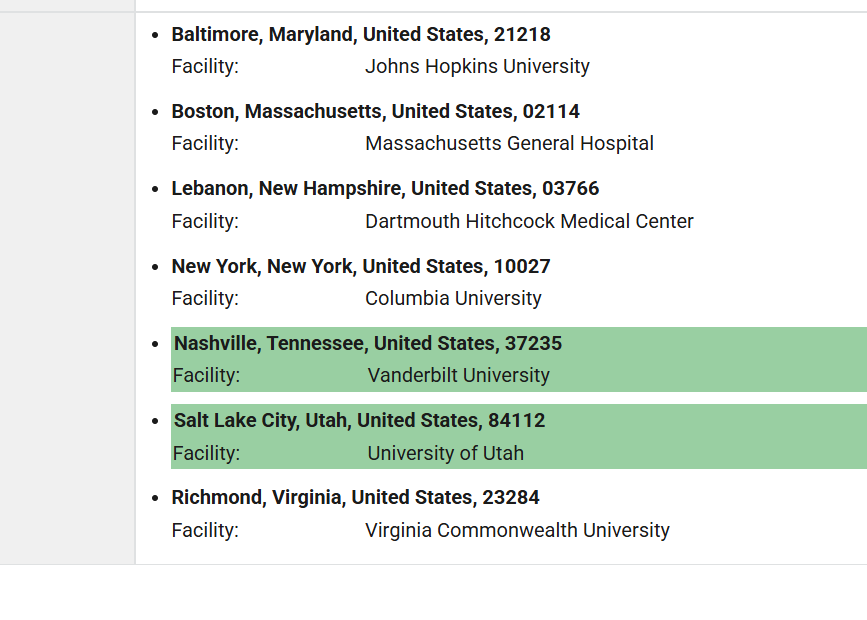
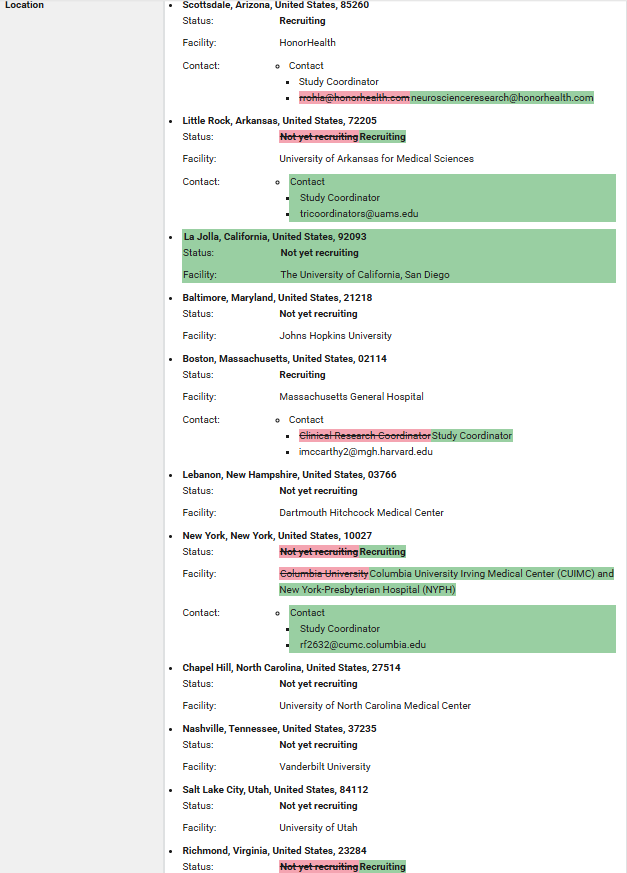
@SangamoTx $SGMO already recruiting for Phase 1/2, RIGHT NOW at 6 locations:
https://t.co/uaBKlGfR7f
#PAIN
$SGMO
The study on measured and estimated glomerular filtration rate (GFR), published today in JAMA, highlights the crucial importance of kidney function as a predictor of long-term health outcomes. The authors demonstrate that both directly measured GFR values and various estimation methods are closely linked to the risk of serious clinical events such as kidney failure, cardiovascular disease and mortality. The study thus confirms the high clinical relevance of changes in GFR and reinforces the importance of this parameter as an endpoint in clinical trials.
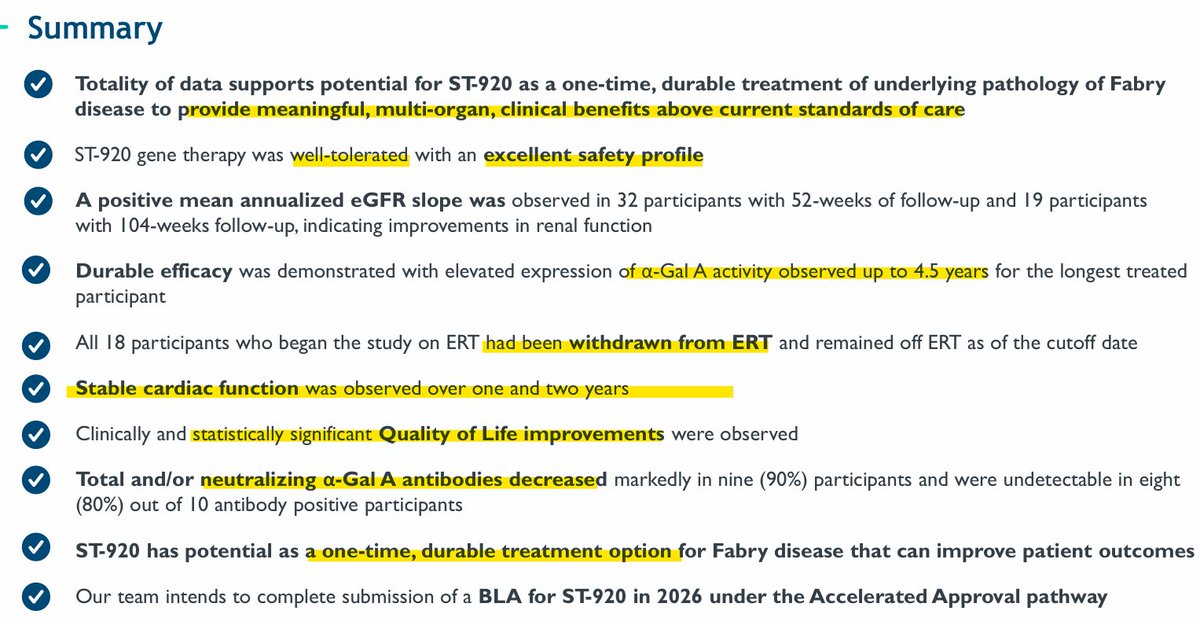
Against this backdrop, the results of Sangamo’s Fabry gene therapy ST-920 are particularly noteworthy. Whilst patients with Fabry disease typically experience a continuous loss of kidney function over the years and thus show a negative eGFR trajectory, the STAAR study observed an average increase in eGFR of approximately 1.97 ml/min/1.73 m² per year following a single treatment with ST-920. This represents not merely a slowing of disease progression, but an actual improvement in renal function on average among the treated patients.
The significance of this result becomes even clearer when one considers that the FDA has now accepted the eGFR slope as a key surrogate endpoint for the accelerated approval of ST-920. The positive trend in eGFR thus stands in direct contrast to the natural course of Fabry nephropathy. Admittedly, the JAMA study does not prove that an improvement of 1.97 ml/min/1.73 m² automatically leads to a precisely quantifiable reduction in mortality or renal failure. However, it confirms that renal function is a clinically highly relevant marker for long-term health outcomes. Against this backdrop, the improvement in eGFR observed with ST-920 takes on particular significance: it suggests that gene therapy not only influences biochemical markers but could also potentially deliver lasting clinical benefits for Fabry patients. This is precisely why the positive eGFR trend is regarded as one of the most important pieces of evidence of efficacy across Sangamo’s entire ST-920 programme.
The author describes how a serious diagnosis—in her case, the rare disease #Fabry — can cause not only physical but also severe emotional distress. After receiving the diagnosis, she experienced feelings of fear, uncertainty, sadness, and confusion about her future. At the same time, the diagnosis also brought relief, because the symptoms she had been experiencing for years finally had a name.
https://t.co/ba6DnuDbvy
For many people with Fabry disease, a successful one-time gene therapy could potentially be life-changing. $SGMO ’s Isavec could therefore be a game-changer for many patients.
Sangamo is a $3.5+ billion pipeline trading at a $76M market cap.
The ownership structure, payer infrastructure, analyst coverage, & IB engagement all point to a deal.
The question is not if but when, and whether it is a Fabry partnership at $2 or a full company acquisition at $4-5.
Either outcome represents 15-35x upside from current levels. The June 9 hearings panel is the next catalyst.
Not investment advice. Do your own due diligence.
There have been some published advantages to Zinc Finger ( $SGMO ) vs. CRSPR. Namely:
1. ZF are not bacterial based like CRSPR. Helps with potential immune responses.
2. ZF tech supposedly provides for a much more granular mapping within the genome.
3. At present time, it seems that double stranded breaks (DSB) are out of favor (with both ZF and CRSPR). But, when DSB used, CRSPR were supposedly containing random off target insertions/updates.
4. ZF technology allows for up regulation and down regulation without DSB's (CAR'S, etc).
5. CRSPR payloads are supposedly greater in size then ZF payloads. Important when wanting to do multi edits and/or shuttling across BBB.
6. CRSPR IP seems to be kind of a mess whereas ZF IP is relatively locked up albeit to a company currently in financial distress.
7. CRSPR is more of an 'open source' tech (advantage on ongoing adaption and use).
There are other pro/cons I'm sure I have not listed. Im certainly no expert, but the above can certainly be confirmed by some quick prompts thru AI engine(s) of choice...
I personslly don't think we live in a mutually exclusive world, but I think eventually the best tool in a given situation will gravitate to the one being used...
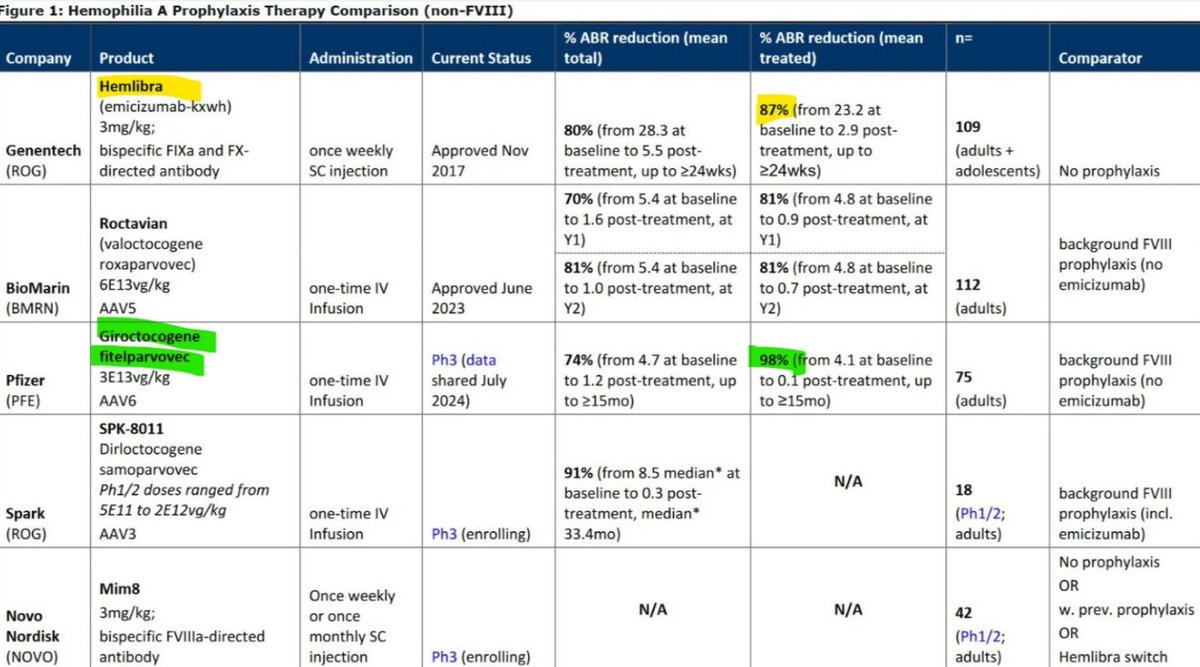
Promising news for hemophilia A patients: Many patients in $SGMO's giroctocogene fitelparvovec trials maintain strong benefits (fewer bleeds, lower treatment burden) through ~3-4 years of follow-up—a real advance vs lifelong prophylaxis. Long-term (5-10+ yrs) data is still maturing, with individual results varying. Big upside: One-time gene therapy could yield major lifetime cost savings vs $300K–$800K+/yr prophylaxis (often >$20M lifetime). Screening + monitoring key. $PFE $RHHBY #Hemophilia #GeneTherapy
https://t.co/VfFQBdoLeq
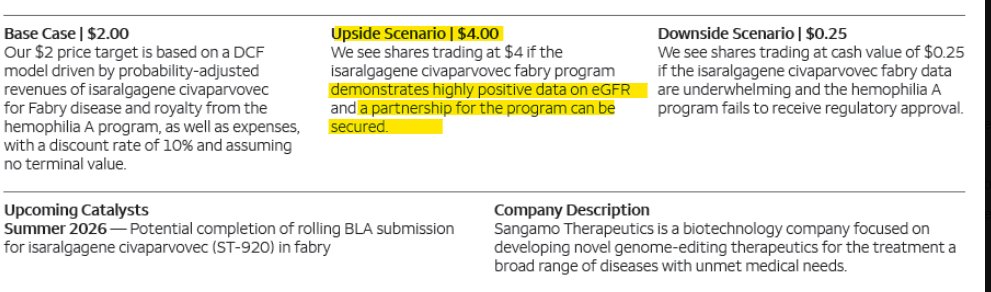
Wells Fargo has highlighted the two key conditions for a $SGMO $4 price target:
“highly positive data on eGFR”
The study data must show very positive results regarding kidney function (eGFR).
“a partnership for the program can be secured”
A partner or deal for the program must be secured.
That should be doable!
Improvements in the SF-36 “bodily pain” domain following $SGMO ST-920 were reported in the STAAR study data. The study described clinically relevant improvements in health-related quality of life, including pain-related domains.
$SGMO ’s clinical trial (NCT06980948) is a randomized, controlled Phase 1/2 intervention study investigating the safety, tolerability and preliminary efficacy of the gene therapy ST-503. A total of approximately 27 patients with treatment-resistant neuropathic pain resulting from small fiber neuropathy are expected to participate.
The study is designed as a parallel-group trial and uses a sham control, meaning that some participants receive a placebo treatment. To minimize bias, it is quadruple-blinded, meaning that neither the participants nor the medical staff nor the analysts know who is receiving which treatment.
Also noteworthy is the study’s progress: While an earlier version listed only five study centers, the study network now comprises eleven centers, five of which are already actively recruiting. This suggests that the study is making organizational progress and gaining momentum. Overall, this is an early-stage clinical trial with a strictly controlled design, primarily intended to lay the groundwork for further clinical developments.
https://t.co/dKR5sxGI60