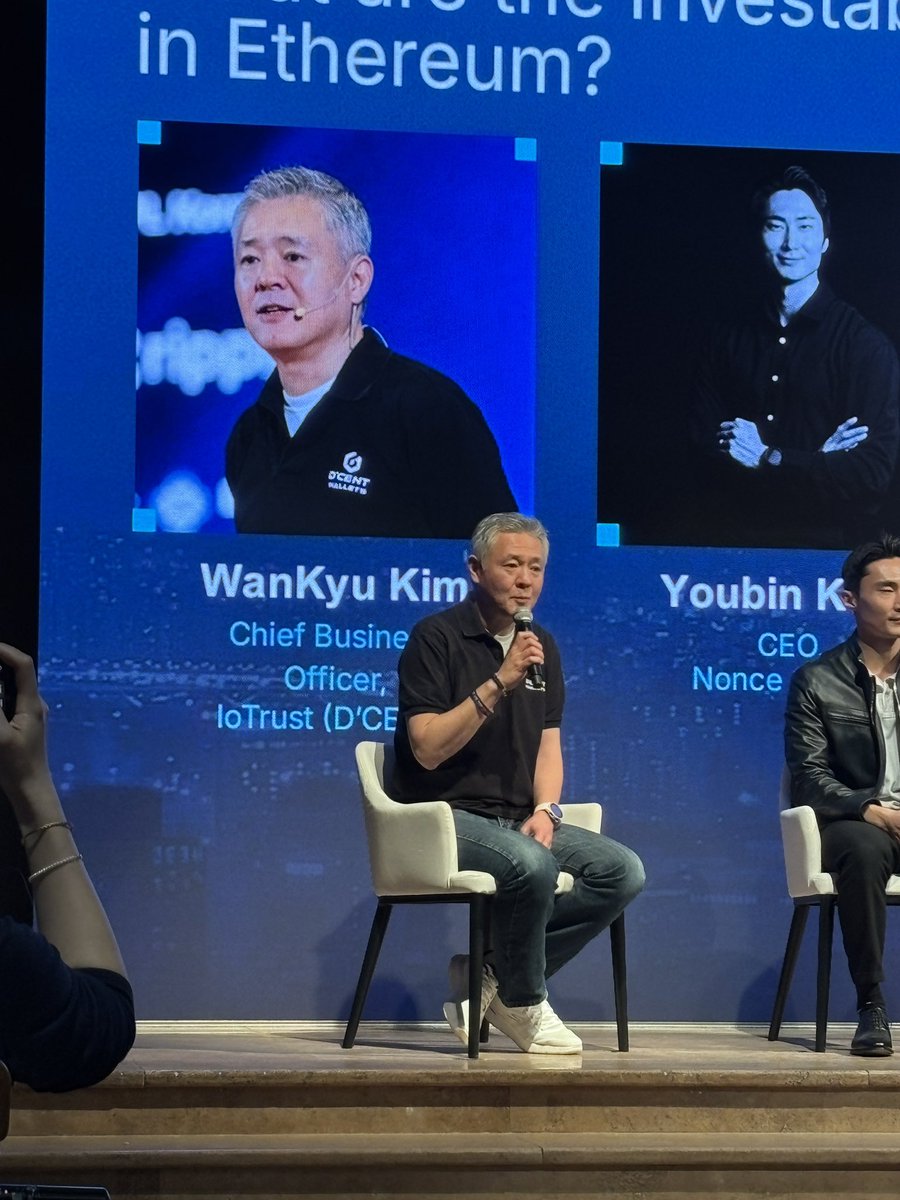
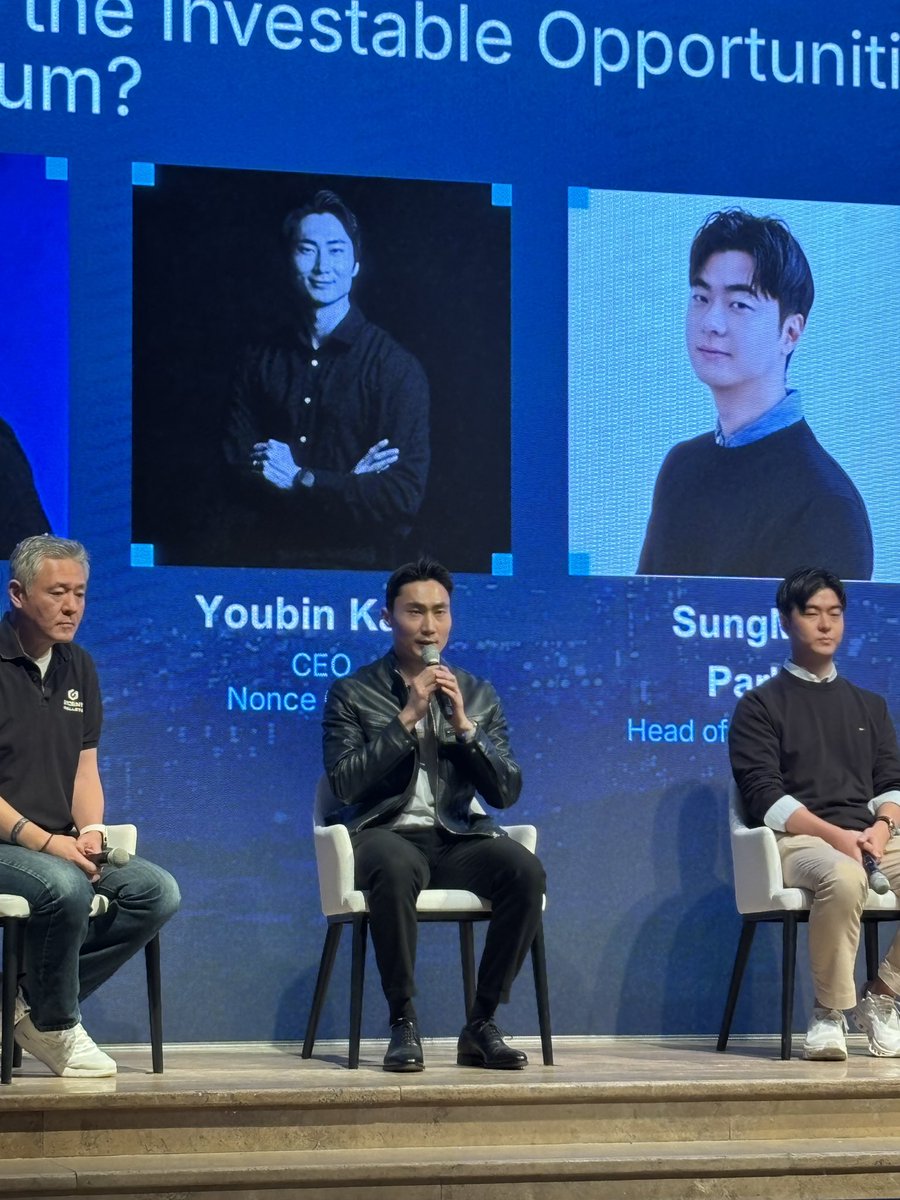
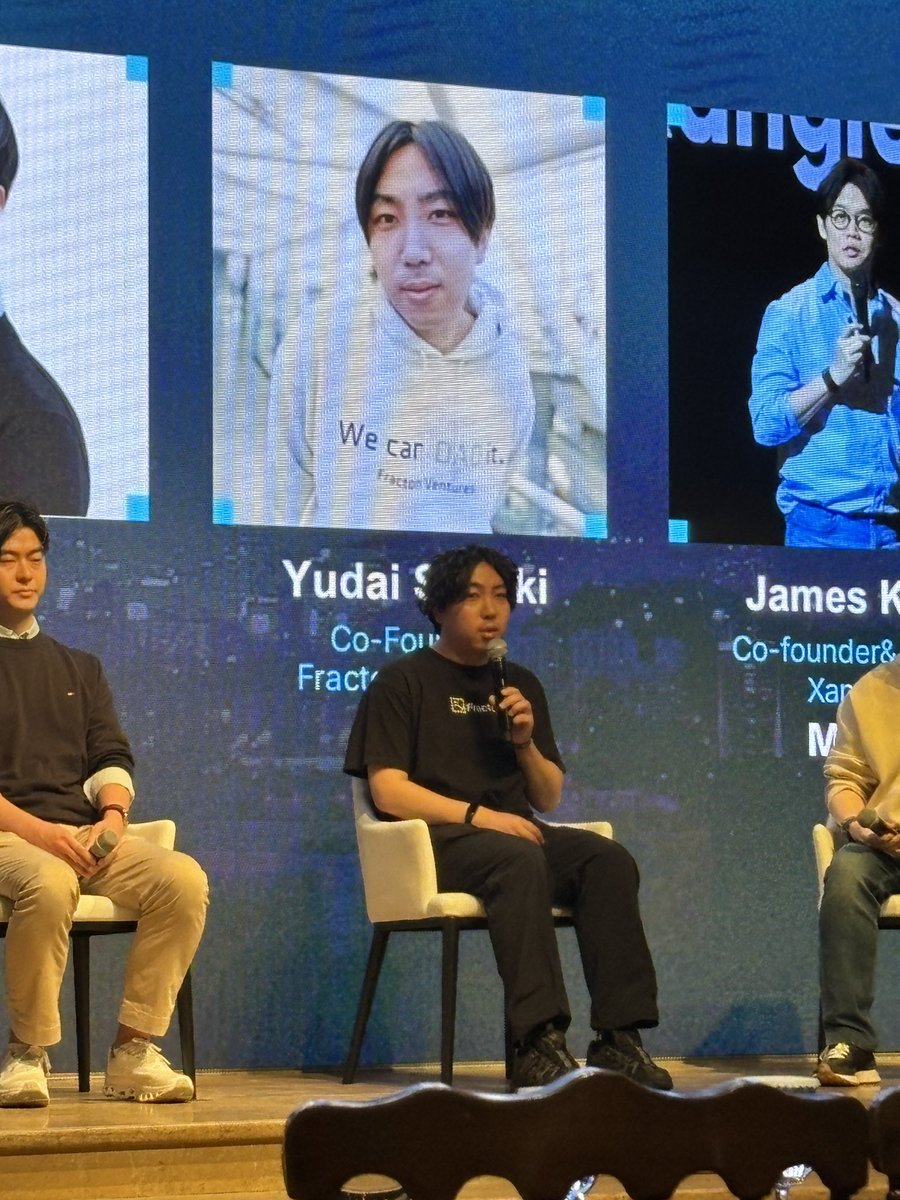
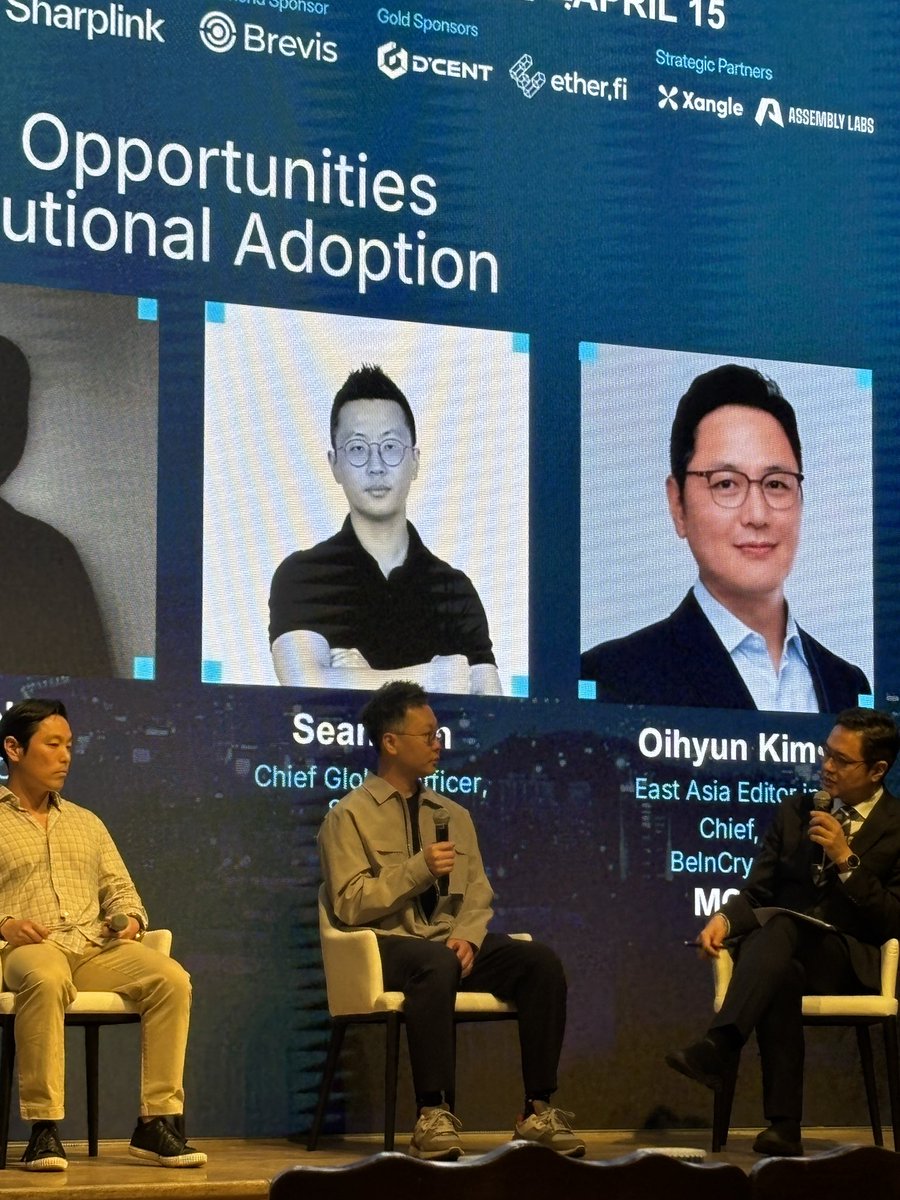
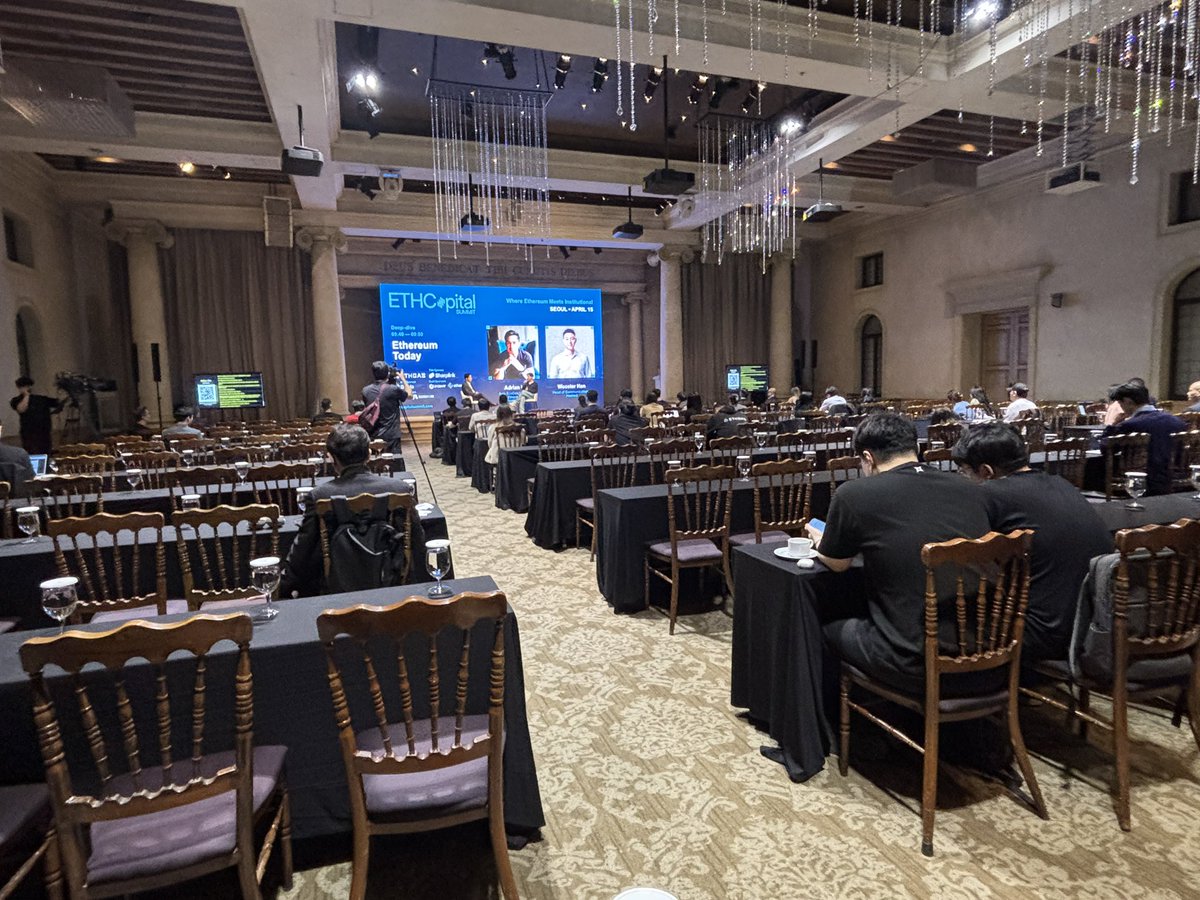
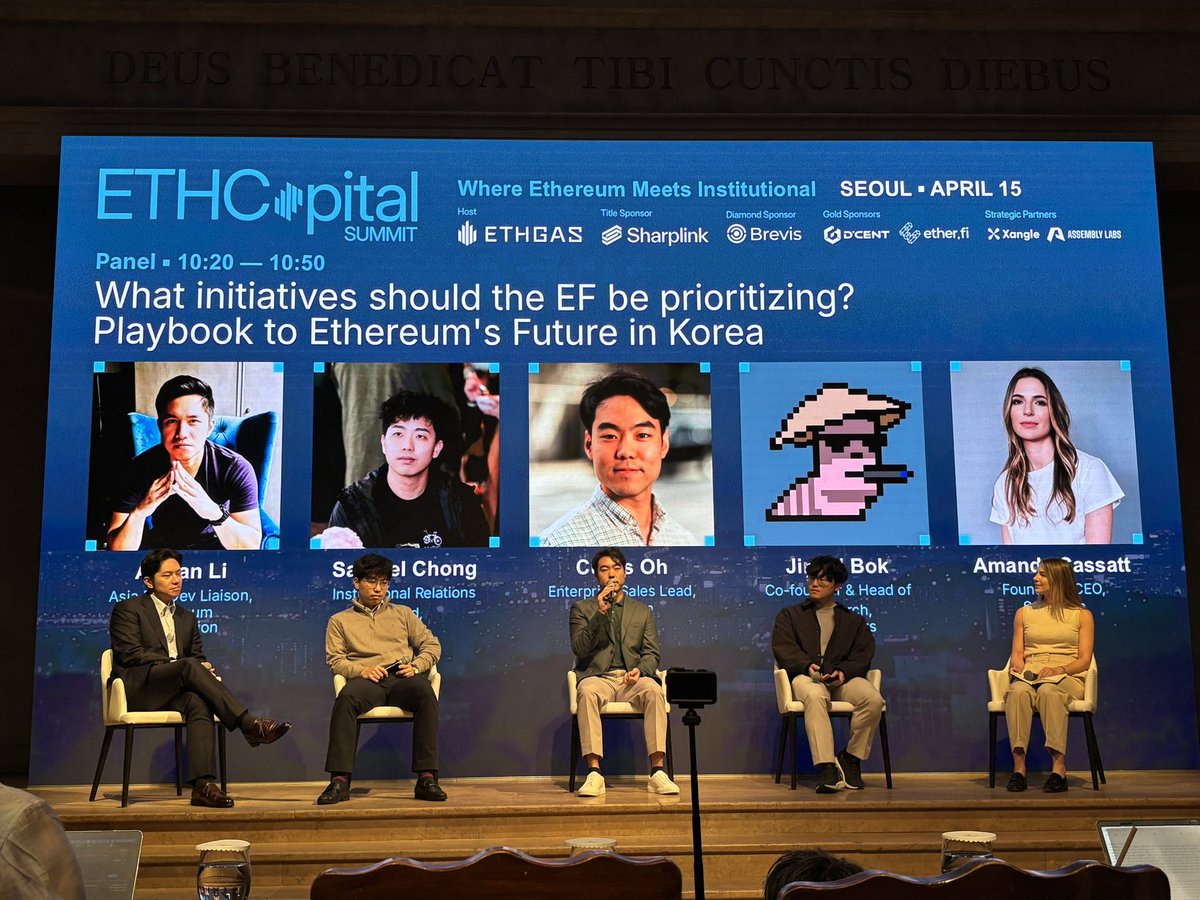
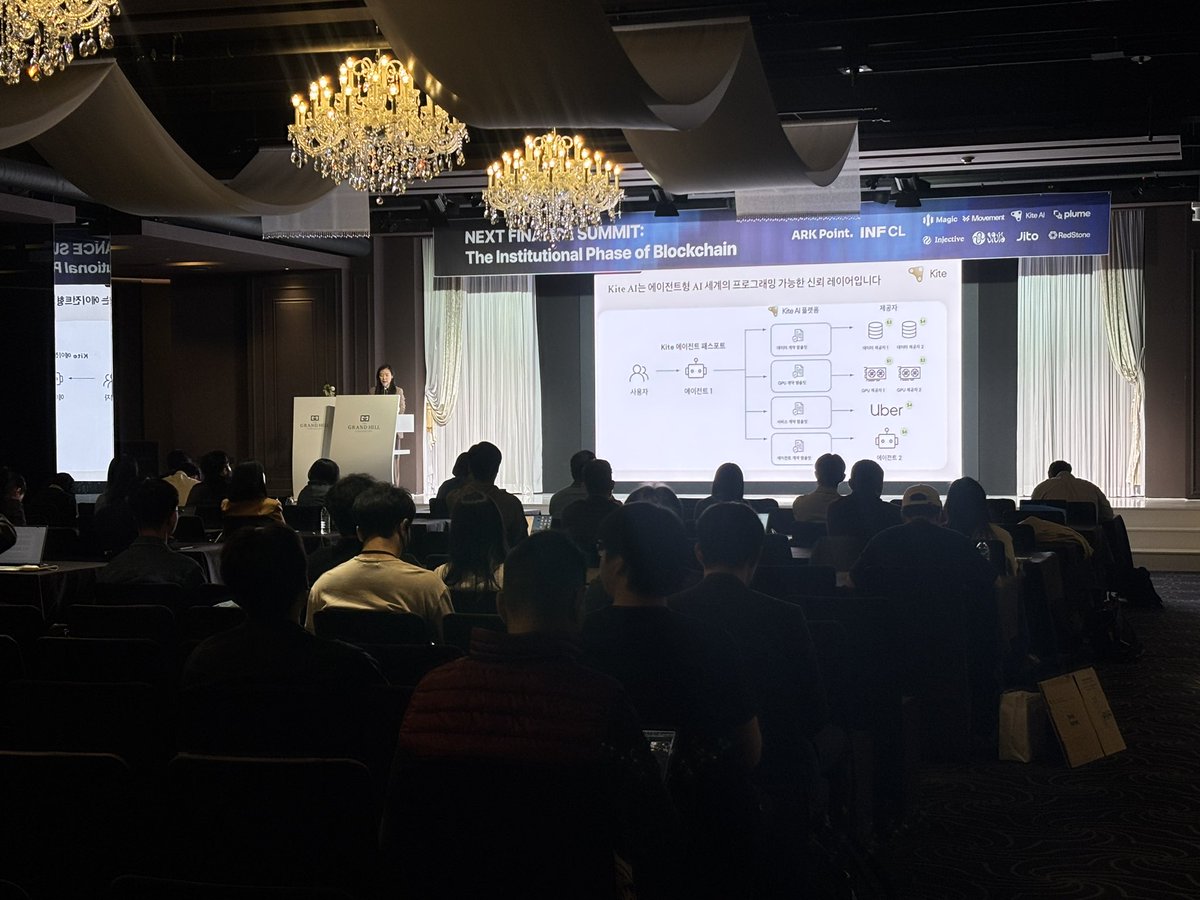
Panel – What are the investable opportunities in ETH? @ETHCapitalHQ
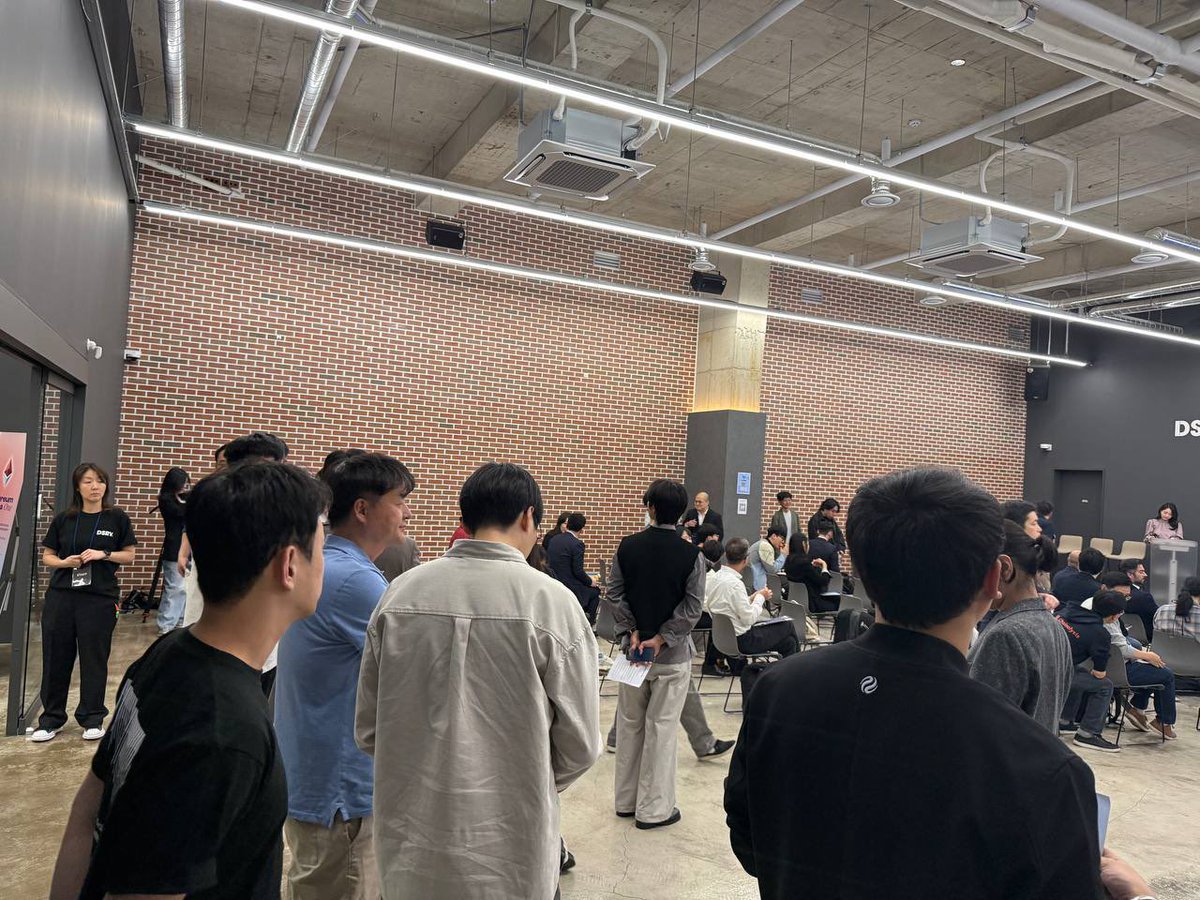
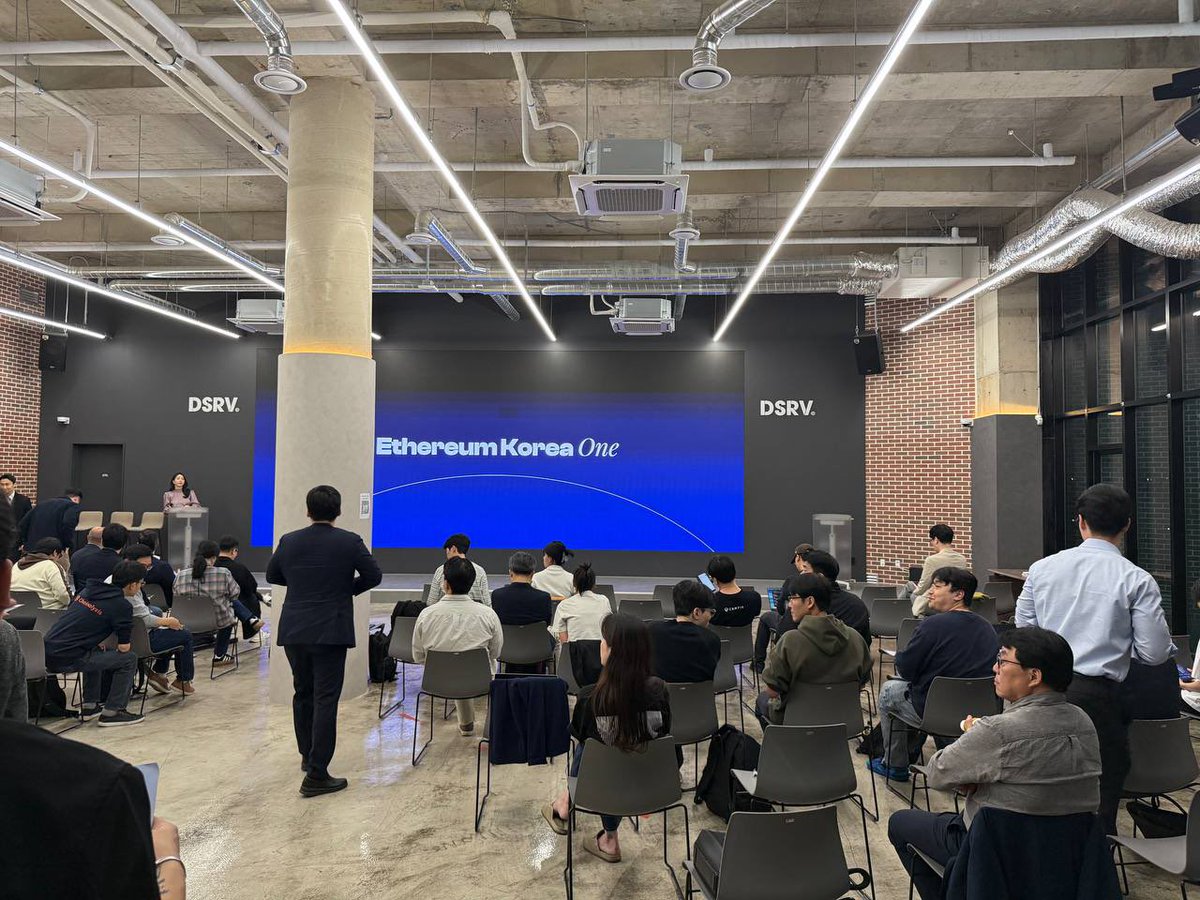
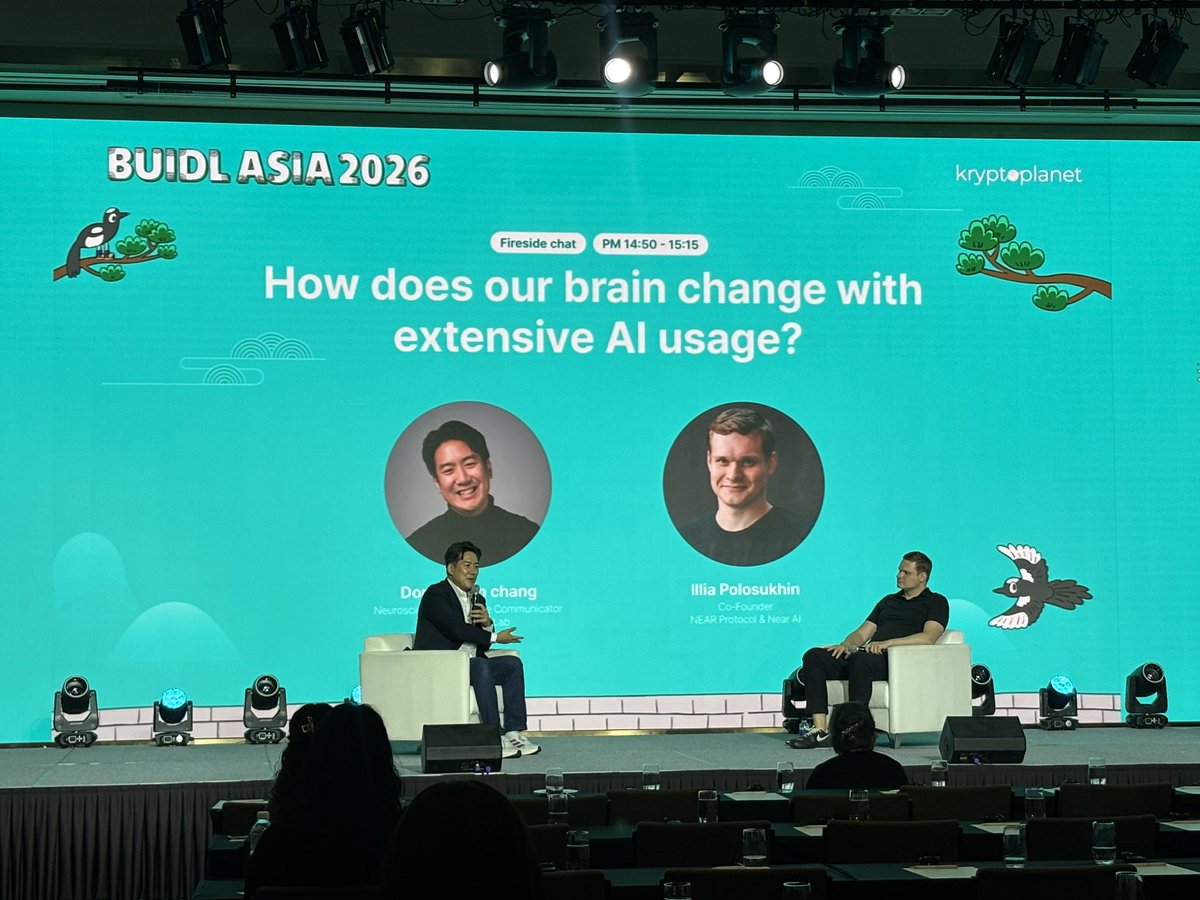
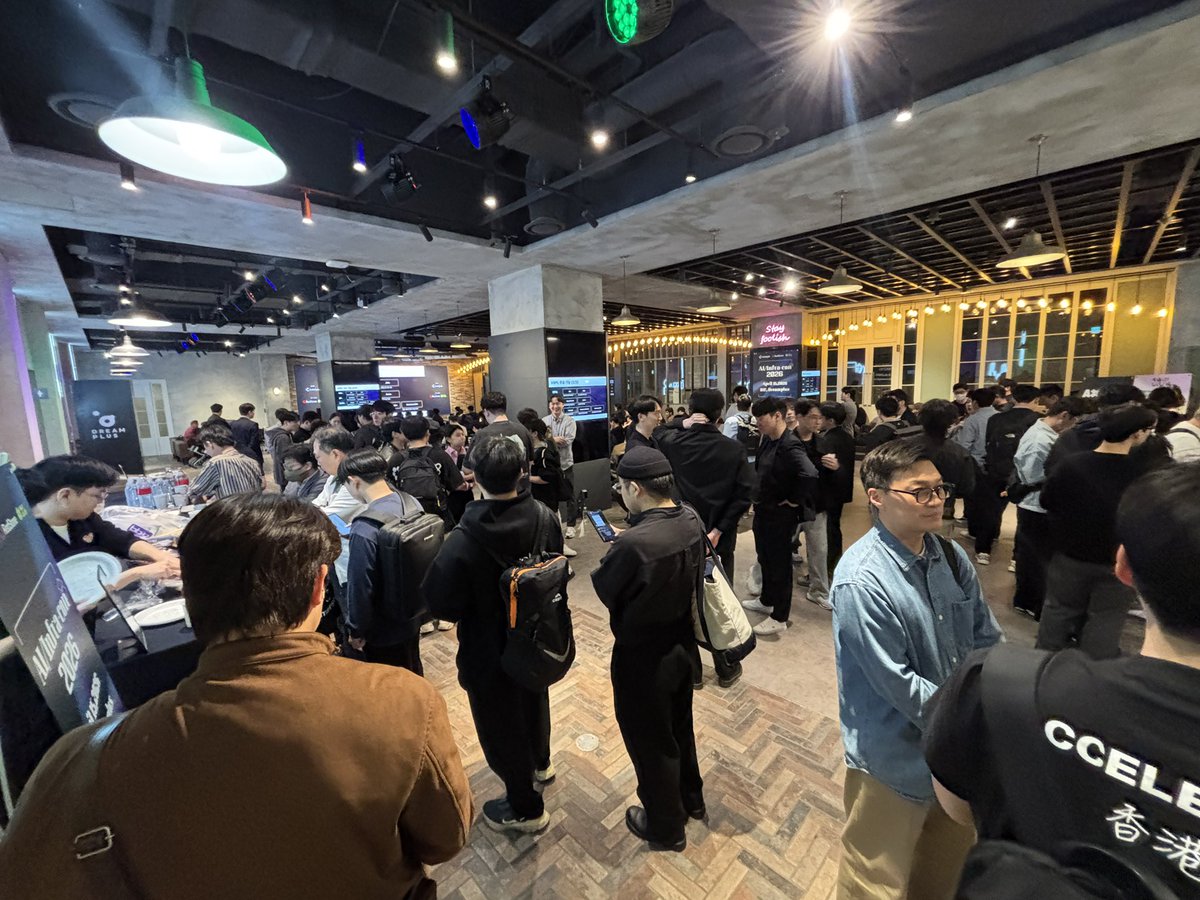
I’ve always regretted not having photos from my talks, so I made sure to take a few this time in case others might feel the same.
Appreciate the thoughtful discussion.
@sungmo_apac16z@9dai_5@JunwooJames
EthCapital 👍 내용도 insightful 하고 너무 똑똑하신 분들의 생각들을 듣고나니 배울것도 맘ㅎ고 자극도됨. 이제 웹3 만 공부해야 하는 게 아니라 전체적인 글로벌 마켓, 금융, 한국시장 규제 흐름 등 알아야할게 많아진것 같다.웹3 활용할 모든 분야를 보는 시��를 가져야할것같음🫠
People think learning AI takes months.
It's really just a couple of hours.
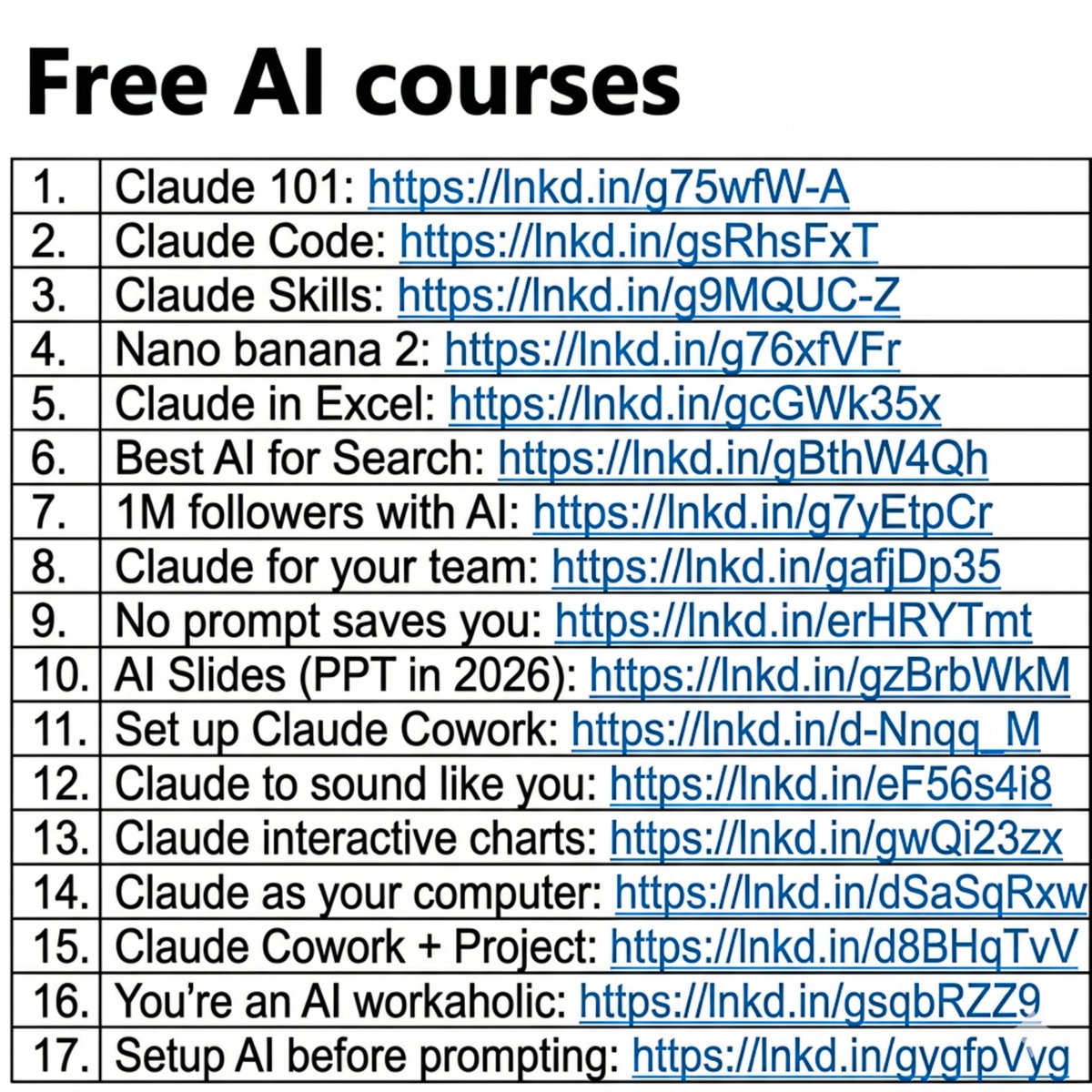
And I wrote 17 free guides to start right away:
Claude 101: https://t.co/Jv1jsvFB7T
Claude Code: https://t.co/WYZd5ltnXo
Claude Skills: https://t.co/jT4uB5AFtY
Nano banana 2: https://t.co/qfHT594CCI
Claude in Excel: https://t.co/mfcXYSA57j
Best AI for Search: https://t.co/77BmjbJjP0
1M followers with AI: https://t.co/1TV9LYAptv
Claude for your team: https://t.co/U1JsBVC299
No prompt saves you: https://t.co/SDKJWykHE4
AI Slides (PPT in 2026): https://t.co/RfcyYRQ2Ad
Set up Claude Cowork: https://t.co/diDhiKjHtU
Claude to sound like you: https://t.co/99RzxXTvzs
Claude interactive charts: https://t.co/ebCHGZqgPt
Claude as your computer: https://t.co/TxYuHPiImn
Claude Cowork + Project: https://t.co/Q7AN9CZ2mg
You're an AI workaholic: https://t.co/mCIvB3ZPA5
Setup AI before prompting: https://t.co/pE3OF722aw
___
1. Save this list for later (three dots, top right).
2. Share it with a friend by ♻️ reposting this image.
3. Subscribe to my free newsletter: https://t.co/psB7XxAv8w.
If quantum “kills” Bitcoin, it also kills:
• The global banking system
• SWIFT transfers
• Stock exchanges
• Military communications
• Nuclear command systems
• Every HTTPS website on earth
If Bitcoin is dead from quantum, your portfolio is the least of your problems.
Saw some people panicking or asking about quantum computing's impact on crypto.
At a high level, all crypto has to do is to upgrade to Quantum-Resistant (Post-Quantum) Algorithms. So, no need to panic. 😂
In practice, there are some execution considerations. It's hard to organize upgrades in a decentralized world. There will likely be many debates on which algorithm(s) to use, resulting in some forks.
And some dead project may not upgrade at all. Might be a good to cleanse out those projects anyway.
New code may introduce other bugs or security issues in the short term.
People who self custody will have to migrate their coins to new wallets.
This brings to the question of Satoshi's bitcoins. If those coins move, then it means he/she is still around, which is interesting to know. If they don't move (in a certain period of time), it might be better to lock (or effectively burn) those addresses so that they don't go to the first hacker who cracks it. There is also the difficulty of identifying all his addresses, and not confuse with some old hodlers. Anyway, it's a different topic for later.
Fundamentally:
It's always easier to encrypt than decrypt.
More computing power is always good.
Crypto will stay, post quantum.
An irresponsible prediction: what might happen if, by 2029, Satoshi Nakamoto’s public key is broken by Google using quantum computing:
- Google could transfer the recovered BTC into its own “quantum-resistant wallet” and position itself as a custodian, claiming the move is necessary to safeguard the assets from malicious actors or market disruption.
- Since these BTC have remained unclaimed, their legal ownership sits in a gray area. In the short term, Google would likely be unable—or unwilling—to liquidate them. As a result, Google gains reputational upside, while the market avoids the shock of sudden selling pressure.
- The U.S. government would likely step in and pursue legislation to determine the disposition of these assets—for example, classifying them as unclaimed property and potentially incorporating them into national reserves.
- This process would almost certainly involve legal disputes (ownership claims, jurisdictional questions, and the legality of the technical actions taken). However, a structured, institutional resolution would still be far preferable to a chaotic scenario in which hackers exploit the vulnerability and dump the assets onto the market.
一个不负责任的预测:如果到 2029 年,中本聪的公钥被 Google 利用量子计算破解之后,可能会出现的情形:
- Google 可能会将被破解出的 BTC 转入其自建的“抗量子钱包”,并以“安全托管”为名进行集中管理,声称此举是为了防止资产被恶意攻击或市场扰动。
- 由于这些 BTC 长期无人认领,其法律归属存在灰色地带。在短期内,Google 很难直接变现这些资产,因此更可能选择“托管而非处置”。这样一来,Google 获得声誉上的加分,同时市场也避免了大规模抛压带来的冲击。
- 随后,美国政府大概率会介入,并推动立法来明确这些资产的归属,例如将其定义为“无主资产”,并考虑纳入国家储备体系。
- 在这一过程中,可能伴随复杂的法律争议与诉讼(例如所有权、管辖权、技术行为合法性等问题),但整体来看,这种“制度化处理”的路径,仍然好于资产被无序黑客攻击后直接流入市场所带来的系统性风险。
Back to zero?
Unless we’re prepared, everything could recentralize to protect compromised data. 기술들 끼리 경쟁하고 있는 느낌 - 그래서 같이 가고자하는 ultimate goal 은뭘까.
AI 등등 기술이 발달할수록 본질적인 질문들이 더 많이 생긴다.
Today is a monumentous day for quantum computing and cryptography. Two breakthrough papers just landed (links in next tweet). Both papers improve Shor's algorithm, infamous for cracking RSA and elliptic curve cryptography. The two results compound, optimising separate layers of the quantum stack. The results are shocking. I expect a narrative shift and a further R&D boost toward post-quantum cryptography.
The first paper is by Google Quantum AI. They tackle the (logical) Shor algorithm, tailoring it to crack Bitcoin and Ethereum signatures. The algorithm runs on ~1K logical qubits for the 256-bit elliptic curve secp256k1. Due to the low circuit depth, a fast superconducting computer would recover private keys in minutes. I'm grateful to have joined as a late paper co-author, in large part for the chance to interact with experts and the alpha gleaned from internal discussions.
The second paper is by a stealthy startup called Oratomic, with ex-Google and prominent Caltech faculty. Their starting point is Google's improvements to the logical quantum circuit. They then apply improvements at the physical layer, with tricks specific to neutral atom quantum computers. The result estimates that 26,000 atomic qubits are sufficient to break 256-bit elliptic curve signatures. This would be roughly a 40x improvement in physical qubit count over previous state-of-the-art. On the flip side, a single Shor run would take ~10 days due to the relatively slow speed of neutral atoms.
Below are my key takeaways. As a disclaimer, I am not a quantum expert. Time is needed for the results to be properly vetted. Based on my interactions with the team, I have faith the Google Quantum AI results are conservative. The Oratomic paper is much harder for me to assess, especially because of the use of more exotic qLDPC codes. I will take it with a grain of salt until the dust settles.
→ q-day: My confidence in q-day by 2032 has shot up significantly. IMO there's at least a 10% chance that by 2032 a quantum computer recovers a secp256k1 ECDSA private key from an exposed public key. While a cryptographically-relevant quantum computer (CRQC) before 2030 still feels unlikely, now is undoubtedly the time to start preparing.
→ censorship: The Google paper uses a zero-knowledge (ZK) proof to demonstrate the algorithm's existence without leaking actual optimisations. From now on, assume state-of-the-art algorithms will be censored. There may be self-censorship for moral or commercial reasons, or because of government pressure. A blackout in academic publications would be a tell-tale sign.
→ cracking time: A superconducting quantum computer, the type Google is building, could crack keys in minutes. This is because the optimised quantum circuit is just 100M Toffoli gates, which is surprisingly shallow. (Toffoli gates are hard because they require production of so-called "magic states".) Toffoli gates would consume ~10 microseconds on a superconducting platform, totalling ~1,000 sec of Shor runtime.
→ latency optimisations: Two latency optimisations bring key cracking time to single-digit minutes. The first parallelises computation across quantum devices. The second involves feeding the pubkey to the quantum computer mid-flight, after a generic setup phase.
→ fast- and slow-clock: At first approximation there are two families of quantum computers. The fast-clock flavour, which includes superconducting and photonic architectures, runs at roughly 100 kHz. The slow-clock flavour, which includes trapped ion and neutral atom architectures, runs roughly 1,000x slower (~100 Hz, or ~1 week to crack a single key).
→ qubit count: The size-optimised variant of the algorithm runs on 1,200 logical qubits. On a superconducting computer with surface code error correction that's roughly 500K physical qubits, a 400:1 physical-to-logical ratio. The surface code is conservative, assuming only four-way nearest-neighbour grid connectivity. It was demonstrated last year by Google on a real quantum computer.
→ future gains: Low-hanging fruit is still being picked, with at least one of the Google optimisations resulting from a surprisingly simple observation. Interestingly, AI was not (yet!) tasked to find optimisations. This was also the first time authors such as Craig Gidney attacked elliptic curves (as opposed to RSA). Shor logical qubit count could plausibly go under 1K soonish.
→ error correction: The physical-to-logical ratio for superconducting computers could go under 100:1. For superconducting computers that would be mean ~100K physical qubits for a CRQC, two orders of magnitude away from state of the art. Neutral atoms quantum computers are amenable to error correcting codes other than the surface code. While much slower to run, they can bring down the physical to logical qubit ratio closer to 10:1.
→ Bitcoin PoW: Commercially-viable Bitcoin PoW via Grover's algorithm is not happening any time soon. We're talking decades, possibly centuries away. This observation should help focus the discussion on ECDSA and Schnorr. (Side note: as unofficial Bitcoin security researcher, I still believe Bitcoin PoW is cooked due to the dwindling security budget.)
→ team quality: The folks at Google Quantum AI are the real deal. Craig Gidney (@CraigGidney) is arguably the world's top quantum circuit optimisooor. Just last year he squeezed 10x out of Shor for RSA, bringing the physical qubit count down from 10M to 1M. Special thanks to the Google team for patiently answering all my newb questions with detailed, fact-based answers. I was expecting some hype, but found none.
Ethereum is no longer just building for today. It’s preparing for the next decade.
The launch of post-quantum efforts is a clear signal:
Ethereum is evolving into long-term infrastructure, built to withstand not just current challenges, but future ones.
This is what real infrastructure maturity looks like, and it’s exactly why building on Ethereum matters.