Radar Zero Wire now has a dedicated page for every published CVE. Check severity, exploitation status, and fixes to prioritize your patching.
https://t.co/8073TVV7Oz
Honestly I’m tired of this AI discovered RCE bullshit.
It creates so much chaos inside of companies that have no idea how to deal with this.
Anyone that publishes an exploit that can’t be widely exploited and doesn’t disclose this - I’m down for total public shaming of the individuals and companies that push this narrative.
I’m not dismissing the criticality of latching on these - however it doesn’t require IR, all hands on deck, must patch tomorrow - which is probably why we see the mass outages we are experiencing.
It’s damaging our industry. We need to fight back on this and go after those that hype this up for ego and marketing.
POC || GTFO
Join me.
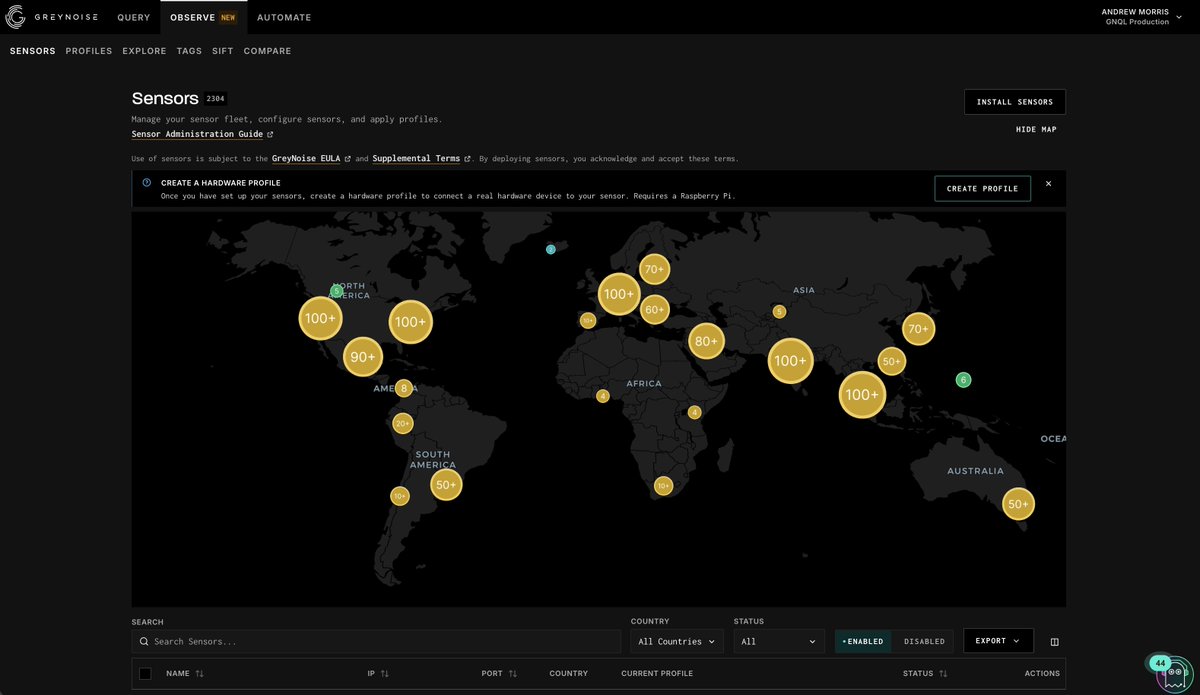
Howdy folks! Taking a break from my twitter break to let yall know that we released a new @GreyNoiseIO product yesterday. It's called Project Swarm. We've been quietly not-so-quietly working on it for a few years. You can buy it now. It costs $1.
There are lots of vulnerabilities on edge-facing apps. To catch in-the-wild exploitation of them, we @ GreyNoise run sensors on the internet. New AI models means more vulnerabilities being identified and exploited, and FASTER. Long term, software and hardware will probably get better, but in the meantime we're gonna have to deal with A LOT of vulnerabilities.
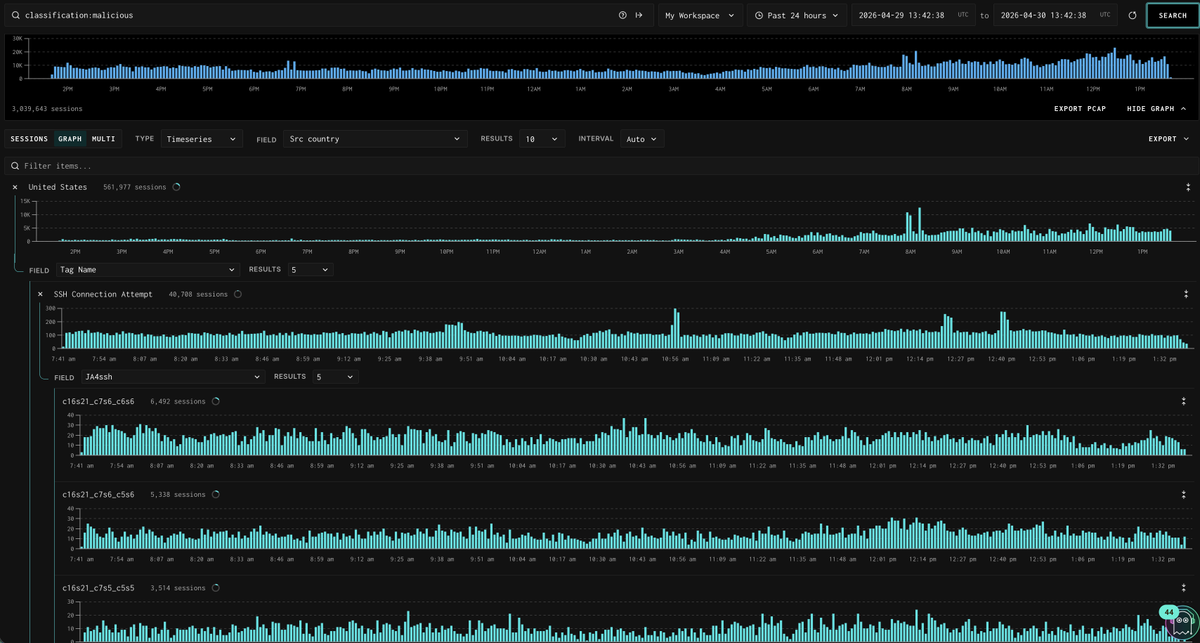
At GreyNoise, the sensors we run are basically honeypots- we bait attackers to scan and exploit them which enables us to learn where the attackers are, which vulnerabilities they are exploiting, what it drops, and what it looks like on the wire. From ~2020-now it took us years to build up our fleet. Now anyone can use our new product to deploy their own sensors on their own networks, or an entire fleet of any size, in a day. You can rip back the data and do whatever you want with it. You can resell it, put it into your product, or just stare at it- whatever you want! On our side, we aggregate the data and pour it into a community dataset that everyone shares. As more people join, the data gets bigger and better.
Couple neat features:
- Sensor deployment is a single bash command on any modern linux distro that supports iptables and wireguard.
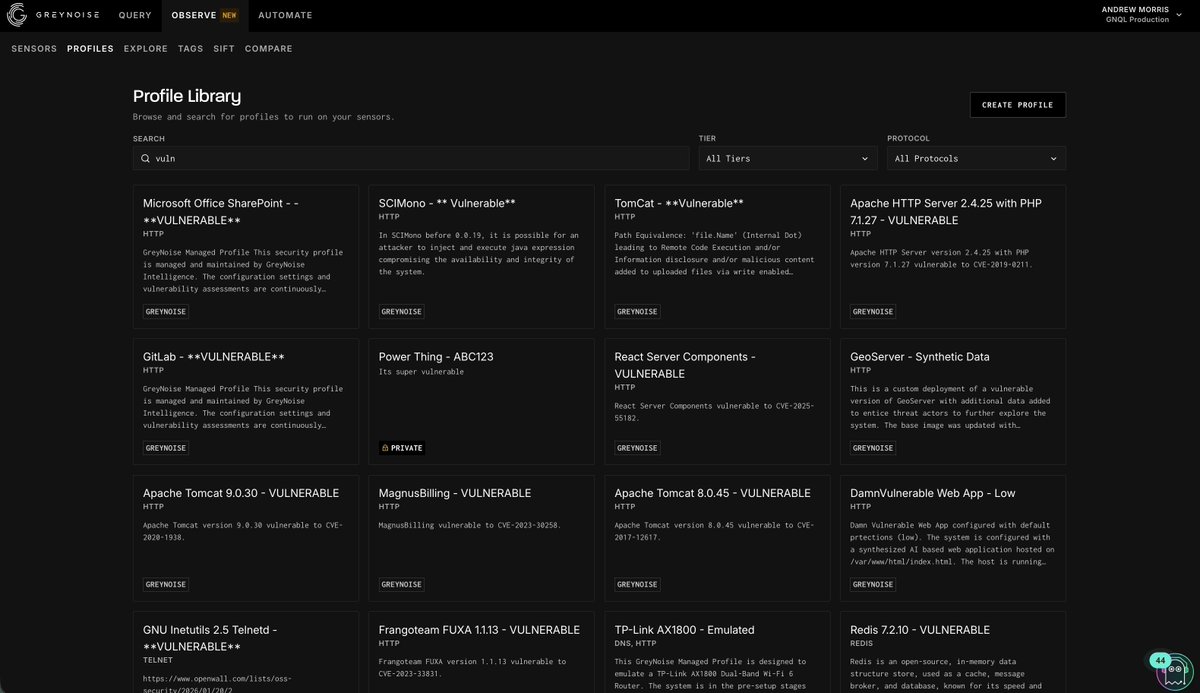
- Sensors and vulnerable software (profiles) are abstracted into different logical concepts, which means the "what" and "where" are different things, and the sensor is not constrained by the compute required to run the vulnerable software. Also, no matter how hacked the profile (honeypot) gets, it can't touch your host sensor or the rest of your network.
- Sensors can run fake honeypots, real software, or even real hardware (bridged with a raspberry pi) like old crappy routers and modems (or expensive firewalls and VPN gateways 👀)
- You can create dynamic blocklists that block IPs sourced from your own sensors in real time, so if a remote IP address *looks at your network* the wrong way, you block them instantly.
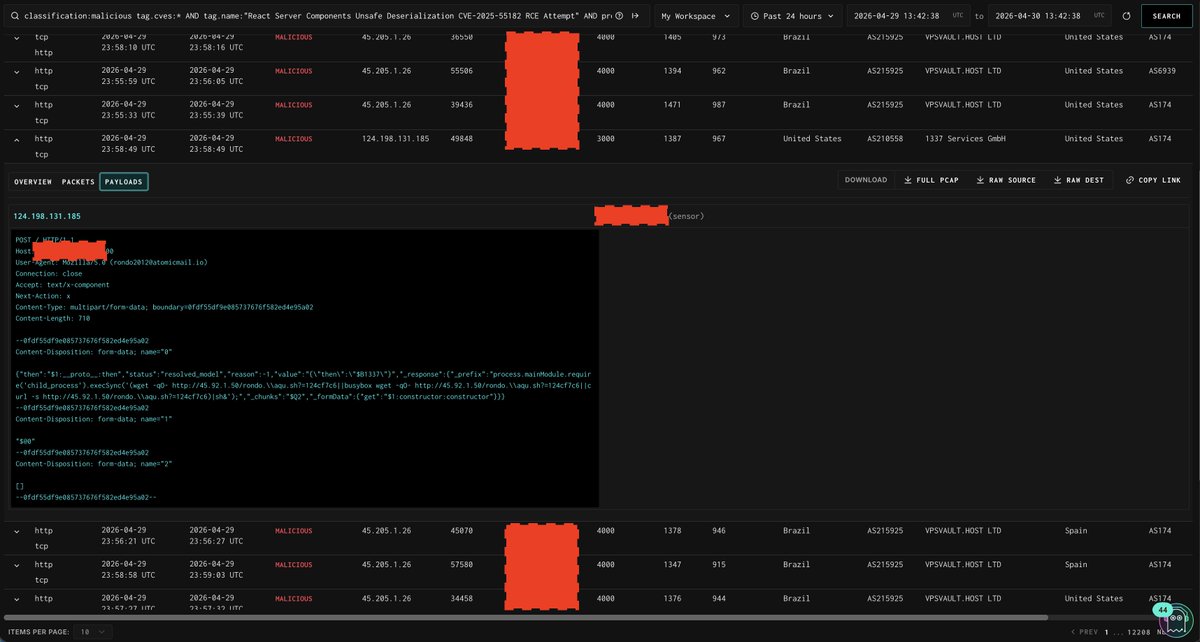
- All the PCAP data is available to you in a gorgeous and intuitive interface at near real time and fully enriched against all of our (thousands of) rules. We're working on the host metadata (malware, syscalls, host behaviors) as well, but this will come later.
- If we don't tag a CVE that's interesting to you, you can write a Suricata rule to tag it yourself once and your data gets tagged with it in real time forever.
- You can instantly download PCAPs of any exploits that hit your sensors.
- If you don't want your data shared with the community dataset, you can talk to our team and we'll work out rights to make it private.
Check it out! There's a lot of moving pieces to make this work and we expect bugs, but it's available right now. Join the fight!
https://t.co/erAWtX1l7B
I wrote a short post on AI and offensive security. I looked at how AI is starting to impact pentesting, red teaming, and offensive tooling. What’s real today and what might be coming next.
👉 https://t.co/KMQkaNYo3R
#AI#Cybersecurity#OffensiveSecurity#Infosec
There is critical vulnerability in React Server Components disclosed as CVE-2025-55182 that impacts React 19 and frameworks that use it.
A fix has been published in React versions 19.0.1, 19.1.2, and 19.2.1. We recommend upgrading immediately.
https://t.co/kue7kd0XEX
Microsoft is adding Sysmon directly into Windows. The Sysinternals utility will make it easier for security teams to detect and respond to threats https://t.co/xWdoMJiocn
Opozarjamo na širjenje zlonamerne kode v imenu FURS🚩 Sporočilo nagovaja k zagonu zlonamerne priponke pod pretvezo ogleda davčnega dokumenta. Priponka ZIP arhiva nosi škodljivo VBS datoteko za zagon prenašalnika Guloader, ki naloži orodje za oddaljen dostop Remcos RAT
Recommandations from the “inventor” of Kerberoasting.
Also check out FAST / kerberos armoring. Article from @SteveSyfuhs :
https://t.co/6iGgakWgrs
And if you are using g/dMSA (managed service accounts) it will automatically set and rotate a long password.
⚠️ A single click on a fake site can hijack your password manager.
Researchers found 11 popular extensions (1Password, LastPass, iCloud & more) vulnerable—putting logins, 2FA codes, and credit cards at risk.
6 vendors still haven’t patched.
Protect your PASSWORDS ↓ https://t.co/C7GrZY7K2f
🛡️ AI-Powered SQL Injection Just Got Real - 𝗦𝗤𝗟𝗠𝗮𝗽 𝗔𝗜 𝗔𝘀𝘀𝗶𝘀𝘁𝗮𝗻𝘁
An SQL Injection testing assistant powered by AI.
Came across a powerful tool blending LLMs with offensive security.
🔗 https://t.co/ljN4zKO4Ea
#CyberSecurity
🚨 You won’t believe how much I made off this Microsoft bounty…
Full story and POC here 👉 https://t.co/iNrGgX1saa
This bug exposed:
📧 Email addresses of package owners
🌐 Out-of-band callbacks for data exfil
💥 IP, personal names and addresses, internal system info