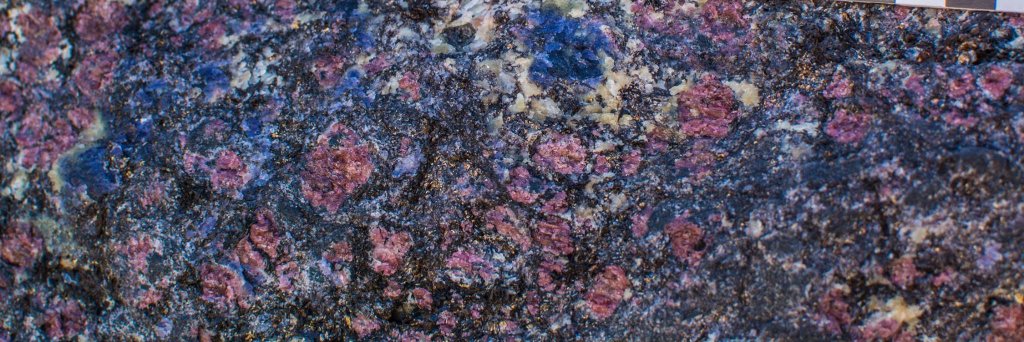
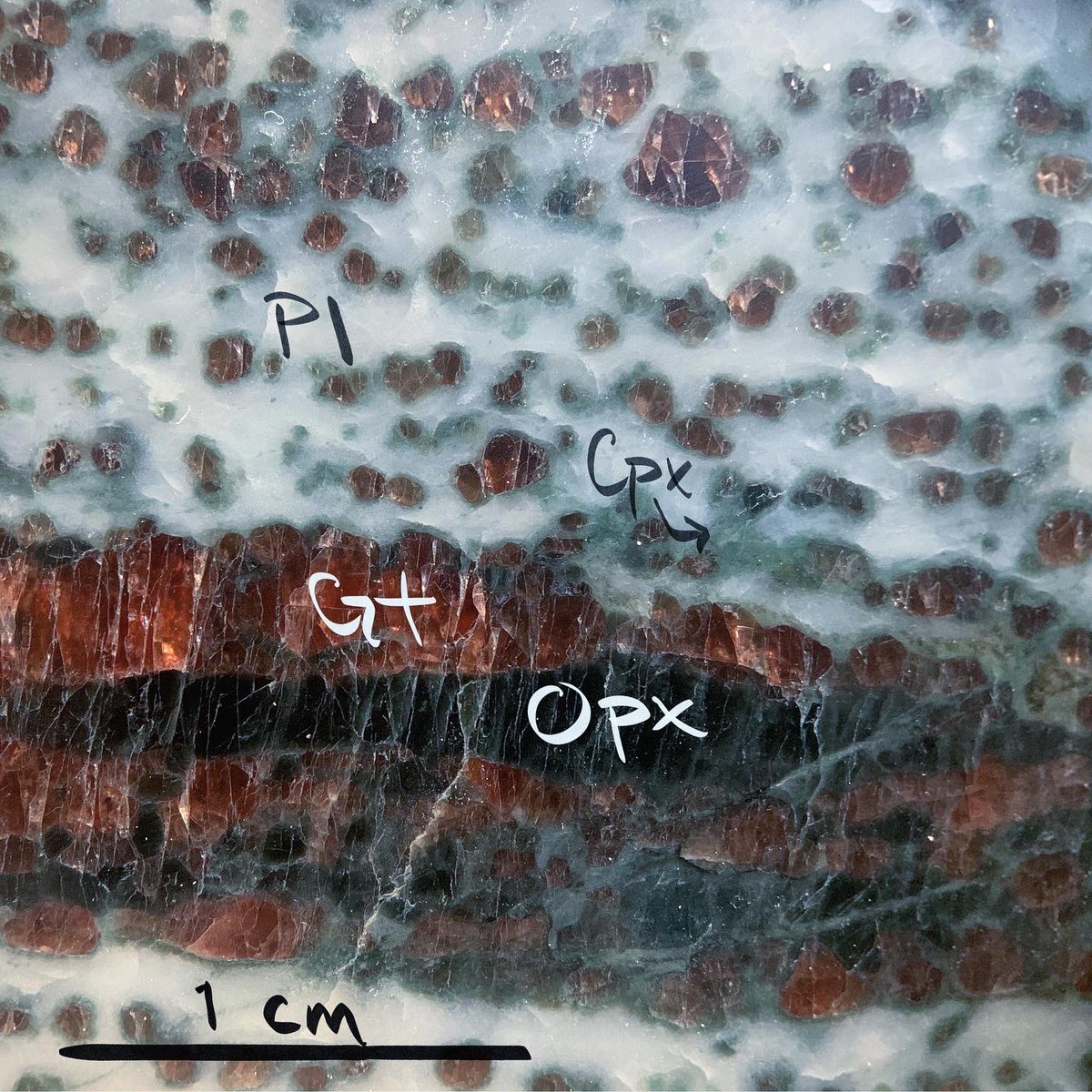
Beautiful Garnet specimens from various pegmatites around the Harts Range region in the Northern Territory, Australia.
Photo by: Patrick Gundersen
#minerals#crystals
Straight from the top of my (gneiss) dome...
Our new JMG paper on gneiss dome formation in an intraplate orogen. Congrats to @Jan_Varga_Geo for rockin' the microphone with PhD paper #2!
And that's probably enough 90s Freestyler references. Find it here: https://t.co/gs7QE4c4Kx
Great to see @Jan_Varga_Geo's PhD work lighting up the Adelaide city centre on a huge scale! As @micROCKScopica always says, earth without art is just eh! #eARTh
Raindrop imprints - common on muddy surfaces today but hard to preserve in the geological record. Only seen a few convincing examples in a long career looking at sedimentary rocks. Early Cambrian Octy Formation, Georgina Basin, Australia, 1988.
Monazite + melt = tasty textures (but potentially misleading ages) 🤔
Check out our new @UniversitySA#STEM, @UniSAFII and @MQEarthEnv paper in Chemical Geology. Read for free here: https://t.co/qwslv4LEdw
For my last #stonesathome coaster, a garnet-peridotite from Norway. This sample of the sub-continental lithospheric mantle formed at 2.7 BILLION years ago (Lu-Hf garnet age) at ~350 km depth! #teamgarnet ftw!
Neptunite, a rare sodium, lithium and titanium-bearing phyllosilicate found in hydrothermally altered blueschist-serpentinite melanges, mostly in California. Ti can be fluid mobile. #geology#mineral#gemstone#stonesathome
How many PhDs does it take to solve a #shearzone?
Fond memories of this central Australia fieldtrip to the very melty Gough Dam Shear Zone, now immortalised in print.
New GEOLOGY paper from @MQEarthEnv & @UniversitySA out now @geosociety: https://t.co/AWZa1lA2Ra
We've taken #StonesAtHome to the next level - helping our @UniversitySA students make their first geological map at the world-class #HallettCove Conservation Park, all from the safety of their own home. Full vid of our virtual field trip available here: https://t.co/96UHMI6Oxt
Our #hotrocks study led by @alicia_pollett featured in the latest edition of #UniSANews - Antarctic ice sheets could be at greater risk of melting than previously thought 🌏🧊🔥: https://t.co/ReL9l8RHr6