Research Scientist, Geological Survey of Canada | Geochronology, Isotope Geochemistry, Tectonics | Road cyclist | bread baker. Views are my own (he/him/his)
Excited to share our paper on using physical properties of ultramafic rocks to infer their mineralogy and alteration with implications for carbon sequestration. Such a fun collaboration with @KatrinSteinth and others @carbmin@UBCeoas @GSC_CGC. A 🧵 1/10:
https://t.co/GZVbuRe2ay
I'm so excited to share with you "Viewing the Rock World", an outreach project based on a 3D-printable thin section viewer that anyone can make! Looking for teachers, educators, student groups, anyone interested in participating! Check out https://t.co/PMPvvQsfu7 for more info.
2/2 This invited review and @NatRevEarthEnv featured article summarizes decades of geochemical work and offers perspectives for the future of mantle geochemistry. Available as open access for the next 2 weeks: https://t.co/PB47QtTfJc
@thegeojesse @kimberlite_8@SteveWechslerPT@AcademicChatter Yep... for me they come in waves: I often receive no review requests for 6-8 months (like right now) or get 5 in a week. I'd be perfectly fine with doing the 5 reviews if spread out but I can't do them at the same time within the requested timeframes (someties 2 weeks!)
So pumped for my new article that solves a geological mystery that I’ve been thinking about for more than a decade. Watch my videos below👇to hear more. Free access to the paper for 50 days at this link: https://t.co/yk9xmiOphH 1/4 @JCUGeoscience@jcu@MonashEAE
My first peer-reviewed paper is out from my MSc work on serpentinization and open access! This project was so much fun, went to some beautiful places, and I met and worked with so many great people! @JamieCutts_Geo@ConnorTurvey@carbmin@UBCeoas
https://t.co/Xj4vl9nO81 (1/5)
@TheNobleGasbag @thegeojesse @BrandonTBishop @SchiffmanPeter @FaithfullJohn Yes pretty neat reactions going on with these rocks during carbonation! My go to is Hansen et al 2005 - Canadian Mineralogist for a great overview of carbonation reactions.
@SchiffmanPeter@TheNobleGasbag @FaithfullJohn Yep, up in BC most evidence (including the stable isotopes) points to post obduction serpentinization being dominant (https://t.co/eIzsZrXbyO)
Read how researchers used an Attom with laser ablation (in Sweden) to map garnet minerals and then a microdrill to remove only the parts needed to accurately date the minerals in particular growth zones using a Nu Plasma (in Canada).
https://t.co/csaxYdhMb5
#Attom#Plasma#ICPMS
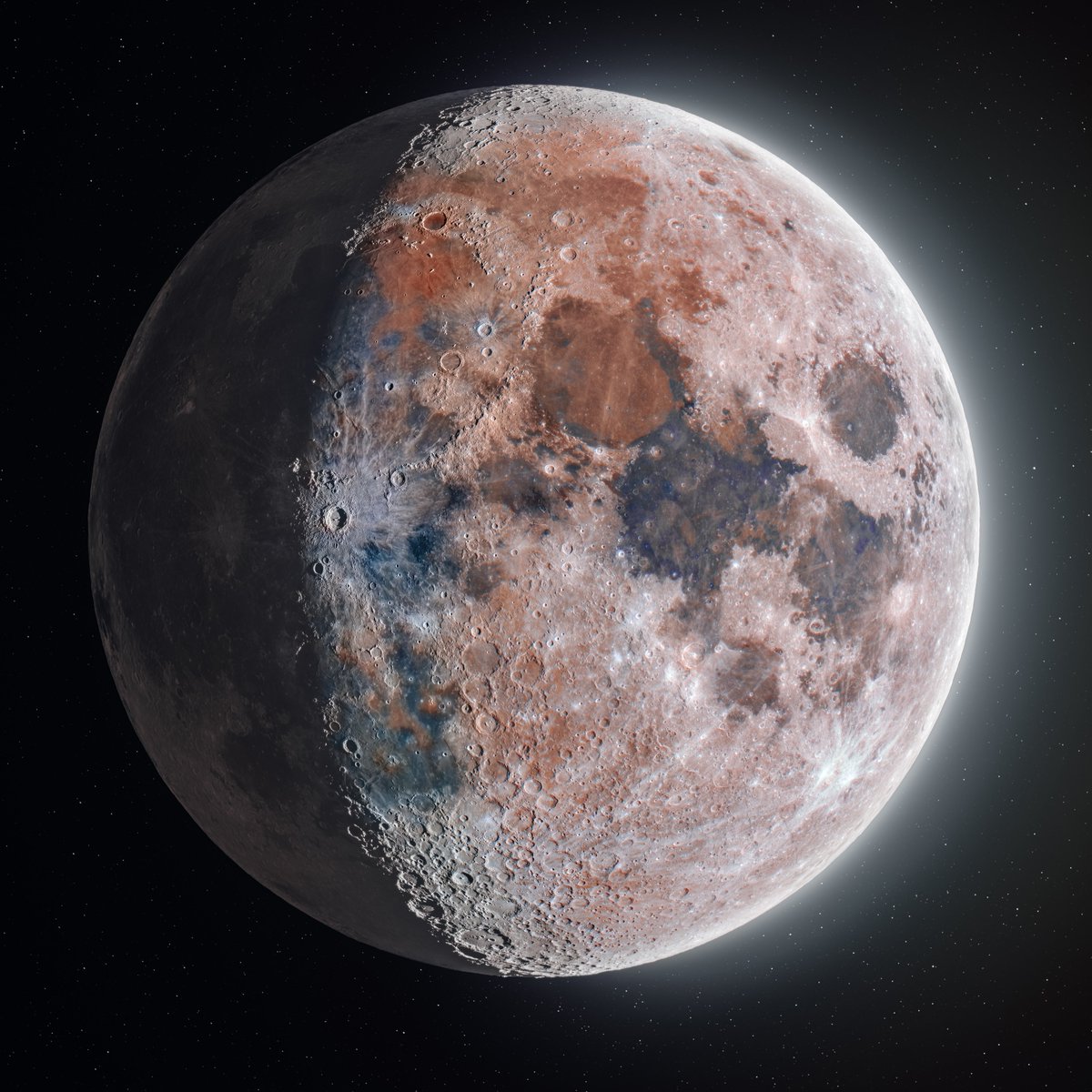
Two years ago, I teamed up with fellow astrophotographer and planetary scientist @MatherneConnor to capture the most ridiculously detailed moon image we could. Over the last few months we put our heads together again to come up with something even clearer. Behold: