Two new superconductors emerged from a machine-learning filter that could screen billions of material candidates, opening a faster route toward room-temperature superconductors. @PhysRevResearch https://t.co/JQf3j82kS7
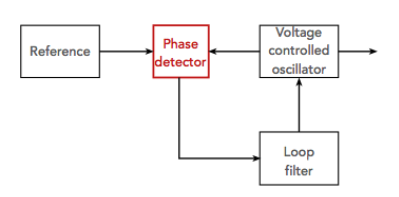
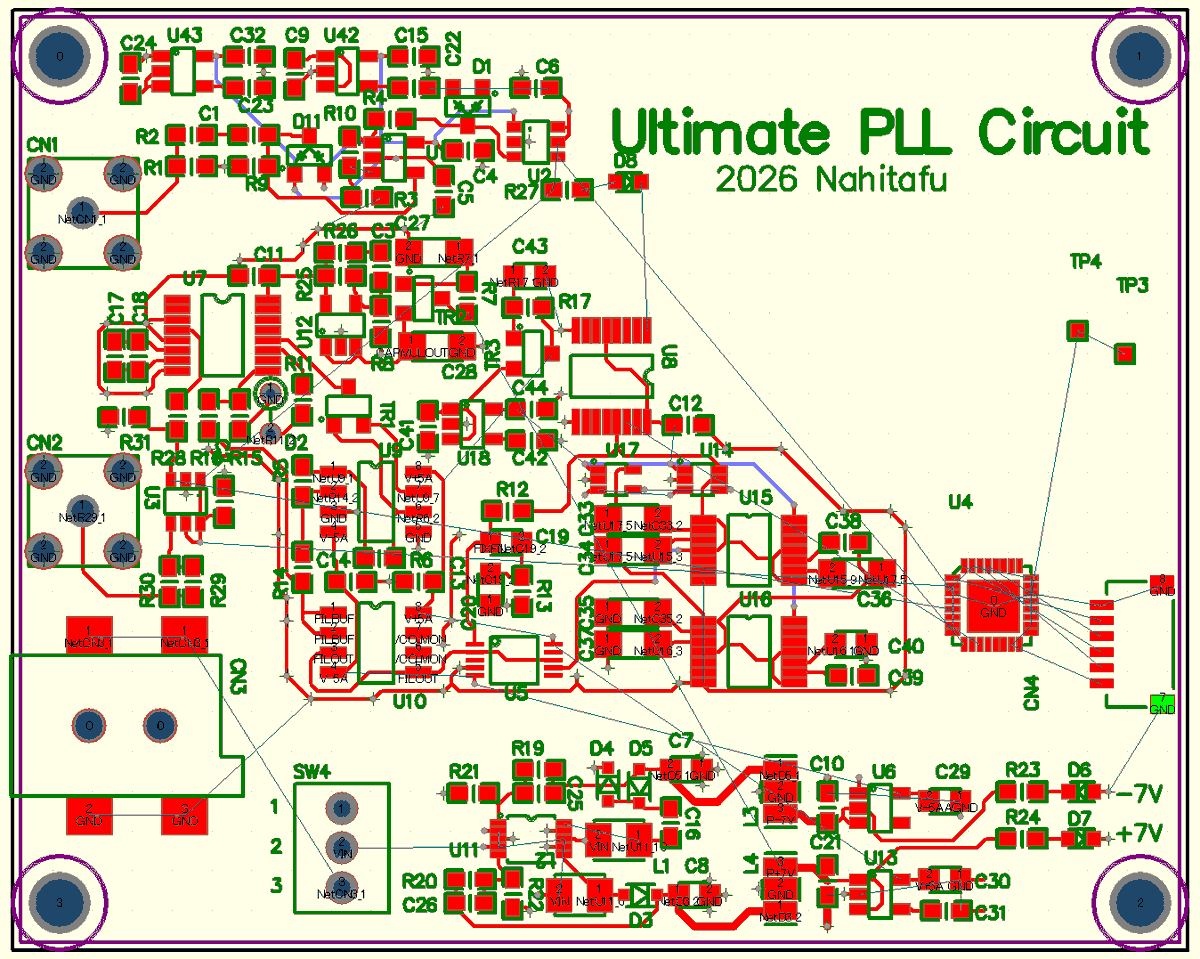
The Phase Detector is the "comparator" at the heart of every PLL, and understanding the nuances between analog and digital implementations is where real-world design optimization happens.
Whether you're building a frequency synthesizer or a clock recovery circuit, the choice of phase detector fundamentally changes the loop’s capture range, spectral purity, and locking behavior.
The Three Pillars of Phase Detection
On the site, I’ve broken down the three primary types of detectors that every RF engineer should have in their toolkit:
1. The Mixer (Analog Multiplier) The classic approach. It’s simple, provides excellent noise performance, and is perfect for high-frequency applications. However, it is sensitive to input signal levels and produces significant harmonics that require careful filtering.
2. The Exclusive-OR (XOR) Gate A popular digital choice for square-wave signals. It’s incredibly easy to implement, provides a linear output over a 0 to 180° range, and is very cost-effective for simpler loops.
3. The Phase-Frequency Detector (PFD) The "gold standard" for modern synthesizers. Unlike the others, the PFD is sensitive to both phase and frequency. It eliminates false locks and brings the loop into frequency acquisition even when it starts far away from the target.
Choosing the Right One for Your Design
If you need high-frequency RF performance with the lowest possible noise, the Mixer remains a top contender, provided you can handle the filtering requirements.
If you are working with square-wave signals and need a simple, cost-effective solution, the XOR Gate is one option.
However, for most modern synthesizers, the PFD is the clear winner. Its ability to "pull" the loop into lock over a wide frequency range makes it indispensable for reliable, fast-locking designs.
The "Pro" Takeaway: The "best" detector is the one that meets your phase noise requirements while providing the necessary frequency capture range. Always consider your input signal’s duty cycle—a PFD is more robust, but a mixer might offer a "cleaner" solution for specific, high-end signal chains.
Want to investigate the circuit design and calculations more I’ve put together a full breakdown of the transfer functions, the pros and cons of each type, and the circuit topologies you need to know: https://t.co/bqE5Z0aIkU
#RFEngineering #PLL #PhaseLockedLoop #WirelessTech #CircuitDesign #HardwareEngineering #ElectronicsNotes #SignalProcessing #Semiconductors
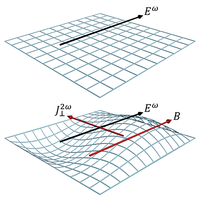
A room-temperature intrinsic nonlinear planar Hall effect in the nonmagnetic topological semimetal TaIrTe₄ reveals how an in-plane magnetic field generates a Berry-connection-polarizability dipole through an orbital mechanism https://t.co/aLruzro80y
Ever wondered how 3D objects spin smoothly in games, animations, or even real-world robotics?
This is the magic behind it!
Meet the rotation matrices that control how things twist around the X, Y, and Z axes.
From video games to spacecraft navigation, these rotations power the invisible math that makes our digital world feel real.
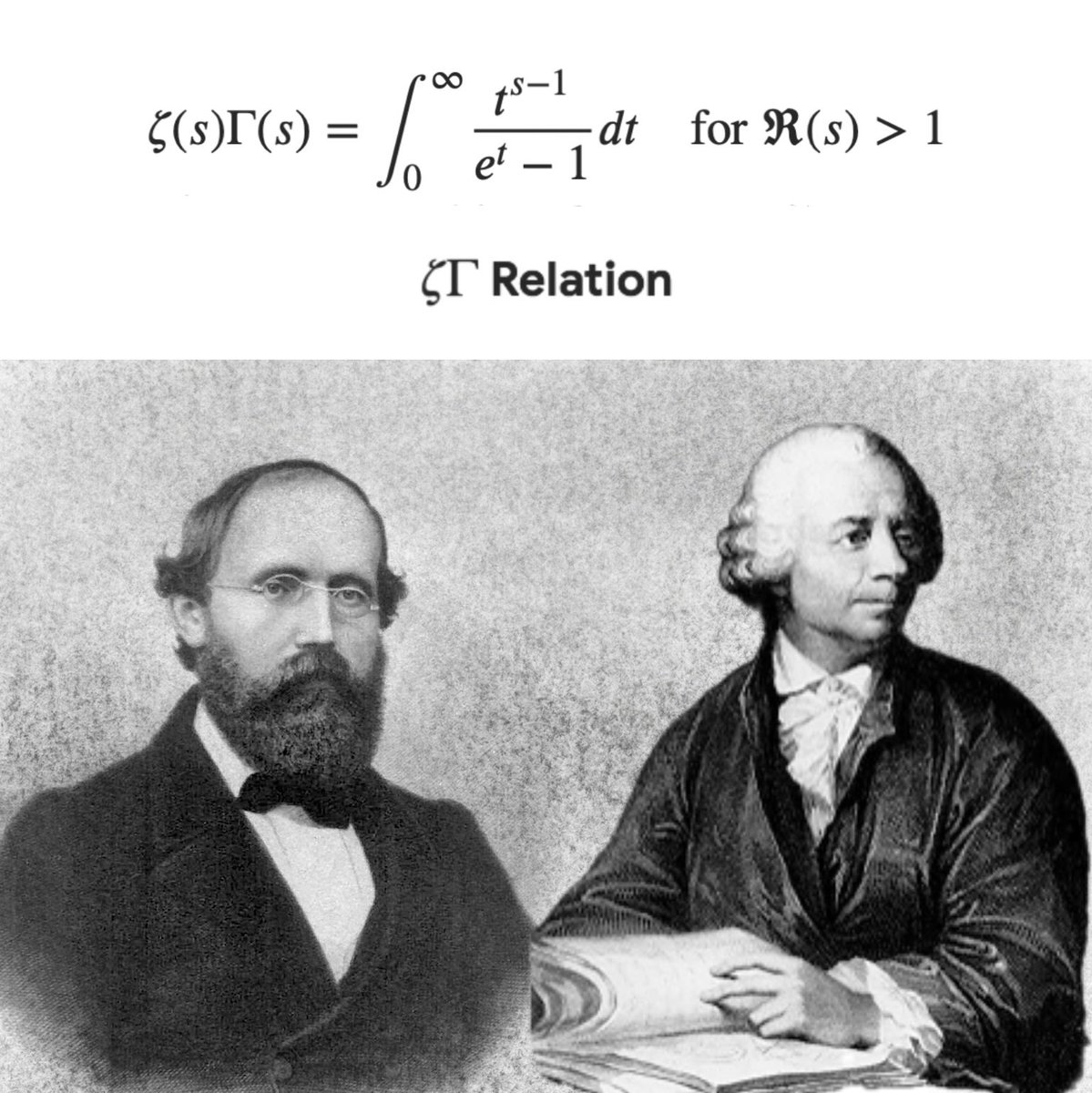
The Riemann Zeta function (which encodes the primes in its zeros) and the Gamma function (which extends factorials to the complex numbers) are linked through this elegant integral.
Imagine you’re trying to climb the highest peak of a mountain, but you’re forced to stay on a narrow winding trail defined by g(x) = 0. You can’t just head straight up the steepest slope by setting ∇f = 0, the mountain won’t let you.
So we invent a clever trick: the Lagrangian
ℒ(x, λ) = f(x) − ∑ λ_i g_i(x)
By solving ∇ℒ = 0, we find the exact points where the level curves of f touch the constraint boundary tangentially: the sweet spots where the gradients align (∇f = ∑ λ_i ∇g_i). These are your local maxima, minima, or saddles under the constraint.
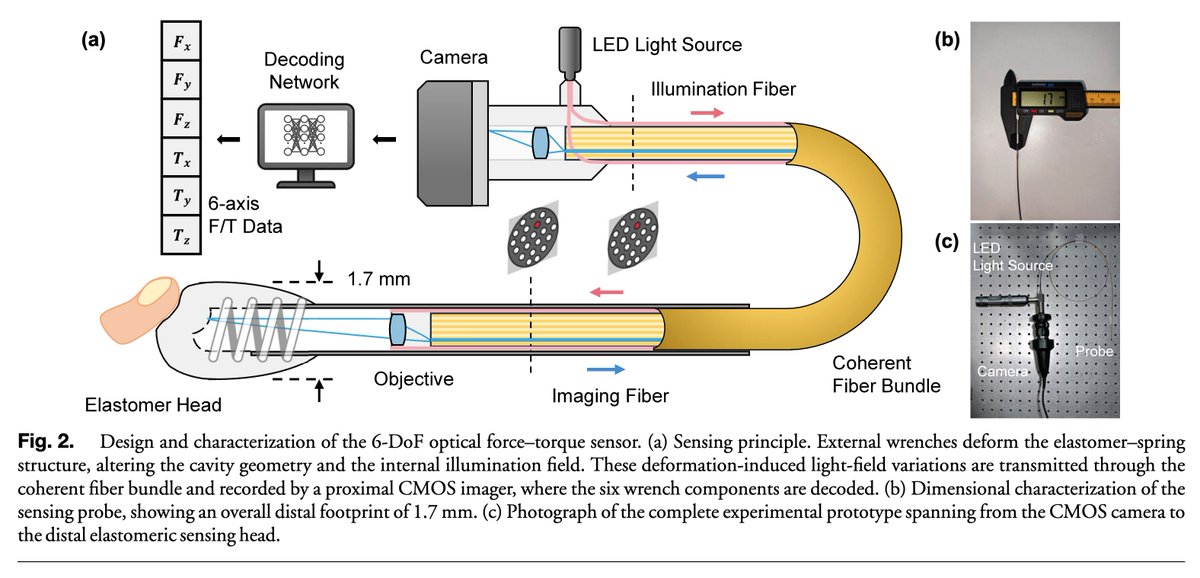
there is still so much potential of neural network stuff in sensing applications, here is a 6-DoF force + torque sensor using a fiber bundle, with a diameter of only 1.7 mm.
sub 0.005 N and 0.02 N*mm RMSE, 3 ms inference latency, and decent model transfer between different probes.
These Simple Tricks Stop Emitter Follower Circuits From Oscillating
Have you ever had a simple emitter follower circuit that started to oscillate all of its own accord.
You ask yourself why should a simple circuit like this with no voltage gain oscillate, but it just does.
I’ve had this problem occur on a number of occasions.
So in this video I set out some I techniques I’ve used to stop this happening.
I provide some tried and tested solutions that are certain to provide a solution.
So watch my video now: https://t.co/jbH4b50XWw
#circuitdesign #emitterfollower #spurious #spuriousoscillation #HardwareDesign #designtips
The Aizawa attractor is a complex, six-parameter set of nonlinear differential equations that generates a highly distinctive, three-dimensional chaotic shape.