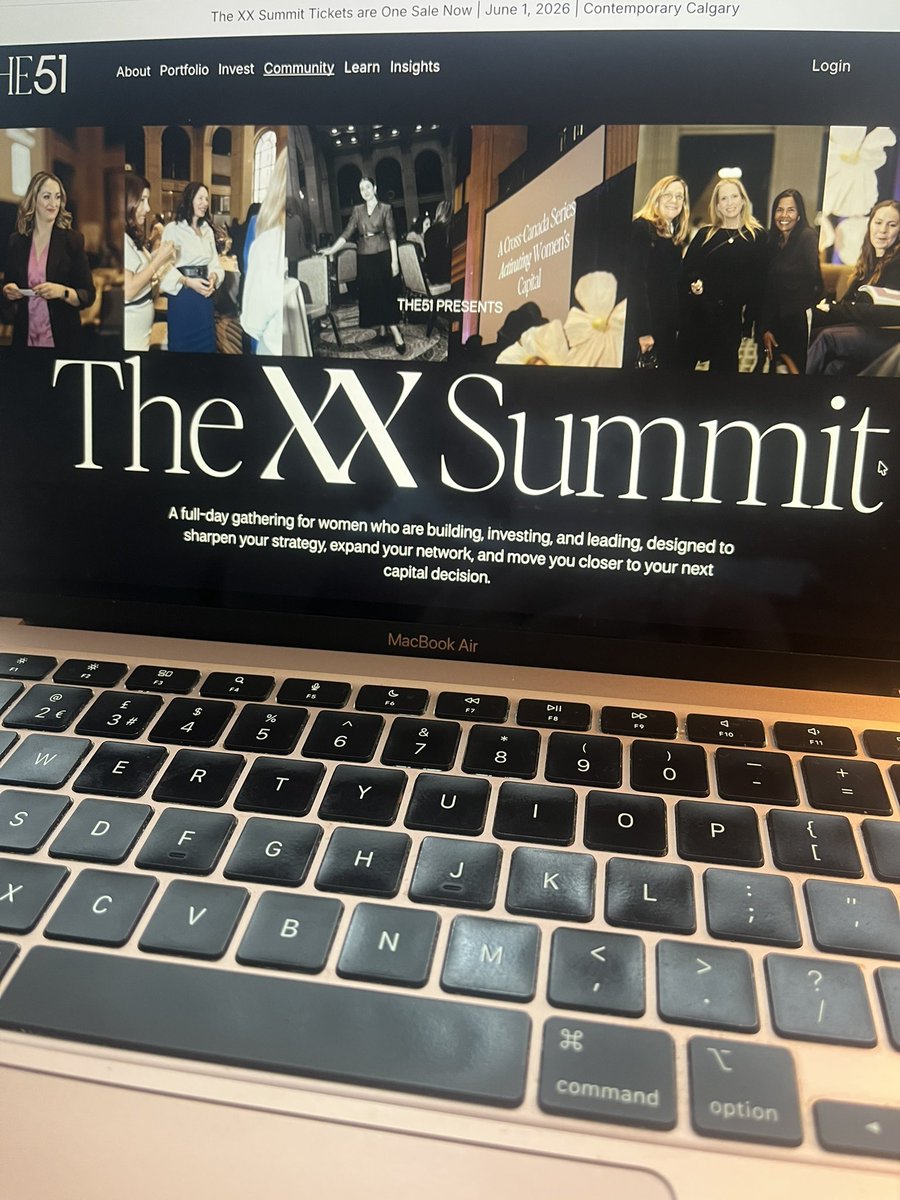
Episode #162 with Shaz Bishop from RBC Brewin Dolphin is live!
We talk about women and the investing shift, industry gaps and the wealth transfer.
Please enjoy!
Check out The Purse Podcast for more (see links in comments) 👇
Today I'm publishing a new essay, Policy on the AI Exponential. AI is progressing extremely fast—much faster than the policy process was built to handle. The essay lays out where I think the technology is now, and the action needed to close the gap: https://t.co/Lh6PWae178
Mira Murati says frontier AI should be built like a tandem bike:
"Having humans in the loop doesn't quite describe it because it sounds like a checkpoint where we're signing off something, and then you're good to go."
"It's more like creating systems that are not just autonomously advancing and leaving civilization behind, but are more like a tandem bike."
"When you're going up a hill, maybe whoever is stronger is pedaling harder. But both hands are on the wheel. That's quite important because that's a different system. It's a system designed for collaboration."
"It will increase the level of agency that people have, and also it will help us steer the research direction towards creating outputs that are more value-aligned."
@miramurati at Bloomberg Tech live with @emilychangtv
Fivetran CEO George Fraser's theory of the SaaSpocalypse:
"There's a lot more uncertainty embedded in all these SaaS companies... than there was a year ago."
"I don't really buy into this reason that all these SaaS categories are gonna disappear and be replaced with vibe-coded software.
I think there will be some, but I think the bigger threat is simply new companies coming along.
It is just so much easier to write software now that AI-native companies will just zoom and catch up to the established incumbents and maybe be better."
@frasergeorgew with @martin_casado
Do not like headlines like this: "Australia 'the last place' to start up". Much more input needed from the startup community in Oz to align the government's thinking.
Fascinating: Forest has raised total £40m, but does not provide rider insurance.
Whilst the startup’s focus is on affordability, providing cover is considered unimportant?
Given e-bikes are causing £50m in bodily injury costs a year, why not?
#thetimes
“There’s been this growing sobering reality of just how much climate is impacting health and how woefully unprepared our systems are”. Estelle Willie, Director of health policy at the Rockefeller Foundation #Bloomberg
"..Slow spending by one of the deepest-pocketed climate philanthropies comes at a challenging moment. Efforts to counteract global warming with public programs and charitable giving have come under scrutiny and attack by the Trump administration, which has dismantled many clean-energy incentives and environmental regulations. The pivot has upended several initiatives supported by the Earth Fund shortly after its founding in 2020..."
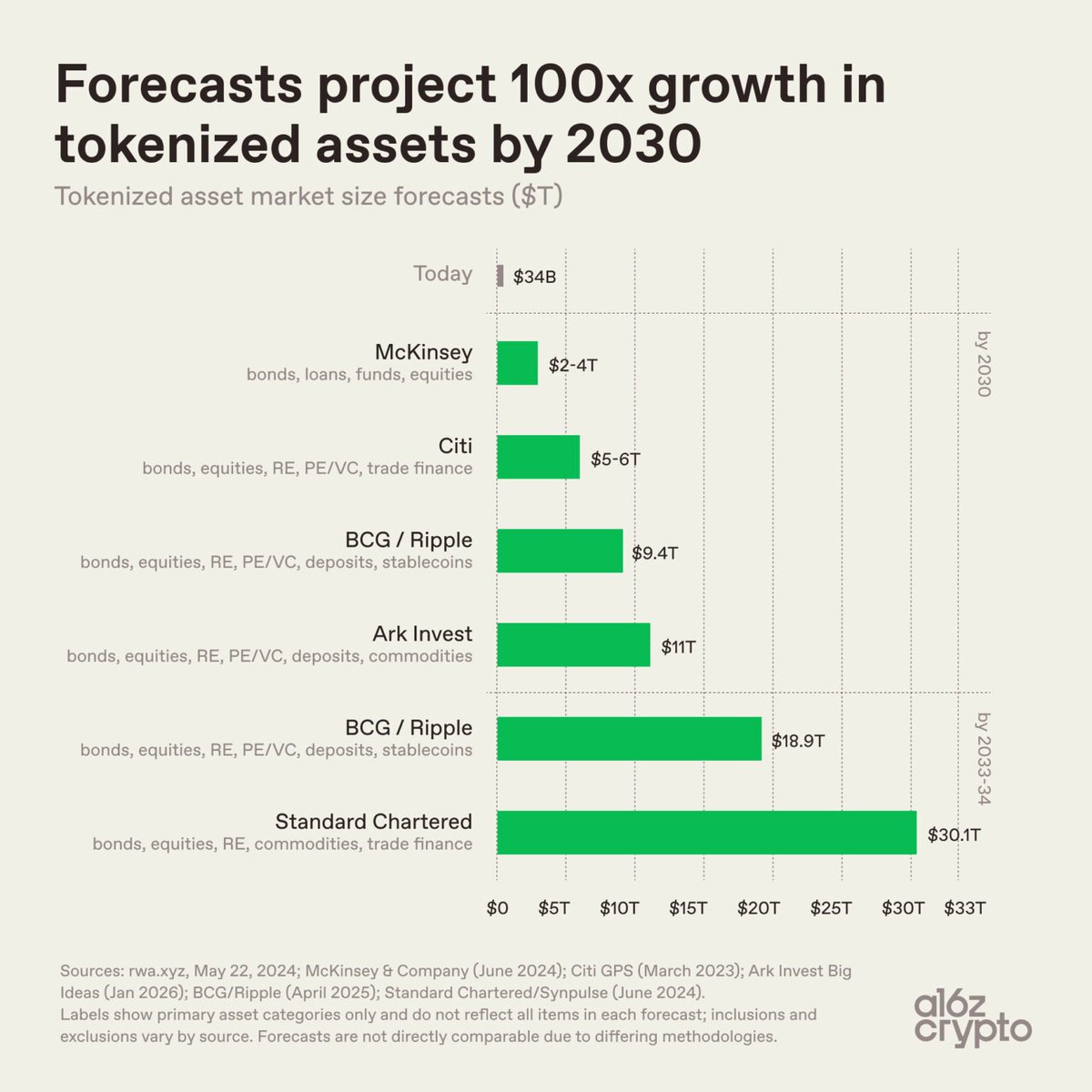
Looking ahead, forecasts for tokenized assets vary a lot but they all point in the same direction: growth.
McKinsey: $2–4T by 2030.
Ark Invest: $11T by 2030.
BCG/Ripple: $9.4T by 2030, $18.9T by 2033.
Standard Chartered: $30T + by 2034.
The gap between $2 trillion and $30 trillion is more about definitions than adoption.
Different institutions are measuring different things. McKinsey focuses mostly on bonds, loans, funds, and equities. Standard Chartered adds commodities and trade finance. BCG and Ripple include deposits and stablecoins alongside more traditional asset categories.
Despite these differences, the broader trend is consistent: Asset tokenization is expected to expand.
Episode #162 with Shaz Bishop from RBC Brewin Dolphin is live!
We talk about women and the investing shift, industry gaps and the wealth transfer.
Please enjoy!
Check out The Purse Podcast for more (see links in comments) 👇
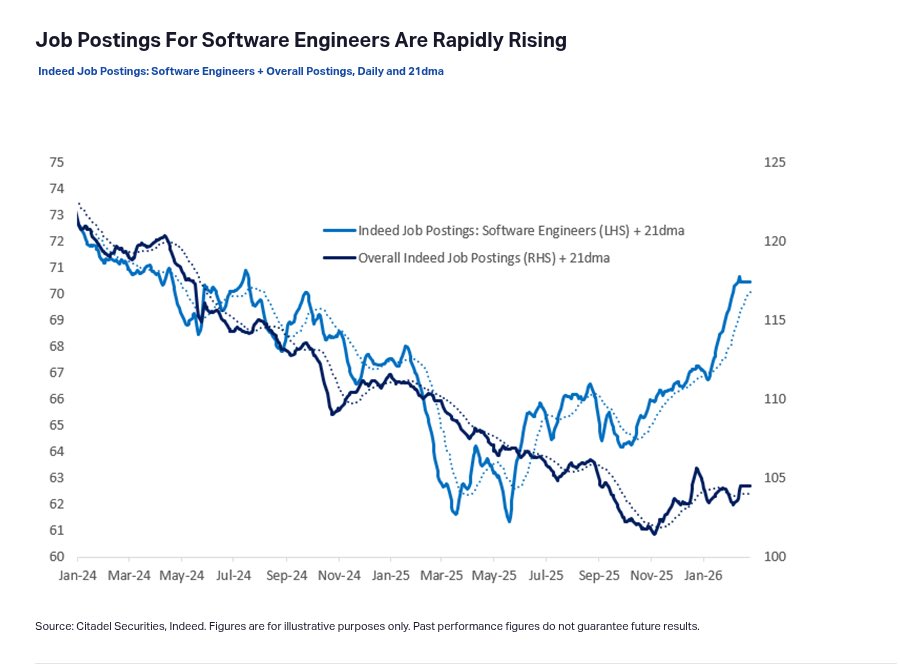
Q: How are job postings for software engineers rising rapidly despite AI agents automating coding?
A: Because there’s far more code to manage than ever before. We’re already seeing a 14x YoY increase in GitHub commits, and it’s accelerating.
AI has dramatically lowered the cost of writing code, so it’s now being used across far more businesses, applications, and use cases.
We’re at the beginning of a massive productivity boom driven by the proliferation of bespoke software throughout the entire economy.
Coding has been AI’s breakout use case this year. The fact that it’s increased demand for software engineers — rather than decreased it — should call into question the entire “AI will cause mass job loss” narrative.
The US FDA could approve its first AI-designed drug within the next couple of years. One candidate, a “treatment for severe asthma, recently entered late-stage trials.” The drug itself isn’t groundbreaking but “that AI is this close to creating a medicine people will actually use is a milestone in its own right.” #Bloomberg
Robots will offset 60% of China’s population slump, says Barclays. “Under scenarios it calls optimistic, Barclays said China’s cumulative installed stock of humanoid robots could approach about 24 million units by 2035. #Bloomberg
We have been surprised that coders still code without actually coding, mathematicans do not do math proofs, and writers who write without actually writing words. Our future is not job replacement but a kind of new work we have trouble imagining only a year ago.