Ornithological conversion therapy. Watch until the end to witness the exact moment when we brought a new bird scientist into the fold 🌎🌎❤️❤️🔥🔥 #wolfelab#MichiganTech#michigantechwildlife
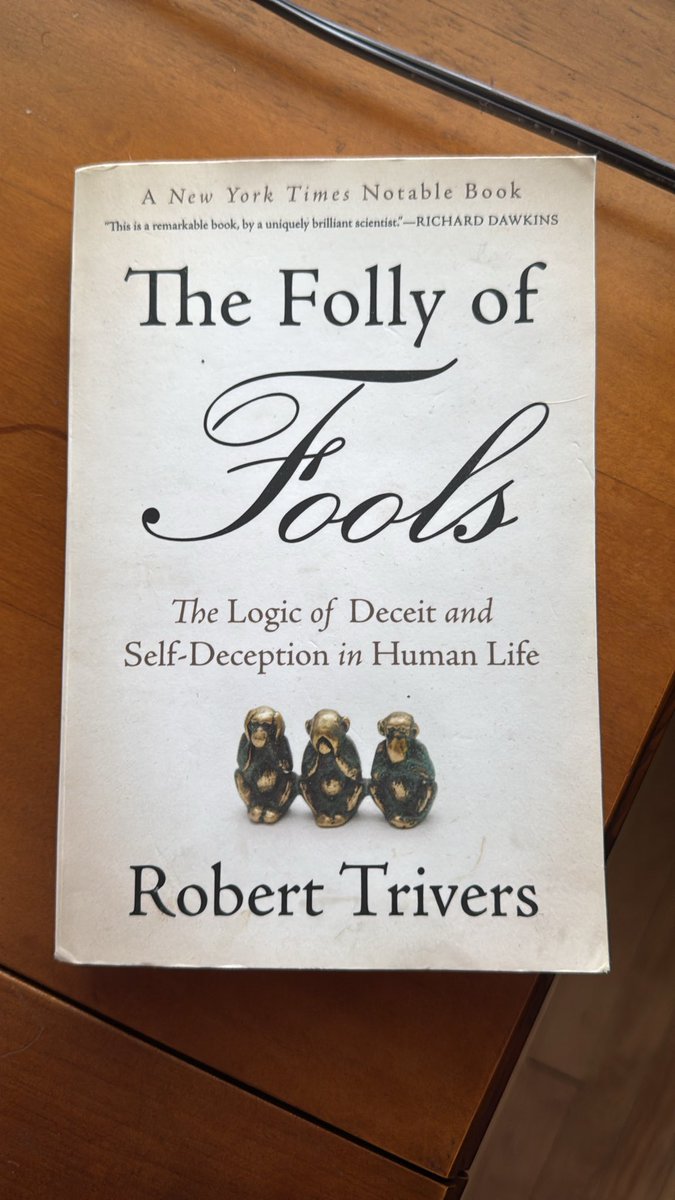
@SteveStuWill Such a bummer. His work on deception as a selective pressure driving the evolution of cognitive ability was mind blowing. His work will be missed.
New Science feature: birds are declining inside “intact” tropical forests. Data point to a troubling pattern. Our work near Manaus is testing mechanisms directly via a dry-season irrigation experiment Grateful for an amazing team + Warren Cornwall https://t.co/RXGwPcTw3g
@SwipeWright@brad_polumbo The painlessly killing predators, philosophical arguments are ecologically bizarre, and entertaining. https://t.co/9yL3c5TWbc
So proud of Kristin for developing innovative tools to address the biodiversity crisis! Their groundbreaking work has significantly advanced red wolf conservation. Like all meaningful endeavors, they're truly "in the arena," shaping discourse and conservation efforts.
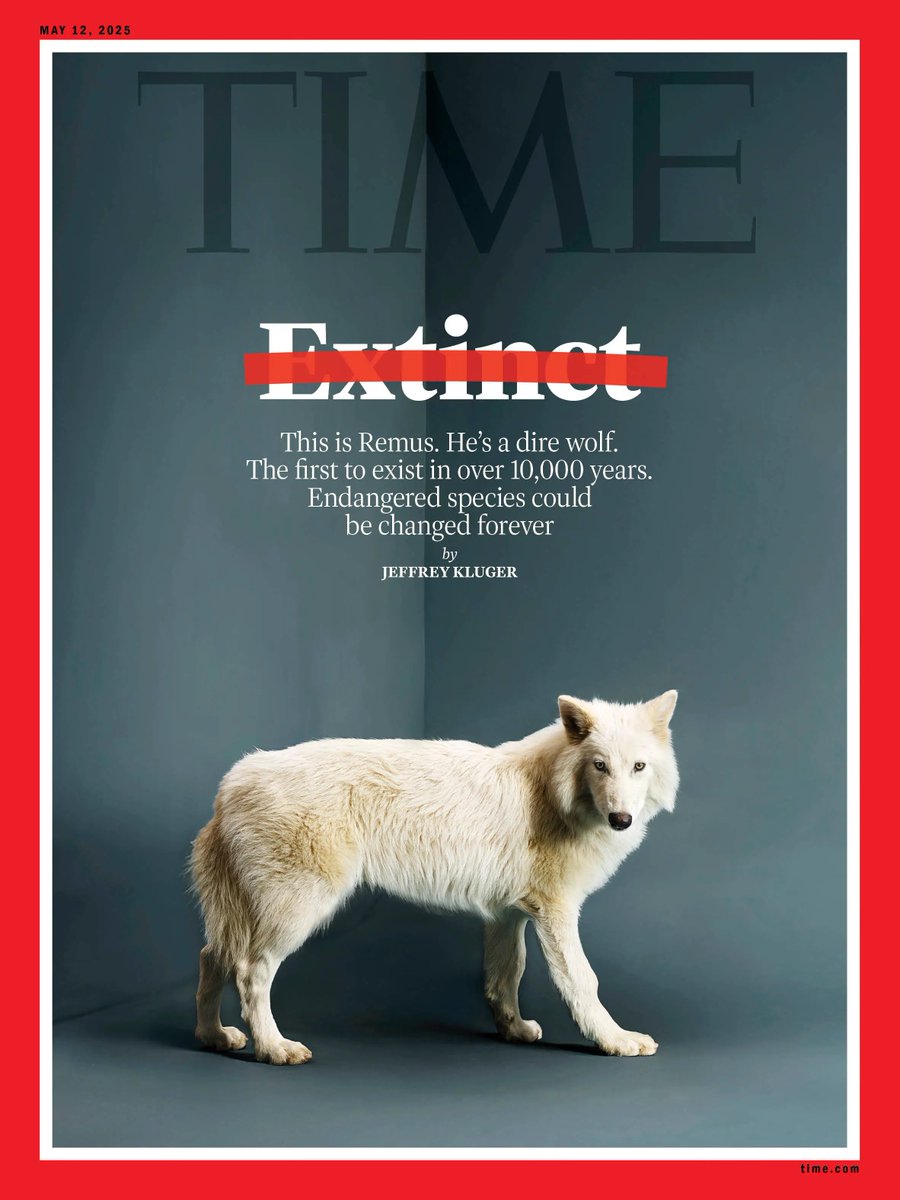
Kristin Brzeski, MTU researcher and assistant professor, is featured in the latest @TIME cover story for her role in finding red wolf “ghost alleles”—a breakthrough that helped create the world’s first Ghost Wolf and could save a species on the brink.
🗞️: https://t.co/NCRJOj5kCD
The birds of the Amazon rainforest understory are facing a crisis. According to a 27-year study of rainforest birds led by Tech researcher @JaredDWolfe, when it comes to supporting healthy bird communities, supposedly pristine environments do not offer protection.
Read more about the research in MTU Unscripted: https://t.co/w9SZ7xdfi2
#AmazonRainforest #ClimateResearch
Our research was picked up by The Guardian, alongside work from two of my favorite scientists, John Blake and @BetteLoiselle. We hope these findings contribute to solutions that help ensure the persistence of these incredible birds into the 22nd century. https://t.co/HZYk3AUhQf
One of the most importantly depressing pieces of research we have produced to date: birds in pristine central Amazonian forest are not doing well. https://t.co/XR98EWdgmb
Exciting opportunity at Michigan Tech! CFRES is hiring an Assistant Professor in Environmental Data Science & Biostatistics. It’s a great unit with passionate faculty, and Houghton is one of the best small towns in America. https://t.co/FSEicdsFlV
This picture (c. 1899) hints at the scale at which seabird eggs were harvested for food, devastating their populations.
Ironically, these eggs went to feed workers harvesting bird guano on other islands, which was a renewable resource - if seabird populations stayed healthy.
🚨 My friend’s first novel, Animal Listeners, is out now! 🐾📚 Join Quinby Clark as she discovers her gift of talking to animals & is invited to a special school where magic meets nature. Perfect for fans of magical adventures & animal enthusiasts 🦊🐦 #NewBook#FantasyReads
We are thrilled to announce that this year’s edition of the Trends in Biodiversity and Evolution (TiBE) conference will be held as part of the TROPIBIO project!
Help shape the program by submitting your ideas for thematic sessions: https://t.co/OAgsWBGia6
Stay tuned for more!
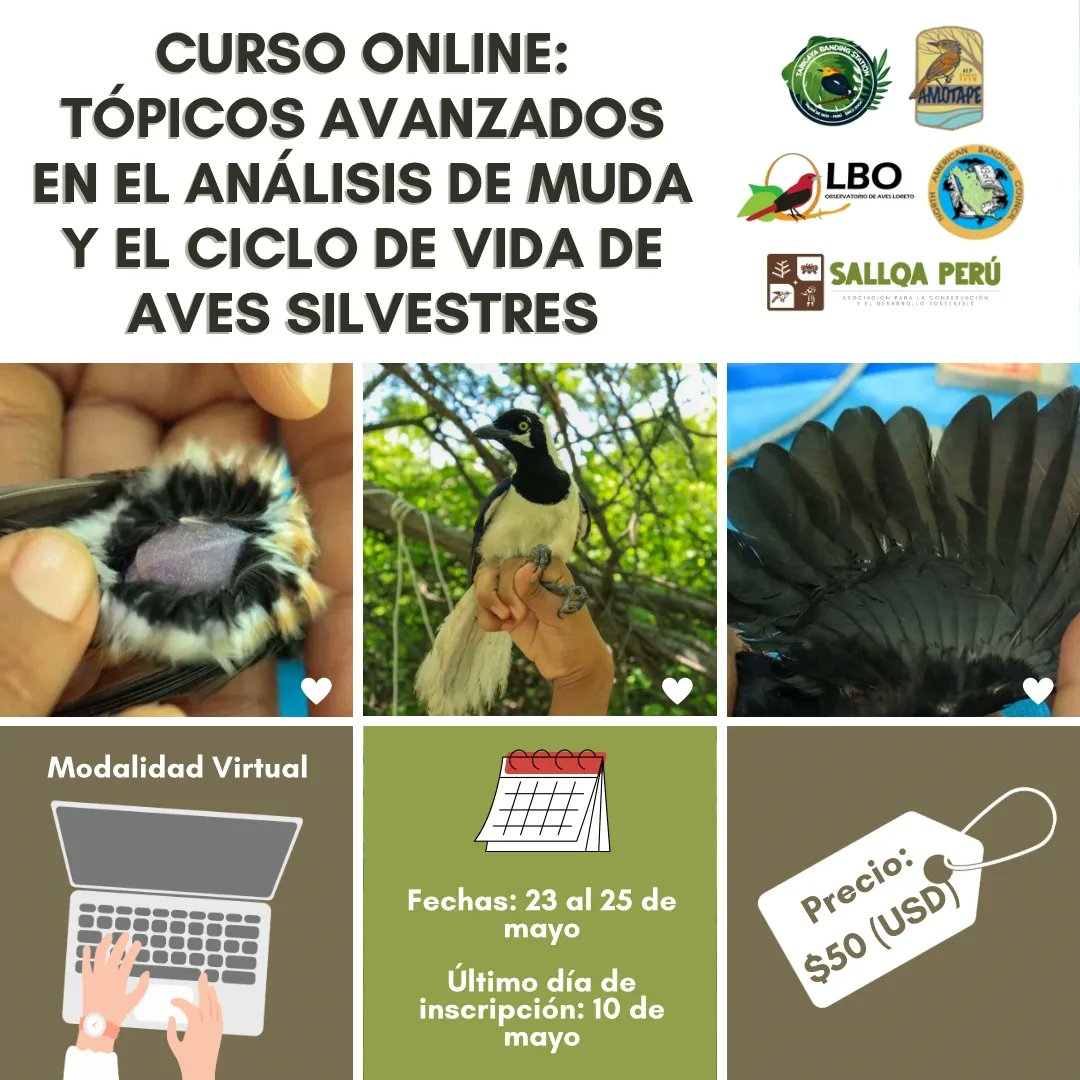
Para los interesados en la investigación en aves silvestres, se viene este curso en modalidad online. Participan 10 instructores de 5 países distintos con amplia experiencia en el tema. Informes a [email protected].
My colleague Dr. Kristin Brzeski at CFRES/MTU is looking for a genetic data analyst starting immediately, working part-time and remotely. Please contact her via email if you are interested
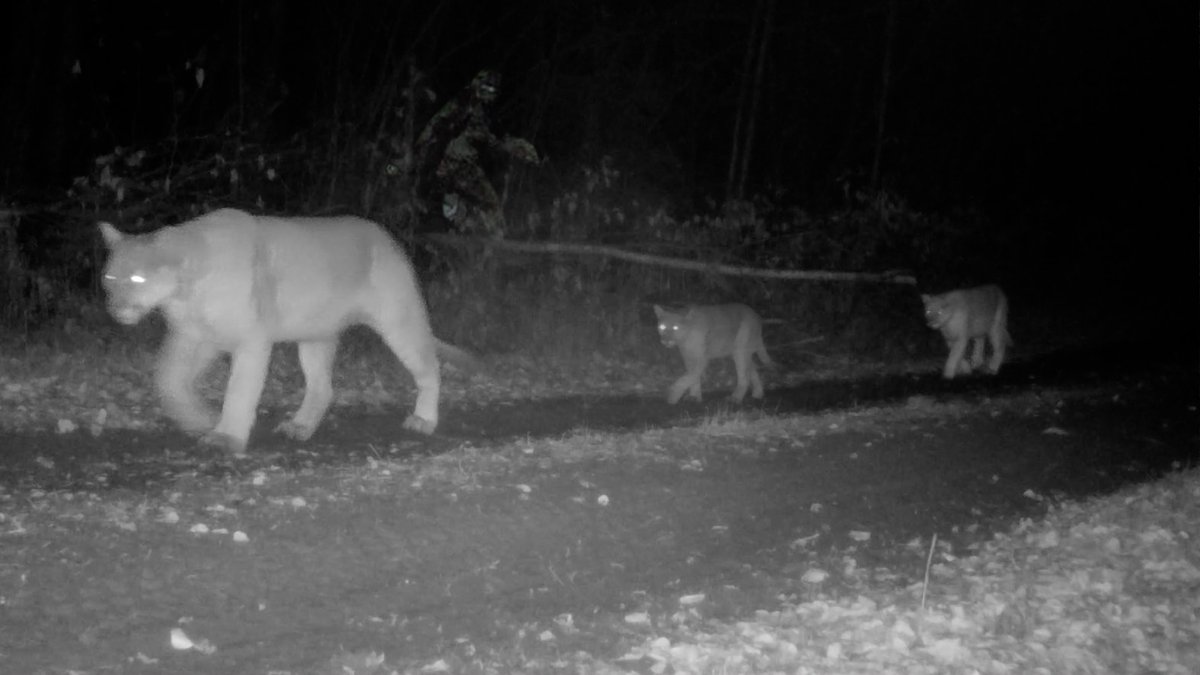
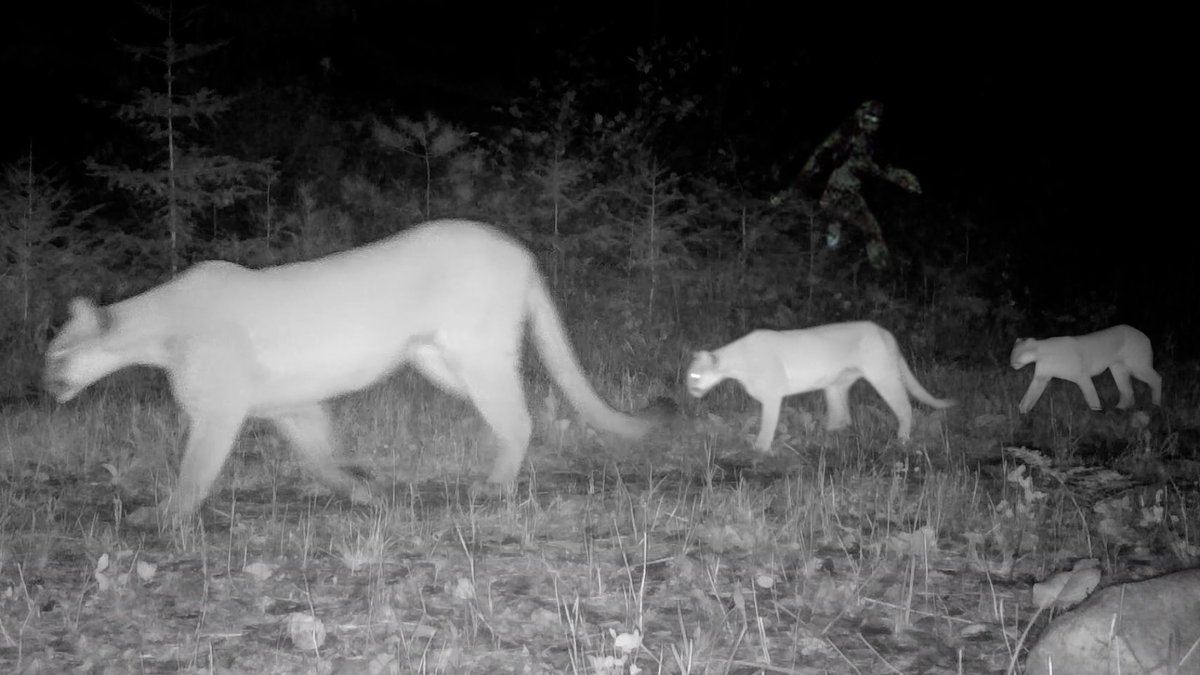
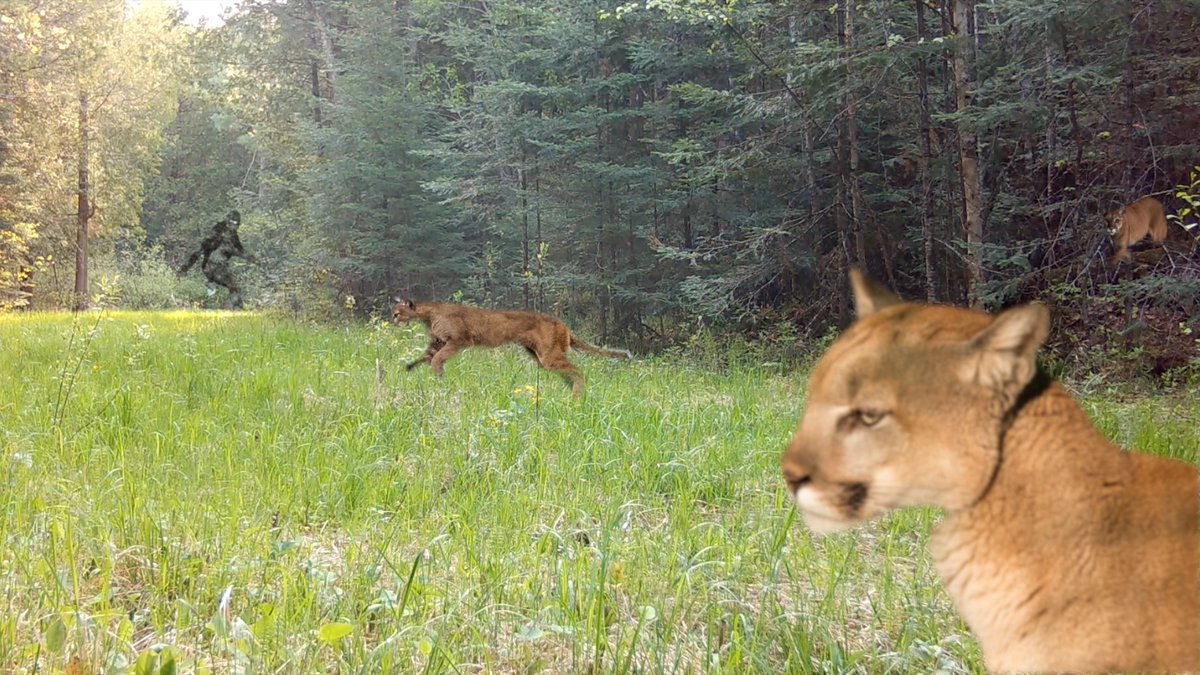
Sharing this information is risky for us but we feel the public should be aware of this, even if it comes at the expense of our project. Last summer, we captured the first observations of a cougar with kittens—the first evidence of a breeding population in Minnesota or the midwest since the 1800s.
We shared this observation with the government, thinking they would want to know, and instead of our observation being met with interest, we were met with unexpected hostility.
We were told that we were not allowed to tell anyone or share the photos publicly. They threatened to shut down our project if we shared the information and forced us to sign non-disclosure agreements. We were given virtually no explanation why.
For the past 8 months or so, we have been really struggling about what to do and at the same time, we have been working to understand what on earth is going on. Fortunately, a biologist with the government, whose name we cannot mention for their own sake, reached out and shared what is going on.
So today, we are violating the NDAs we signed to share what is really going on.
Turns out, for years the government has been trying to re-introduce large predators across the midwestern US without the public knowing: the goal is to establish breeding populations of these animals.
We have heard, though we cannot confirm for sure, that the insurance companies are behind much of this, as has been rumored at deer camps across the Midwest for decades...
Apparently, they started this program years ago when cryptic predators were hard for the public to spot, and so introducing them secretively was easy. However, the popularity of trail cameras has put a real kink in their plans.
In an attempt to cover up this plan, the government continues to deny the existence of a breeding population of many large cryptic predators, and then silence anyone who captures evidence to the contrary.
And this includes silencing anyone who captures photographic evidence of not only breeding cougars but also of another introduced species: Homo sasquatchis.
For years, the government had been trying to increase H. sasquatchis populations but to no avail.
In 2016, when President Trump took office, one of his first acts as president was to hire Dr. Hors Manoor, famed H. sasquatchis researcher, and create the covert “Institute of Sasquatchis Proliferation” (referred to as ISP).
One of our white house contacts told us: “Donny is a lifelong squatcher.”
However, due to gridlock in Congress, President Trump could not secure all the funding needed to establish an independent institute so the ISP ended up being housed in the same facility where the cougars were being bred for reintroduction.
And so what this meant is that the cougars and H. sasquatchis were raised right next to one another. In an internal leaked report that was sent to us, Dr. Ugiess R. Weerd, an esteemed ethologist, working at ISP noted that this was a big problem as the "animals had developed an emotional dependency”, and therefore "one species could not be reintroduced without the other”.
In other words, both had to be reintroduced at the same time, which explains the photos we captured, and the fact that the cougars we observed were not alone...
Anyway, there was apparently some concern as to the future of the Institute of Sasquatchis Proliferation when Joe Biden became President. Some thought he would quash the program.But President Biden gave a rousing speech in a closed-door meeting at Camp David shortly after he became president.
He stated: "When I was younger, I remember walking in the woods and hearing the knocks of the squatches, and briefly seeing a sentinel squatch before it darted away. But now the woods are silent, the squatches have all gone. Look what we have done to them!”
And with those remarks, he summoned bipartisan support for the Institute of Sasquatchis Proliferation. As a result, over the past 4 years, more H. Sasquatchis have been reintroduced in North America than in any other time in history.
Even more surprising, we have it on good authority that on the first Tuesday of every month, former President Trump and President Biden meet in the oval office for tea and crumpets, and to discuss recent H. sasquatchis developments, plan future reintroduction efforts, and watch re-runs of "Finding Bigfoot”.
So in this time of division and polarization, it seems there is one thing that can bring us all together: Homo sasquatchis.
Confirmed: Arizona Game and Fish wildlife biologists reviewed the imagery of a jaguar in the Huachuca Mountains and confirmed that it is a new individual not previously photographed in the state. The video was captured on a trail camera by Jason Miller... 🧵👇
@kareem_carr I’m confused why you want to belittle the rigor of a PhD dissertation. Justification, background information, & synthesis of pre-existing theory that inform your research is a critical component of a written dissertation. It’s not just filler. Why suggest the contrary?