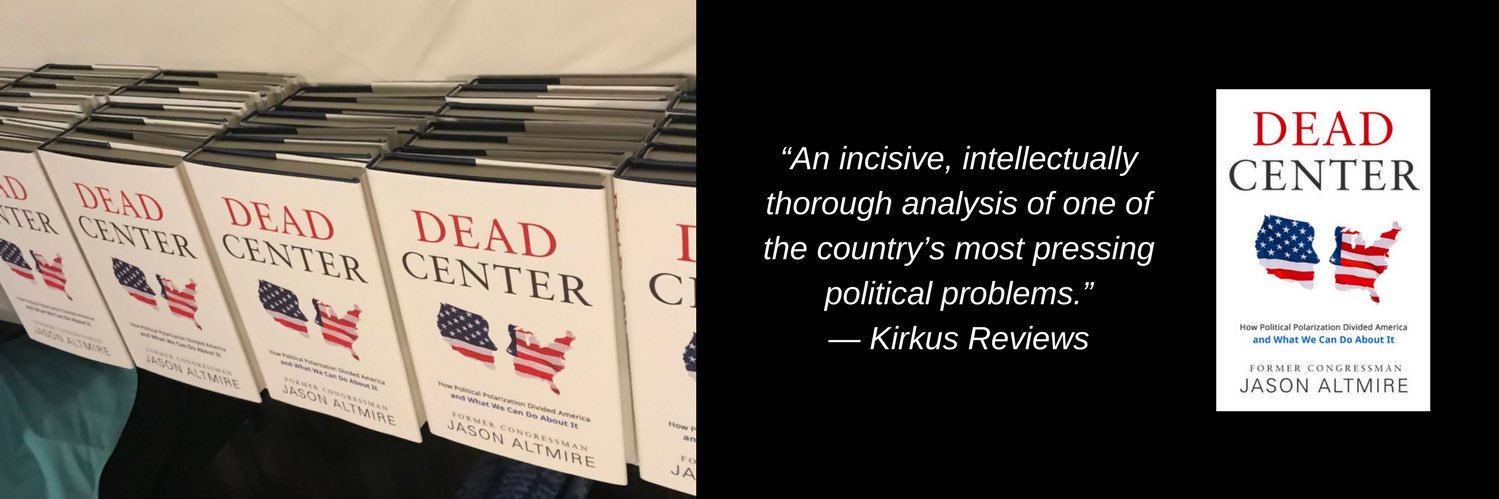
Tune in to #AnHonorableProfession to learn from @jasonaltmire and Riley Burr's recently published book, Trade Up: Why the Future Belongs to Skilled Trades and How Career Education is Transforming the Workforce. 🎧 https://t.co/6mBjg3YuSz
At the beginning of the year, @SenatorWarnock's YouTube was averaging around 7K views per month. Today it’s averaging 1M. I talked to @charlie_2221, the Senator's Deputy Communications Director, about their growth playbook. A few insights below:
A conversation on C-SPAN about some of the most interesting moments since the Senate became televised in 1986. I join Capitol Hill ace reporters Carl Hulse and Paul Kane. https://t.co/1ad53B0IEz
@Timodc@melissadderosa The point that she is making is Dems haven’t learned from Pat mistakes and continue to put forward candidates that are less competitive in a general election, in pursuit of ideological box checking
For college graduates today, landing a first job is difficult—and in some areas more competitive—than it has been in years. Postings for entry-level jobs are declining in many industries, unemployment for recent graduates is rising, and many of the tasks that once served as a stepping stone into the workforce are increasingly being taken over by AI.
This disparity in unemployment is “not something that throughout history has been true all that often,” says Cory Stahle, senior economist at Indeed.
Read more: https://t.co/RP0vDL9pp4
“Is the message here for Republicans that if you dissent from the President, he is going to take you down?” @margbrennan asked Rep. Brian Fitzpatrick (R-PA) after Louisiana Sen. Bill Cassidy’s defeat in his Republican primary.
“Well, it is one of the many reasons, Margaret, why we need to open primaries up in all 50 states,” Fitzpatrick said. “Closed primaries, coupled with gerrymandering, your previous question, are really, really hurting our country. They're causing gridlock on the House floor.”
NYT says both parties oppose open primaries because they “impede partisan gains,” allowing “voters across the political spectrum to choose candidates, often resulting in centrist choices.” They “allow non-party faithful to vote, which party leaders see as a forfeit of power.”
Grateful to @Kellen_Browning and Anna Griffin for their in-depth reporting on the state of the primary reform movement, and what the evidence shows (including @uniteamerica Institute's latest study) about open primaries' impact. https://t.co/G407EKStrc
@ctyankee007@cspanwj The data we cite in the book show that those who graduate college with a degree in a liberal arts field are significantly more likely to be unemployed than those who graduate college with a more career-focused degree. It compares 4-year degrees, not degrees to high school grads.
Career Education Colleges and Universities President & CEO @JasonAltmire on what he calls a "Sputnik moment" for the American workforce:
"We have millions of jobs that can't be filled. The pipeline to those jobs is harmed by the demographics of the country. We're getting older, and not enough people are choosing that profession. We have job displacements driven by AI. So all of this comes together to form a national crisis."
TUE | Author and Career Education Colleges and Universities President & CEO @jasonaltmire discusses his new book, "Trade Up: Why the Future Belongs to Skilled Trades and How Career Education is Transforming the Workforce."
Watch LIVE at 9:15am ET!
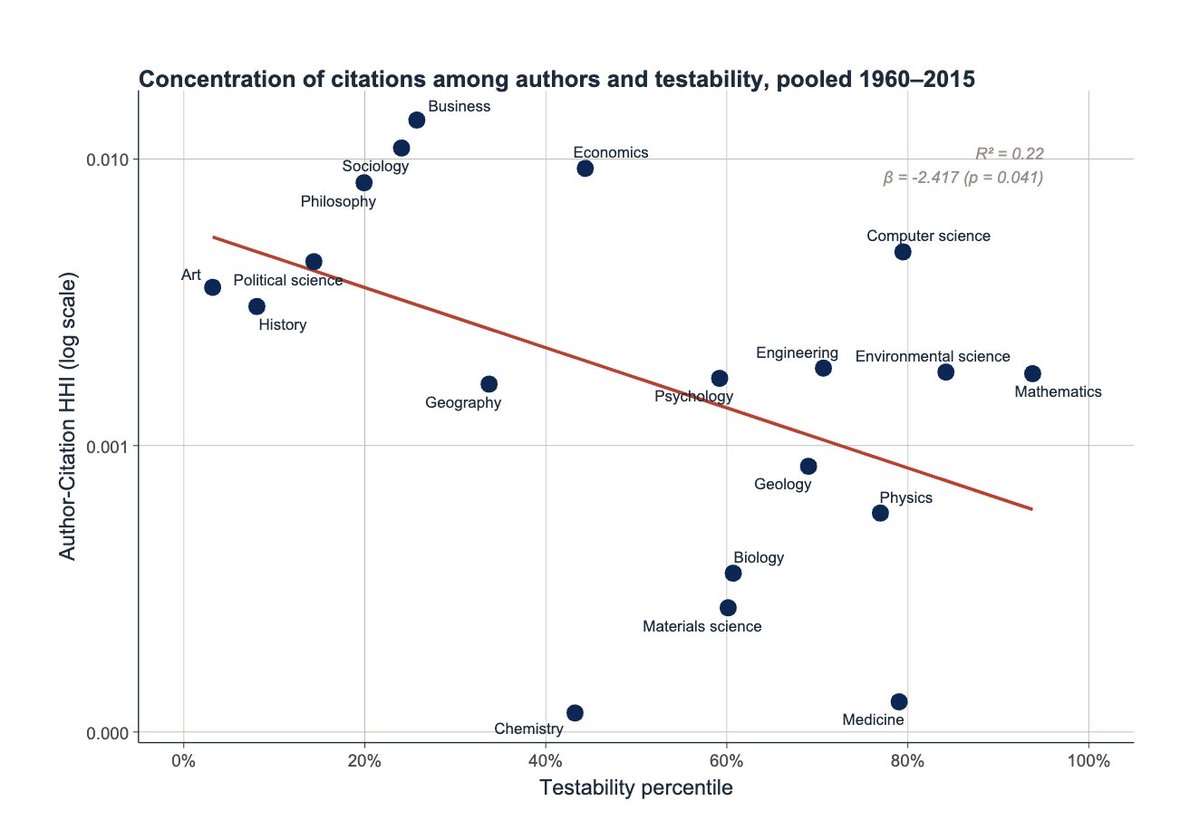
Prestige bias is a major problem in academia: success in academia leads to numerous unfair advantages (eg., professors at prestigious universities have an easier time getting their papers published).
But prestige bias is bigger in fields that are less scientific (eg., art, history, politics, and philosophy). In these fields, the claims of academics are hard to test so people rely more on prestige as a heuristic about the truth of their claims.
In contrast, fields where claims are more testable exhibit lower concentrations of prestige markers (eg., math, physics, computer science, and medicine). This makes it easier for unknown or early career researchers to break through and have success.
A new analysis finds that a 10% increase in the testability of claims in a field is associated with a 9% decrease in citation concentration. Evaluators rely less on prestige for quality assurance when the work is testable.
My field is psychology is in the middle (close to biology). In the last decade, the credibility revolution has dramatically changed the field. As people published replication attempts, several the leading figures in the field lost significant prestige when their claims did not hold up to empirical scrutiny.
This is actually the sign of a healthy scientific field: Prestige should not trump empirical evidence.
https://t.co/p4Xy4jv7PF