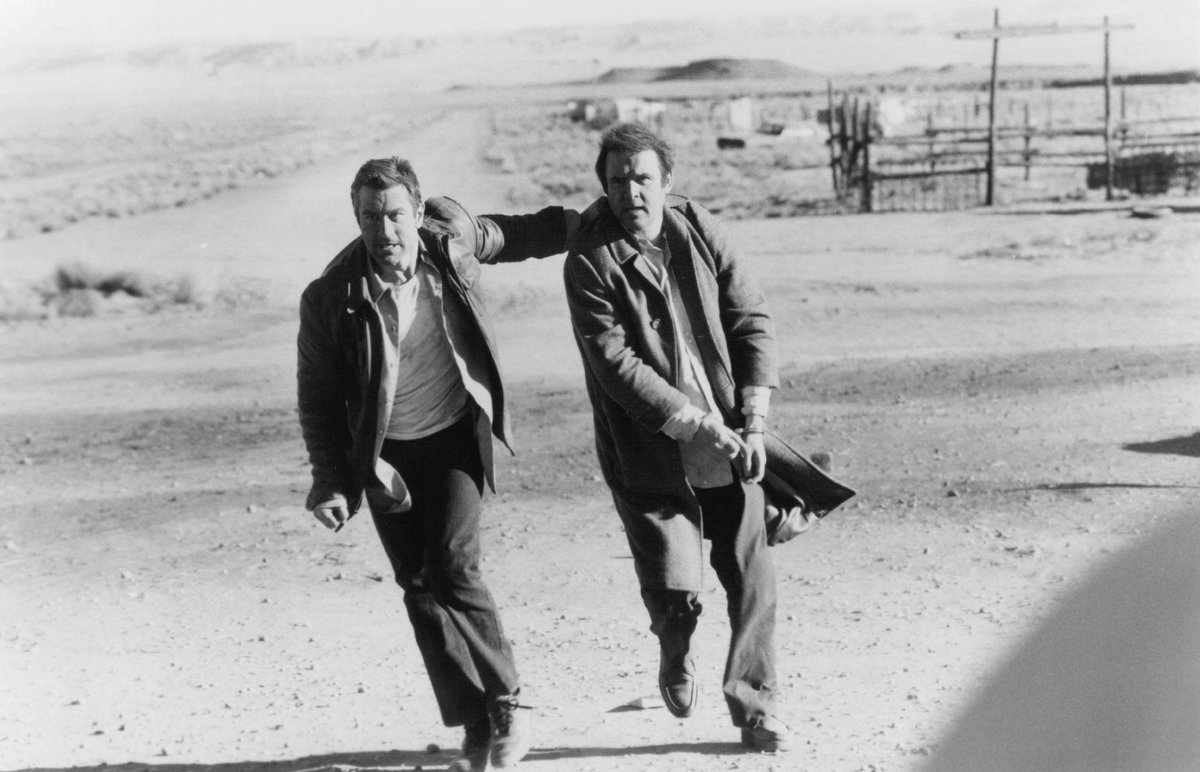
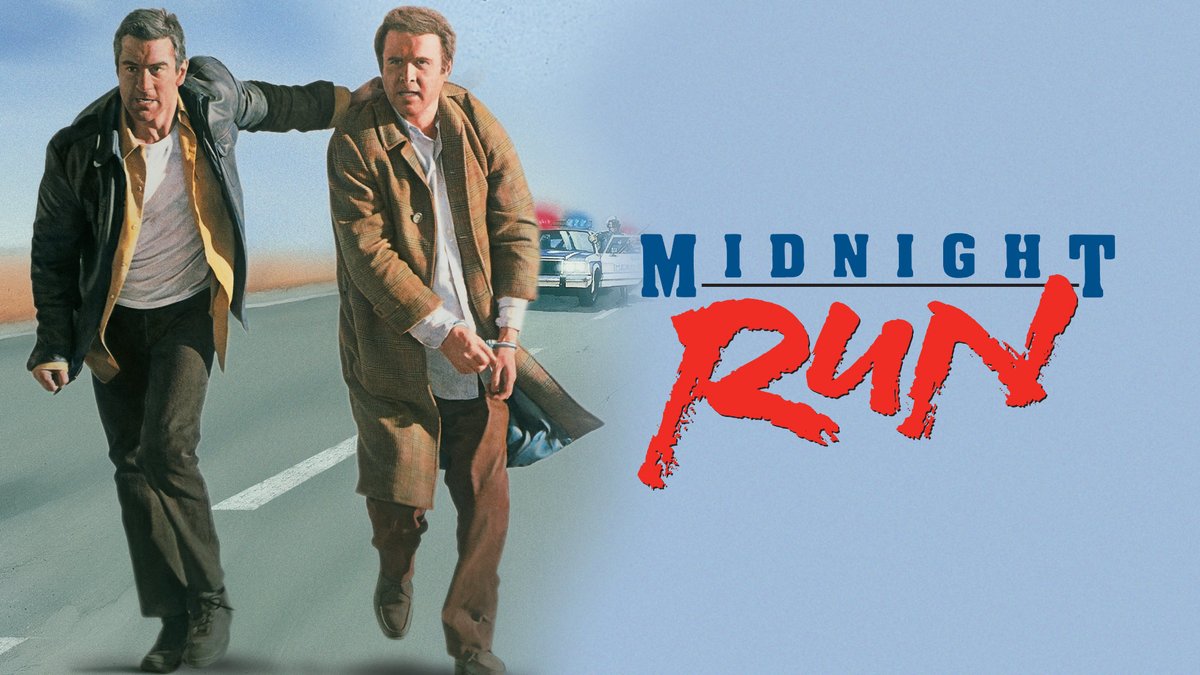
MIDNIGHT RUN was released 36 years ago today. One of the best buddy comedies to come out of the 80s, its behind the scenes story was a cross-country thrill ride
1/30
23 incredibly specific things you've probably noticed that also have incredibly specific names:
1. Spoliation — when parts of an older building are reused to make a new one.
Ian Fleming created James Bond.
He was also a Professional Life Enjoyer.
His daily routine is something we can all learn from.
In 1946, Ian Fleming purchased a piece of land in Jamaica with a private beach and hired a contractor to build a house with a first class view of the pristine Caribbean sea.
He named the house Goldeneye.
On 17 February 1952 Fleming began writing the first James Bond novel from his Goldeneye estate.
The name of the novel is Casino Royale.
Here is Fleming’s routine:
He began each day with a morning dip in the Caribbean sea followed by a hearty breakfast with his wife Ann.
Breakfast was always scrambled eggs, bacon and black coffee. Fleming drank coffee because he believed tea tasted like mud and caused the decline of the British Empire.
At 9am, after kissing Ann, he would leave the breakfast table and go inside the main living room of Goldeneye where he had a desk in the corner by the windows. He would pull out his Imperial typewriter and write for the next three hours.
At noon, he would stop writing and walk barefoot into the warm Jamaican sun. There, he would meet up with Ann and go down to his private beach to sunbathe and swim before lunch.
After lunch, he would take a 1-2 hour royal afternoon nap.
At around 5pm, he would return to his desk in the main living room of the Goldeneye estate and spend an hour or so going over what he had written earlier in the day. After making his corrections, he would take the type-written papers and place his manuscript in the left-hand drawer of his desk.
This daily routine, which Fleming followed for the next dozen years, led him to write a total of twelve James Bond novels and two short story collections.
In a speech he gave to students at Oxford, Ian fleming had this to say about his writing process:
“Say whatever you want, research it properly, and write fast. Never look back. If you interrupt the writing of fast narrative with too much introspection and self-criticism you will be lucky if you write 500 words a day and you will be disgusted with them into the bargain.”
22 ideas from David Ogilvy:
1. You have a first class mind. Stretch it.
2. The longer your memos, the less likely they are to be read by men who have the power to act on them.
3. Permanent success has rarely been built on frivolity. People do not buy from clowns.
4. Only First Class business, and that in a First Class way.
5. Get rid of sad dogs who spread doom.
6. Pick a subject and make yourself an authority on it.
7. The more you tell the more you sell.
8. We have a habit of divine discontent with our performance. It is an antidote to smugness.
9. Big ideas are usually simple ideas.
10. Search all the parks in all your cities; you'll find no statues of committees.
11. You aren't advertising to a standing army; you are advertising to a moving parade.
12. Great industrial leaders are always fanatically committed to their jobs. They are not lazy, or amateurs.
13. In the best companies, promises are always kept, whatever it may cost in agony and overtime.
14. Tell the truth, but make the truth fascinating.
15. Tolerate genius. There are very few men of genius. Almost without exception they are disagreeable.
16. We prefer the discipline of knowledge to the anarchy of ignorance.
17. Don't bunt. Aim out of the park. Aim for the company of immortals.
18. Pay peanuts and you get monkeys.
19. We make advertisements that people want to read. You can't save souls in an empty church.
20. Do not tolerate incompetence. It is demoralizing for professionals to work alongside incompetent amateurs.
21. Talent is most likely to be found among nonconformists, dissenters, and rebels.
22. I admire people who work with gusto. If you don't enjoy what you are doing, I beg you to find another job. Remember the Scottish proverb, "Be happy while you're living, for you're a long time dead."
I just made another podcast on David Ogilvy (the 5th one)
It’s packed full of useful ideas. Listen here: https://t.co/l1FzrqaHrN
Who is the most high-agency person you've never heard of?
Rudolf Vrba.
He escaped Auschwitz by soaking himself in gasoline -- to give a memo to Churchill, Roosevelt, and the Pope.
Meet the man who saved 200,000 lives from the Nazis:
I considered moving out of the USA.
After some research, I realized leaving is stupid.
There is no chance the USA will stop being the global superpower.
And the best country for opportunity.
The reason surprised me:
⬇️
1970 to 1988 is often referred to as Disney's "Dark Age."
During the "Dark Age," Disney's animated films were mostly critical and commercial failures.
Then, in the late 1980s, a story consultant named Chris Vogler wrote a 7-page memo that helped spur "The Disney Renaissance."
In 1978, Chris Vogler was a film student at USC. For one of his classes, Vogler was reading "The Hero With A Thousand Faces" by the mythologist Joseph Campbell.
That year, the first Star Wars movie was released. Vogler saw it in the theaters, and he was almost certain Star Wars was putting Campell’s ideas to work.
Vogler distilled Campbell’s complex ideas into a term paper that identified how George Lucas was using mythic elements throughout Star Wars.
A few years later, Vogler was hired as a story consultant at Disney where "memos were a big part of the corporate identity...following the example of [CEO, Jeffrey] Katzenberg, an absolute master [of "the memo art form"].
So Vogler adapted that term paper into a 7-page memo, in which he outlined “the twelve stages of the hero’s journey.”
The hero's journey, Vogler summarizes, goes like this:
The hero is introduced in his ORDINARY WORLD where...
The hero receives the CALL TO ADVENTURE.
The hero, reluctant at first, REFUSES THE CALL.
The hero MEETS A MENTOR and is encouraged to CROSS THE THRESHOLD where...
The hero encounters TESTS, ALLIES, and ENEMIES.
The hero reaches the INNERMOST CAVE where he endures the SUPREME ORDEAL.
The hero SEIZES THE SWORD or the treasure and...
The hero starts to take THE ROAD BACK. Along the way...
The hero is RESURRECTED and transformed by their experience, and then...
The hero RETURNS to his ordinary world with a TREASURE, BOON or ELIXIR to benefit their world.
Vogler's memo was read by CEO Jeffrey Katzenberg.
Katzenberg made it required reading for everyone in the company, and then, he sent Vogler to work with the Animation team working on "King of the Jungle"—what would become "The Lion King."
On a corkboard, the team pinned the storyboard for "The Lion King," "with the twelve stages of the Hero's Journey clearly marked as signposts."
Using this 12-step program as a roadmap, "The Lion King" was released in 1994 and became the most successful animated film ever, and for a while, the most profitable film in history.
Takeaway 1:
The comedian Hasan Minhaj likes to say that his job is to distill coffee into espresso:
"My job is to distill coffee into espresso...to take complicated things and make it simple so people can walk away after twenty minutes with a clear take and perspective.”
Vogler wasn't the first to come across Joseph Campbell's complex ideas. He was the first to distill them into a practical guide for storytellers.
Takeaway 2:
Vogler was right. George Lucas did indeed read Joseph Campbell before bending the story of Luke Skywalker to follow the twelve steps of the hero’s journey.
In fact, Lucas calls Campbell his Yoda. Not just him. Not just Star Wars. Toy Story, Finding Nemo, Aladdin, Harry Potter, Mulan, Moana,...
Once you know the 12 steps, you see the hero with a thousand faces everywhere.
---
“There are only two or three human stories, and they go on repeating themselves as fiercely as if they had never happened before.” — Willa Cather
Been looking at the most expensive real-life film stunts ever.
Here are 9 wild ones.
1. MATRIX RELOADED (2003)
For this chase sequence, a fake highway was built at a dis-used naval base in California. The 1.3 mile loop highway cost $2.5m and was fenced by a 19ft wall.
I sat through four NCAA tournament games in Birmingham yesterday, and nothing was more fun than listening to NKU’s band shred every song they played—and watching band director @will_redden allow the tunes to course through his veins. I hope they get invited back tomorrow.
Few other things need to be recognized in this video 100%..
1. Listen to the trumpet take it up the octave and nail it
2. Listen to those heavies chug on the bassline
3. Listen to those ‘bones during that final trombone chorus
That’s just some of it. Give this band some love
@tylermilliken_ I was at that game. Hot, humid, and the Sox started terribly. We almost left to beat traffic—and then things turn, Phillips goes years, and we drove back to Tennessee talking about there being no way the Sox don’t win the Series.
We all think of habits in what we physically do, but we rarely consider the habits in how we think…
What you tell yourself you can do.
What you tell yourself you’re good at or capable of.
Who you tell yourself you are.
How you think is your most important ritual.







![bpoppenheimer's tweet photo. 1970 to 1988 is often referred to as Disney's "Dark Age."
During the "Dark Age," Disney's animated films were mostly critical and commercial failures.
Then, in the late 1980s, a story consultant named Chris Vogler wrote a 7-page memo that helped spur "The Disney Renaissance."
In 1978, Chris Vogler was a film student at USC. For one of his classes, Vogler was reading "The Hero With A Thousand Faces" by the mythologist Joseph Campbell.
That year, the first Star Wars movie was released. Vogler saw it in the theaters, and he was almost certain Star Wars was putting Campell’s ideas to work.
Vogler distilled Campbell’s complex ideas into a term paper that identified how George Lucas was using mythic elements throughout Star Wars.
A few years later, Vogler was hired as a story consultant at Disney where "memos were a big part of the corporate identity...following the example of [CEO, Jeffrey] Katzenberg, an absolute master [of "the memo art form"].
So Vogler adapted that term paper into a 7-page memo, in which he outlined “the twelve stages of the hero’s journey.”
The hero's journey, Vogler summarizes, goes like this:
The hero is introduced in his ORDINARY WORLD where...
The hero receives the CALL TO ADVENTURE.
The hero, reluctant at first, REFUSES THE CALL.
The hero MEETS A MENTOR and is encouraged to CROSS THE THRESHOLD where...
The hero encounters TESTS, ALLIES, and ENEMIES.
The hero reaches the INNERMOST CAVE where he endures the SUPREME ORDEAL.
The hero SEIZES THE SWORD or the treasure and...
The hero starts to take THE ROAD BACK. Along the way...
The hero is RESURRECTED and transformed by their experience, and then...
The hero RETURNS to his ordinary world with a TREASURE, BOON or ELIXIR to benefit their world.
Vogler's memo was read by CEO Jeffrey Katzenberg.
Katzenberg made it required reading for everyone in the company, and then, he sent Vogler to work with the Animation team working on "King of the Jungle"—what would become "The Lion King."
On a corkboard, the team pinned the storyboard for "The Lion King," "with the twelve stages of the Hero's Journey clearly marked as signposts."
Using this 12-step program as a roadmap, "The Lion King" was released in 1994 and became the most successful animated film ever, and for a while, the most profitable film in history.
Takeaway 1:
The comedian Hasan Minhaj likes to say that his job is to distill coffee into espresso:
"My job is to distill coffee into espresso...to take complicated things and make it simple so people can walk away after twenty minutes with a clear take and perspective.”
Vogler wasn't the first to come across Joseph Campbell's complex ideas. He was the first to distill them into a practical guide for storytellers.
Takeaway 2:
Vogler was right. George Lucas did indeed read Joseph Campbell before bending the story of Luke Skywalker to follow the twelve steps of the hero’s journey.
In fact, Lucas calls Campbell his Yoda. Not just him. Not just Star Wars. Toy Story, Finding Nemo, Aladdin, Harry Potter, Mulan, Moana,...
Once you know the 12 steps, you see the hero with a thousand faces everywhere.
---
“There are only two or three human stories, and they go on repeating themselves as fiercely as if they had never happened before.” — Willa Cather](https://pbs.twimg.com/media/FtJLxrtXgAAp455.jpg)





