🔥Today, I'm proud to launch the Mapping Racist Covenants (MRC) interactive map! The MRC project explores the geography of racist housing covenants across Tucson subdivisions, focusing on those enacted between 1912-1968. The map is available at: https://t.co/dLCQFMS6QV
1/
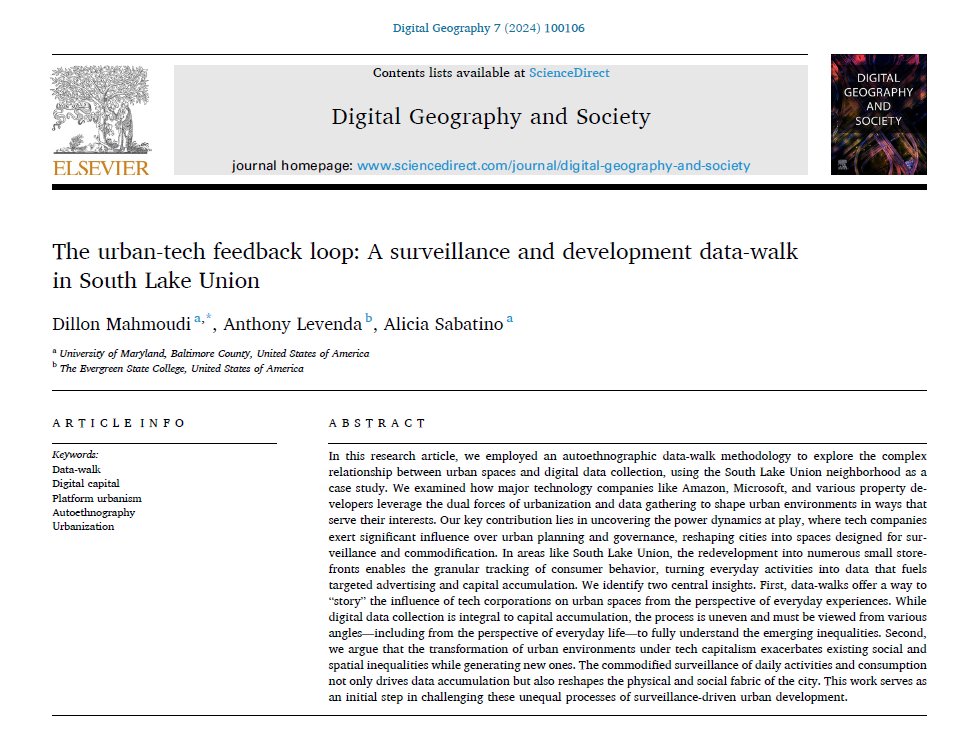
Tech firms shape cities to generate data for their digital products, creating a feedback loop: they invest in urban property & design spaces that capture and reinforce consumer preferences.
New open-access paper w/ Anthony Levenda & @aliciacsabatino
https://t.co/DCy0PodcRr
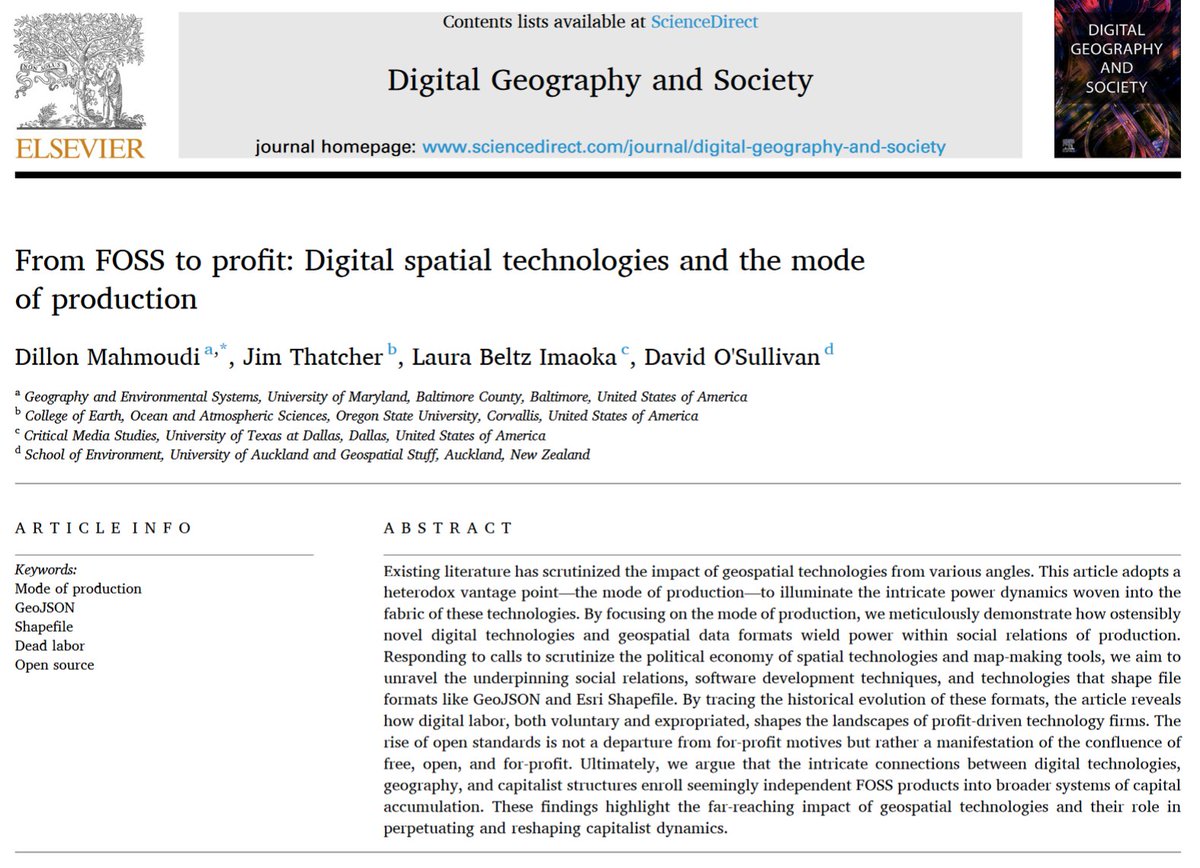
Excited to see this out in @dig_geo! Fun and insightful to examine mundane file formats through the mode of production. This paper looks at the histories of GeoJSON and the Esri Shapefile.
https://t.co/W4t5jCFBca
🗞️NEW LAW in AZ takes down barriers for those wanting to redact racist language from their CC&Rs👍
See the research @JasonJurjevich and his team had for @TucsonStar in the link below with a link to Mapping Racist Covenant's site in the comments 🔗🔗
https://t.co/k8ivEHomIz
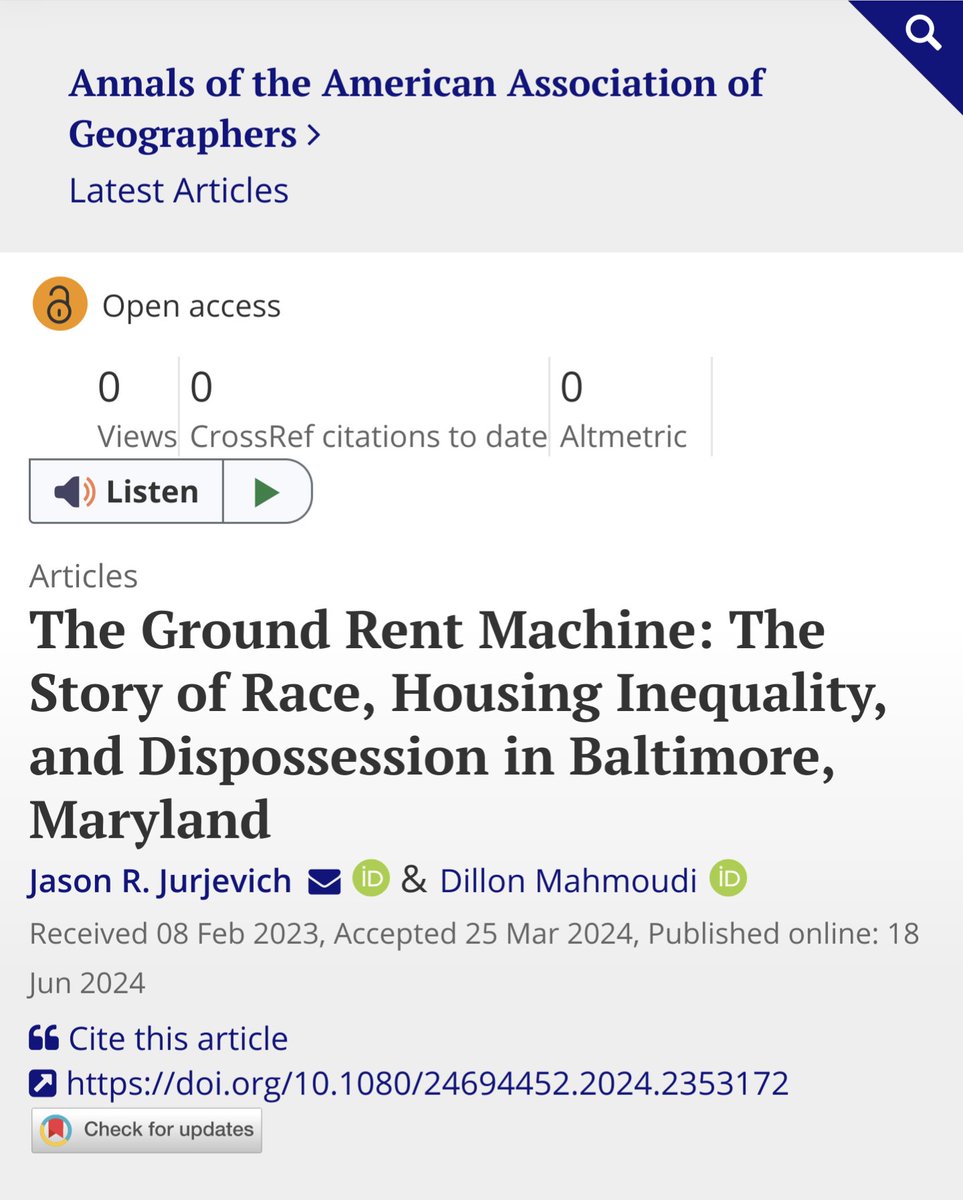
📍Our paper 'The Ground Rent Machine' is out in @theAAG! Using critical quant, we illustrate the uneven and racialized geog of ground rent in Baltimore (roughly 1 in 3 homes), shaping the geog of segregation and housing inequality. Grateful to @dillonm my dear friend + colleague.
Excited our paper "The Ground Rent Machine" is out in @theAAG, which tells the story of racial dispossession thru a little known legal mechanism: ground rent. A dream to collaborate with @JasonJurjevich, engage in crit quant, and decline-as-urbanization.
https://t.co/cxRffMs74a
@TucsonProgress Turnout is closer to 13.9% using a more accurate denominator (CVAP, not registered voters, 110,575/798,113). Low turnout raises this question: why are we holding elections for Tucson mayor and council in off-year elections?
NEW: The Census Bureau is proposing to test asking people age 15 and older questions about their sexual orientation and gender identity through the American Community Survey next year to help with civil rights and equal employment enforcement
https://t.co/ZtMU9t5n4Y
University of Arizona researchers have mapped more than 200 Tucson subdivisions with racist housing restrictions in their founding documents. https://t.co/F7zub014FE
This work is not possible without a rockstar research team, including Yoga, Chris, Liz, and Claire, and funding from a 2022 @MellonFdn Borderlands grant from @uazlibraries, as well as support from @SGDE_UArizona@UArizonaSBS@PimaRecorder and community partners! 3/3
🔥Today, I'm proud to launch the Mapping Racist Covenants (MRC) interactive map! The MRC project explores the geography of racist housing covenants across Tucson subdivisions, focusing on those enacted between 1912-1968. The map is available at: https://t.co/dLCQFMS6QV
1/
In 2021 we had to sign Covenants, Conditions & Restrictions (CCRs) that contained racist language, presenting African American and Asian individuals from residing in our subdivision. Being a geographer, I knew I needed to tell the story of exclusion/discrimination with a map. 2/
Join us next Friday, Aug. 25 as we present our interactive web-based map highlighting the geography of racist Covenants, Conditions, and Restrictions (CCRs) in Tucson that were enacted between 1912-1968. Funded by the 2022 Mellon Borderlands grant funding from @uazlibraries.
I just want to thank @dcvanriper, @RRHDr, @wmannin, our students, and @NICHD_NIH and in particular the Population Dynamics Branch for supporting this new resource. You can download contextual data on structural racism, sexism, cis-heterosexism. Read about it below. #SBECCC