"What will sales teams look like going forward?
Probably half the size they used to be, pre-AI.
And reps might even be 5x as efficient in a few years." with @samdblond
.@googlecloud killed its own opening video 3 weeks before Google Cloud Next.
In rehearsals, VP of Marketing @saykay looked at the opener her team had built and called it. It was using AI, but not enough of it to actually showcase what the product could do. So they rebuilt it from scratch. In 3 weeks.
Here's how it came together, straight from her SaaStr AI 2026 session:
- It started on a napkin. A creative director sketched the concept by hand, then fed it into Nano Banana to generate the source images and inspiration.
- The story was Google's own history. The 1998 origin garage. Dino. The original server rack that was actually built out of Legos. 138 Easter eggs packed into the video, prompted from Google's own lore.
- Then they added motion with Veo and stitched it all together with a few custom agents built on the Gemini Enterprise platform.
- The agents improvised. They prompted for balls representing customers, and the model added a burst of water that was nowhere in the brief. It injected its own creativity into a physical, on-stage moment.
- The hardest part was the most physical: resolution. Max output was 4K. The screen at Next is the size of a 737. They had to upres from 4K to 12K using a custom Deep Mind model, the same one used for the Wizard of Oz production at the Sphere.
Top Takeaways:
1️⃣ The old version of this project needed an agency, a much bigger budget, and a lot more than 3 weeks. That whole path collapsed into an internal team using their own tools.
2️⃣ And the same video was impossible a year earlier. They tried similar work the prior year and it was too early, mostly because of the upres wall. Twelve months later it shipped on the biggest screen they had.
"When we wake up every morning, the first thing we do is talk to 10K, our AI VP Revenue. Because it knows more about the business ... that we do."
"Every app should build an agent like this for its users and customers, too.
Every app should could up with insights into your data and their product you didn't even know about." with @samdblond CEO @MonacoGTM
Had a sales call with exec at leading AI company the other day:
🤷He had no idea what MCP was or how a competitor product worked
😯And he "wasn't familiar with how Claude worked" but "would talk to folks that did"
-> Even if you have insane customer demand, I say, still hire folks that know the product cold
Yeah -> “I hate hiring people that come with playbooks”
You’ll learn any candidate you hire that endlessly talks about their playbook … will do nothing but run it borderline blindly
Over the past 3.5 years at @ElevenLabs, I've done unconventional things in GTM. Let me tell you why:
- I hate hiring people that come with playbooks. In interviews, when someone tells me about their "playbook", I reject them immediately
- Each company is different. Entering a market selling support agents is different from selling legal tech or ERP replacers.
- Each market & product requires a unique thesis and approach. If you don't understand the market, you can't craft a narrative that will be sticky
- AI has changed all dynamics. Experimenting is the only path forward
- Thinking big and placing bets yearly delivers outsized returns. I only need 1 bet to work to smash the target for the year
- Aligning the team in a Vision is the glue. Not many companies have a crazy Revenue Vision each year; mostly because leaders fear getting fired if something doesn't pan out. I can't be bothered
- You build a startup to do impossible things. Unconventional leads to making possible the impossible
Doing things unconventionally isn't easy - you face rejection internally & externally. But, hey, "this is the way".
An example: I came up with the "Global hyper-local" concept in 2024. Let me tell you that most people didn't want to open markets, have teams on the ground, adapt product (incl translations) or stop being US-first, amongst many things.
Today, we are global, +$500m in ARR, 50% of revenues come from outside the US, Enterprise is larger than Self-service, I have teams in +25 countries and have cracked the most difficult markets.
Being unconventional works. Just be creative, driven, hands-on, pushy and jump through obstacles. But don't be silly; if a company doesn't value it, find a new challenge. We are lucky to live the best period in history to build companies.
@rabois Oh great
Plus the almost 50% we pay on ordinary income and short-term capital gains anyway
Plus the 40% we pay when we die on a lot of it
It really adds up
A tough, honest truth
AI makes the most driven radically more efficient
And it can make ... the less driven ... lazier. They just wait for the AI to do it. They just don't do it anymore.
I know this sounds triggering. But we're 21+ AI Agents in. And I see it everywhere.
"Do AI sales agents only work for SaaStr because it has such a big brand?" It's maybe the #1 question we get
So we asked @samdblond CEO @MonacoGTM:
"What's just as important as brand is message-market fit. And so many have that. It can be applied across almost any start-up with a strong value proposition."
Zynga founder @markpinc says IPOs are “only bad” unless you need access to capital markets like SpaceX or large-cap AI companies.
“If you don’t have that need for capital market access, there is no benefit.”
“You have so many employees who leave because they say, ‘I always wanted to be at a company that went public. It was on my bucket list. Goodbye.’”
“Your culture changes. Ours did.”
“It gives you five other jobs as a CEO that you don’t need.”
10 learnings from this week's The Agents 🧵👇
1. Our AI VP of Finance went live and it doesn't even have its own app. It runs inside 10K, our AI VP of Marketing. Everyone says the future is 100 specialized agents. In our stack it's the opposite. They're collapsing into each other.
2. Start with what's broken, not what's fun to automate. We built the finance agent because collections had quietly fallen six figures behind. That was the pain worth solving.
3. Deal closes → reads the full contract → flips it to Closed Won in Salesforce → creates the invoices in Bill → sends them → turns on collections reminders. Under 30 seconds. Then we added commissions as step 5.
4. Put an agent on your software and it finds features you never turned on. Bill had automated invoice reminders sitting there for years. We never switched them on. The agent flagged it in minutes.
5. Some tools get MORE valuable with an agent on top (Bill, Salesforce). Others get less necessary (PandaDoc, maybe Marketo). It resets the whole buy-vs-build question.
6. Agents are NOT set-and-forget. Qualified was still selling last month's SaaStr Annual tickets a month after the event. Too much stale data drowns out the correction.
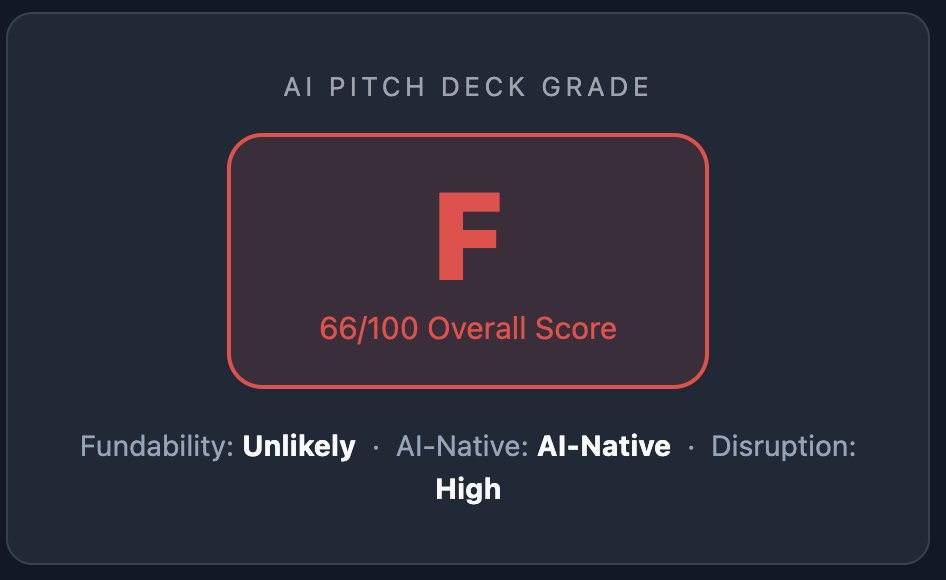
7. Too many guardrails break agents too. Our pitch deck grader passed 5,000 decks, then failed everyone after I added a 15th rule. Past a ceiling, more rules break the system, they don't tighten it.
8. Outbound isn't dead. It looks nothing like 2018. Revenue per rep is ~2x pre-AI today, plausibly 5x in two years. Owner already runs ~$2M/rep in SMB.
9. The vendor relationship that matters now is your FDE, not your AE. Best software relationships I've had in years. Buyers want the person who deploys and fixes, not the closer.
10. It was never really about freed-up time. It's collaboration. The first thing Amelia does every morning is get coffee and talk to 10K. 10K is the one that suggested we rip out PandaDoc.
Every single thing we did, you can do. We were just willing to start.
https://t.co/tcldw1EwDe
Yeah. I mean you add products with @MonacoGTM + @GetArtisanAI can radically turbocharge how you do outbound, etc. and make your team much more efficient
And net net we often can get buy with 50% of the sellers we used to have, with higher quotas / attainment
But the rest sort of seems the same. For now.
How different everything is since I built my last software company:
- Coding: 95% different
- Support: 90% different
- Product: 50% different
- Sales: 30% different
- Marketing: 10% different