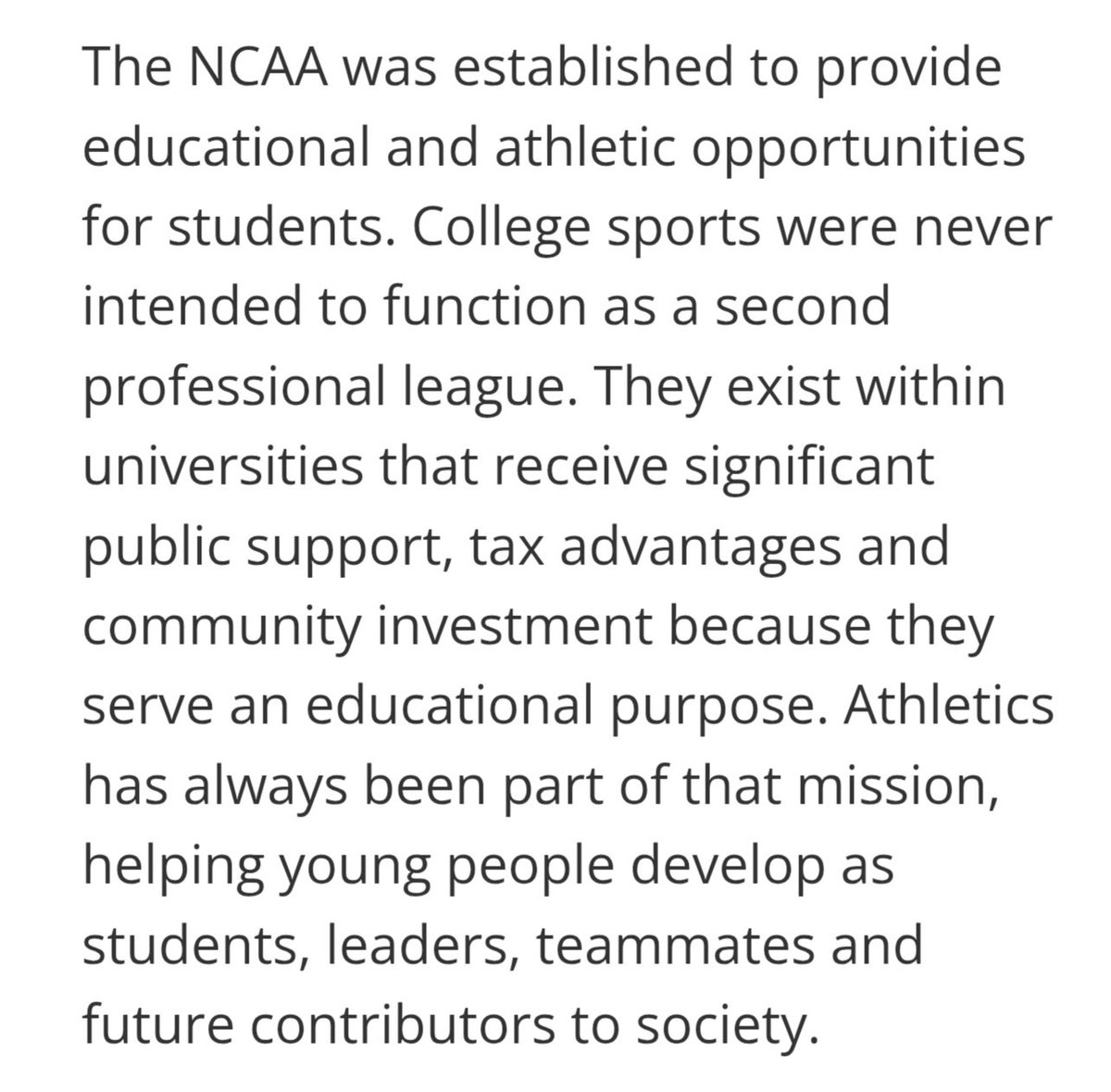
Great insights on NCAA eligibility from one of the top coaches in NCAA Cross Country & Track, Furman University's @RGary2 in @tandfn (link to article in replies)
"I worry that we are slowly losing sight of why college sports exist in the first place"
After reading about this new wave of lawsuits against the NCAA I have learned that stupid is contagious and not to argue with an idiot. They will bring you down to their level and beat you with experience.
The NCAA has recently been canceling pending eligibility extension and season-of-competition waiver requests outright rather than deciding them on the merits.
I'm seeing this increasingly in active matters right now.
It appears the administrative process is being dismantled ahead of the new five-year rule.
Where the facts justify it, court remains the only reliable path, particularly given the NCAA's newest strategy of essentially not even reviewing what was submitted.
You only get a clock extension if you can show that you missed 2 or more seasons of competition due to circumstances outside the control of the player or the school (e.g., redshirt, medical hardship waiver/absence). Clearly did not meet that criteria. Only 1 missed it appears.
The underlying problem in college sports is that everyone says they want rules, but nobody wants to follow them as soon as it negatively impacts them. Applies to society as well.
The NCAA is a private organization, and its bylaws are internal contracts. EOs only direct federal agencies, not private groups. No statute gives the President power to rewrite them or deprive athletes of their rights. An EO would be aspirational only and a waste of time.
Many college "leaders" are celebrating President Trump's signing of an executive order that will purportedly save college sports.
What their commentaries fail to highlight is that the order does not create any rules. It does not grant the NCAA an antitrust exemption. It does not and cannot declare that NCAA rules are immune from legal challenge.
It tells the NCAA and federal agencies to do certain things (such as returning to a one-time transfer with immediate eligibility rule and preempting state NIL laws). However, each of those things must still comply with existing law and survive judicial review. The order says so in Section 4(b), which conditions the NCAA's rulemaking mandate on actions taken "to the extent permitted by law and applicable court orders."
The executive order's enforcement mechanism is federal funding. That's a real threat. However, conditioning federal funding on compliance with an executive order is something that courts are willing to scrutinize and reject when the legal foundation is insufficient.
And let's not forget that at his roundtable one month ago, President Trump said he anticipated any executive order he signed would be challenged in court.
I expect the NCAA to attempt to adopt rules consistent with the executive order's directives, and that challenges will be brought to the courts. Congress will hold more hearings on college sports. No bills will be passed. Lawyers will bill more hours (thanks, President Trump!), state attorneys general will fight back against the federal government interfering with their state laws, and the courts will strike down any new policies that violate antitrust law.
This is no April Fools’ joke. Incoming PSAs can now start requesting final athletics certification through the EC. Below is a helpful guide from the NCAA!
I am liking this year’s Braves schedule to start 2026. Last year they open with San Diego and the Dodgers on the road. This year it’s Kansas City and Oakland.
If college athletes are sharing in revenue that is generated, why are HS athletes not afforded the same opportunities to share in the revenue their schools make off of them? Just saying…
How much do the agents have to pay back to the athletes after over promising and under delivering when they can’t get them a better situation than they already have?