Check out my blog on Treasury’s withdrawal of the mixer and unhosted wallet rules.
Policy advocacy can take a long time. Everyone clicks on the story of immediate outrage when a bad policy is announced. But while attention may wane, at @coincenter we often spend years pushing for better outcomes.
It’s encouraging on days like today when that work pays off.
https://t.co/eyH1cZrN4O
Treasury just withdrew crypto surveillance rule proposals long opposed by Coin Center.
The “unhosted wallet” and mixer rules would have expanded reporting into our pockets.
https://t.co/0XhQlmzT1s
The biggest question I’m left with from this reasoning is why it wouldn’t also mean that bets on sportsbooks are “swaps” and therefore unlawful to offer to retail customers off a DCM.
Nothing in the definition of a swap seems to turn on the platform where the bet is offered.
Prediction markets are swaps: "they just happen to be swaps that people find entertaining and fun."
Couldn't have said it better.
Read more about our prediction markets win in IL at the link 🔗 below. We are grateful to the court for their careful consideration.
The opinion touches on a lot of points that I raised in this piece: https://t.co/mH2Mrq2pLi
I also think the opinion as an example of good legal writing (even if you disagree with the outcome): straightforward logic, shorter well-structured sentences, and easy to understand.
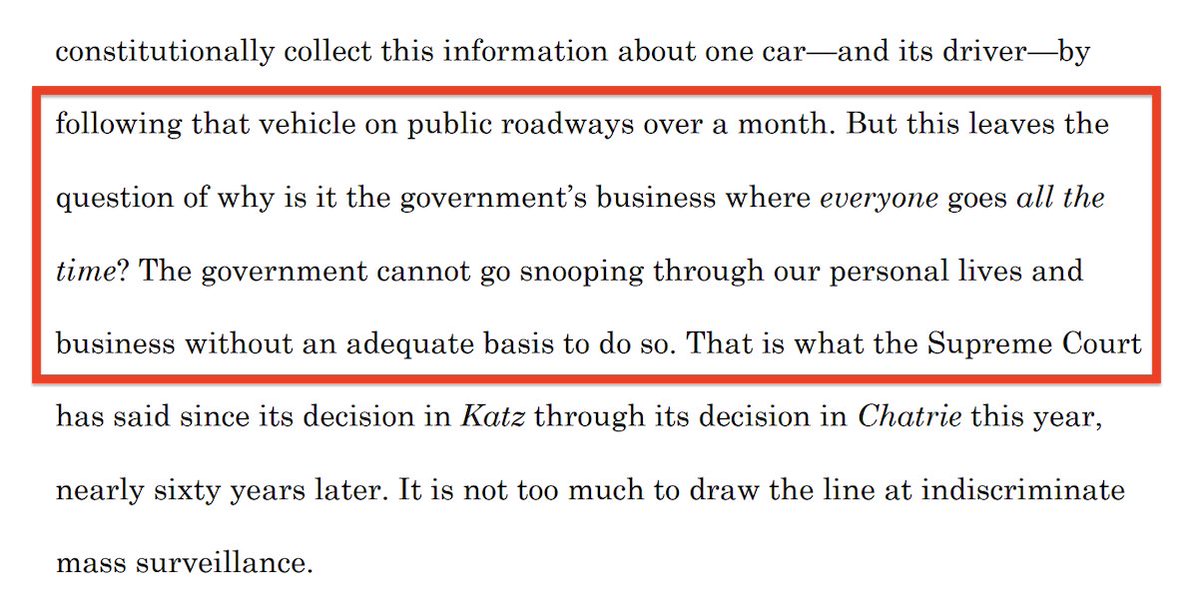
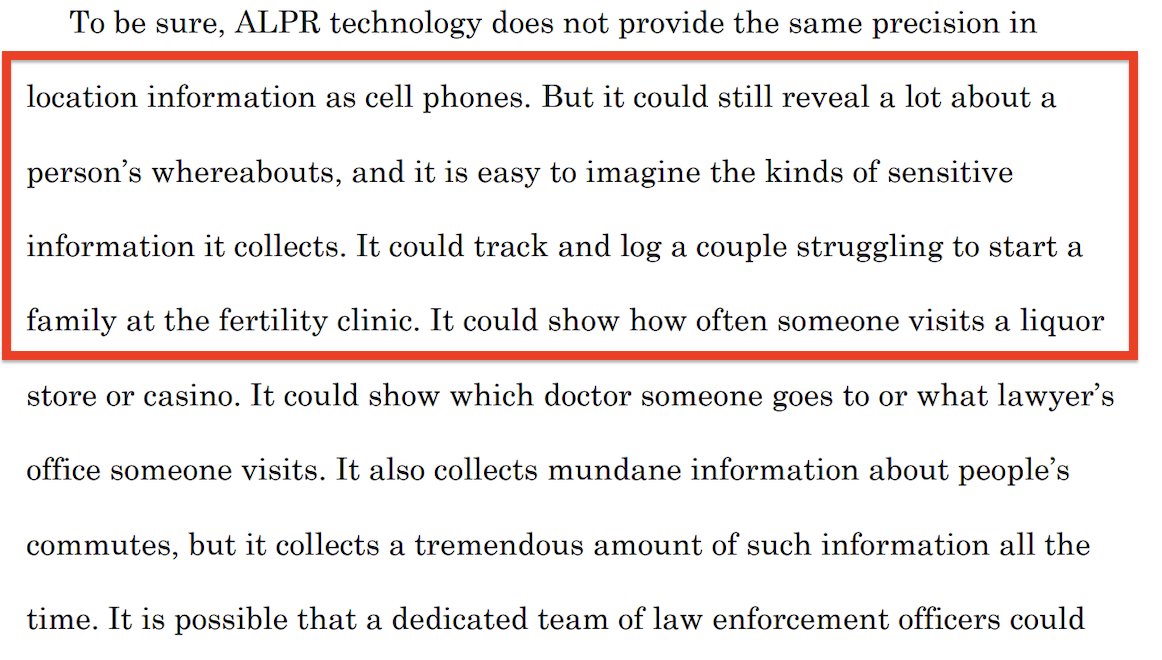
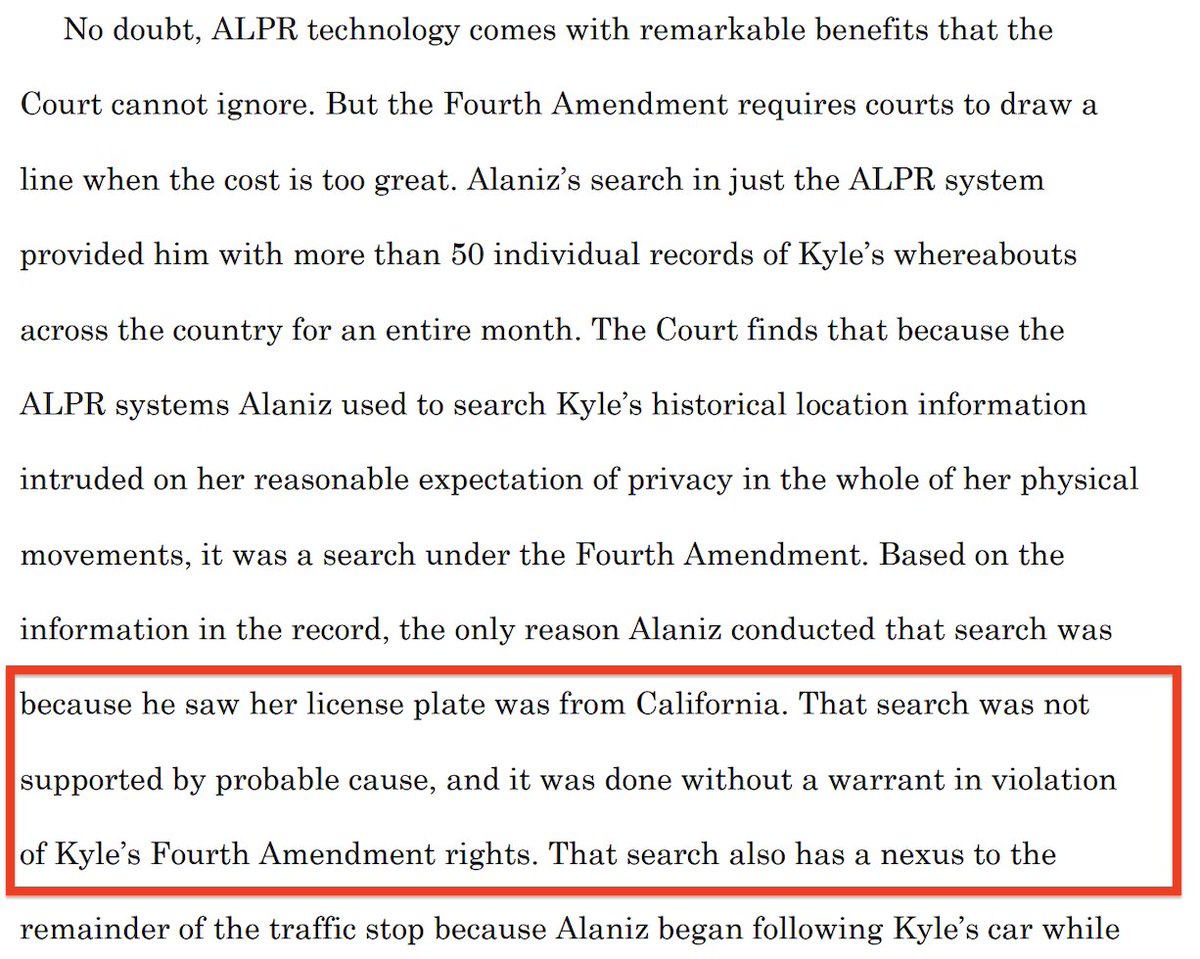
NEW: A Federal judge just ruled that a warrantless Flock/ALPR search violated a woman's 4th Amendment rights!
"Why is it the government's business where everyone goes all the time?"
"Freedom from persistent, dragnet-style surveillance while in public is not a foreign concept in our society, and it is a reasonable expectation that society already accepts"
Judge Sara Hill (N.D. Oklahoma) notes other courts, including in Oklahoma, ruled the other way on Flock searches. She argues that a decision from 1983 shouldn't govern 2026 networks of what she calls "indiscriminate mass surveillance."
"This Court is now faced with technology that appears to be approaching the dragnet type law enforcement practice Mr. Knotts warned of."
Setting up for an interesting fight in circuit court if the government appeals.
Story by @jason_koebler
https://t.co/xXq8KtyrXt
Ruling: https://t.co/xYhkozrWWD
“Founded in 2014, Coin Center is a rare creature in Washington’s crypto circles: a digital asset nonprofit without a firm allegiance to any specific part or player in the crypto industry.
Instead, Coin Center fashions itself as a champion for the core philosophical essence of crypto — the ability to conduct financial activity without intermediation. The nonprofit is effectively a civil liberties group arguing for the core innovations underlying crypto technology by pointing to the First and Fourth Amendments.”
For the latest edition of the Punchbowl News Vault Quarterly, we talk with Coin Center Director of Policy Jason Somensatto about life for crypto after the collapse of the Clarity Act.
@BrendanPedersen and @ccleffert with the details: https://t.co/Kz6hU9EbnD
Just a couple decades ago, public records stayed mostly private because accessing them took real effort. The Supreme Court called it "practical obscurity."
The internet reduced the cost of accessing public data, and AI has made it easier still. Assembling data about almost anyone on the planet has never been easier.
@GoBankYourself on how zero-knowledge cryptography can rebuild that protection by design, via @coincenter:
https://t.co/cSlS3G7EdS
On the topic of unnecessary personal data revelations, just signed my daughter up for a dance competition and it used some bespoke registration software that required MY birthdate and gender along with everything else you would expect. Sure that will be held safely
Grateful to @coincenter for publishing this and allowing me to be their first guest-post!
Practical obscurity protected people because compiling a life from scattered records was expensive. Digitization and AI inverted that cost structure. Engineered obscurity restores it by permitting verification without compilation.
It is fair to say that the part of our work that I am most interested in these days is around the future of privacy in this weird digital world that is developing, which is why this piece @GoBankYourself wrote for us resonated so much. Definitely worth your time to read.
In our first guest post, @GoBankYourself explains the death "practical obscurity." It used to be more effort than it was worth to piece together a picture of someone's life. Now with AI, its trivially easy.
Flock, financial history, browsing data, everything. It's all going to be connected.
https://t.co/Mo6LMRZBuT
Are model weights protected speech? Do people have a right to run intelligence on hardware they own?
@glukianoff and @BitcoinConner join @KyleOlney to explore these questions and more in The Right to Compute ↓
Timestamps:
0:00 - The limits of “code is speech”
06:25 - Why AI needs a stronger legal argument
12:01 - Are model weights protected speech?
17:22 - Who should be liable for AI use? (lessons from bitcoin)
20:54 - AI regulation's threat to privacy
23:57 - The privacy case for open-source AI
30:00 - Why AI policy badly needs technical expertise
32:55 - Who should shape AI policy
Maybe now the cops will understand why it's a bad idea to force everyone to keep all their sensitive data in 7,000 honeypots all over the internet
https://t.co/GGtCFuptn1
In the wake of Clarity not passing, and thus no BRCA, lawsuits like Lewellen's will be key to ensuring prosecutors are appropriately restrained from going after developers.
Read about Lewellen's appeal brief filed this week.
In new brief, Lewellen argues that DOJ enforcement discretion cannot replace clear legal protection for non-custodial developers
https://t.co/V7kBbIUCXY
Over the course of 85 days this spring and summer, the course of AI policy under Trump was completed altered.
We set out to understand the thinking behind those events, beginning with the arrival of Anthropic’s Mythos, through the June executive order and subsequent export controls.
Today’s @POLITICOMag cover story, a deep dive from me and @SophiaCai99
Rick Scott: "With regard to destroying mankind, these companies need to do the right thing on their own. We're not going to get smart enough to regulate them. We're not going to get something done up here."