If medicine was held to the standard of rigor that software engineering is - let alone the discipline you see in aircraft or bridges - way fewer people would die unnecessarily
Six Things I See in My ‘Strongest’ 80-Year-Old Patients
I am 63 now, and after three decades as an orthopedic surgeon, I have examined thousands of people in their eighties. Some arrive frail and afraid, others walk in straighter and more confident than patients half their age.
They’re still skiing, still gardening, still picking up grandchildren without a second thought. The gap between those two groups is not luck, and it is rarely genetics alone. The same patterns keep showing up in those who are thriving.
Here is what they have in common. The most important reasons are lower down in the list…
King’s College Hospital in London has opened a rooftop garden for critical care patients, with its first patient—a 29-year-old woman dependent on feeding tubes—saying the outdoor space gave her “a real boost to keep on going.”
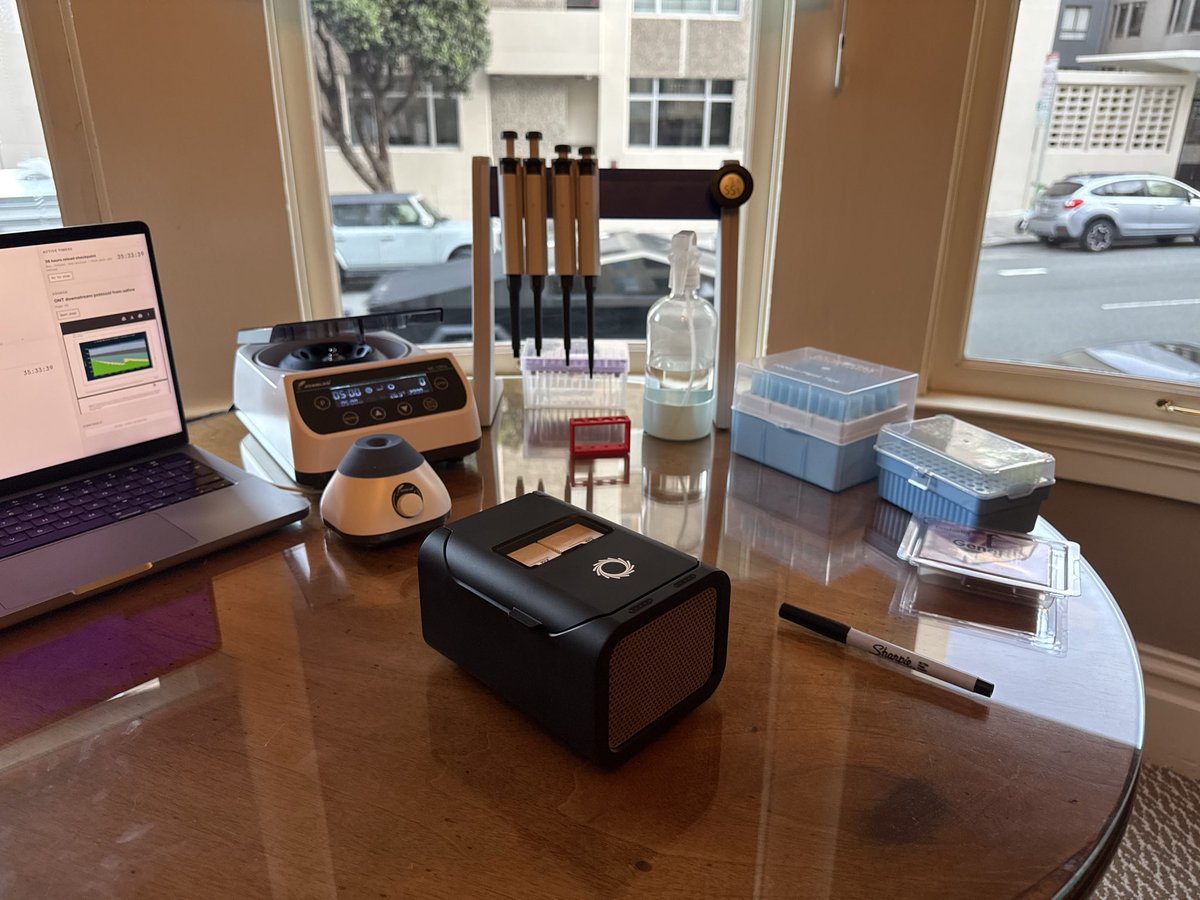
I just sequenced a human genome to 30× coverage entirely at home.
As far as I know, this is the first time this has been done.
I didn’t step foot in a lab once. Every step - from saliva collection, to running the sequencer - took place in a single room with a dining table + kitchenette.
Six weeks ago, I had never done wet lab biology before.
I used an Oxford Nanopore P2 Solo - the only commercially available sequencing device portable enough to do 30x human genome sequencing at home.
Biggest takeaway - I could build something that combined software, hardware, and molecular biology far faster than I thought was possible.
I can name >100 specific instances where AI helped me solve a technical problem that would previously have blocked me because I lacked access to a domain expert.
For example: how do I save my sequencing run when my DNA extraction yield is 4x lower than I need it to be, and I have this limited set of reagents to hand?
To make this work, I had to navigate multiple disciplines:
- writing software to monitor sequencing runs and orchestrate remote GPU infra for basecalling
- learning + executing 5 hour long molecular biology protocols
- building a hardware device to quantify DNA concentration
Apologies for the hyperbole, but I feel super lucky to be living in 2026.
A few weeks ago I decided to sequence a human genome to 30x at home.
Then I actually did it. And I did it really quickly.
In life we understand that the more fragile a beauty, the more it calls for care and responsibility. This is the main meaning of my presence today in Acerra: to confirm and encourage the surge of dignity and responsibility that every honest heart feels when life sprouts and is immediately threatened by death. https://t.co/NGdBnVvjVH
I'd like the phone book for Hokkaido, Japan, please.
Okay, here you go. The phone book for Hokkaido, Japan.
Thank you. May I please use your phone?
Is it a local call?
Y-Y-Yes…