Still seeing PRs where people run a whole .filter() and check .length > 0 just to see if an item exists in an array. Pick the right built-in method for what you actually need back so you aren't iterating through the entire list for no reason.
Plain JavaScript objects are great until you start deleting properties dynamic or need non-string keys. Maps are literally built for frequent write/delete operations and come with an O(1) size lookup. Stop treating them as interchangeable.
JavaScript is single-threaded, but the event loop makes it feel concurrent. When a Promise resolves at the exact same time a setTimeout triggers, the runtime doesn't flip a coin. It has a strict hierarchy.
ES2022 made this built-in for a reason. It handles null-prototype objects without throwing a TypeError. Are you still using the old prototype method out of habit?
Calling hasOwnProperty directly on an object is a ticking time bomb. If your object comes from Object.create(null) or someone names a property "hasOwnProperty", your production code crashes instantly. Switch to Object.hasOwn and sleep better.
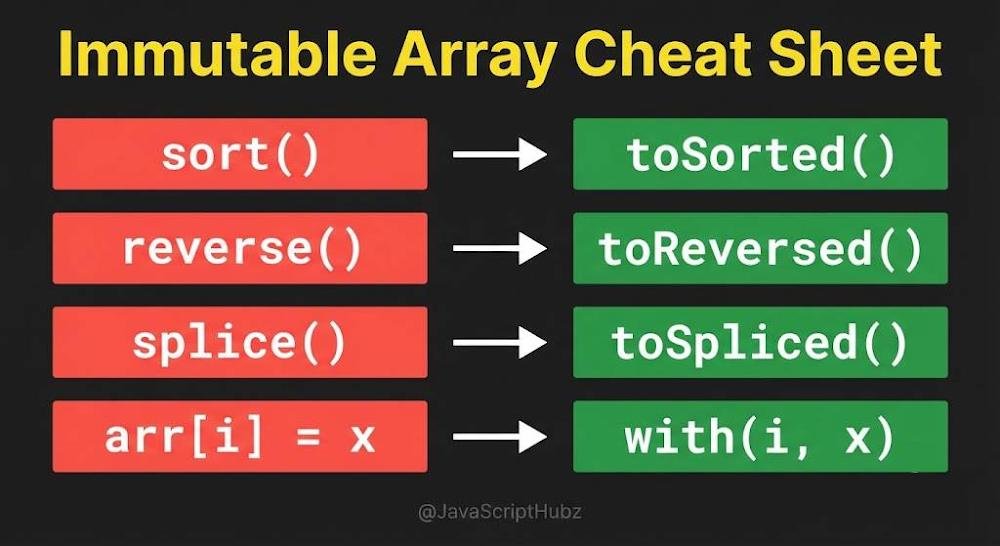
The .with() method is highly underrated for changing a single element immutably. If your project drops support for old browsers, you should absolutely be using these daily.
Stop mutating your arrays in place and causing weird side effects down the line. Modern JavaScript gives us clean, immutable alternatives that return a fresh array copy without touching the original state. Bookmark this sheet.
Understanding the exact difference between a falsy value and a nullish value is a guaranteed question in every JavaScript technical interview. Let's see who gets it right first.
Junior devs think both variables will output 10. Mid-level devs know why they don't. JavaScript evaluates the number 0 differently depending on which operator you throw at it. Drop your answer below.
Unless you have massive objects leaking memory, stick to assigning undefined or null. Do you care about micro-optimizations like this in your daily workflow, or do you just push to prod and pray?
Using "delete obj.key" is one of the easiest ways to kill your app's performance in production. The V8 engine hates it because it destroys the hidden class shape. Setting it to undefined keeps the inline cache hot.
Junior devs memorize the surface difference between double and triple equals. True senior engineers understand how V8 engine specs handle implicit type coercion under heavy production workloads. Look at this basic JS snippet—what is the exact sequence of the execution output?
The 'this' keyword ruins JavaScript tech interviews. Master these 3 rules to save your production scope:
- Regular: global object
- Method: object itself
- Arrow: surrounding scope
Bookmark this.
Hot take: If your production codebase still allows unchecked in-place mutations on domain entities without strict boundaries, you are running an organized mess. Immutability is not a preference; it is infrastructure safety.
Do you tolerate this in code reviews, Tech Leads?
Juniors look at this and only see a basic math problem resulting in 90. But platform engineers see a dangerous object mutation anti-pattern that silently de-optimizes V8 engine's Hidden Classes under the hood.
What exactly gets printed to the console?
The real danger: Direct mutation breaks immutability, causing untraceable state bugs in modern reactive architectures. For high-throughput engines, deep freezing or pure immutable structures are non-negotiable to prevent layout shifts.
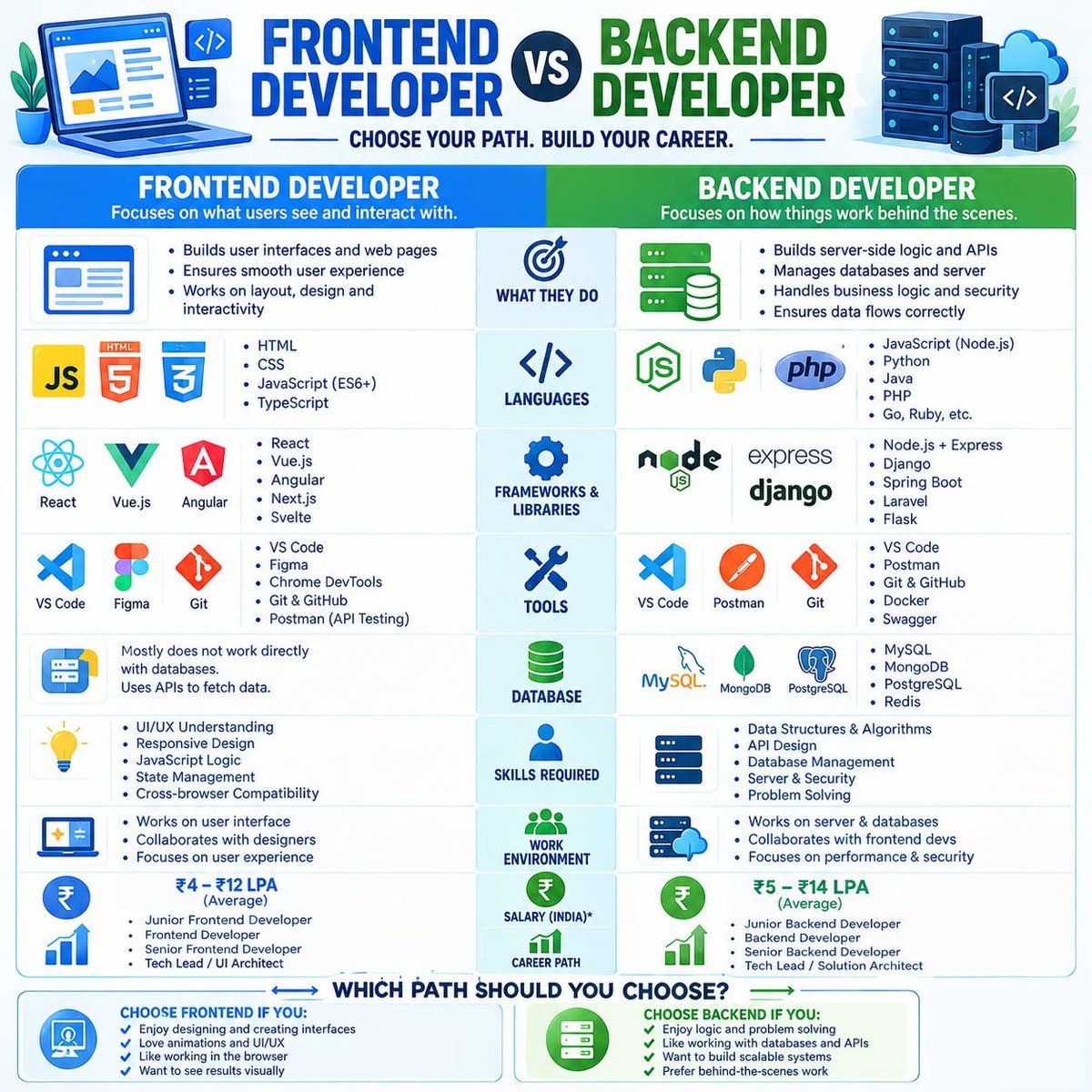
The rigid division between frontend and backend is an outdated artifact of legacy engineering teams. In modern system architecture, deep isolation creates massive integration bottlenecks. Developers must evolve beyond isolated silos.