Top Overnight News
Oil fluctuated in jittery trading, as Saudi Arabia cut prices of its benchmark grade to Asia, the kingdom’s state producer warned about the risk of low stockpiles and as fighting in Yemen intensified: BBG
Yemen’s internationally recognized government launched a full-scale military campaign to recapture Houthi-held territory after weeks of escalating conflict between the Iran-backed group and Saudi Arabia: BBG
Flávio Bolsonaro surged to a surprise lead over Luiz Inácio Lula da Silva in the first round of Brazil’s presidential election, making him the overwhelming favorite to win the runoff and take Latin America’s biggest economy sharply to the right: BBG
The euro fell to its weakest level since May 2025, as France’s deepening fiscal crisis and the prospect of fresh political upheaval in the region rattled European markets: BBG
Spanish PM Sanchez gambles on snap election to end parliament deadlock: BBG
Democrats Inch Into Red Territory, but Have Problems on Home Turf: WSJ
Intel stock slides as TSMC explores Terafab tie-up, analyst flags share losses: RTRS
Savills’ Prime London index is down about 27% since its peak in 2014, as a cocktail of taxes, political and economic shocks have created more than a decade of misery for the owners of the city’s finest homes. When combined with the consumer price index, the real-terms drop is more than 49%: BBG
US goes into midterm elections with a less dynamic form of full employment: RTRS
US Senators Warren (D) and Hawley (R) are reportedly beginning a probe into how home and auto insurers process claims: WSJ.
US Army tests counter-drone tech at Mexican border as cartel drone use rises: RTRS
All B-1 Bombers Returning to U.S. From U.K. Base: WSJ
Bank Stocks Are Haunted by the Ghosts of 2023: WSJ
Premarket movers
Mag 7 stocks are mixed: Nvidia climbs 0.6% after partner Hon Hai Precision Industry reported better-than-expected quarterly revenue, pointing to sustained and elevated spending on AI infrastructure (Alphabet unchanged, Amazon -0.1%, Apple -0.2%, Meta -0.2%, Microsoft +0.4%, Tesla -0.3%)
US-listed shares of Brazilian companies and firms exposed to the country rally after Flávio Bolsonaro surged to a surprise lead over Luiz Inácio Lula da Silva in the first round of the presidential election.
Align Technology (ALGN) slips 2% after Evercore ISI downgraded the medical-device company to inline, writing that “the dental macro picture has meaningfully weakened.”
Cenovus Energy’s US-listed shares (CVE) slip 2% after the company agreed to buy Athabasca Oil Corp. at an enterprise value of C$5.7 billion ($4 billion), the latest in a wave of consolidation as Canada’s government seeks to grow energy production.
Cerebras Systems (CBRS) is up 4% after OpenAI CEO Sam Altman said the company is “a close partner” of OpenAI and the two firms have “a deep engagement pushing on the frontiers of speed.”
DraftKings (DKNG) gains 4% as BofA raises the recommendation on the online sports betting company to buy, with the analyst citing her more positive view of the predictions markets (PM) impact. .
Harley-Davidson (HOG) climbs 5% after Citi upgraded the motorcycle company to buy, writing that an acceleration in retail growth is “tough to ignore.
Intel (INTC) is down about 4% after a report on discussions of a potential collaboration between Taiwanese chip giant TSMC and Elon Musk’s Terafab, which Intel joined in April.
PTC (PTC) surges 36% after Schneider Electric agreed to acquire the company.
RXO (RXO) gains 20% after agreeing to be purchased by CH Robinson Worldwide. Shares of CH Robinson (CHRW) are down 7%.
Wells Fargo (WFC) inches 1.3% higher after Morgan Stanley upgraded the bank to overweight, seeing “a clearer path to improving profitability in 2027.”
Shocking stat of the day:
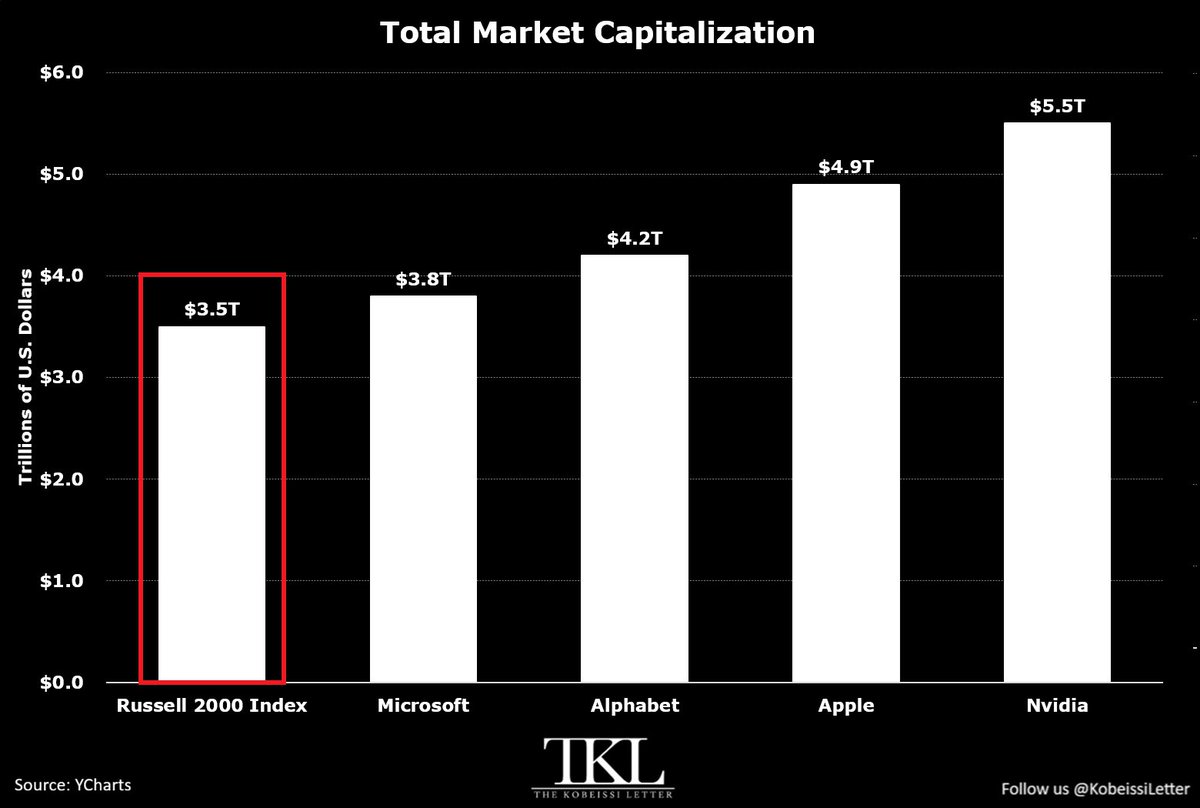
Each of the top 4 S&P 500 companies is now larger than the entire Russell 2000 Index, which has a total market cap of $3.5 trillion.
Nvidia, $NVDA, alone, with a $5.7 trillion market cap, exceeds the small-cap index by $2.2 trillion.
At the same time, Apple, $AAPL, with its $4.9 trillion market cap, is worth $1.4 trillion more than the Russell 2000.
Alphabet, $GOOGL, and Microsoft, $MSFT, are valued at $4.2 trillion and $3.8 trillion, respectively, also surpassing the combined market cap of the Russell.
These 4 big tech stocks are now collectively valued at a massive $18.6 trillion, accounting for 26% of the S&P 500’s total market cap.
Meanwhile, the Russell 2000 represents ~7% of the total US equity market, despite containing nearly 2,000 companies.
Big tech has never been bigger.
El paro ha cambiado de décima de 4,1 a 4,2% por los pelos en realidad ha pasado de 4,14% a 4,18% no ha sido para tanto, los redondeos favorecieron el mes pasado y perjudicaron en este
Not only were the 29K jobs created in Sept. below expectations, but as I predicted last month, July and Aug. were revised down by 31K and 29K respectively. My guess is that all three months will ultimately be revised even lower. We have a weak labor market with strong inflation.
TRUMP: SOUTH KOREA DEAL EXPANDS WITH $8.4 BILLION ENERGY PROJECT
President Trump says the South Korea agreement now includes $8.4 billion for an enhanced oil recovery project.
Trump says the investment will increase U.S. oil and gas production, strengthening domestic energy security.
Las nóminas no agrícolas de EE. UU. aumentaron solo en 29.000 empleos en septiembre, frente a los 84.000 esperados, mientras que la tasa de desempleo subió al 4,2%, frente al 4,1% previsto.
El empleo privado aumentó únicamente en 46.000 puestos, mientras que el empleo público cayó en 17.000.
El crecimiento de los salarios también se moderó hasta el +0,13% mensual y el +3,02% interanual. Además, las nóminas de agosto fueron revisadas a la baja hasta 133.000, desde 162.000, y las de julio hasta -10.000 empleos.
SEPTEMBER NONFARM PAYROLLS MISS BADLY:
- Jobs added were +29K vs +84K expected
- Unemployment rate increases to 4.2% vs 4.1% expected
The 10-year treasury yield just fell 0.77%, the $SPY is up 0.88%, and $BTC is almost at $87K on this news.
Why are yields falling and risk on assets going up if we are seeing unemployment go up and missing on the expected jobs number?
Well, that means the economy might not be as hot as the Fed thinks and we may not need to hike as aggressively as expected.
Bad news, in the eyes of the macro, might be good news again…
July revised down by 31,000, from +21,000 to -10,000,
How July print changed:
Original -23K
1st revision: +31K
2nd revision: -10K
August revised from 162K to 133K
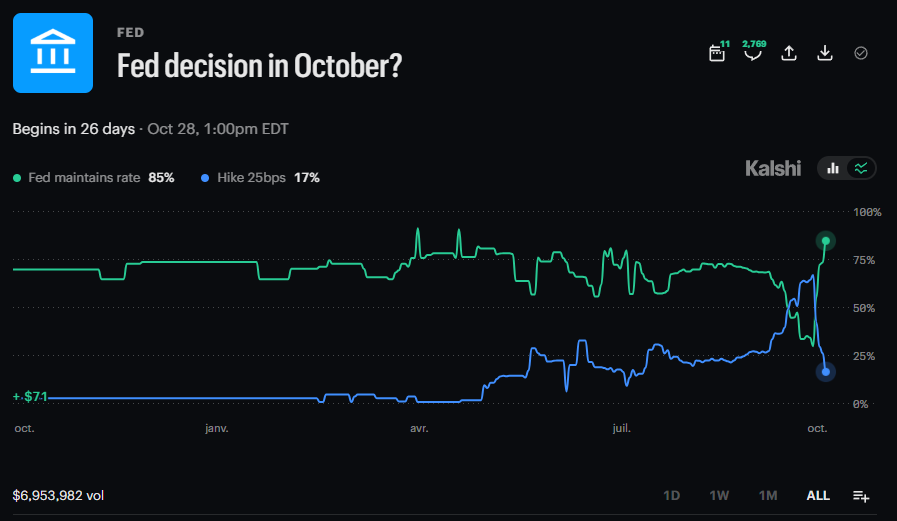
FED PAUSE ODDS SURGE TO 85% AFTER WEAK JOBS REPORT
Kalshi now prices an 85% chance the Fed holds rates in October after payrolls rose just 29,000 vs. 84,000 expected.
Unemployment climbed to 4.2%, triggering a sharp dovish repricing of the Fed outlook.
https://t.co/qUEGIdb1ac
BREAKING: The US economy adds +29,000 jobs in September, well below expectations of +89,000.
The unemployment rate rose to 4.2%, above expectations of 4.1%.
August's job number was also revised down by -29,000 jobs.
This marks the third weakest jobs report of 2026.
Top Overnight News
Iran is preparing a broader and more forceful response if the United States resumes large-scale military attacks, sources said, while continuing a diplomatic push that Iranian officials privately see as unlikely to succeed. RTRS
Vladimir Putin has instructed his military leaders to abandon the rules of war, prompting a steep increase in strikes on civilian targets amid a major push to regain the advantage in the conflict, according to intelligence intercepted by Kyiv. FT
Governments around the world are running out of room to shield consumers from higher energy prices resulting from the Iran war and other crises, with fuel subsidies potentially costing more than $1 trillion this year, a United Nations study found. BBG
World food prices rose in September, as transportation disruptions and weather concerns limited supplies and lifted prices for several crop-based commodities, the United Nations’ Food and Agriculture Organization said. WSJ
Amazon’s exploring a deal to shift about $8 billion of high-end Nvidia chips into a sale-leaseback SPV vehicle backed by outside investors to help strengthen its balance sheet. FT
European countries are in crisis talks over the release of diesel stocks, as the US threatens them with a diesel export ban unless they release strategic reserves of the oil product. FT
Tokyo’s key inflation gauge rose sharply as the effects of some temporary government measures faded, backing the Bank of Japan’s stance on continuing to raise the benchmark rate after authorities accelerated the pace of policy normalization. BBG
Eurozone CPI for Sept ran hot on the headline (+3.8% vs. the Street +3.7% and vs. +3.2% in Aug) and was inline on core (+2.5% vs. +2.4% in Aug). BBG
Trump posted "Republicans in the Senate have to get moving on what I call the “No More Changing of Clocks Act,” officially known as The Sunshine Protection Act".
Goldman estimates nonfarm payrolls rose by 80k in September, slightly below consensus of +88k. On the positive side, the level of layoffs remains low and big data indicators of job growth picked up sequentially. On the negative side, September payroll growth has tended to underperform its recent trend when Labor Day is later in the month—like it was this year—and last month’s sharp increase in nonfarm payrolls was boosted by outsized increases in leisure and hospitality and local educational services payrolls that we do not expect to repeat. GS Research
BofA Flow Show (w/e 30th September): USD 18.8bln to bonds, 15.8bln to stocks, 0.9bln to crypto, 0.7bln to gold, 118.0bln from cash on quarter-end; Bull and Bear indicator 8.8 (prev. 9.3).
Premarket movers
Mag 7 stocks are higher (Nvidia +1.7%, Alphabet +0.4%, Tesla +0.7%, Amazon +0.5%, Microsoft +0.9%, Meta Platforms +0.4%, Apple +0.2%)
Airbnb (ABNB) rises about 2% after KeyBanc Capital Markets upgraded the online travel company to overweight, seeing positive growth trends.
Edison International (EIX) falls 2% after Jefferies cut its recommendation on the utilities company to underperform on California wildfire liability risk.
Fair Isaac (FICO) falls 8% as the FHFA is planning to direct Fannie Mae and Freddie Mac within weeks to require lenders to pull credit data from two major credit reporting bureaus instead of three, according to a person familiar with the plans. TransUnion (TRU) falls 3% and Equifax (EFX) slumps 3%.
Nike (NKE) slumps 9% after the sneaker and sportswear maker’s revenue guidance for the full year fell short of consensus estimates.
Twilio (TWLO) rises 1% after S&P Dow Jones Indices noted that the stock will replace Warner Bros Discovery in the S&P 500 effective Oct. 6.
ON Semi (ON) climbs 8% after the chipmaker said it will buy Synaptics for $123 per share, revising their earlier all-stock deal to an all-cash transaction. Synaptics (SYNA) rises 15%.
Vylor (VYLR) climbs 3% after the Corteva Inc. seed spinoff was initiated with buy ratings on its growth profile.
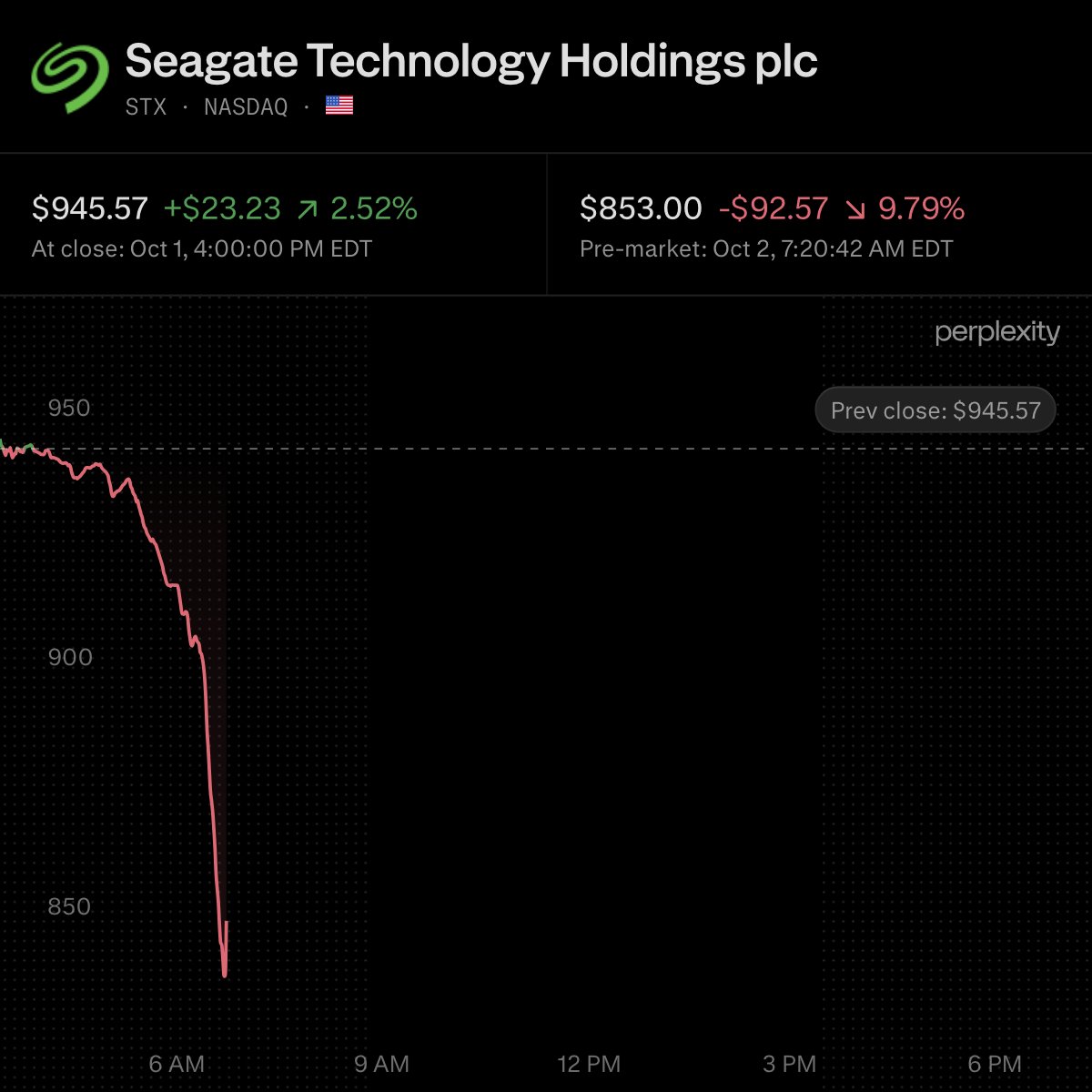
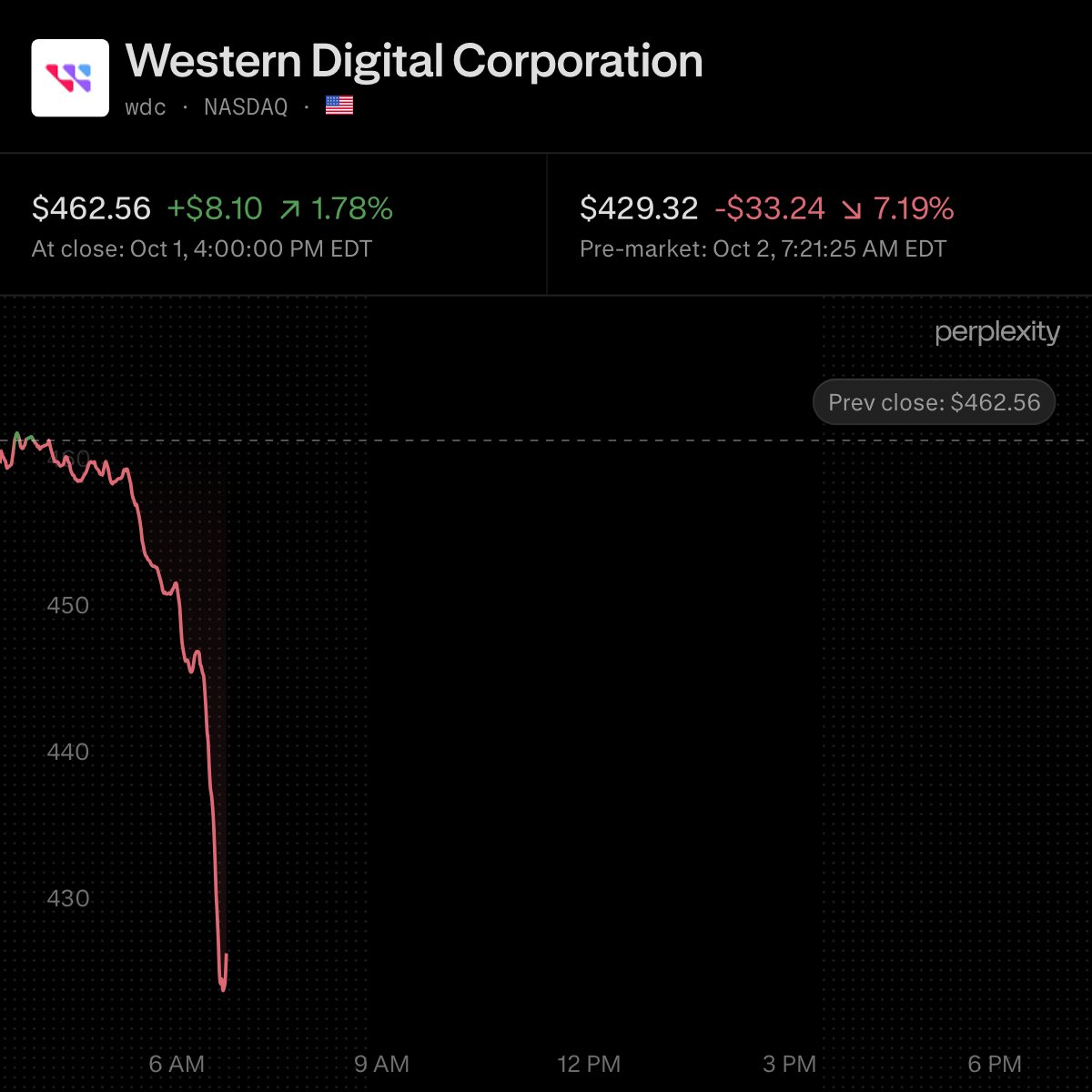
Western Digital (WDC) falls 8% and Seagate Technology (STX) drops 12% after Nikkei reported that Toshiba would invest ¥60 billion to double its production capacity for hard disk drives.
$STX -10%; $WDC -7%
Toshiba plans to invest ~$380M to double HDD capacity for AI data centers by FY2027, expanding its Philippines plant.
It’s targeting 65TB drives by 2030 and eventually 100TB, as tight memory supply and SSDs costing ~20x more push more AI storage demand toward HDDs.
Cierra Wall Street al alza: SPX +0,19%, NDX +0,31%, Dow +0,04%, Russell +0,35%.
Un inicio de octubre volátil para las acciones, con ganancias nocturnas, impulsadas por Micron, que dieron paso a pérdidas al inicio de la sesión por la tensión en los mercados de deuda.
Tras el cierre de los bonos europeos, marcados por el caos, las acciones estadounidenses repuntaron y volvieron a terreno positivo. Al cierre, el NDX y el RTY lideraban las ganancias, el Dow Jones se mantenía prácticamente estable y el SPX registraba pequeñas subidas.
Otro día más, la IA lideró, ayudada por Micron y la narrativa sobre la inversión en inteligencia artificial. La compañía ofreció un pronóstico optimista para el trimestre actual, impulsado por el frenesí de construcción de infraestructura vinculada a la IA, aunque advirtió de que el aumento de las remuneraciones afectaría a los márgenes de beneficio.
Este fue el decimotercer día consecutivo con más nuevos mínimos que nuevos máximos.
Los rendimientos de los bonos del Tesoro también se desplomaron, liderados por los de corto plazo tras varios comentarios de miembros de la Fed.
Sin embargo, en Europa hubo mucho movimiento, con un fuerte desplome especialmente en los bonos franceses.
El dólar extendió sus ganancias, poniendo a prueba el límite superior de su rango de los últimos 18 meses. Las subidas del dólar de hoy se debieron en gran medida a la debilidad del euro, en medio de la debacle de los bonos en Francia e Italia. La moneda europea se desplomó hasta su nivel más bajo frente al dólar desde mayo de 2025.
El oro logró mantenerse en verde a pesar de la fortaleza del dólar.
Bitcoin repuntó hasta los 85.000 dólares en medio del caos en Oriente Medio y a pesar de registrar la primera salida de capitales de los ETF en mucho tiempo.
Por último, los precios del WTI se dispararon, con el Brent de nuevo por encima de los 106 dólares.
Dallas Fed President Lorie Logan says the Fed likely will need to raise rates by at least another 50 bps to ensure inflation doesn’t settle above the central bank’s 2% goal.
Logan said those additional increases, together with September’s, would merely reverse the three cuts the Fed made last year. She said the Fed needs to set interest rates at a modestly restrictive level, a threshold that remains uncertain and could require even more increases.
Logan drew a distinction on the run-up in bond yields. To the extent higher Treasury yields reflect expectations of a more aggressive Fed, those increases “don’t do our work for us,” she said.
But if the increase in yields is driven by rising term premiums, or the extra compensation investors demand to hold longer-term debt, the moves “can slow the economy, reducing the need to tighten monetary policy.” https://t.co/7CR3iduR5s
$NVDA confirms GPT-6 Astra Ultrafast is running on Blackwell with up to 8x faster token generation than Astra Standard.
OpenAI is now using its own models to optimize kernels directly for Blackwell improving latency throughput and cost on Nvidia hardware.
$GOOGL JUST PUT ITS AI CHIPS INTO ORBIT FOR THE FIRST TIME
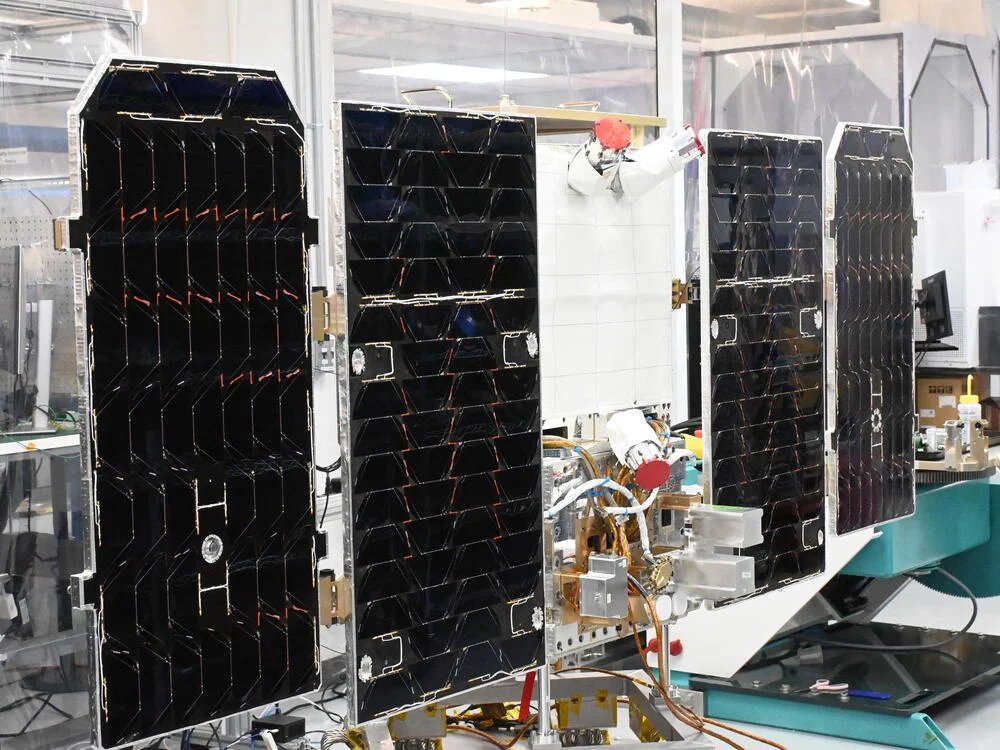
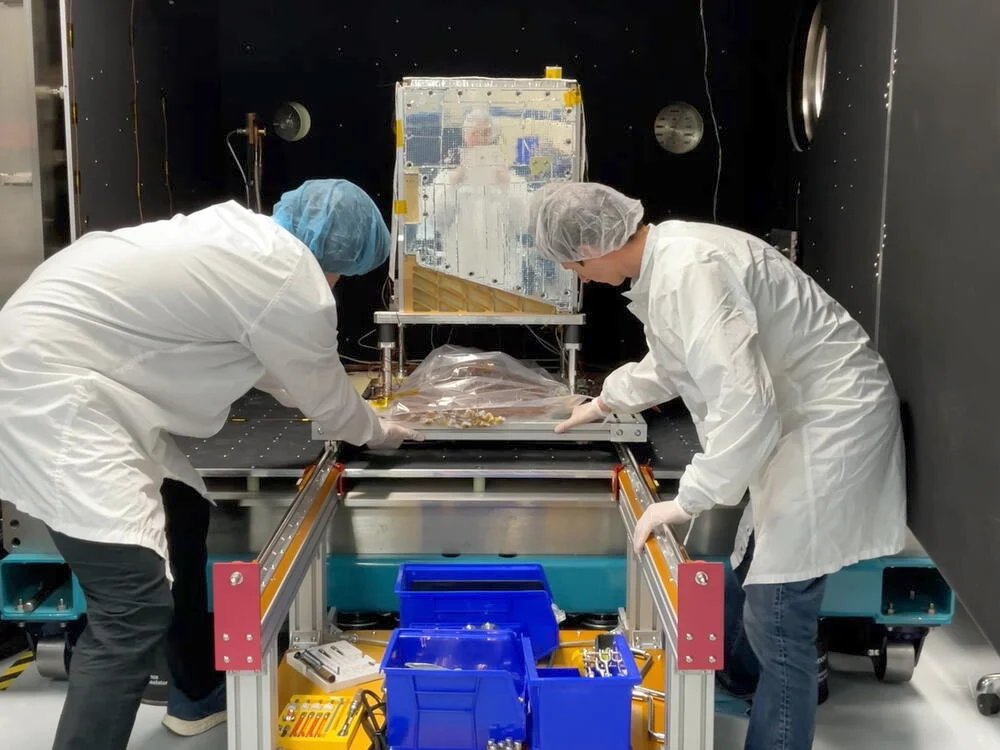
Google and Planet Labs $PL have successfully launched Project Suncatcher M1 aboard SpaceX’s Transporter-18 mission.
Planet says it has already made contact with the spacecraft and begun commissioning. This is the first-ever in-orbit test of Google’s Tensor Processing Units, or TPUs.
The refrigerator-sized prototype carries four Trillium TPUs, Google’s custom AI accelerators.
This is not yet an orbital data center. The goal is to see whether the same type of AI hardware Google uses on Earth can survive launch and reliably run machine-learning workloads in low Earth orbit.
There are three major engineering problems Google is testing:
RADIATION: cosmic radiation can corrupt calculations or damage electronics. Google previously tested Trillium TPUs with proton radiation and found they could withstand more total radiation than expected over a five-year mission.
COOLING: there is no air in space, so fans cannot cool the chips. Heat has to be moved through heat pipes into radiators and then emitted away from the spacecraft. The current prototype is expected to run AI workloads in roughly 15-minute bursts before allowing the system to cool.
NETWORKING: Google’s long-term plan is not one satellite, but clusters of satellites carrying dozens of TPUs each and connected through high-speed laser links.
Google estimates future AI workloads could require tens of terabits per second between satellites. Its ground prototype has already demonstrated 800 Gbps in each direction.
Why put AI compute in space at all?
In the right low-Earth orbit, solar panels can generate up to 8x more power than on Earth because satellites can receive near-continuous sunlight, reducing one of the biggest constraints facing AI data centers: electricity.
The economics:
Google estimates that if launch costs eventually fall below roughly $200 per kilogram by the mid-2030s, the cost of operating compute in space could begin approaching the energy cost of comparable terrestrial data centers.