0/ Nếu làm MARKETING PLAN từ con số 0, MÌNH sẽ setup AI như thế này... 👇
Mình đã áp dụng kỹ thuật này để có workflow chạy những campaign 5k$ - 100k$ cho công ty - liên tục trong 1 năm.
Hi mọi người, mình là Khải Hoàn - admin mới của Nghiên AI. Công việc trước đây của mình là làm Growth cho app Coin98 Wallet.
Đặc thù của lĩnh vực Crypto này là phải hiểu blockchain, kỹ thuật mới làm scheme được. Budget lớn và cần chạy nhanh ngay khi kí xong.
Thì đây là cách mình đã setup - để xử lý bài toán này.
Educational content
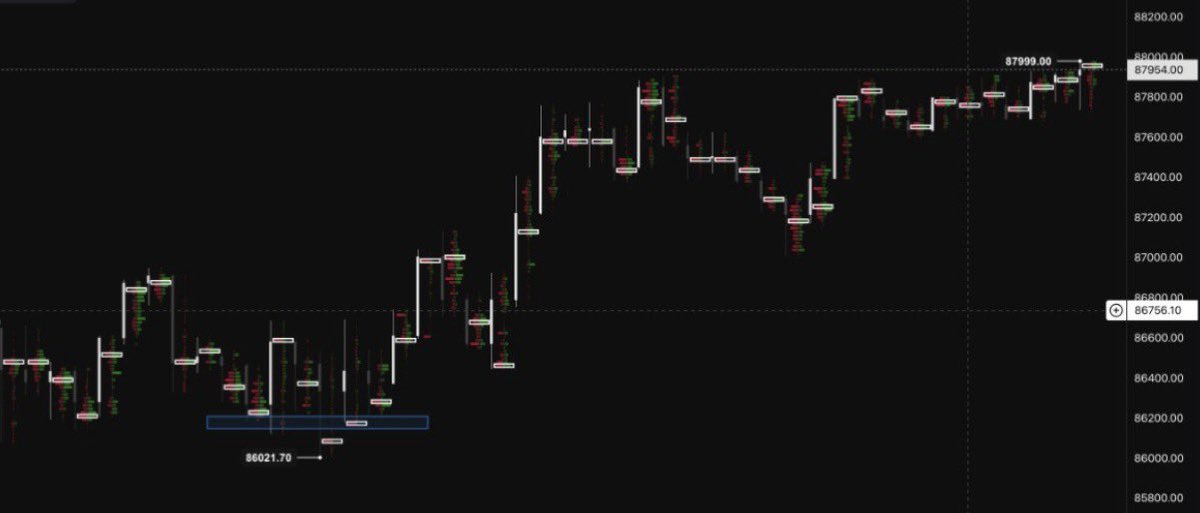
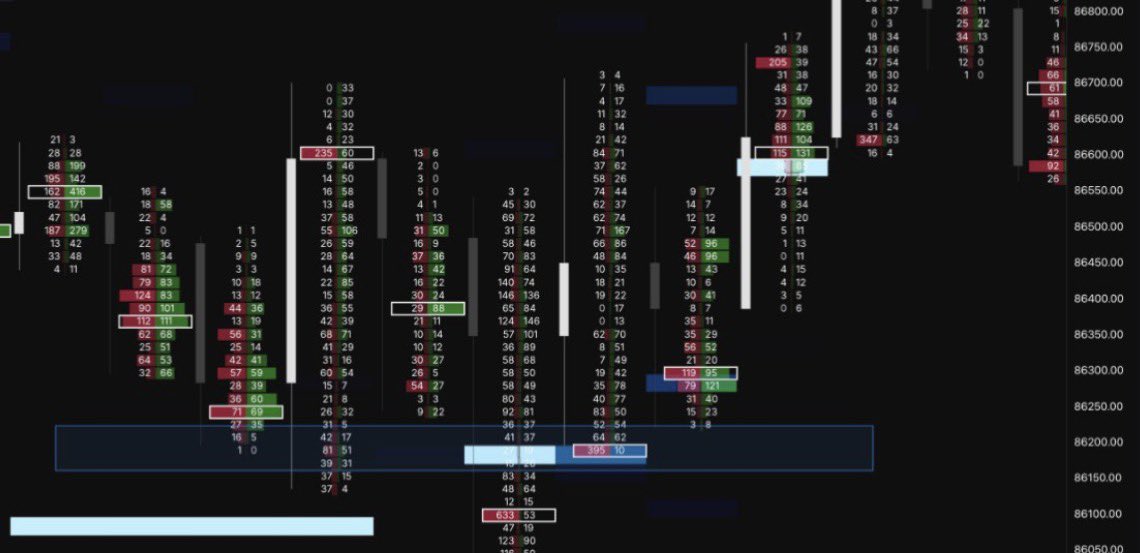
Here, the footprint is much more telling than it seems at first glance.
The price falls, the bid numbers increase, everything seems extremely bearish. Sellers hit the market hard, one after the other. But there is one detail that stands out: despite all this aggression, the price does not really fall.
And that's where everything changes.
When you see so much volume coming in for sale and the market stops falling, it means that someone on the other side is doing the dirty work: buying everything without moving the price, calmly, without rushing. They don't need to chase, they let others sell.
That area of volume below the price is not weakness, it is acceptance. The market stops, absorbs, breathes. The more they sell, the more someone accumulates. It's the classic moment when it looks like panic from the outside, but inside it's just redistribution.
Then the same thing always happens: the selling pressure starts to fade, the new lows no longer arrive, the market stops pushing. Not because there are no sellers, but because they no longer have any effect.
And that's when you realise that control is no longer in the hands of those who attack, but those who wait.
The footprint is not for guessing the future, it is for reading the present. Here, the present says that the market was building a base, not breaking down. And when a base is built like this, the next move is often rapid and counterintuitive.
The market always speaks.
The footprint just shows you who is speaking the loudest.
Update W 10/11 - 16/11
Well POI of last update touched and then dump hard Nothing clearly at moment but some POI need focus
* Bit: 109.5 - 112
* E: 3750 - 3880
* XAU: 4116 - 4200
Likely 1 more huge leg before claim bull trend
Update W. 27/10 - 02/11
MM always make the move, so leg down first, likely price will touch POI next week
* Bit: 117 and sw, then price will try ATH again
* E: 4150 then 4450 and if keep above, moon
* XAU: price range too wide so be careful in define trend. Looks like ATH again
Update W. 27/10 - 02/11
MM always make the move, so leg down first, likely price will touch POI next week
* Bit: 117 and sw, then price will try ATH again
* E: 4150 then 4450 and if keep above, moon
* XAU: price range too wide so be careful in define trend. Looks like ATH again
Update W. 13/10 - 19/10
Market so bleeding so new week maybe bounce before next leg
* Bit: POI around 117
*E: watching 4270 - 4300
* XAU: 3D candle seems weakness. D close below 3979 so correction will happen
Update W.6/10 - 12/10
* Bit: what a unpredictable W candle, break ATH. Bidding at range 114 - 116
* Eth: bidding at 4300 - 4150
* XAU: follow trend to 3970
Update W.6/10 - 12/10
* Bit: what a unpredictable W candle, break ATH. Bidding at range 114 - 116
* Eth: bidding at 4300 - 4150
* XAU: follow trend to 3970
Trading plan W.22/9 - 28/9
* Bit: bullish structure in HFT. Need a full green D close
* E: buy when price break RS 4750. W close looks good when close above 4580
* XAU: follow trend, buy possible around 3659 - 3639
Update W.28/9 - 05/10
* Bit: chart W holy shit, so bad. Hopefully bounce to 113.4 before next leg down maybe round 104 - 105 or lower at 98 sub
* E: same with Bit. bounce to 4300 and next leg down to 3750 or 3510
* XAU: price exhausted in LFT. POI around 3660 -3686 for bidding
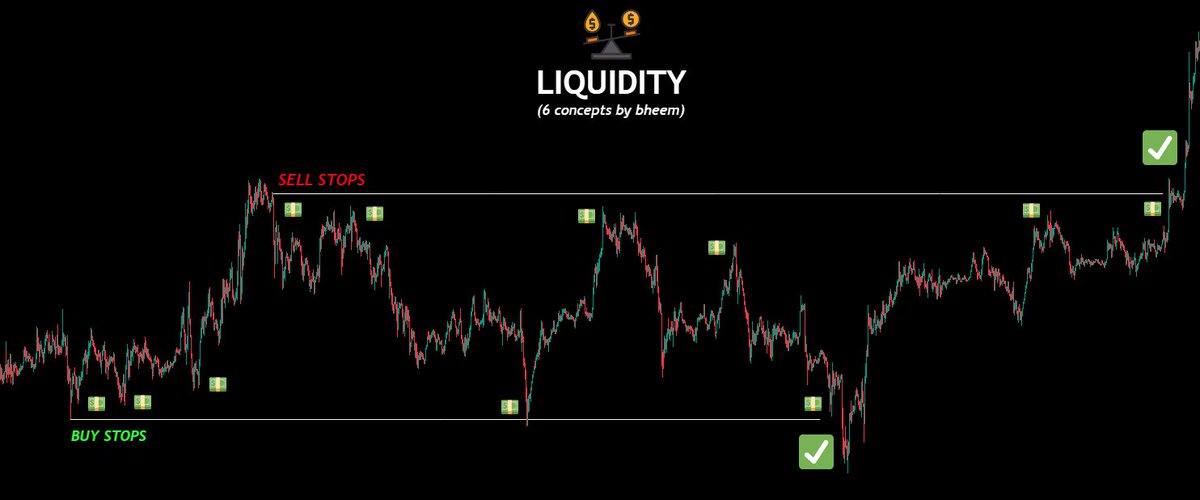
If you can’t identify the Liquidity- You will be the Exit Liquidity🩸
In this thread, you will learn about all 6 forms of liquidity without having to purchase a mentorship course from any influencer ever again🧵
Bessent’s interview with Tucker Carlson reaffirmed a lot of views that many of us already held—but I think it’s worth highlighting a few key points that are particularly relevant.
First, they’re 100% serious about addressing the wealth imbalance. He spoke about record European vacations and record food bank visits in 2024. That means they’re not coming to save stocks anytime soon. Rate cuts to stimulate risk assets are off the table because they completely undermine the goal. Bessent cited data showing that while equity markets have performed well, the lower class hasn’t participated—widening the economic divide. They’re steady in their stance: a 15% drop in equities isn’t a pain point. One example he mentioned was that the equal-weighted S&P wasn’t even down much. Relative to long-term charts, this drawdown is a blip. Their language around markets has remained consistent despite the recent weakness.
This, in my view, widens the so-called “Trump put” significantly. Stimulus—especially in capital markets—is unlikely unless we enter a full-blown recession. Thinking they’ll change course just because the S&P drops 20% is wishful. Doing so would defeat the entire purpose of their strategy and waste a bullet that could be used if things really go off the rails.
Bessent also made it clear that the U.S. believes it holds the cards when it comes to China. He argues that China, as a surplus nation, is in a structurally weaker position. In his words, the Chinese business model and economy are among the most imbalanced in modern history. They’re currently in a deflationary recession—or even depression—and are trying to export their way out of it. Given their trade deficit and dependence on U.S. markets, he believes they simply can’t afford to retaliate in any meaningful way. This means the U.S is going to fight this battle because they really think they have the cards.
His outlook on tariffs was also unambiguous: they’re here to stay. He believes we’ll see substantial tariffs up front, with revenue from those tariffs gradually declining as manufacturers shift production domestically and U.S. revenue rises. There is no expectation that these measures will be walked back.
Also worth noting—Bessent made it abundantly clear that Powell no longer has real autonomy. A major theme of the interview was the desire to shift the Fed’s mandate back to strict monetary policy, stripping away its recent focus on things like climate change—which Bessent dismissed as misguided. He openly described himself as a bond salesman, and the idea that this administration would allow the Fed full control of rates seems naive. Rates are arguably more important to this administration than to any cabinet in recent memory, given Bessent’s influence.
Bottom line: rate cuts, banking deregulations, or any kind of stimulus package are not coming anytime soon.