Such a scene is often framed as proof the Dutch are superhuman—they’re not.
The real miracle isn't the Dutch cyclist. It's the environment that allows ordinary people to do extraordinary things. Build the infrastructure, and you'll find your city is full of capable cyclists too.
Bicycles are hugely space efficient, which is why they make a lot of sense in congested cities. This video demonstrates why there aren’t traffic jams in bike lanes.
This is amazing!
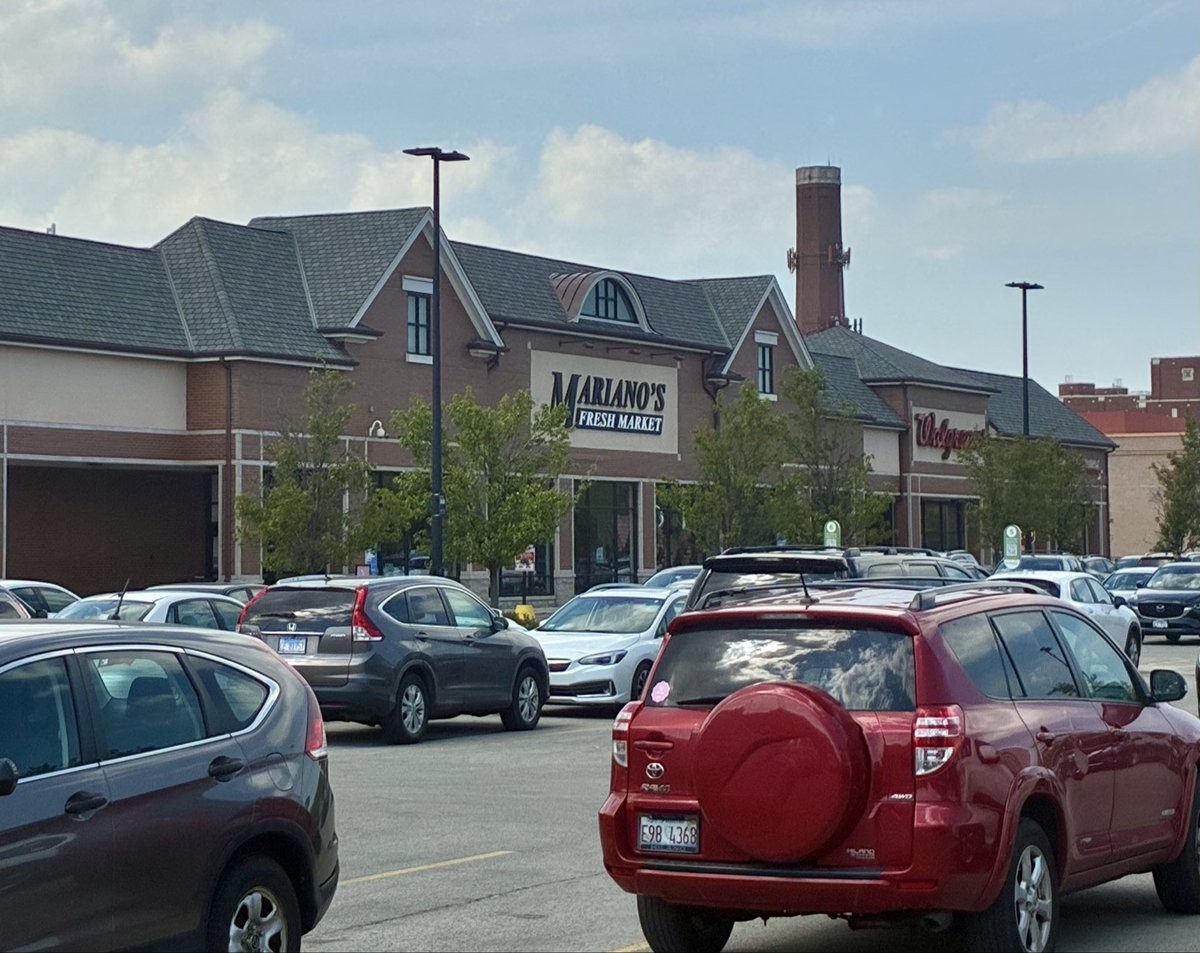
When a little league ran out of money and couldn't maintain its field, a local developer came in, bought the field, and redeveloped it into a parking lot for the nearby data center
He even kept the baseball diamond visible in the parking lot to give it some character
We need more of this in our communities!
What every voter and apparently, the NY Times Editorial Board, should know about housing policy:
1. Rents reflect the balance of supply of apartments and demand for those apartments in a given area. That’s it; there’s no magic. If you want lower rents, you can hope for a recession that destroys jobs and, therefore, demand. Or you can add supply.
2. There is no amount of money that any big city government could feasibly spend that would add materially to supply. This is because, depending on the location, new apartments cost $250,000-1,000,000 to develop… building even a few hundred of those starts to stress any city budget, and many big cities need tens or hundreds of thousands.
3. On the other hand, investors (including pension funds and endowments, insurance companies, rich families, etc.) can collectively **easily** provide enough capital to build as much housing as we need **so long as they are confident they can get a reasonable return**.
To get those investors to fund the creation of the housing our society needs, we must do two things:
1. Dramatically reduce the time & complexity associated with securing governmental permission to develop housing. This means reviewing and simplifying the overlapping regulations that constrain housing production: zoning codes, building codes, parking, ADA, etc. But it also means changing the cultures within the relevant governmental agencies from “default no” to “how can we help you?”.
2. Provide certainty around on-going regulation of apartment operations.
The way investors get a return from building rentals is as follows: They hire managers to lease the apartments, collect the rents, pay operating expenses and any mortgage payments, and then send the investors the cashflow that remains.
But governments all over the country have been restricting the manner in which apartment buildings can be operated in all kinds of ways.
For example: Cities have been making it harder to screen tenants, while also making it much harder to evict tenants who don’t pay. You can see why both of those measures are politically popular. After all, who doesn’t want people to get second chances? And who wants anyone to get evicted? But, as a manager, the combination of those two regulations makes it much harder to predict, with any certainty, that the rent will get paid… and that makes it very difficult to get investors to provide capital to create more housing.
Another example: Rent control. Again, I understand why renters love rent control and why politicians want to give it to them. But, if, as has been the case in NY, LA and San Francisco, city governments hold annual rent increases below the rate of growth in the operating expenses of the buildings, the cashflow payable to the investors shrinks… making them much less likely to invest capital in building more apartments.
In conclusion: For ~every other good or service in the economy, we allow the market to function, and the result is that we have a surplus of choice at all price points (think of food or clothes or cars), which is spectacular for the consumer. If we want a surplus of choice at all price points in housing, we need to get comfortable with the idea of allowing the market to provide it.
And that means allowing investors to build rental apartments *and* allowing them to operate those apartments in a manner consistent with making a reasonable profit.
Remember: Every developer of rentals is either a landlord-in-waiting or hoping to sell to one.
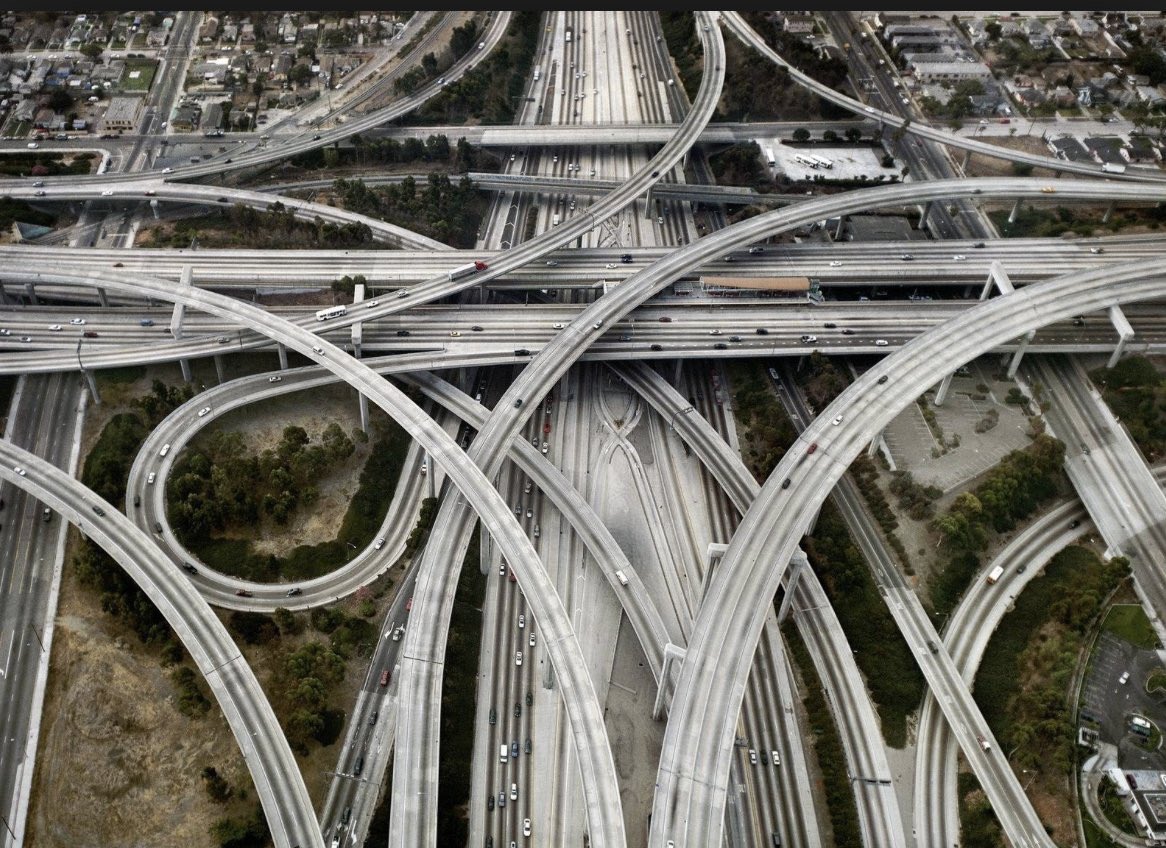
(I’m not trying to criticize bicycling or the cameraman. I just think it’s telling that a lot of people are noticing this principle in this context and miss the ubiquitous one—fast cars everywhere).
A bunch of comments point out how the cameraman’s speed is obnoxious to the walkers—which is a good point!
Different speeds sharing the same space is bad design, especially when that space is compact.
The Atlanta Beltline being this packed with people at 7pm on a TUESDAY is just a delight. Every restaurant along the trail is packed, people everywhere socializing and being humans together. The dichotomy of this experience against Atlanta Freeway Hell just boggles the mind.
The most important thing about this amazing Paris transformation is how fast it happened —how fast people on bikes “appeared” —once streets were transformed. You can’t write this off as “#Paris was always this way,” because it wasn’t.
It took leadership.
They put fake windows and rooflines on commercial buildings to create the look of mixed-use urbanism because they know that’s what the whole world craves
We’ve obtained entitlement approvals on 27 large-scale housing projects in California.
Here’s the top 10 most off-the-wall objections I’ve heard at our public hearings:
👇
1) “Your building is so tall, airplanes are going to crash into it causing complete and total destruction! It will be chaos!”
[It was 85’ tall….]
2) “My commute to work is currently 12 minutes. I ran some calculations, and your project will increase my commute time by exactly 42 minutes!”
[Our traffic study concluded “no significant impacts”. Oh, and we were adjacent to a Metrolink station]
3) “Your new housing project is going to make the homeless situation significantly worse!”
[We had ~ 30 Very Low Income affordable units as part of our project, which would be built on an empty surface parking lot]
4) “Your project is near a church. Please tell me, how many times in a day and on what days do the church bells ring? Have you even counted? Have you?!!”
[A church is one of the more unobtrusive neighbors in an urban infill deal. Plus, we use double pane windows].
5) “My dog has PTSD, and construction noise is going to give him a mental breakdown. You must pay me $5k/ month for his therapist.”
[She then suggested that a total dog therapist budget of $12,000 might be acceptable.]
6) “Your environmental report may be clean but my friend is a scientist and he says your property sits on top of both Uranium and Plutonium.”
[Of course this is absurd. We had to show the Planning Commission our Phase II. The objector screamed: “I want a Phase III, IV, and V!”]
7) “You are a greedy developer that just wants to charge the highest rents you can. You will drive up rents all over the city!”
[Some people don’t understand: the market sets the rents. It’s supply and demand. More supply will lower the rents. Econ 101]
8) “California has no more water, and thus, by constitutional law, all housing construction across the state must immediately stop.”
[Imagine this as case precedent!]
9) “I present to City Council, a petition to take the property from the developer and turn it into a park. With these 20 signatures, the City has no choice but to comply.”
[We responded that the City could acquire our land at a market price if they wanted a park here]
10) “You are the devil.”
[We were turning vacant retail into a mixed use project with one of the highest number of low income housing units in a single project in the submarket]
Which comment is the most obsurd??
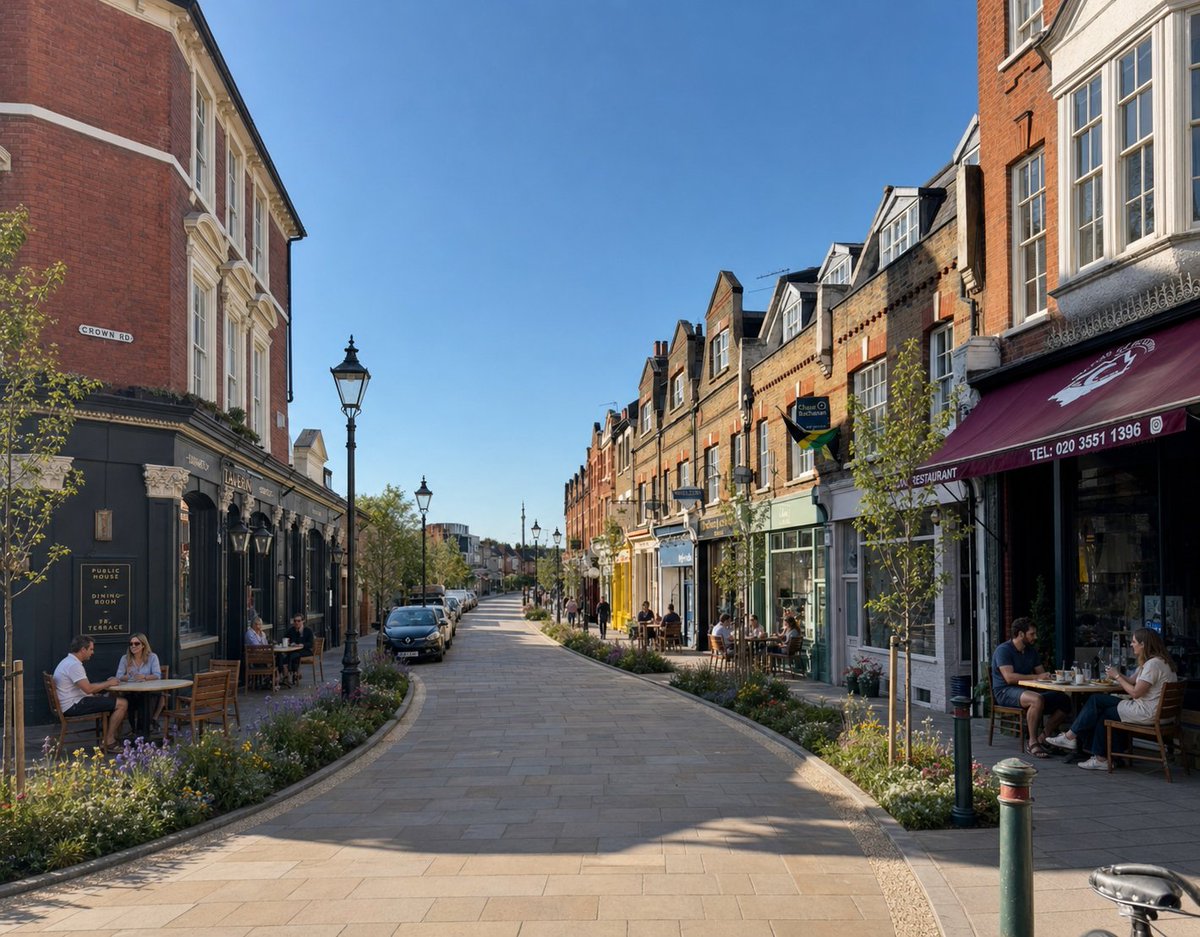
It requires relatively few interventions to make a good street into a great street.
- Ditch tarmac for stone paving (over a short stretch at least)
- Rain gardens/street trees
- Attractive streetlights
It's something we should be doing on every high street and village centre.
Made a Mission Revival version. You can easily build a 10-unit, 6-story complex with a single stair and elevator, 1 parking spot per unit, and a 30-foot-wide backyard on most lots in California quite cheaply. Imagine suburban-style mass production, but for apartments.