The @BBC just parroted the Israeli army’s narrative about yesterday’s killings in Lebanon. They said that they were striking Hezbollah targets and even mentioned that the ‘IDF said they killed 10 Hezbollah operatives.’ They failed to mention the Syrian laborer and his 12 year old daughter who were hunted and executed by an Israeli drone and also conveniently forgot to mention international law, which dictates that legitimate targets are only on the battlefield during active hostilities. There is no battlefield right now. We are in a ceasefire. Every person they kill, Hezbollah member or not, has civilian status.
Israel is being allowed by the world to carry on a killing spree. What makes you think they will stop here?
This is a ladybird larva. It looks nothing like a ladybird. It looks like a tiny black alligator with orange spots — and most gardeners crush it thinking it's a pest.
That mistake costs the garden dearly. An adult ladybird eats around 50 aphids a day. Its larva can devour up to 500 before it pupates. Ten times as many. That strange-looking creature working its way along your tomato stems is the most effective phase of a ladybird's entire life.
Once you know what to look for, the larva is unmistakable: an elongated blue-black body with six orange spots along the sides, six short legs, slow and methodical movement up and down stems. It doesn't fly, doesn't jump, doesn't hide. It moves from one aphid colony to the next and feeds continuously for two to three weeks before pupating.
The pupa looks like a small, still orange droplet fixed to a leaf — and it too gets removed during routine plant tidying. Inside it, the adult ladybird is forming.
If you find aphids on a plant and ladybird larvae among them, leave them alone. The biological control is already working.
🐞
Nothing represents Israeli society better than this microcosm.
The impunity, the abuse of power, the glee of inflicting pain, the targets they choose: defenseless and unable to fight back.
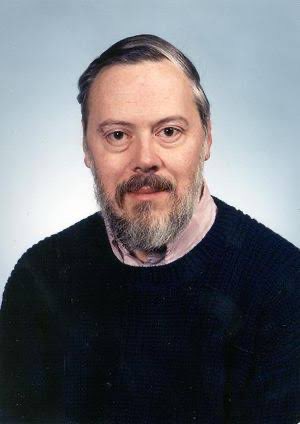
Dennis Ritchie created C in the early 1970s without Google, Stack Overflow, GitHub, or any AI ( Claude, Cursor, Codex) assistant.
- No VC funding.
- No viral launch.
- No TED talk.
- Just two engineers at Bell Labs. A terminal. And a problem to solve.
He built a language that fit in kilobytes.
50 years later, it runs everything.
Linux kernel. Windows. macOS.
Every iPhone. Every Android.
NASA’s deep space probes.
The International Space Station.
> Python borrowed from it.
> Java borrowed from it.
> JavaScript borrowed from it.
If you have ever written a single line of code in any language, you did it in Dennis Ritchie’s shadow.
He died in 2011.
The same week as Steve Jobs.
Jobs got the front pages.
Ritchie got silence.
This Legend deserves to be celebrated.
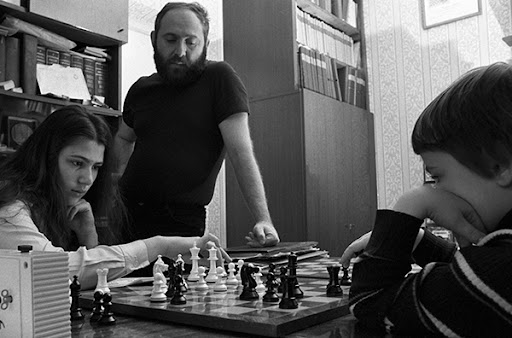
A Hungarian psychologist raised three daughters to prove that any child could become a chess grandmaster through early specialization. He succeeded. Two of them became grandmasters. One became the greatest female chess player who ever lived.
Then a sports scientist looked at the data and found something nobody wanted to hear.
His name is David Epstein. The book is called "Range."
The Polgar experiment is one of the most famous case studies in the history of deliberate practice. Laszlo Polgar wrote a book before his daughters were even born arguing that geniuses are made, not born. He homeschooled all three girls in chess from age four. By their teens, Susan, Sofia, and Judit were dominating tournaments against grown men. Judit became the youngest grandmaster in history at the time, breaking Bobby Fischer's record. The story became the gospel of early specialization. Pick a domain young, drill it hard, and you can manufacture excellence.
Epstein opens his book by telling that story honestly and then quietly demolishing the conclusion most people drew from it.
Chess works that way. Most things do not.
Here is the distinction that took him four years of research to articulate, and that almost nobody who quotes the 10,000 hour rule has ever read.
There are two kinds of environments in which humans develop expertise. Psychologists call them kind and wicked. A kind environment has clear rules, immediate feedback, and patterns that repeat reliably. Chess is the cleanest example. Every game ends with a winner and a loser. Every move is recorded. The board never changes shape. The pieces never invent new ways to move. A child who plays ten thousand games will see most of the patterns that exist in the game, and pattern recognition is exactly what chess mastery is built on.
A wicked environment is the opposite. Feedback is delayed or misleading. Rules shift. The patterns that worked yesterday may be exactly the wrong patterns to apply tomorrow. Most of the real world looks like this. Medicine is wicked. Investing is wicked. Building a company is wicked. Scientific research is wicked. Almost every job that involves a complex changing system with humans in it is wicked.
The Polgar sisters trained in the kindest environment any human can train in. Their success was real and the method was correct. The mistake was generalizing the method to fields where the underlying structure of the environment is completely different.
Epstein's research is what made the implication impossible to ignore.
He looked at the careers of elite athletes outside of chess and golf and found that the pattern was almost the inverse of what people assumed. The athletes who reached the very top of their sports were overwhelmingly people who had played multiple sports as children, specialized late, and often switched disciplines well into their teens. Roger Federer played squash, badminton, basketball, handball, tennis, table tennis, and soccer before tennis became his focus. The kids who specialized in tennis at age six and trained year-round for a decade mostly burned out, got injured, or topped out at lower levels of the sport.
The same pattern showed up everywhere he looked outside of kind environments. Inventors with the most patents had worked in multiple unrelated fields before their breakthrough work. Comic book creators with the longest careers had drawn for the most different genres before settling. Scientists who won Nobel Prizes were dramatically more likely than their peers to be serious amateur musicians, painters, sculptors, or writers.
The skill that mattered in wicked environments was not depth in one pattern. It was the ability to recognize when a pattern from one domain applied unexpectedly in another. That kind of thinking cannot be built by drilling a single subject. It can only be built by accumulating mental models from many subjects and learning to move between them.
The deeper finding is the one that should change how you think about your own career.
Specialists in wicked environments often get worse with experience, not better. Epstein cites studies of doctors, financial analysts, intelligence officers, and forecasters showing that years of experience in a narrow domain frequently produce more confident judgments without producing more accurate ones. The expert builds elaborate mental models that feel comprehensive and turn out to be increasingly disconnected from the actual structure of the problem. They stop noticing what does not fit their framework. They mistake fluency for understanding.
Generalists do better in wicked domains for a reason that sounds almost mystical until you understand the mechanism. They have less invested in any single mental model, so they abandon broken models faster. They are used to being a beginner, so they are not threatened by the discomfort of not knowing. They have seen enough different domains that they can usually find an analogy from one field that unlocks a problem in another. The technical name for this is analogical thinking, and the research on it is one of the most underrated bodies of work in cognitive science.
The single most useful sentence in the entire book is the one Epstein puts almost as a throwaway.
Match quality matters more than head start.
A person who tries six different fields in their twenties and finds the one that genuinely fits them will outperform a person who picked one field at fourteen and stuck to it on willpower alone. The lost years were not lost. They were the search process that produced the match. Every field they walked away from taught them something they later imported into the field they finally chose.
The reason this is so hard to accept is cultural, not empirical. We tell children to pick a path early. We reward the prodigy who knew at six. We treat the late bloomer as someone who failed to launch on time, when the data suggests they were running an entirely different and often more effective optimization process underneath.
The Polgar sisters were not wrong. The conclusion the world drew from them was.
If your environment is genuinely kind, specialize early and drill hard. If it is wicked, and almost every interesting human problem is, then the people who win are the ones who refused to specialize until they had seen enough to know what was actually worth specializing in.
You are not behind. You were running the right experiment all along.
🇫🇷 New: Jean-Luc Mélenchon, French presidential candidate and leader of France’s largest left-wing political bloc:
🔹“We do not forget a single one of the 10,000 Palestinian prisoners who endure hell in the jails of the supremacists in Netanyahu's government.”
🔹“Our duty is to be at the forefront of those fighting against the genocide in Gaza and the massacres in Lebanon.”
🔹“Our thoughts go to those who took the risk of boarding the flotillas to Gaza. Netanyahu's navy committed an act of piracy against these vessels.”
(🎥 Video originally shared by @JLMelenchon. Translated by Drop Site)
In May 2024, @IDF Sgt. Dolev Mor Yossef posted this photo on his Instagram - posing with two blindfolded Palestinian women.
The two women have not been seen since.
personally not interested in baseball and i cant imagine going into the replies of a baseball writer and saying "im not into baseball." it's weird how many people are compelled to do that here with subjects they are not interested in. don't like fashion, move on!
The "partition plan" they are talking about was in 1922, not 1947. It refers to the creation of Transjordan as a self-governing Arab emirate within the Mandate for Palestine but excluded from the Jewish homeland.
A pervasive lie has been spread about this since 1925. The claim is that "Palestine" in the Balfour Agreement included Transjordan, but the British split off the land east of the Jordan river to create an Arab state, leaving the Jews with only the land west of the Jordan. This lie appears to have been originally spread by the Revisionist Zionist Ze'ev Jabotinsky.
It took me weeks to piece together the real story from original sources.
Transjordan was never included in the 1917 Balfour Agreement. It was at that time part of the Ottoman Vilayet of Syria.
In 1916, Syria was provisionally divided in two by the Sykes-Picot agreement, with the northern half being a French "sphere of influence" and the southern half ("Transjordan") British. Sykes & Picot envisaged the two powers collaborating to establish an Arab state or confederacy of states in Syria. Talk about wishful thinking. Britain did want an Arab state there, since it had already promised this to the Hashemites in return for Arab help in defeating the Ottomans. But France wanted another Algeria.
At the time of the San Remo Conference (1920), which allocated the Mandates, the whole of Syria (including Transjordan) was ruled from Damascus by Britain's Hashemite ally Feisal. He had just declared Syria independent and himself King.
Against the wishes of the Syrians (King-Crane Commission 1919), and arguably violating the Sykes-Picot Agreement, the Conference allocated the Mandate for Syria to France and the Mandates for Palestine and Iraq to Britain. Importantly, the Conference did not define the boundaries of the Mandates. It left Britain and France to thrash this out between themselves. There are numerous maps circulating that claim to show "San Remo Conference boundaries", but they are all fake.
Three months after the Conference, France invaded Syria, deposed Feisal and established a military occupation. However, the occupation did not extend south of the Sykes-Picot line. The area known as "Transjordan" was left ungoverned. In France's eyes, it was a British responsibility.
Feisal's brother Abdullah raised a small army and moved into Transjordan, setting up his base in Amman. From there he conducted guerilla raids into French Syria and across the Jordan into British Palestine, both of which he claimed. He threatened to raise an army and kick out both the French and the British.
The British didn't take Abdullah's threats seriously, but the guerilla attacks were annoying and they did need to govern Transjordan - they feared that if they didn't, it would de facto be run by the French from Damascus. So they agreed a deal with the Hashemites (known as the "Hashemite Solution"). Feisal would become King of Iraq, and Abdullah would become Emir of the smaller Transjordan. Both would legally be under British oversight. For Iraq this was easy, since Britain was the Mandatory power for Iraq. But France was nominally the Mandatory power for Transjordan. To bring Transjordan under British oversight in accordance with the Sykes-Picot Agreement, the League of Nations agreed to add it to the Mandate for Palestine. This was in 1921, before the Mandates had been finalised.
But there was a problem. The draft Mandate for Palestine incorporated the Balfour Agreement. Adding Transjordan to it would significantly extend the scope of the Jewish homeland and impose on Abdullah an obligation towards Jews that he would not accept. So Article 25 was added to the Mandate to exclude Transjordan from the Jewish homeland.
Jabotinsky originally agreed to the exclusion of Transjordan from the Jewish homeland. But by 1925, he had changed his mind and was laying claim to Transjordan as part of the "Jewish state". This remains the Revisionist Zionist position now...
@RichHeydarian I'm not woke so I'll be saying the least woke thing ever. Lindsey is acting just like all repressed homosexuals ever. He needs to prove his masculinity by acting like a blood fscking thirsty war hawk.
Winston Churchill fought his depression with bricks. He'd lay them for hours at his country home in Kent. He joined the bricklayers' union. And in 1921 he wrote about why it worked. It took psychology another 75 years to catch up.
He called his depression the "Black Dog." It followed him for decades. His method for fighting it back was as basic as it sounds: laying brick after brick, hour after hour.
Churchill spelled out his theory in a long essay for The Strand Magazine. People who think for a living, he wrote, can't fix a tired brain just by resting it. They have to use a different part of themselves. The part that moves the eyes and the hands. Woodworking, chemistry, bookbinding, bricklaying, painting. Anything that drags the body into a problem the mind can't solve by itself.
Modern psychology now calls this behavioral activation. It's one of the most-studied depression treatments out there. Depression sets a behavior trap. You feel bad, so you stop doing things, and doing less means less to feel good about. Feeling worse makes you do even less. The loop tightens until you can't breathe inside it.
Behavioral activation breaks the loop from the action side. You schedule the activity first, even when every part of you doesn't want to. Doing it produces small rewards: a wall gets straighter, a painting fills in, a messy room gets clean. Those small rewards slowly rewire the brain. Action comes first, and the feeling follows.
Researchers at the University of Washington put this to the test in 2006. They studied 241 adults with major depression and compared three treatments: behavioral activation, regular talk therapy, and antidepressants. For the people who were most severely depressed, behavioral activation matched the drugs. It beat the talk therapy. A 2014 review of more than 1,500 patients across 26 trials backed up the result.
Physical work like bricklaying does something extra on top of this. It crowds out rumination, the looping bad thoughts that grind people down during the worst stretches of depression. Bricklaying needs both hands and gives feedback brick by brick: each one is straight or crooked. After an hour you can see exactly how much wall you built. No room left for the mental chewing.
The line George Mack used in his post, "depression hates a moving target," is good poetry. The science behind it is sharper. Depression hates a brain that has somewhere else to be.
@RichHeydarian Nothing changes until KOLs like you and corpo media like GMA/ABS_CBN, keep pushing the narrative that the presidential system is better than a parliamentary system so #NoChaCha. Pinoys are the fools doing the same thing over and over again and expecting a different result.
The lack of news on Gaza isn’t because the genocide is over.
It’s because Israel slaughtered the journalists and Western media pretends there’s a ceasefire.