@agrossfield Sometimes such values can be usual for comparison between different ligands even if the absolute values are ludicrous. I’ve gotten values like –32 and –28, where rigorous calc gives –10 and –7 kcal/mol.
🔓Take a look at this #OpenAccess research from @JeffComerSim and colleagues, as featured on the inside front cover of our latest issue:
'Computational design of a cyclic peptide that inhibits the CTLA4 immune checkpoint'👀👀
https://t.co/UHJPwwUvE8
📍 @KSUDAP
@andrewwhite01 We should probably be fighting for those to be more open too. I do FEP and docking solely with open source code (although the proprietary codes are probably more friendly for novices).
@LindorffLarsen In the US, there is a much bigger jump between postdoc and Asst. Prof. My income tripled between my CNRS postdoc and my Asst. Prof. position at Kansas State. I don't think most US postdocs are getting what St. Jude quotes.
Designed a cyclic peptide that folds and self-assembles at the graphite/graphene–water interface using molecular dynamics simulation and verified the formation of linear patterns experimentally. In my opinion, the coolest work I've ever done.
https://t.co/v1mZvFBeR6
@JCIM_JCTC
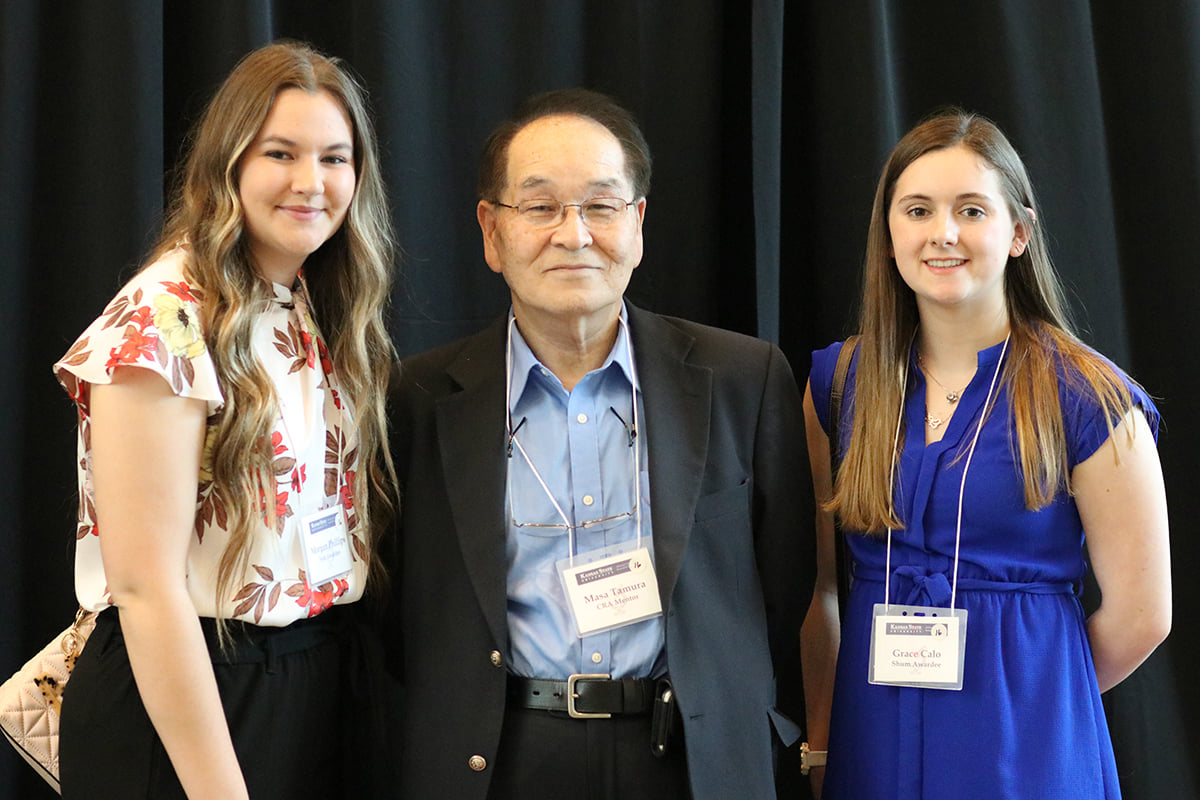
Excited for these students to be receiving cancer research awards under the mentorship of the CVM's Dr. Masaaki Tamura: Grace Calo, third-year veterinary student (right), Justin Shum Award; and Morgan Phillips, undergraduate student, Joanne L. Reeves Award. @KSUDAP
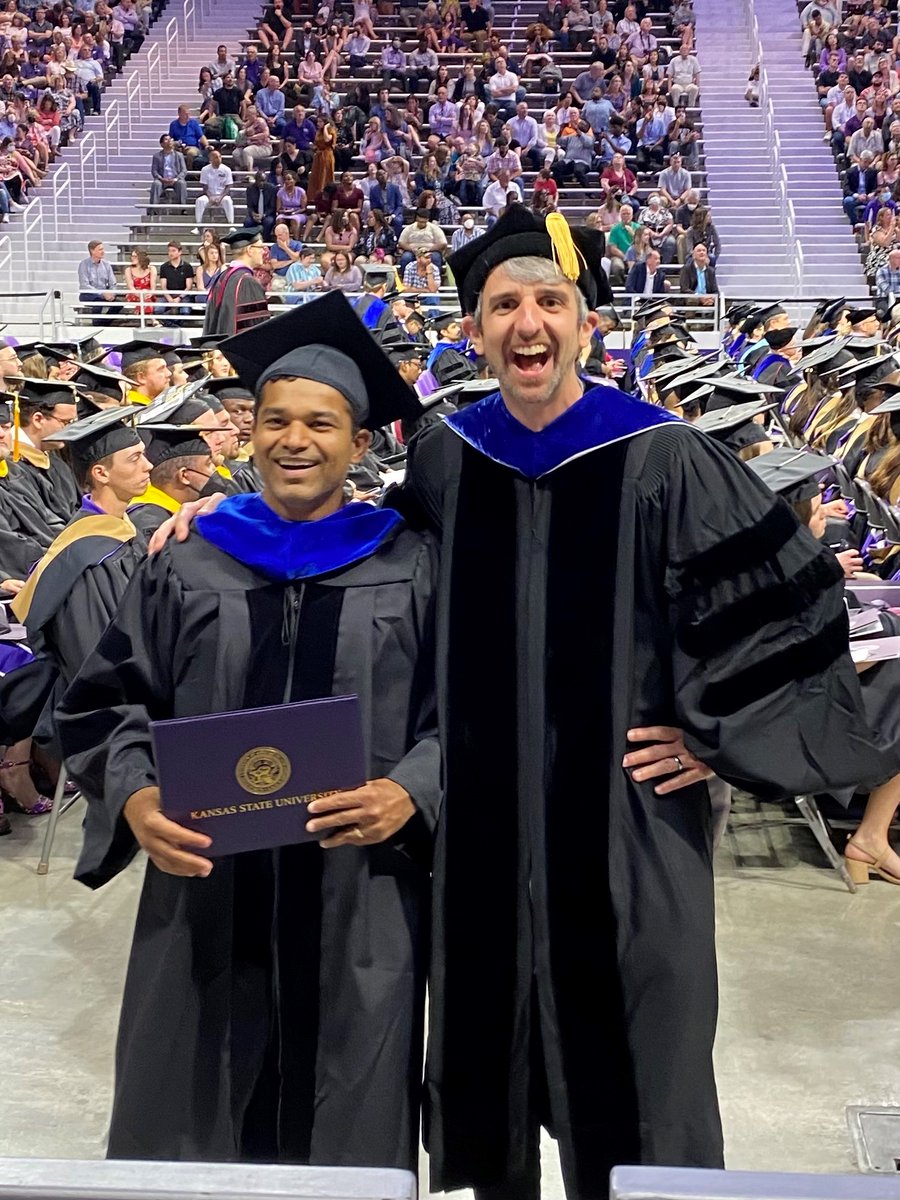
🎓#KState graduation is underway! 🎉🥳👏A big congrats to Dr. Thakkar and Dr. Comer! Dr. Thakkar is the first PhD to come out of the @JeffComerSim lab! Well done by all!
@KSUCVM@KSUGradSchool
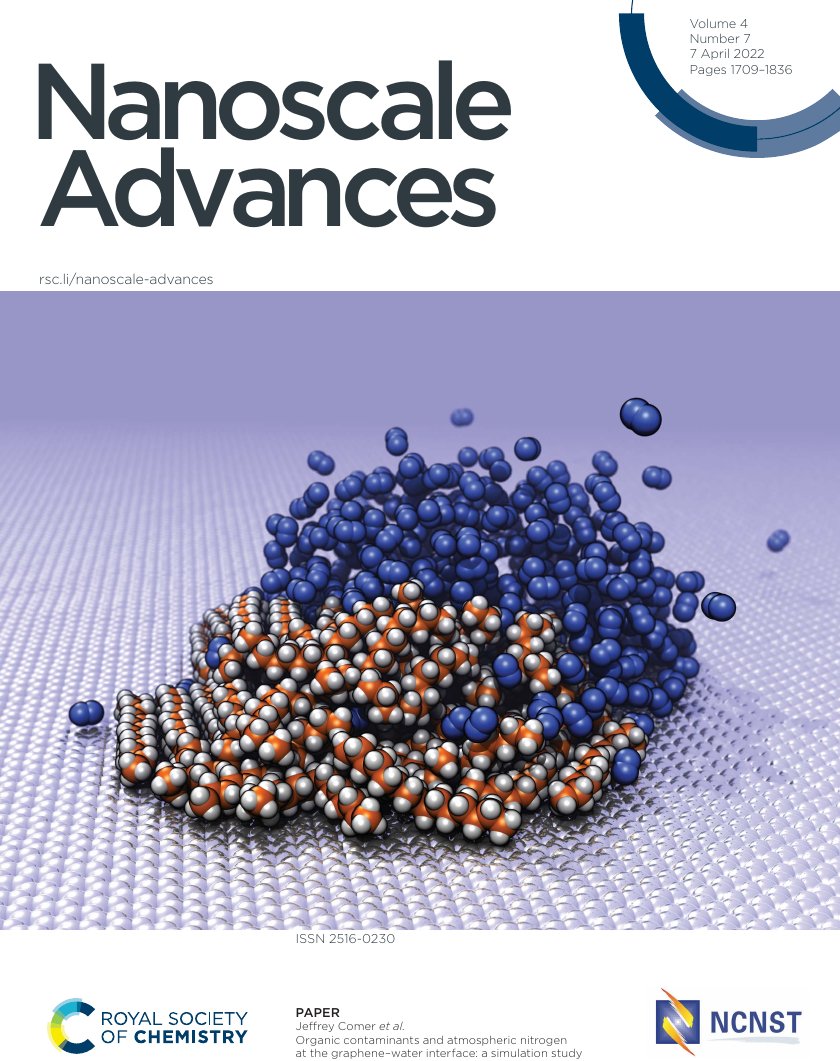
Our article on hydrocarbon aggregation at the graphene–water interface in Nanoscale Advances has been highlighted as a Popular Advance! https://t.co/BEuQydARjQ @KSUDAP
Graphene and graphite in water may be covered in airborne hydrocarbon contaminants under typical laboratory conditions. https://t.co/9VqxdIeoix @KSUDAP@nanoscale_rsc
@davidlmobley Nice work! It seems like every group has a different protocol and few have a good justification for what they do, so this is helpful. The “simple scheme” used no restraints, while the “gentle scheme” had many stages. Do you think all stages are necessary or maybe good practice?