@Jeri_Actual@gatnerd Used it all the time in the Army or in competitions in extremely dusty environments, there is a reason the forward assist is there
I recall my 1st day as a freshman undergraduate physics student. The professor told us that during our four years we would be admiring the most beautiful items in the universe—equations of physics. He also gave us a tip for success in our studies: the correct answer will be the most beautiful & elegant equation. He was right. It also explains why research mathematicians & mathematical physicists, among all scientists, exhibit the highest percentage of believers in God and an afterlife.
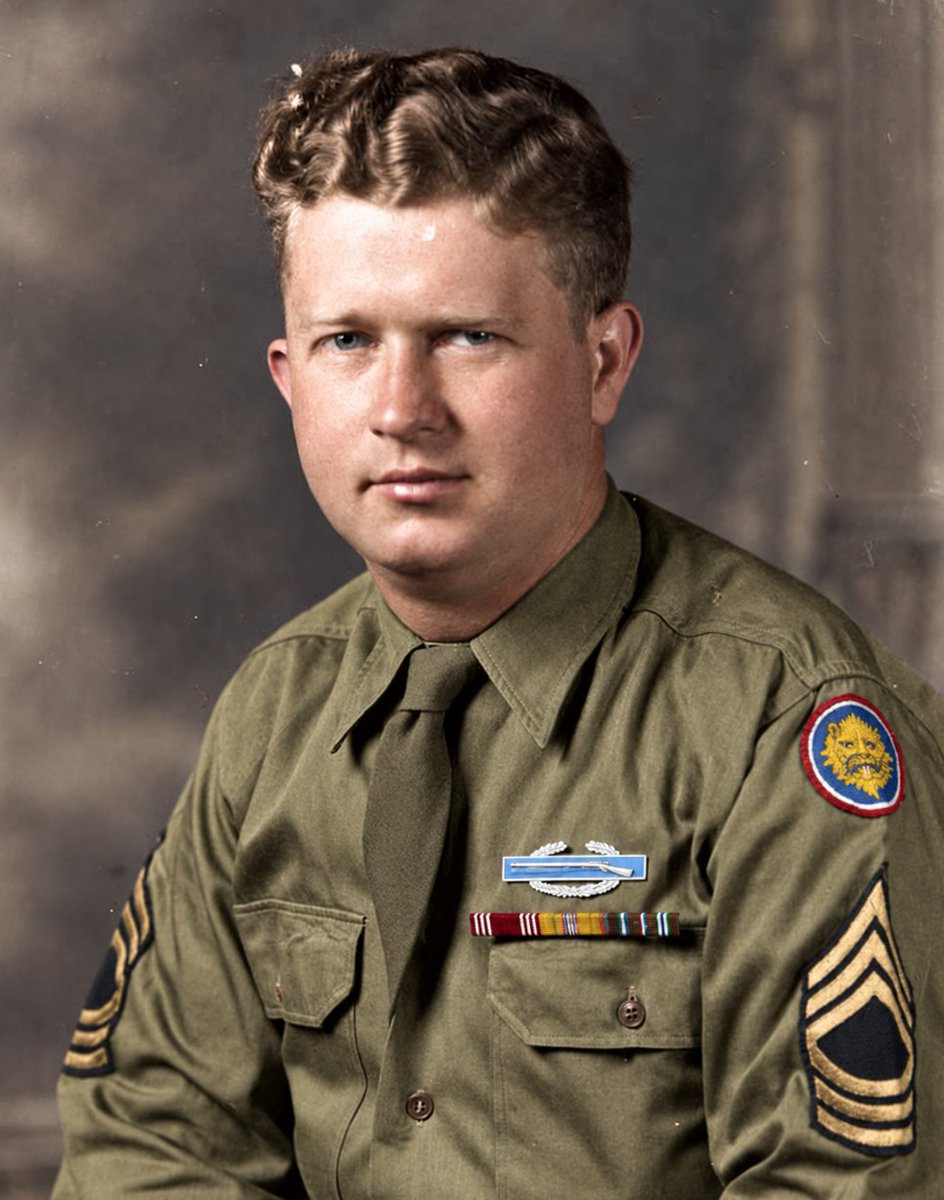
🇺🇸 A German officer pressed a pistol between his eyes. Behind him stood more than 1,200 American prisoners.
If he surrendered the names the Nazis wanted, more than 200 Jewish-American soldiers could disappear.
He answered with five words.
His story was nearly forgotten. Follow us and share it so it never will be again.
Master Sergeant Roderick "Roddie" Edmonds had been captured during the Battle of the Bulge while serving with the 422nd Infantry Regiment.
By January 1945, he was the senior American NCO at Stalag IX-A. On January 26, the Germans issued an order: every Jewish-American prisoner must report separately at morning roll call.
Edmonds understood what separation could mean. So he issued his own order: "Every American would report".
The next morning, more than 1,200 men stood together outside the barracks.
The German commandant demanded that Edmonds identify the Jews. When he refused, the officer drew his pistol and pressed it against Edmonds’ forehead.
Edmonds did not move. "We are all Jews here."
He reminded the commandant that prisoners were required to give only their name, rank and serial number. If the German shot him, Edmonds warned, he would have to shoot them all, and face trial for war crimes after Germany’s defeat.
Then the commandant lowered his pistol and walked away.
Not one Jewish-American prisoner stepped forward. More than 200 men had been saved because one soldier refused to surrender them.
Edmonds survived the war but never told his family what he had done. He died in 1985.
Witnesses later revealed the truth. In 2015, Yad Vashem recognized him as Righteous Among the Nations. On March 2, 2026, his son accepted the Medal of Honor on his behalf.
His name was Master Sergeant "Roddie" Edmonds.
And when evil demanded names, he answered: "We are all Jews here".
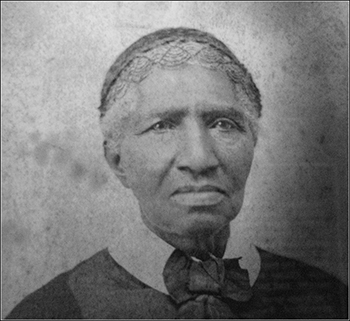
In 1835, at an estate auction in Kentucky, a woman named Clara Brown stood and watched her husband and her three surviving children sold off to different buyers.
She spent the next forty seven years looking for her daughter.
Clara was born around 1800 near Fredericksburg, Virginia, and was enslaved from birth. She was moved to Kentucky as a child. She married a man named Richard and had four children, Richard, Margaret, and twin girls named Eliza Jane and Paulina Ann. Paulina drowned when she was small.
When the man who owned them died in 1835, the estate was broken up and sold, which in practice meant the family was auctioned off in pieces to four different people. Eliza Jane was about ten years old.
Clara never saw her husband, her son, or her older daughter again.
She was bought by a man named George Brown in Russellville, Kentucky, and worked for him for roughly twenty years. When he died, his will freed her. She was in her mid fifties.
Kentucky law at the time required freed Black people to leave the state. So being given her freedom also meant being ordered out of the only place she had ever lived.
She worked her way to St. Louis, then to Kansas. In 1859 news of gold in Colorado came through, and she got herself onto a wagon train heading west by hiring on as the cook, in exchange for the outfit agreeing to haul her laundry kettles. Seven hundred miles.
In Central City she opened the first laundry in Gilpin County and washed for the miners.
And it turned out she was a formidable businesswoman. She saved. She bought property. She put money into claims. At her height she owned sixteen lots in Denver, seven houses in Central City, and property and mining interests in Boulder, Georgetown and Idaho Springs. Somewhere around ten thousand dollars, which is roughly a million now.
She also fed and housed whoever showed up needing it, which is where the name Aunt Clara came from, and the church services she hosted in her own cabin became Colorado's first Protestant congregation.
And the entire time, she was looking.
After the Civil War she went back east, to Kentucky and then Tennessee, trying to find her family. She did not find them.
What she did instead was find other formerly freed people with nowhere to go and no way to get anywhere, about sixteen of them, and pay out of her own pocket to bring every one of them to Colorado.
The money went. Some into claims that failed. Some to real estate men who cheated her. Most of it to people who needed it, and to the search, which she never stopped running, decade after decade.
Then in 1882 word finally came back to her. There was a woman in Council Bluffs, Iowa, named Eliza Jane.
Clara was 82 years old and had almost nothing left. She went anyway.
It was her.
Forty seven years. She brought her daughter and her granddaughter back to Denver with her.
She died three years later, in October of 1885. The governor of Colorado and the mayor of Denver came to the funeral, and the Colorado Pioneers Association, which had voted her in the year before, conducted the service.
She arrived in Colorado with a load of wash kettles and no money, built a small fortune out of other men's dirty shirts, and spent essentially all of it on other people and on one ten year old girl she had been sold away from in 1835.
She found her.
"If you don't know who you are, you become what you do." ~ Chip Conley
It is easy to derive our sense of worth from our careers, roles, titles, or accomplishments. But when our identity is rooted in our profession (e.g., "I am a pastor," "I am a business owner," "I am a teacher"), we can struggle if we lose our job, retire, or fail at something.
* What truly defines you apart from your job, role, or achievements?
* Identify your core values. What matters most to you beyond what you do?
The aim of the Christian life in the present time—the goal you are meant to be aiming at once you have come to faith, the goal which is within reach even in the present life, anticipating the final life to come—is the life of fully formed, fully flourishing Christian character.
-After You Believe / Virtue Reborn
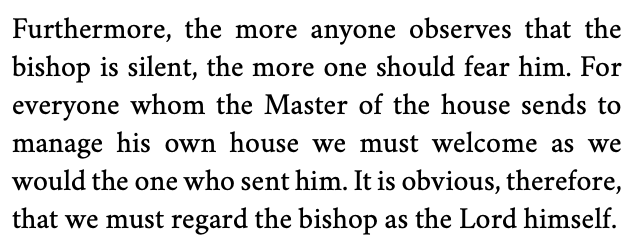
This, from Ignatius's letter to the Ephesians, shows the divergence from the NT model. Nowhere in the canonical letters do we find such comparison of an elder to the Lord himself. They are under shepherds, who are indeed owed respect and honor, but Paul also contemplates what do to in the case of a bishop who persists in sin.
Ignatius was concerned about the survival of the church in the face of persecution. But, is that not the Lord's business, who promised the gates of hell would not prevail?
Cold. Waiting. Fear. Master these three and you can outlast 99% of people. Survival isn't about physical strength or skill. It's about mental toughness when everything tells you to give up. That's where the real battle is won.
@keithrobphil@Annakhait Scripture, history and our lives are full of people who initially received the Word joyfully and did not endure (parable of the Sower and the 4 soils)