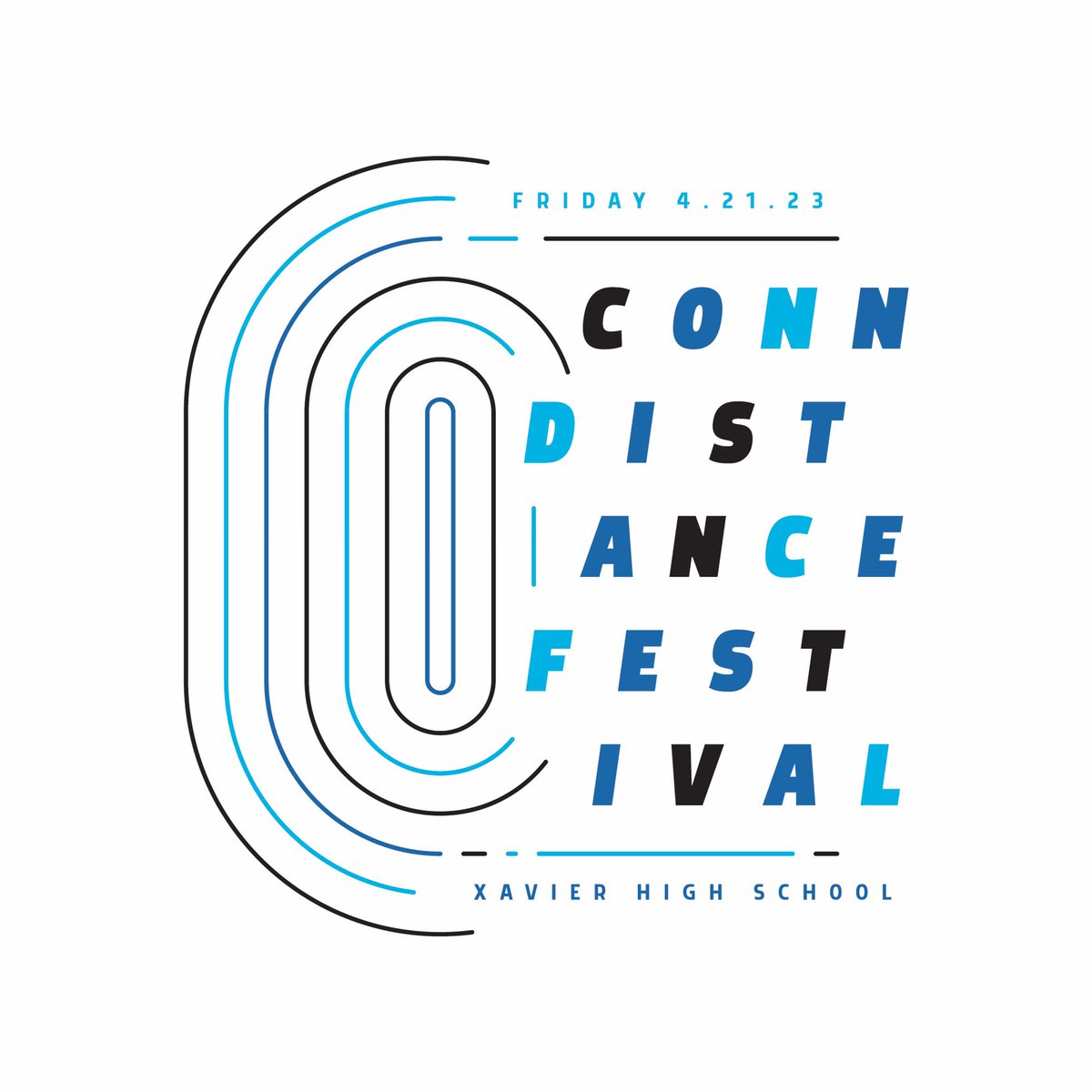
The 6th CT Distance Festival is only 3️⃣ weeks away❕😎
Join us on the evening of April 19th for the most electric racing atmosphere on Connecticut soil❕🏃🏻⚡️🏃🏽♀️
🗓 Friday, April 19th
⏰ 4:00pm Start
📍 @hallxctf
💻 @mysportsresults
📊 @PCTiming#cttrack
1) Thread for today: I am not going to opine on the Supreme Court's ruling except to tell a story about a late and valued friend. The story will suffice for the sum of my thoughts about affirmative action.
I was working at the student newspaper at the University of Maryland...
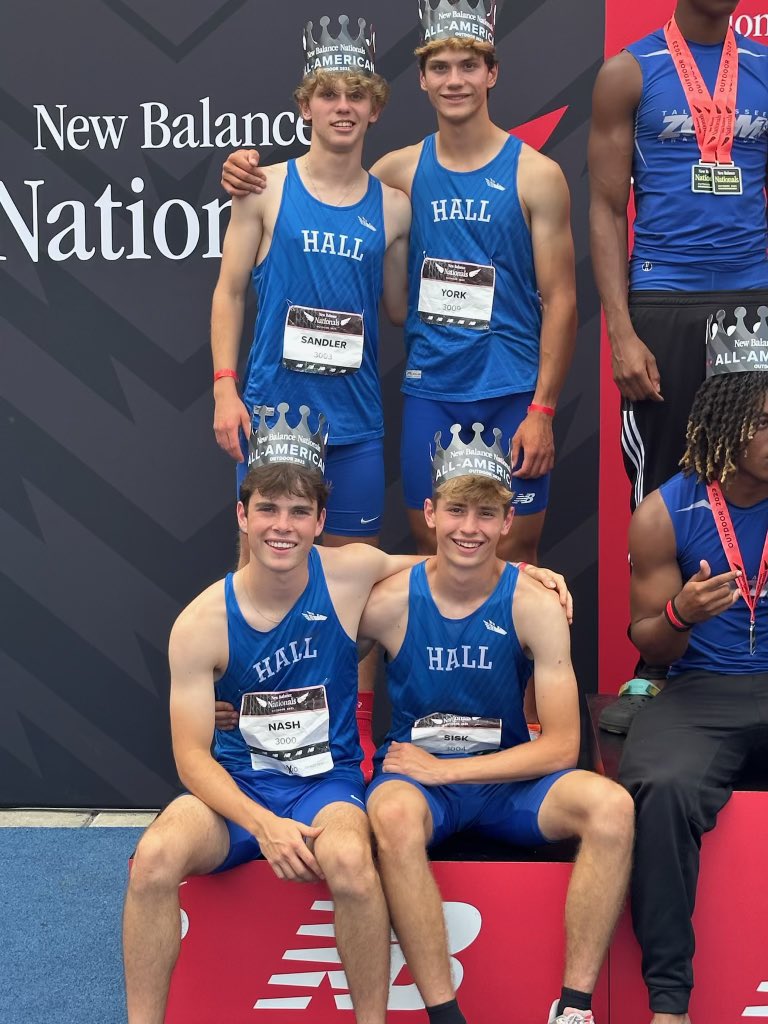
Boys 4x400 6th in the championship race at the New Balance Outdoor Nationals earning All American honors. Congrats to Sam Sandler, Jon York, Tommy Nash and Gabe Sisk.
The #1 priority of admin should be staff morale.
Everything else is secondary. Here's a few tips:
* give them a voice
* Trust them as professionals
* Treat everyone as individuals/ humans
* Respect their time
* Show them you care personal/professional
* celebrate/ appreciate
What is your brain doing when you are doing absolutely nothing?
A neuroscientist wanted an answer to that question.
So she conducted the first brain-imaging study of brain activity when the brain is in a "resting state"—free of inputs/free to wander.
The results are interesting...
The neuroscientist Dr. Nancy Andreasen used a positron emission tomography (PET) scan to study brain activity when the brain is at "wakeful rest"
When you are doing absolutely nothing:
"We found activations in multiple regions of the association cortex," Dr. Andreasen wrote. "We were not [seeing] a passive silent brain during the ‘resting state,’ but rather a brain that was actively connecting thoughts and experiences.”
Essentially, Dr. Andreasen demonstrated that the brain defaults to creativity.
When you are doing absolutely nothing, the brain engages in what the researchers termed "random episodic silent thought" or REST.
And during REST, the brain "uses its most human & complex parts."
Takeaway 1: Doing nothing promotes creativity.
Raymond Chandler, Neil Gaiman, Dr. Suess, George Lucas, and many other writers all have/had a similar habit.
They gave themselves two options:
a) You don’t have to write.
b) You can’t do anything else.
@neilhimself explains:
"I go down to my lovely little gazebo at the bottom of the garden, sit down, and I’m absolutely allowed not to do anything...I'm not allowed to do a crossword, read a book, phone a friend...all I’m allowed to do is absolutely nothing, or write. But writing is actually more interesting than doing nothing after a while."
Takeaway 2: REST
Resting, Dr. Andreasen wrote, “allows the association cortices of the brain to converse in a free & uncensored manner.”
This is why ideas come to us in the shower, on walks, and when daydreaming.
A favorite example of this: @Lin_Manuel had the idea for “Hamilton” on vacation:
"I was on a pool float with a margarita in my hand and had a moment when my brain could unplug. [It was his first vacation in 7 years]. The moment my brain got a moment's rest, the best idea I've ever had in my life walked into it."
---
“If a plant only gets sunlight, it’s very harmful. It needs darkness too…In the darkness, it converts oxygen into carbon dioxide. We are like that too. We need periods of doing & periods of non-doing.” — Robert Pirsig
Follow me @bpoppenheimer for more content like this!
My son was bullied in school last year.
The ‘cool’ kids harassed him in the classroom. And wouldn’t let him play sports at recess.
We noticed how much he hated going to school every day. After months of being bullied he finally broke down and told me what was going on.
I was bullied as a kid too, so I knew how it felt. My heart was broken for the little guy. I took it seriously.
I sat in his bed until late that night giving him perspective and tools.
He went to school the next day armed for battle, but our plan backfired. He was crushed again. He wanted to give in. Maybe change classes. I told him not to give up.
We went back to the drawing board.
The day after he managed to turn it all around. He stood up for himself and showed the bullies he’s not to be messed with a respectful way.
He was invited to play! He ended up becoming one of the best players in the school. 💪
Fast forward…
Yesterday my son was playing soccer. And a boy tried to play. The kids wouldn’t let him in. A few years back they gave this boy a nasty nickname and he’s been sidelined ever since.
Yesterday on the court, my son also called him the mean nickname. He saw how much it hurt the boy.
He remembered his hurtful it was when we was bullied.
He came home from Synagogue and told me what happened. He felt terrible.
I told him the right thing to do was to call to say sorry. He didn’t want. He was to shy and embarrassed.
I called the boys father anyways. He told me that his son is having a rough year because of the bullying. My son heard every word.
His father passed the phone to his boy.
I put my son on the line.
“I’m sorry I called you that name. From now on I’ll make sure that nobody bothers you .” My son said.
The boy responded “thank you Menachem.”
My son said “can we be friends?”
I heard the boy chocking up and struggling to answer. Finally he said in a teary voice…
“Yes”.
Lesson learned, bullying is serious. We as parents have to be just as concerned about other kids feelings as we are about our own kids.
We have to turn our children into leaders and defenders instead of bystanders.
I subscribe to the hands on parenting method. How about you?
Teaching is so weird because nobody seems to want to talk about how to explain things... which seems like it'd be something we'd talk a whole lot about. There are a few things I've learned from research into clarity of explanations that I wish I'd been taught earlier 1/
We need to move away from drills based coaching where children are standing in a line behind a cone waiting for a turn.
And move towards a game based coaching environment where children are moving around, making decisions and are continously involved.
If you want to be the best 9-year-old in a sport then by all means specialize as early as possible and play year-round. If you want an opportunity to be the best at age 18+ then diversify early through multiple sports and lots movement activities then specialize later on!
#LTAD
Lauren Fleshman's new book Good For A Girl is sad, scary, riveting, and unrivaled in its personal integrity. It's a must read for teen girl runners, their parents, their coaches, and all who treasure healthy running. There aren't many easy answers. But the spotlight is important.
There is overwhelming research showing homework does little to improve achievement, especially in early years, and can actually have negative effects. Recess however has many positive effects such as improved self regulation of emotions, improved interpersonal skills and focus!







![bpoppenheimer's tweet photo. What is your brain doing when you are doing absolutely nothing?
A neuroscientist wanted an answer to that question.
So she conducted the first brain-imaging study of brain activity when the brain is in a "resting state"—free of inputs/free to wander.
The results are interesting...
The neuroscientist Dr. Nancy Andreasen used a positron emission tomography (PET) scan to study brain activity when the brain is at "wakeful rest"
When you are doing absolutely nothing:
"We found activations in multiple regions of the association cortex," Dr. Andreasen wrote. "We were not [seeing] a passive silent brain during the ‘resting state,’ but rather a brain that was actively connecting thoughts and experiences.”
Essentially, Dr. Andreasen demonstrated that the brain defaults to creativity.
When you are doing absolutely nothing, the brain engages in what the researchers termed "random episodic silent thought" or REST.
And during REST, the brain "uses its most human & complex parts."
Takeaway 1: Doing nothing promotes creativity.
Raymond Chandler, Neil Gaiman, Dr. Suess, George Lucas, and many other writers all have/had a similar habit.
They gave themselves two options:
a) You don’t have to write.
b) You can’t do anything else.
@neilhimself explains:
"I go down to my lovely little gazebo at the bottom of the garden, sit down, and I’m absolutely allowed not to do anything...I'm not allowed to do a crossword, read a book, phone a friend...all I’m allowed to do is absolutely nothing, or write. But writing is actually more interesting than doing nothing after a while."
Takeaway 2: REST
Resting, Dr. Andreasen wrote, “allows the association cortices of the brain to converse in a free & uncensored manner.”
This is why ideas come to us in the shower, on walks, and when daydreaming.
A favorite example of this: @Lin_Manuel had the idea for “Hamilton” on vacation:
"I was on a pool float with a margarita in my hand and had a moment when my brain could unplug. [It was his first vacation in 7 years]. The moment my brain got a moment's rest, the best idea I've ever had in my life walked into it."
---
“If a plant only gets sunlight, it’s very harmful. It needs darkness too…In the darkness, it converts oxygen into carbon dioxide. We are like that too. We need periods of doing & periods of non-doing.” — Robert Pirsig
Follow me @bpoppenheimer for more content like this!](https://pbs.twimg.com/media/Fr_l8F9WwAAyaFB.jpg)