John Abruzzo was already at his desk on the 69th floor of the North Tower when the first plane hit.
He was a Port Authority accountant and a C5-6 quadriplegic.
His power wheelchair was how he moved through the world.
Most of his floor emptied fast.
Ten coworkers did not.
They lifted him out of his custom chair and into a lightweight evacuation chair the agency had bought after the 1993 bombing - the same attack that had already trapped Abruzzo in this building once before.
That first time it took six hours to get him down.
This time they took turns: two at the front, two at the back, sliding him down flight after flight, pivoting on every landing.
One person scouted ahead.
When they hit smoke they changed stairwells.
They even stopped at a Snapple machine.
Firefighters they passed offered to take him.
The group said no.
They would not leave him.
It took about 90 minutes to descend 69 floors.
They carried him over debris in the lobby and out through a broken window.
They were on the sidewalk roughly ten minutes before the North Tower fell.
The chair that brought him down is in the 9/11 Memorial Museum now.
The names of the people who stayed with him are not as widely known as they should be.
There was no speech.
No vote.
Just a group of office workers who looked at a man who could not take the stairs and decided his life was not someone else’s problem.
That is the story.
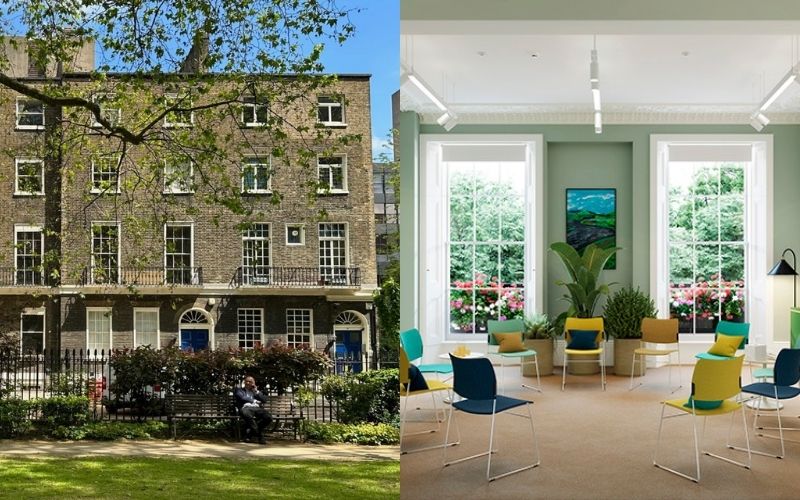
Delighted to share that a world-first centre for people impacted by rare dementias will be named in honour of visionary philanthropists Hilary and Galen Weston.
Read more:
https://t.co/TSVB6BITjM
https://t.co/6MzEKGjata
https://t.co/GSGHGQDt0M
At UCL, AI is revolutionising dementia research; from faster Alzheimer’s diagnosis to tracking progression and developing new treatments.
This #WorldAlzheimersMonth, explore how our neuroscience experts are improving lives: https://t.co/GPY7aOzW7K
Prof Tabrizi: “I want to thank the participants in our young adult study as their dedication and commitment over the last 5 years mean we hope that clinical trials aimed at preventing #HD will become a reality in the next few years." @ucl@UCLIoN@DrMFarag https://t.co/iufuIajqF0
This is an exciting opportunity to build on a fantastic collaboration across the UK, at the most exciting time in dementia research! Let me know if you want to talk!
We are delighted that the @SRausingTrust has awarded a further £5 million in support of the Neurogenetic Therapies Programme (NgTP) at @UCLIoN/@UCL.
Together, we can transform outcomes for people with neurodegenerative and dementia-causing diseases. 🔬 https://t.co/yDMcM1mYDg
Congratulations to Dr @AndrewSeaton@UCLHistory who has been shortlisted for the 2024 #WolfsonHistoryPrize, the UK's most prestigious history writing prize, for his book 'Our NHS: A History of Britain’s Best-Loved Institution' https://t.co/W0gKjiMMM1
Well, it’s official: I have been promoted to full Professor @ucl I am well aware of what this means; that as a Black Woman I am one of a few. To the students over the years who told me it meant the world to see me at the front of a room- I am still here.
A teenager, who is the first patient to take part in a UCL-sponsored clinical trial led by Mr @martin_tisdall @UCLchildhealth@GreatOrmondSt to use deep brain stimulation (DBS) to treat epilepsy, has seen his daytime seizures reduce by 80% https://t.co/36FwZ02GJS
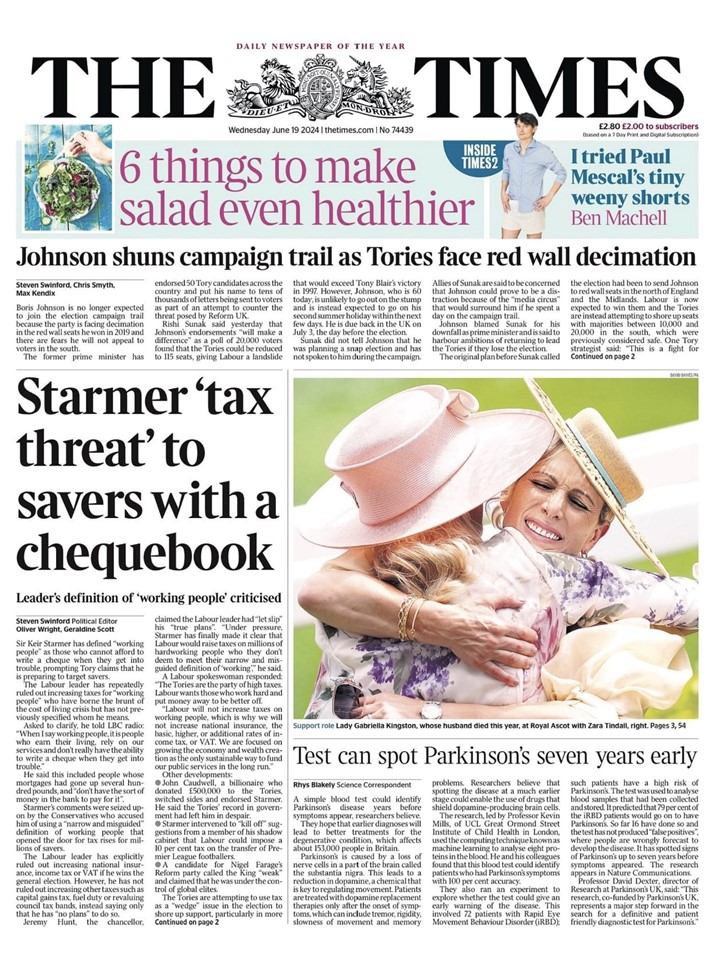
Front page of The Times this morning for our lab, describing our use of artificial intelligence & panels of biomarkers to create new predictive test for Parkinson's Disease.
It is an absolute privilege to work with the superb clinicians and scientists at UCL.
#ParkinsonsDisease
Drugs with the potential to treat Alzheimer's are expected to be approved in the UK this year, but healthcare services may need to change to ensure patients have equitable access to these therapies finds a study co-led by Prof @rimonaweil & Dr @cathmummery https://t.co/2cbspDC2iP
The perfect week to announce a flagship initiative - the first ‘Maggie Centre’ for dementia - it is much needed To support patients and families and hopefully will lead the way for more in the UK in the future
This #DementiaActionWeek, we are delighted to announce that a £2.7 million gift from The Hilary and Galen Weston Foundation has secured a site for a world-first Rare Dementia Support Centre at @UCL. https://t.co/oLHiU2yLEo