We teach kids things that have no connection to the world around them and wonder why they’re not engaged.
So I made this list of books covering 18 core pillars of “boring” infrastructure modern society is built on.
There are cathedrals everywhere for those with eyes to see.
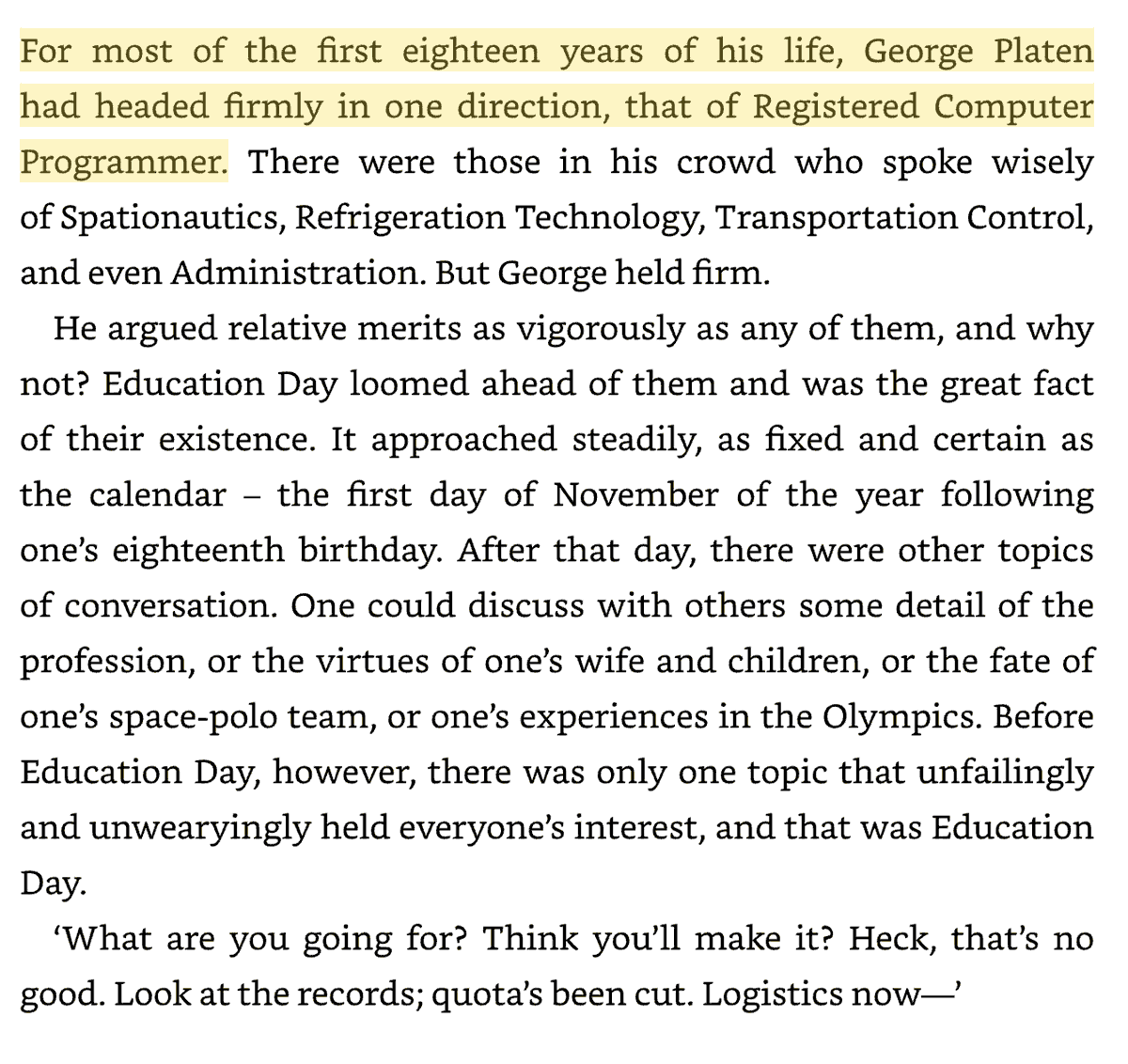
If you work in tech, you will want to read the ~40-page short novel Profession by Isaac Asimov, from 1957.
An unusually intelligent youngster decides they want to be a Registered Computer Programmer as demand for that profession is the highest of all. But he gets rejected... and even though the story was written 70 years ago, it's as if it described the world that could happen with AI, and who the most valuable people of such a world could be.
(thanks @ritakozlov for the recommendation!)
@LynAldenContact And I feel like an update was made where whenever I open X, it auto moves me to the For You tab and it takes me a 30 seconds to realize I’m in the wrong room 🥲
How to keep AI spend flat while token usage grows exponentially: Not with friction and spend alerts. With better defaults, routing, and caching.
Better Defaults (not Usage Caps) – Engineers can choose any model they want, but defaults matter. We’re experimenting with defaulting to open weight models like GLM 5.2 and Kimi 2.7 through our LLM gateway, while still encouraging engineers to choose the right model for the task. 91% of our employees were never hitting their usage caps, so instead of lowering caps and driving up alerts, we're moving to cheaper defaults. Note that code reviews use a diversity of models, so they can check each other's work.
Better Routing – In our custom harnesses, we preprocess prompts and route to the best model for the job, considering cache hits and model pricing. For instance, you may want a frontier model for planning, but not for execution where they can be overkill. Ultimately, humans shouldn't be choosing models - AI can automate this task.
Better Caching – Cache misses are the easiest way to drive your cost up. All of our requests are cache aware, so we’re reusing a warm cache wherever possible. For example, our cache hit rate went from 5% → 60% in LibreChat once properly implemented.
Keep Context Lean – Start fresh sessions when switching tasks. Scope file context narrowly. Disconnect unused tools. Don't just compact. The goal isn't fewer tokens used, it's fewer tokens wasted.
Better Visibility – Our engineers can use as many tokens as they want, from whatever model they want, but we’ve made usage visible – and the more you spend on AI, the more impact we expect.
The goal isn't to suppress usage. It's to build the infrastructure that makes exponential growth sustainable.
Putting this into practice has cut our AI spend nearly in half, while our token usage continues to grow.
Agentic workloads are quietly rewriting inference economics. We pulled data from 432k real coding agent requests at SemiAnalysis and the median one isn't 32k, isn't 64k, but 96k input tokens. For context, that's more than the entire text of The Great Gatsby being shoved into the model before you've even typed your question. (1/3)🧵