Our director Professor Jeremy Howick has been ranked in the top 0.25% of researchers in General and Internal Medicine in the 2026 Stanford–Elsevier career-long citation-impact database 👏
Jeremy has published more than 250 peer-reviewed articles and is the author of three books, including Doctor You, which became an Amazon number 1 bestseller.
His research into the power of empathy and the mind-body connection has also earned recognition from the British Medical Association, the European Society for Person-Centred Healthcare, and the University of Oxford.
Congratulations Jeremy on this great achievement ❤️
Can empathy save lives in maternity care? ❤️New research suggests it can play a vital role in improving safety for mums and babies by strengthening communication, trust and decision-making.
Read more 👉https://t.co/4Y61au6MOP
@JeremyHowick@Empathy_Centre@katieotty
Too often, maternity tragedies have something in common: women raised concerns but weren't listened to.
Empathy isn't just kindness. It's essential to patient safety.
We need empathic systems, not just empathic staff.
My latest @ConversationUK article:
https://t.co/HiUzOl7fLz
#Empathy #MaternityCare #PatientSafety
Did you know you can watch a selection of plenaries from our ground-breaking Educating for Empathy in Healthcare course that show educators how to teach empathy to others?
“It was a good eye-opener to how empathy can make a huge difference in my daily consultations.”
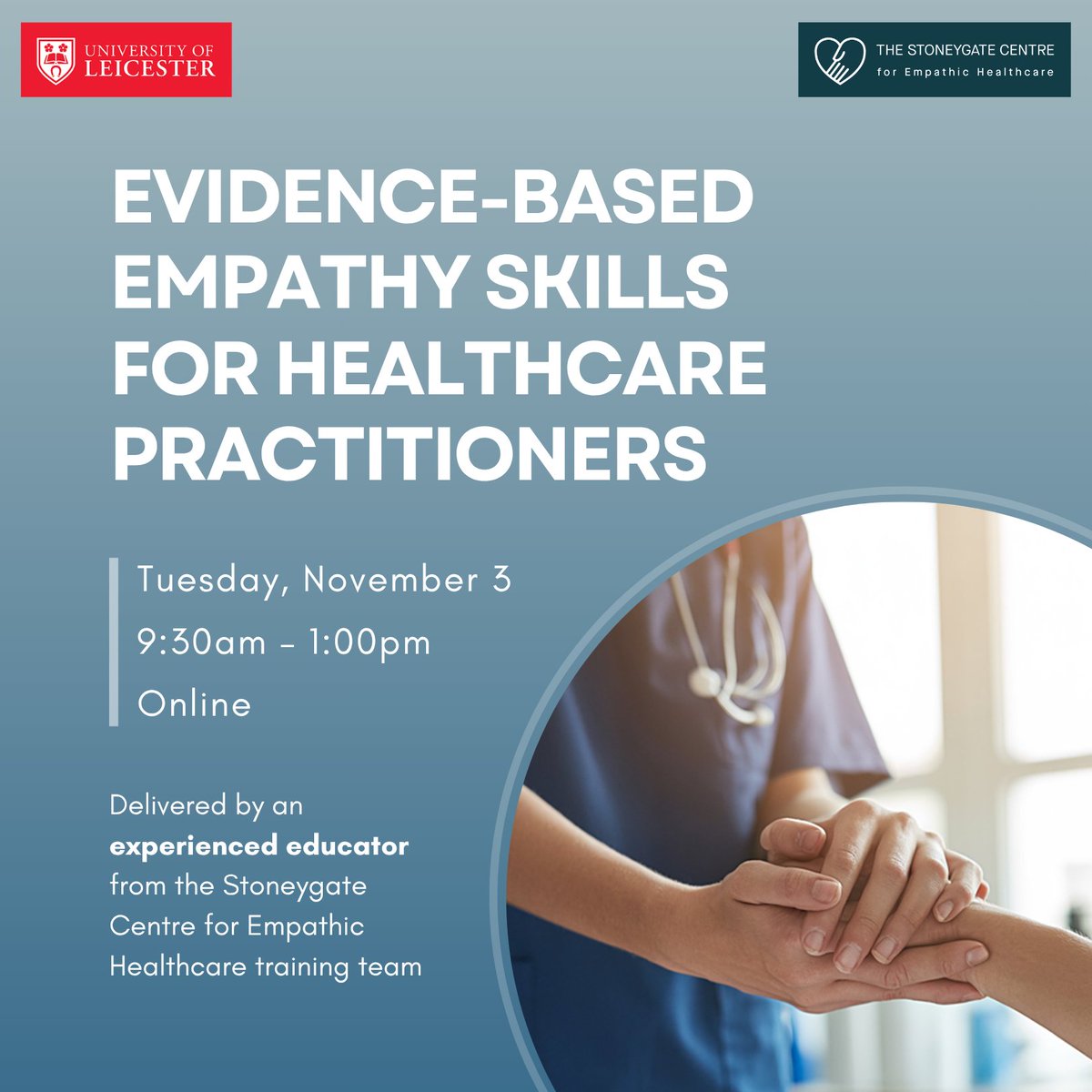
This was one of the positive responses we received from previous participants of our 'Evidence-based empathy skills for healthcare practitioners' half-day webinar.
1/2
Measuring empathy in healthcare is important so we asked: How can we make empathy measurement simpler?
The answer: our new Rapid Assessment of Therapeutic Empathy (RATE) scale.
Hear more about RATE from @a_bennettweston below👇
Read the research: https://t.co/YOdTFhq0zB
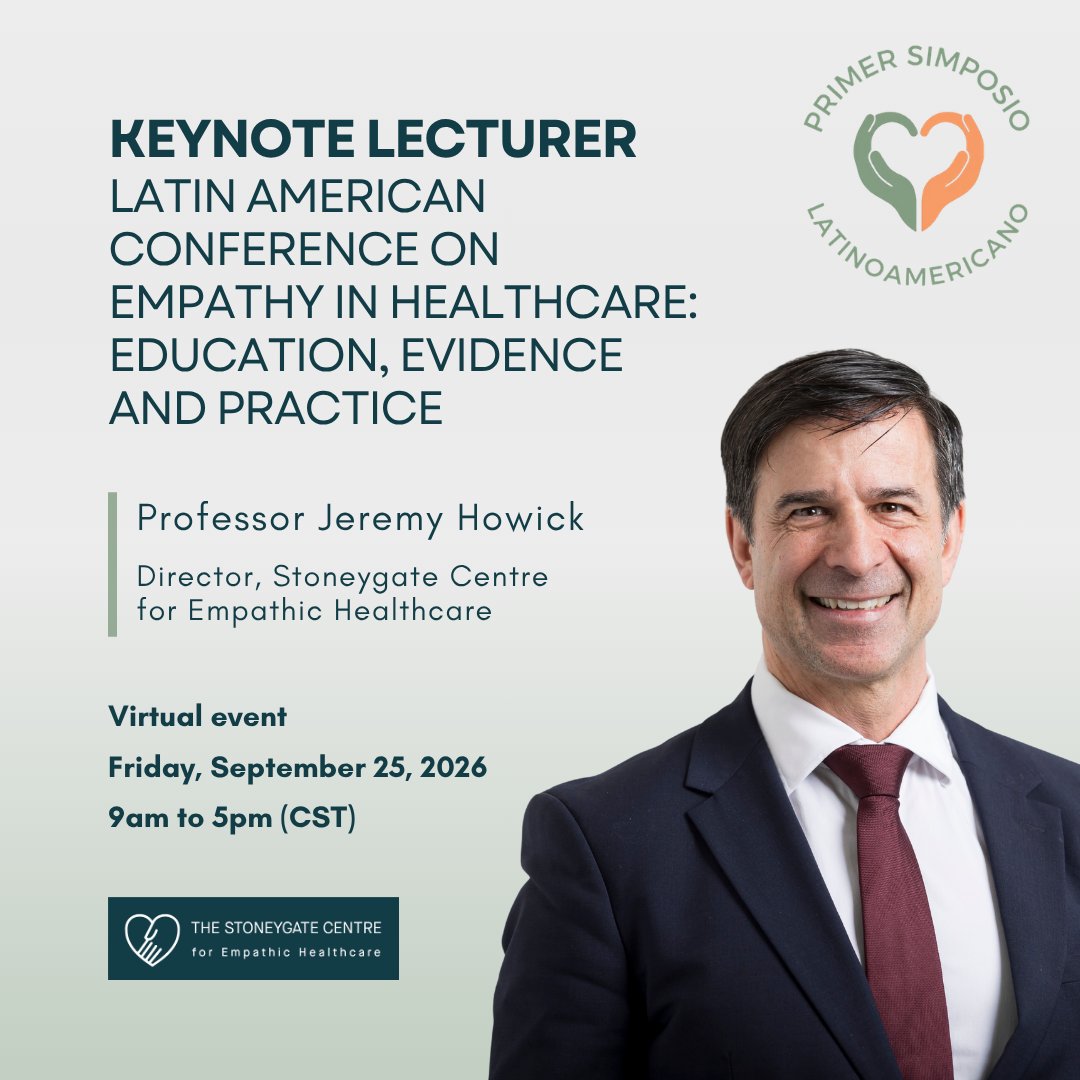
Our director Professor Jeremy Howick will give a keynote lecture at the Latin American Conference on Empathy in Healthcare: Education, evidence and practice as part of our efforts to improve outcomes for patients and help healthcare professionals cope with pressures at work.
1/3
News | New one-question scale could transform how empathy is measured
👉 https://t.co/KyzurlOtyd
One question can measure how much empathy a patient experiences from their healthcare professional, new study states.
#CitizensOfChange | @JeremyHowick | @a_bennettweston
As AI gets better, does empathy matter MORE—not less?
Excellent piece in @timeshighered arguing that universities mustn't neglect the human capabilities technology can't replace.
This resonates strongly with our work @Empathy_Centre: empathy can be taught, practised & supported—and we're now extending our training into education.
The future isn't AI vs empathy. We need both.
Article:
https://t.co/Yxwk2WxlXQ
Our courses:
https://t.co/zyc3W12GwU
@UniofLeicester@LeMedSchool@UCSDCompassion
#Empathy #AI #HigherEducation #Education #Empathic
Empathy pays
Delighted to have a new article published by @TheEconomist 's Economist Enterprise.
Our research suggests more empathic healthcare organisations mean:
❤️ Safer patients
👥 Healthier staff
💷 Lower costs
Empathy isn't just an ethical aspiration. It's a financial strategy.
Thanks to @a_bennettweston & Jason Oke for collaborating on the underlying research and to @E_Sukkar at The Economist!
https://t.co/43IQYuOMm1
@Empathy_Centre@UniofLeicester@LeMedSchool@NIHRresearch@NIHRARCs@UCSDCompassion
#DoctorYou #Empathy #Empathic #compassion #communication #evidencebasedmedicine
What does empathic leadership actually look like?
Delighted to contribute to @Forbes on how leaders can become more empathic in @SallyPercy's new article.
Some remarkably simple leadership heuristics:
👂 Listen first, speak last
🚶 Walk the shop floor
💬 Be vulnerable
Empathy isn't just about being "nice"—it's a practical leadership skill.
https://t.co/w5DXlCFLsW
@Empathy_Centre@UniofLeicester@LeMedSchool@UCSDCompassion@Speakers_bureau@ChampSpeakers
#Empathy #Empathic #compassion #communication #evidencebasedmedicine
Our director Professor @JeremyHowick will give a keynote lecture at the Latin American Conference on Empathy in Healthcare: Education, evidence and practice as part of our efforts to improve outcomes for patients and help healthcare professionals cope with pressures at work
1/3
SYSTEM BARRIERS TO EMPATHY
We've spent decades teaching clinicians to be more empathic. But what if the biggest barrier isn't the clinician—it's the system?
Our research programme on #SystemEmpathy suggests that organisations can either enable or suppress empathy.
Over four studies we've:
🔹 Developed the first conceptual framework
🔹 Identified practical system-level solutions
🔹 Demonstrated implementation in an NHS Emergency Department
🔹 Developed the first System Empathy Index, linking higher system empathy with better patient safety, healthier staff, and lower spending on temporary staffing and consultancy.
Read more:
Framework: https://t.co/1OOOG2osfZ
Empirical study: https://t.co/JFqty7tZqD
Implementation: https://t.co/Vx2hTnATxl
Index: https://t.co/595ncHXHmU
If these findings continue to hold up, the future of empathy may depend less on changing people—and more on changing the systems in which they work.
Please share if you think healthcare should become easier to deliver with empathy.
@uniofleicester @UHLNHS @NIHRresearch
#Healthcare #PatientSafety #NHS #Leadership
Some readers have interpreted my article as arguing against inquiries into maternity failures. That isn't my view. Reviews and transparency are essential. My point is that when multiple reviews identify similar recommendations, we owe it to families to implement them quickly. Families deserve both accountability and action.
I'm sorry that you've interpreted my article this way.
My point was that the latest Ockenden report itself concludes that many recommendations from earlier reviews were not implemented. Had they been, many tragedies might have been prevented.
As for your final sentence, it's factually incorrect. My brother died in infancy from a preventable cause, and listening to patients and families is a central part of my work.
I hope we can focus on the substance of the argument rather than making personal assumptions about one another. The goal should surely be the same for all of us: preventing future harm.