📘 BOOK GIVEAWAY!
We're celebrating the release of "Good News for Midlife" by Dr. @jaredcwilson with a special giveaway!
Want a free copy? FOLLOW us, LIKE this post, and RT to enter to win.
🚨Flash Giveaway🚨
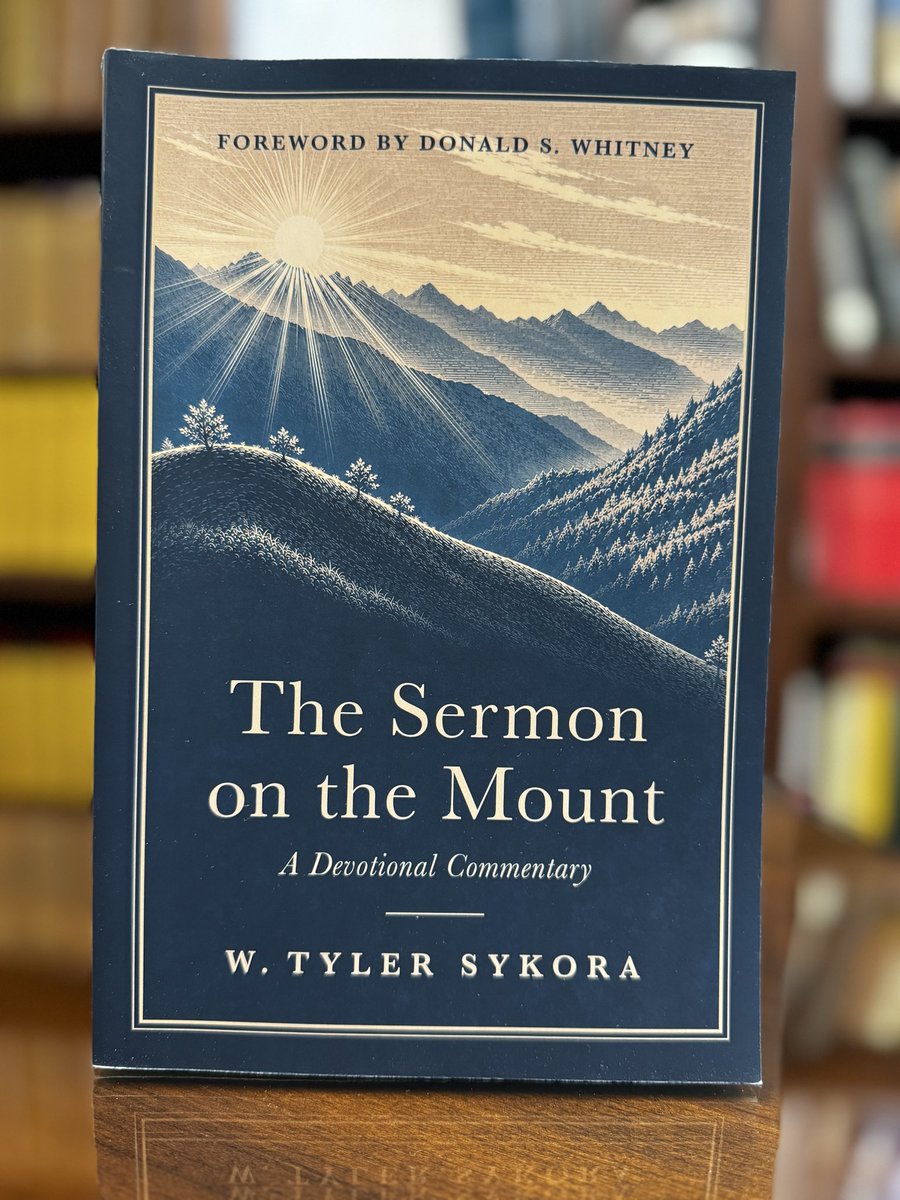
I’m giving away a signed copy of one of my @MBTS colleagues’ latest book on the Sermon on the Mount!
To enter:
🔁 RT this post
👤 Follow this account
👇🏾 Tag a friend for an extra entry!
Winner announced 10/9
📘 BOOK GIVEAWAY
We're celebrating the release of "The Sermon on the Mount" by Dr. Tyler Sykora with a special giveaway!
Want a free copy? Follow us, like this post, and RT to enter to win.
Let’s say you have two friends, Frank and Art. Frank is a no-nonsense, just-the-facts kind of guy, while Art is more extravagant and colorful in the way he tells stories.
Frank tells it frankly. Art tells it artfully.
If both guys experienced the same event and recounted it to you, both could give you an accurate account, but in very different ways.
Frank and Art are a lot like Hebrew prose and Hebrew poetry. And in Bible in One Year, we see a perfect example in Judges 4 and 5, which we read today.
Judges 4 gives us the prose account of Israel’s victory over Sisera. Judges 5 retells it in poetry.
Compare these examples:
PROSE (4:15): “The LORD routed Sisera and all his chariots and all his army.”
POETRY (5:21): “The torrent Kishon swept them away, the ancient torrent. March on, my soul, with might!”
PROSE (4:21): Jael drives a tent peg through Sisera’s temple.
POETRY (5:26): “She sent her hand to the tent peg and her right hand to the workmen’s mallet; she struck Sisera; she crushed his head; she shattered and pierced his temple.”
PROSE (4:21): So Sisera died.
POETRY (5:27): “Between her feet he sank, he fell, he lay still; between her feet he sank, he fell; where he sank, there he fell—dead.”
Why is this helpful for us as students of the Bible?
Because sometimes we fail to recognize that our Hebrew poetry “friend” is not speaking in a straightforward, matter-of-fact, no-frills way. Poetry uses vivid imagery, repetition, metaphor, and hyperbole.
So when reading the Bible, ask: Is this Frank or Art? Is this prose or poetry?
If it is prose, the account will likely be straightforward. If it is poetry, don’t be surprised when the earth trembles, mountains quake, hills dance, stars fight, or rivers clap their hands.
Both prose and poetry speak truth but in their own respective ways. We need ears to hear how their different voices communicate that truth, both inspired by the same Spirit to teach us what God would have us know and believe.
_______
For much more material like this that helps in reading and studying the Bible, see my free 1517 Academy Course on this topic: https://t.co/pLoz5SHRB3
New semester, new swag! Win an RTS mug, tee, journal + Lamy pen, Owala bottle, keychain, hat & socks. To enter: Follow @ReformTheoSem, like this post, and repost it. Closes Sun, 8/30 at 11:59 PM CST. Winner announced 8/31. US residents only. Not affiliated with X.
Boomer: “I paid my dues. Now it’s time for the young to serve.”
Translation: “My comfort is more important than Jesus.”
Younger Adult: “I’ve got too much going on. Let the old people serve.”
Translation: “I choose my commitments and priorities, not Jesus.”
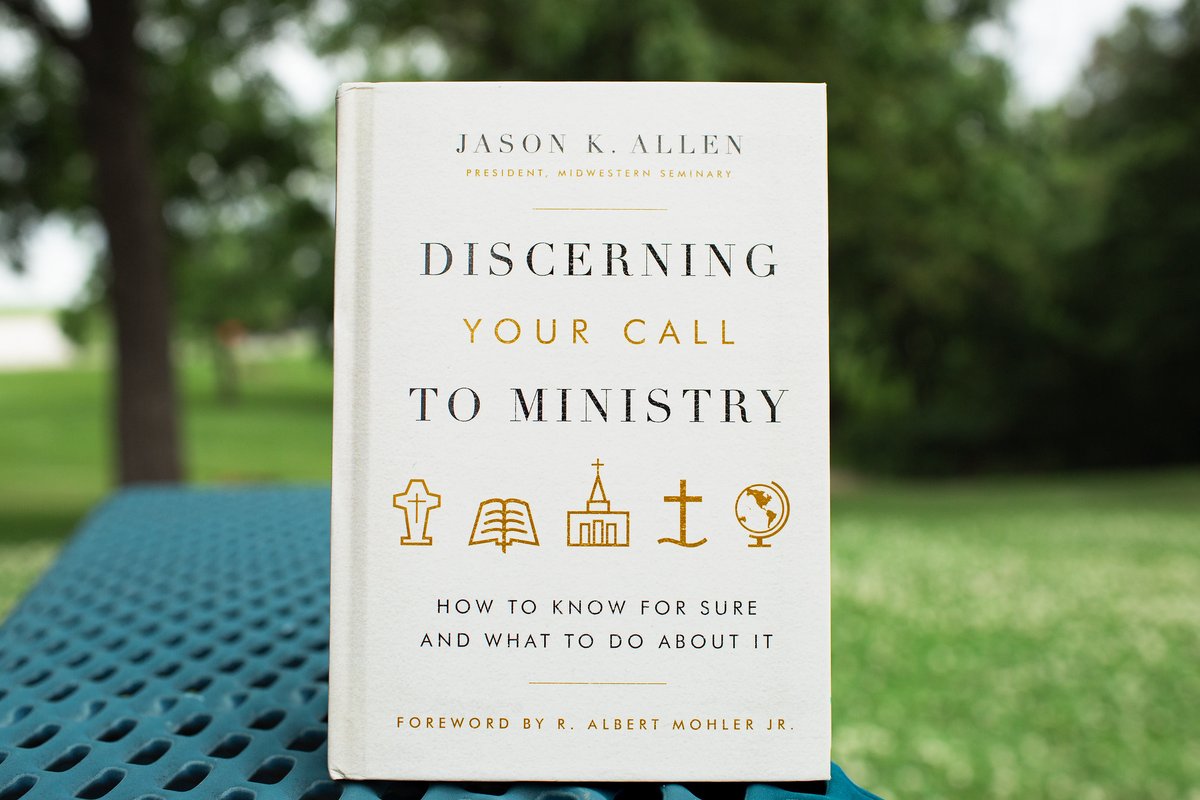
📙 For day 23 of #MBTSBooks, we’re giving away "Discerning Your Call to Ministry" by Dr. @jasonkeithallen.
FOLLOW US, LIKE, and RT to enter!
🎁 Enter to win the New Studies in Biblical Theology: https://t.co/lKRFP7z4DH
📘 GIVEAWAY!
To celebrate the release of "Pastoral Mentoring for the Care of Souls" by Midwestern Seminary faculty Dr. @jaredcwilson, we're giving away a free copy!
FOLLOW US, LIKE this post, and RT to be entered to win!
True story: in peak twitter days I did a devotional for the Texas A&M basketball team where I regretfully used a Rudolph the Rednosed Reindeer illustration and only one dude talked to me after: Alex Caruso. He was so kind.
In Ezekiel 10 God’s glory departs Jerusalem—goes out of the temple, through the Eastern Gate, over the Mount of Olives
In Ezekiel 43 God’s glory returns to Jerusalem—over the Mount of Olives, through the Eastern Gate, into the temple
In Luke 19 Jesus enters Jerusalem by riding over the Mount of Olives, through the Eastern Gate and into the temple.
Jesus is the glory of God.
Lord Jesus, come and show Your glory again!
Q: What is Amillennialism?
A: Amillennialism is a view of the End Times that does not teach a literal thousand-year earthly reign of Christ. Instead, it understands the “thousand years” mentioned in Revelation 20 as a symbolic expression for the entire New Testament period.
Q: When did the 1000 Years of Christ’s reign begin?
A: It began with his resurrection and ascension into heaven. At that point, Christ sat down at the right hand of the Father and began to reign as King of kings and Lord of lords.
Q: Is the “thousand years” in Revelation 20 a literal timeframe?
A: No. As with other numbers in Revelation, and apocalyptic literature in general, the “thousand years” are symbolic of a complete time period (10 x 10 x 10). It refers to the entire New Testament era—from Christ’s first coming until his second coming. The exact duration is not literal but represents the fullness of Christ’s reign from heaven.
Q: What is the “first resurrection” mentioned in Revelation 20?
A: The first resurrection refers to spiritual resurrection—that is, those who come to life through faith in Christ. Believers experience new life in him now, during this present reign.
Q: What about Satan being “bound”?
A: During this New Testament period, Satan is bound—his power is severely limited by Christ. He can no longer deceive the nations in the way he once did. However, near the end of this era, he will be released for a short time, leading to increased opposition and persecution.
Q: What happens after this millennial reign?
A: At the end of this symbolic millennium, Christ will return, defeat all evil, and bring about the second resurrection—the bodily resurrection of the dead. Believers will be raised to eternal life with Christ.
Q: Has amillennialism been the dominant view throughout church history?
A: Yes. A non-literal understanding of the 1000 years has been the prevailing eschatological view for most of church history worldwide. Though other views have gained popularity in modern times, especially in some evangelical circles, amillennialism remains the historic and global majority position in Christian theology.
_____
We read Revelation 20 today in Bible in One Year: https://t.co/XxNvEtNH7e