Congress has a real opportunity to get permitting reform done.
API’s Kristin Whitman on why this is a pivotal moment to fix our broken permitting system and unlock infrastructure that will power America’s future.
When diesel prices are this high, I understand the impulse to keep every gallon at home. But banning exports would backfire and it could leave the market with less fuel and Americans with higher prices. Read my new op-ed in @WSJopinion
Experts universally agree: A diesel export ban would backfire.
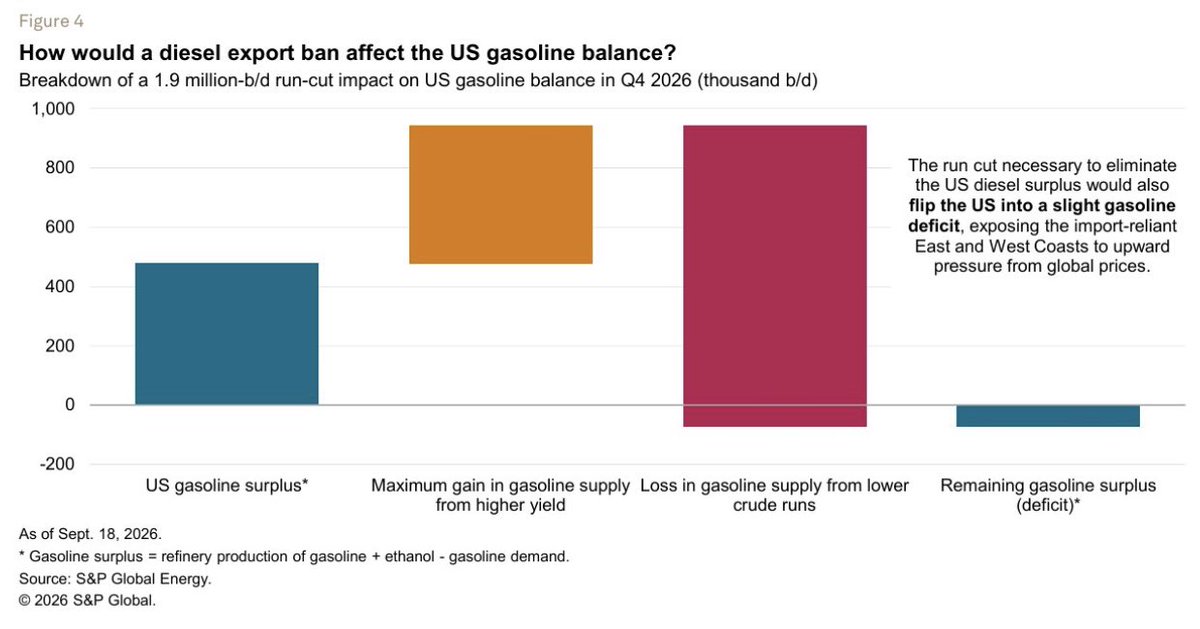
Less refinery output. Tighter fuel supplies. More pressure on gasoline and diesel prices.
Banning diesel exports could mean less diesel production, less gasoline and HIGHER prices at the pump.
An emergency action to lower diesel prices that raises gasoline prices would be political malpractice.
Republicans should suspend federal fuel taxes instead.
A diesel export ban won’t fix a global refining crisis. It could disrupt refineries, reduce fuel production and put even more pressure on prices.
In his latest @WSJ op-ed, API President & CEO @mj_sommers explains what Washington should do instead:
https://t.co/sVmEhJz5cP
“If you’re banning the export of diesel, you’re essentially going to back up the entire system.”
API President & CEO @mj_sommers joined @jaketapper on @CNN to discuss why restricting diesel exports could disrupt refinery operations, reduce fuel production and put more pressure on prices.
“You’re really trading one problem for another.” API President & CEO Mike Sommers joined @CarlQuintanilla and @SaraEisen to discuss why export restrictions would make rising fuel prices worse, not better. @SquawkStreet@CNBC
Americans are feeling higher fuel prices, especially diesel. Restricting U.S. diesel exports may sound like a quick fix, but it risks making this situation far worse.
This crisis began with a choke point. We can’t fix it by creating another one.
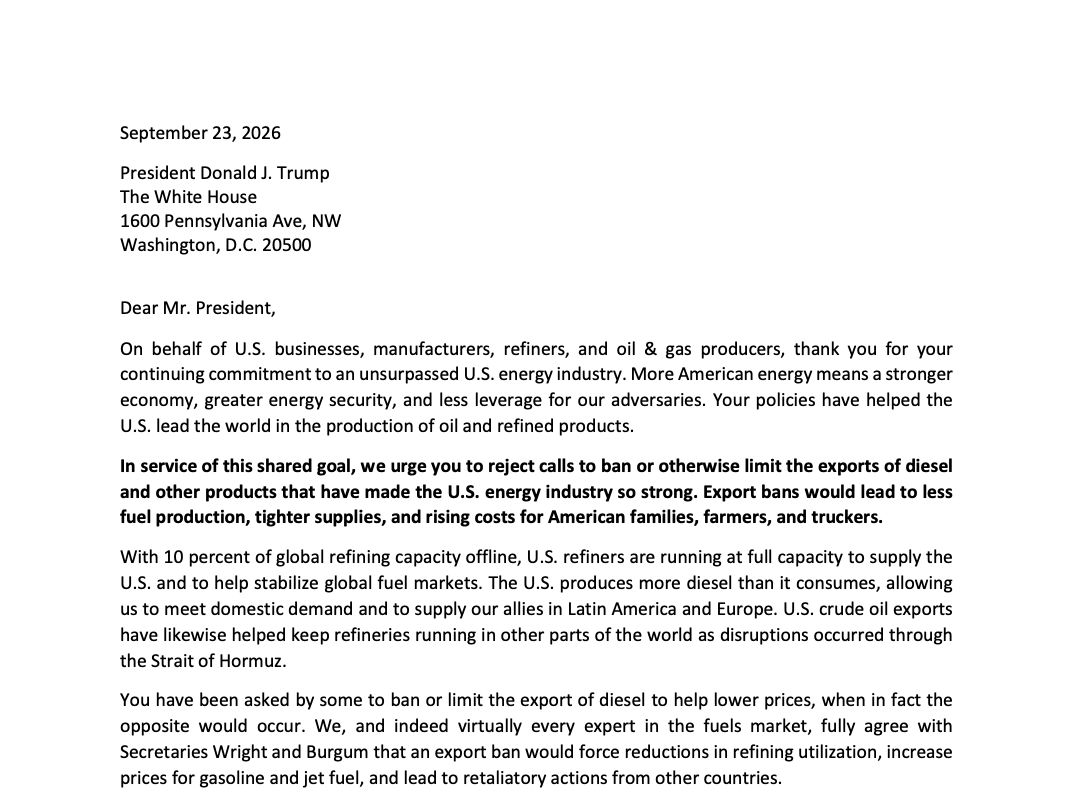
The biggest business groups in the U.S. warned President Trump against a diesel export ban this week, saying in a joint letter that such an action would prove counterproductive and raise fuel prices rather than lower them.
Read the full letter here: https://t.co/iskElqJ0M8
API President & CEO @mj_sommers joined @kaileyleinz and @JMathieuReports on @BloombergTV to explain why diesel export restrictions would drive fuel prices higher and how permitting reform could help deliver more affordable energy for American consumers.
API President & CEO @mj_sommers joined @larry_kudlow on @FoxBusiness to explain why restricting diesel exports would push fuel prices higher, and what policymakers should do instead to help ease tight markets.
Skyrocketing diesel prices have the Trump admin debating a 90-day ban on exporting diesel. @APIenergy President and CEO @mj_sommers joins Scott to share policy solutions for lowering fuel costs.
Global disruptions have already put significant pressure on fuel markets, and restricting exports would exacerbate the problem. An export ban ignores a basic reality of the U.S. fuel system — where fuel is refined and where it is needed do not always line up.
Appreciate @MarkHalperin having me on to discuss why refinery operations, global supply and the way fuel moves all matter in the debate over export restrictions.
The GOP’s “fuelish” diesel export ban risks refinery cuts without fixing the global shortage.
You can’t fence off a globally traded commodity by executive order.
Want lower prices? Suspend gas taxes and costly fuel mandates. Don’t punish American exports!
"Energy demand is going up, and if we don't get permitting done, we're not going to be able to meet the demands [of the future].” — API CEO @mj_sommers on the @RuthlessPodcast
API President and CEO @mj_sommers joined @MarkHalperin@2waytvapp to discuss today’s global refining crisis and how diesel export restrictions would backfire. “An export ban on diesel would be bad policy for the United States.”
President Trump to facing pressure from Republicans to ban diesel exports.
But researchers including @gbrew24 warn it would backfire by causing refiners to pull back.
@Bob_McNally says it would be an "authentic policy error" or APE. "In fact, this would be king of the APEs."
Americans are hurting from rising diesel costs driven by an unprecedented disruption to global refining capacity. We understand the administration is looking at every option to deliver relief, but restricting U.S. energy exports would only compound the problem — exacerbating refining challenges and ultimately hurting consumers.
The answer is more supply and more flexibility — not new restrictions that risk making a difficult situation worse.