Pre-print alert: The Crunchometer is a low-cost, open-source technology that uses bite sound to democratize the microstructural analysis of feeding bouts on solid food
The Crunchometer: A Low-Cost, Open-Source Acoustic Analysis of Feeding Microstructure https://t.co/K6o2F4py7P
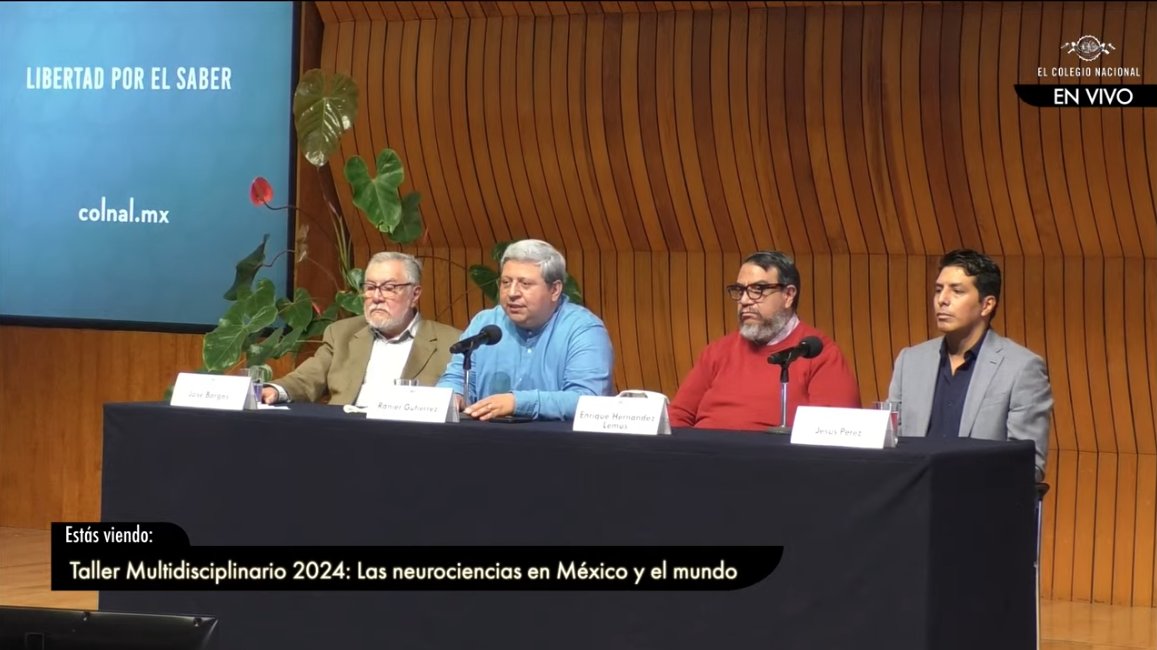
#EnVivo. Ya comenzó el “Taller multidisciplinario de neurociencias 2024”.
El día de hoy participan Pablo Rudomin, @GutierrezRanier, @Iehchel, Hugo Merchant, Carlos D. Brody, José Bargas, @JesusEPO y @EsmeFon01.
Síguelo #enlínea: 👉https://t.co/LwspIR4QcB
#Enlínea | Taller multidisciplinario de neurociencias 2024
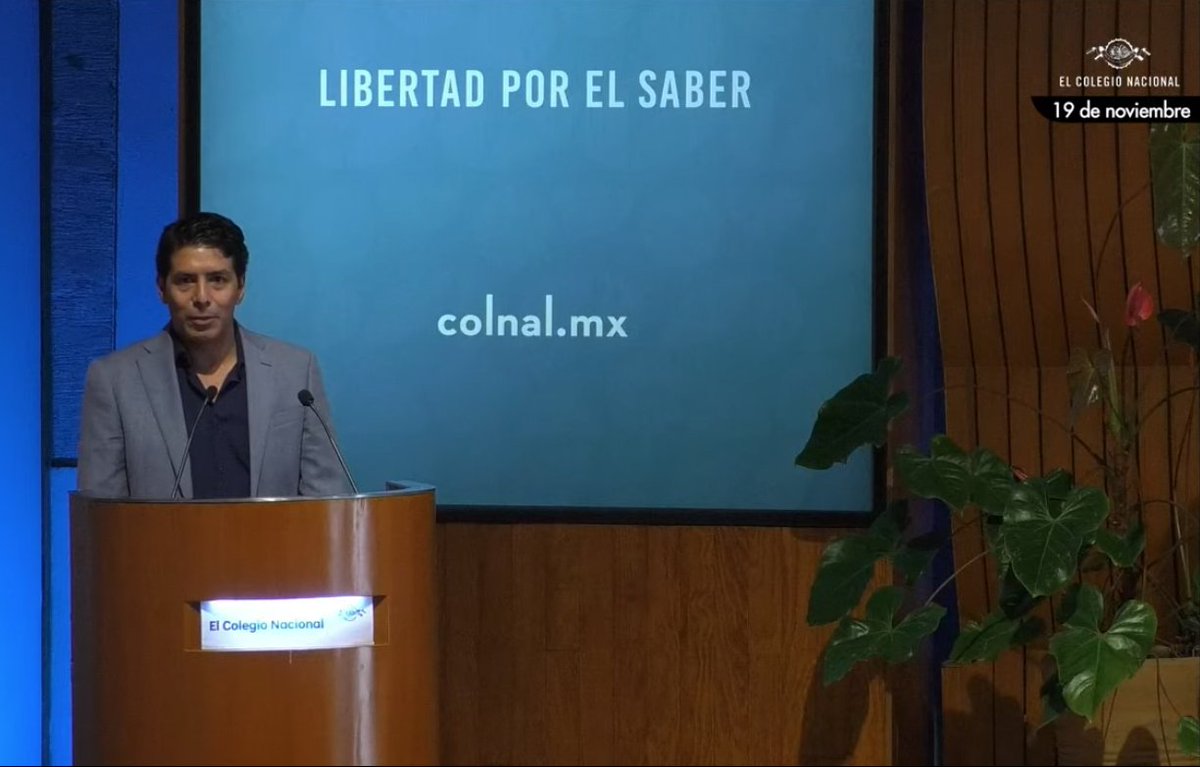
«En los últimos 20 años se han desarrollado tecnologías para poder registrar una mayor cantidad de neuronas simultaneas en la corteza visual. Yo estoy utilizando la microscopia de dos fotones para registrarla» @JesusEPO.
👉https://t.co/Qy1V1vnh1I
#Enlínea | Taller multidisciplinario de neurociencias 2024
«Hubel y Wiesel demostraron que las neuronas en la corteza occipital codifican las propiedades de los estímulos visuales y les otorgaron un Nobel (1981) por eso. Ahora conocemos a eso zona como la corteza visual» @JesusEPO.
👉https://t.co/Qy1V1vnh1I
#Enlínea | Taller multidisciplinario de neurociencias 2024.
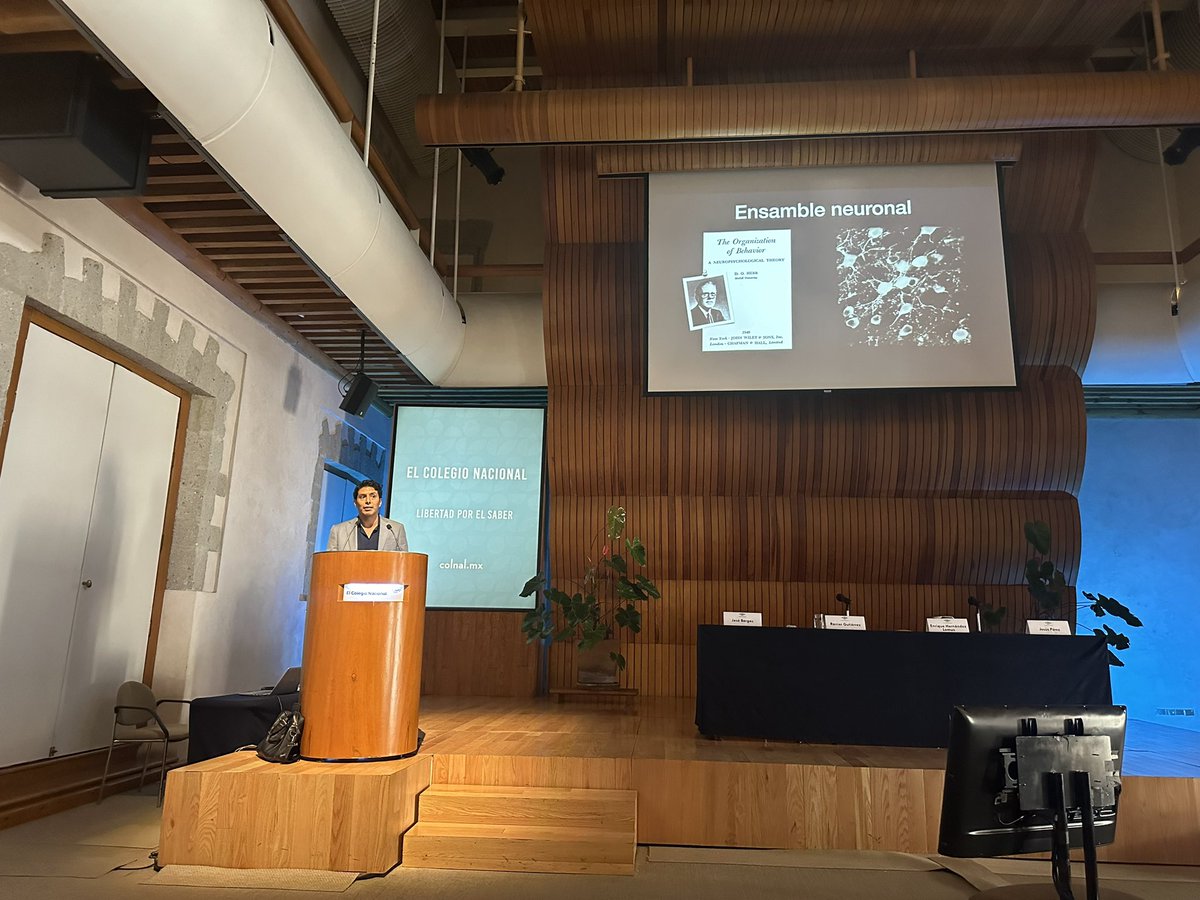
¿Cómo representa nuestro cerebro las imágenes? ¿Cuántas neuronas se necesitan para identificarlas?
Sigue la exposición de @JesusEPO.
👉https://t.co/LwspIR4QcB
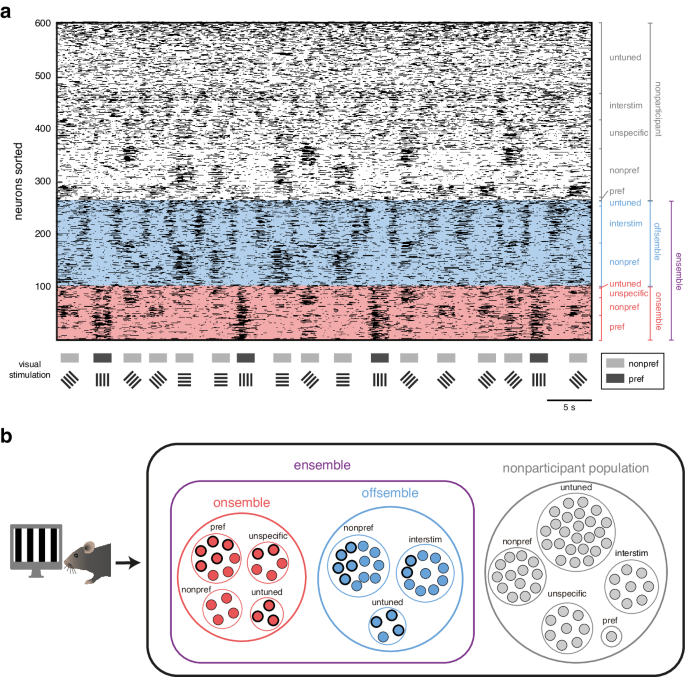
¡Mañana tengo el honor de presentar en @ColegioNal_mx! Hablaré sobre Offsembles y su participación en la codificación de estímulos visuales.
🗓️ 19 de noviembre
⏰ 11 AM (CDMX)
📍 Lugar: El Colegio Nacional (también en línea)
¡No te lo pierdas!
#Neurociencia#Offsembles
Excited to present my poster tomorrow afternoon at #SfN on the #Offsembles! Can’t wait to discuss how precise stimulus encoding is achieved by selective silencing of neurons! #Neuroscience#Xsembles2P
Recently, I got an interview @Columbia based on my recent paper. Picture credits to @TabataRiv. Here it is:
This Postdoc Is Tapping Into the Symphony of the Brain | Columbia News https://t.co/9k6ZE3sdSZ
In a recent paper, Jesús E. Pérez-Ortega, a postdoc in the lab of Professor @YusteRafa, examined how a mouse's brain constructs its field of vision.
@Columbia News spoke with Pérez-Ortega about that paper and his work more broadly.
https://t.co/yfhVpxw1dj
@DrShabanaKhan Yes, #Xsembles2P can work on spontaneous awake activity recordings without stimulus-evoked or running periods. No external information is needed. All you need is your raw video!
🧠🔍 Analyzing neuronal activity like this can be challenging. If you're working with similar data, Xsembles2P can make your ensemble analysis simple. #Neuroscience#EnsembleAnalysis#Xsembles2P
🛠️ Give Xsembles2P a try! Access the latest version on my GitHub repository, and don't hesitate to share your feedback and suggestions. Let's advance together! #Neuroscience#Xsembles2P#EnsembleAnalysis https://t.co/LI3nHnPWRB
📚 I am proud to announce the use of Xsembles2P algorithm in our latest publication @NatureComms, https://t.co/P6sXfUUCsk demonstrating robust representation of visual stimuli by cortical ensembles in the visual cortex. #Xsembles2P#Neuroscience#ResearchTool