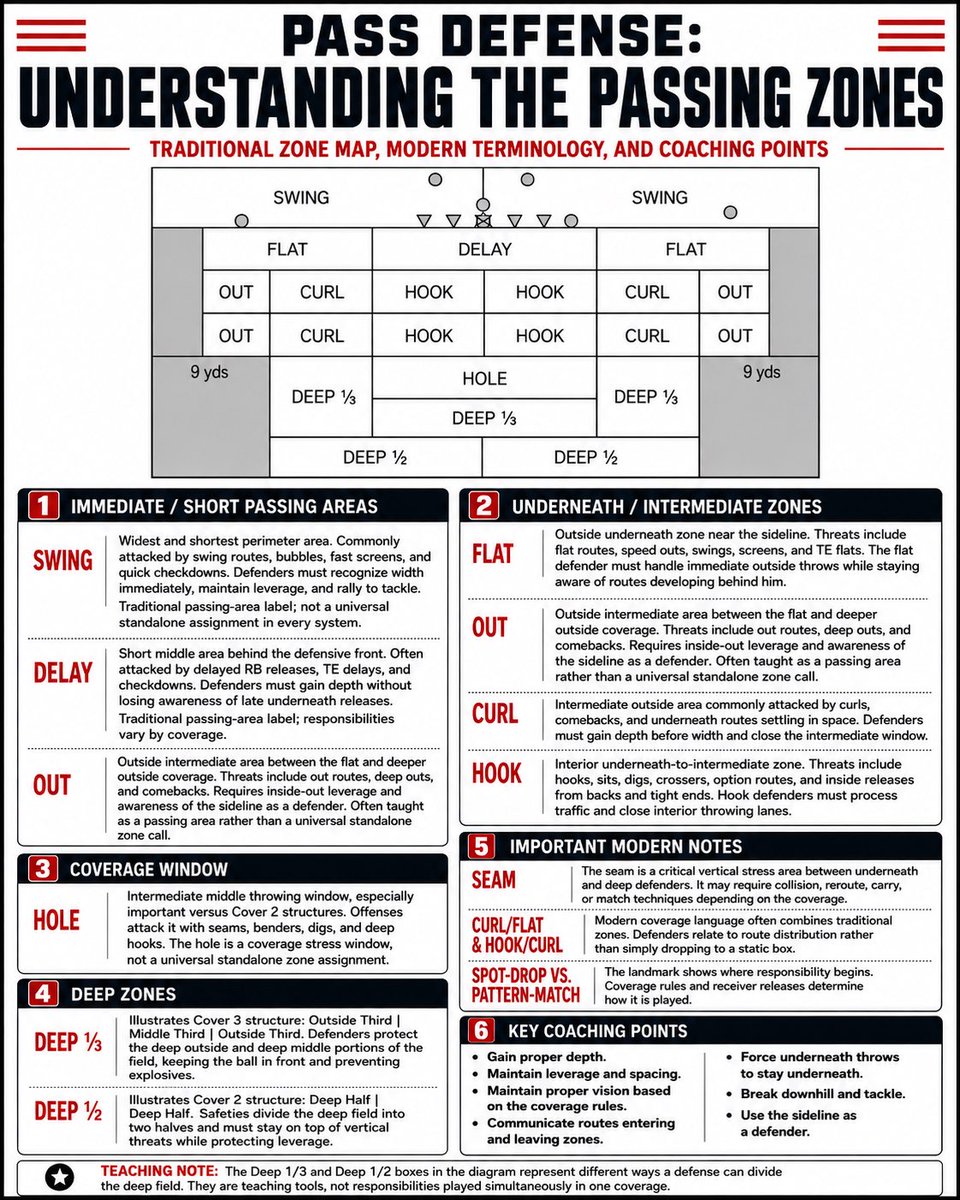
Understanding passing zones is more than memorizing boxes on a diagram. Each area of the field creates a different responsibility for the defense and a different opportunity for the offense.
Traditional passing-area terminology includes the Swing, Delay, Flat, Out, Curl, Hook, Hole, Deep ⅓ and Deep ½. These landmarks help explain where routes develop and where defenders can be stressed, but the exact responsibility will always depend on the coverage call and defensive system
Swing / Delay ➡️ Immediate underneath areas often attacked by backs, screens, checkdowns and late releases.
Flat ➡️ Outside underneath space where defenders must handle quick throws while remaining aware of routes developing behind them.
Out / Curl ➡️ Intermediate outside areas attacked by outs, comebacks, curls and other routes designed to create space between underneath and deep coverage.
Hook ➡️ Interior underneath-to-intermediate space where linebackers and other underneath defenders must process crossers, digs, hooks, option routes and inside releases.
Hole ➡️ A potential middle-of-field coverage window, especially against Cover 2, that offenses can attack behind underneath defenders and between the deep safeties.
Deep ⅓ ➡️ The deep-field structure associated with Cover 3: Outside Third | Middle Third | Outside Third.
Deep ½ ➡️ The deep-field structure associated with Cover 2, where two safeties divide the deep portion of the field.
Modern coverage goes even further with Curl/Flat, Hook/Curl, seam responsibilities and pattern-match principles. Defenders are not simply dropping to a spot and covering grass. They must recognize route distribution, maintain leverage and spacing, communicate, understand where their help is located and react according to the rules of the coverage
Hidden yardage in special teams is one of the most overlooked parts of football, but it has a major impact on winning. It’s the field-position value a team gains or loses through kickoffs, punts, returns, coverage, penalties, ball security, and situational decisions in the kicking game
It may not always show up the same way traditional offensive or defensive stats do, but it directly affects drive length, starting field position, scoring opportunities, and overall game flow. A kickoff covered inside the 20, a punt downed at the 7, a return that gets the offense beyond the touchback line, or a penalty avoided in the return game can all create hidden yardage that helps tilt the field
From a coaching and scouting perspective, hidden yardage is really about winning the small field-position battles consistently over the course of a game. It’s not always about one explosive return. It’s about forcing opponents to drive a longer field, creating shorter fields for your offense, making sound decisions in the return game, covering kicks with discipline, and avoiding mistakes that give away free yards
The teams that consistently win in special teams usually understand that every yard matters before the offense or defense even takes a meaningful snap. Hidden yardage is won in the margins, and over four quarters those small gains can become a major advantage
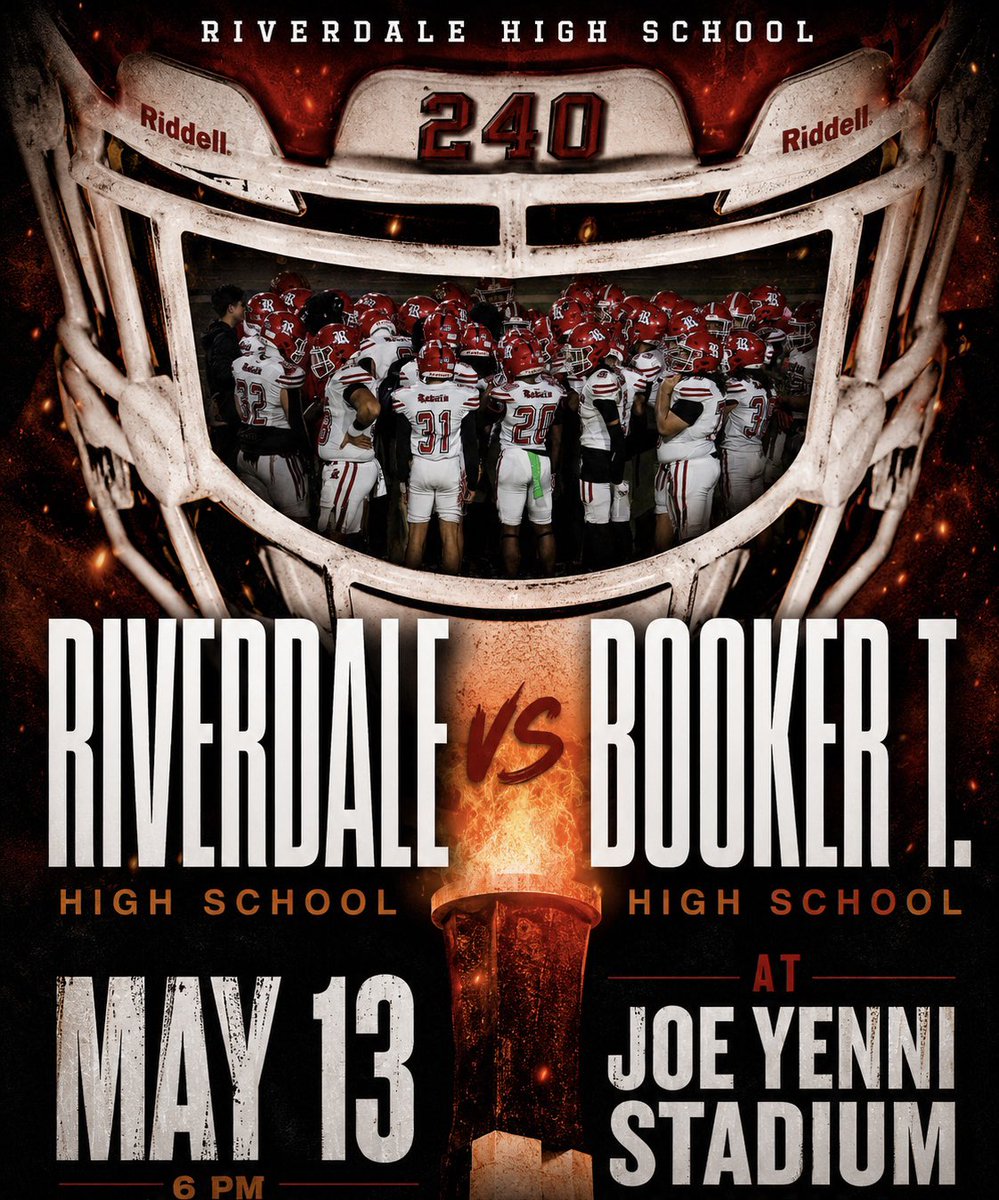
🚨 REBELS FOOTBALL FUNDRAISER 🚨
Riverdale Rebels Football is raising money for the upcoming season! Your support helps provide equipment, travel, team meals, uniforms, and gives our players the resources they need to compete 🏈 Thank you for supporting Riverdale Rebels Football
3 Coaching Nuggets:
1. Catch the person doing the right things and tell them. Too many coaches today just criticize.
2. To win the player, you need to win the person. Trust comes from connection.
3. Always be honest and compassionate when delivering feedback or bad news.
LA Rams HC Sean McVay - Be An Elevator
"We want to try and be elevators, we want to try and help people be able to reach their highest potential."
"What that means is that you elevate every person/situation that you're a part of. That's what great leaders do."
"I know when I reflect back on the good times, it's been because there is a purpose about serving others."
"When I have looked back and said man I should have been better, it's usually when it's become a little bit more about me than I ever wanted it to. Your own selfish ambitions."
ASSESS YOUR TEAM LEADERS:
✅ Are they your hardest workers?
✅ Do they care about winning?
✅ Do they exemplify your standards?
✅ Are they all about the team?
✅ Do their teammates respect them?
✅ Are they on the same page with you?
✅ Do they hold their teammates accountable?
Real communication requires effort.
Real relationship requires effort.
Real alignment requires effort.
Real execution requires effort.
Real leadership requires effort.
You can’t just go through the motions.
Show up on purpose.