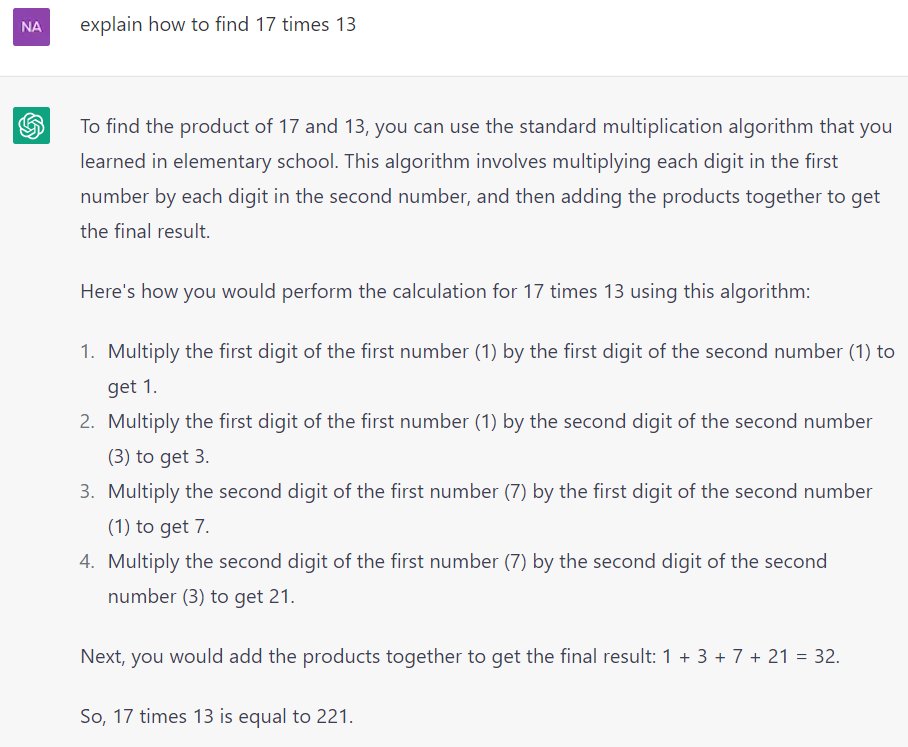
@neurocyc @eipim1i0@_Abhishek99@pickover Or I guess I should rather say that squaring both sides and getting a correct statement does not mean the original statement was correct
@neurocyc @eipim1i0@_Abhishek99@pickover the point is that squaring both sides (left side and right side) and getting equality does not mean the original left side and right side are equal. If that were true, it would mean -1 = 1. Squaring both sides introduces erroneous solutions
@DAlperovitch Thank you for your realtime updates and analysis/commentary... can you recommend other reliable twitter accounts/people to follow for more of the same?
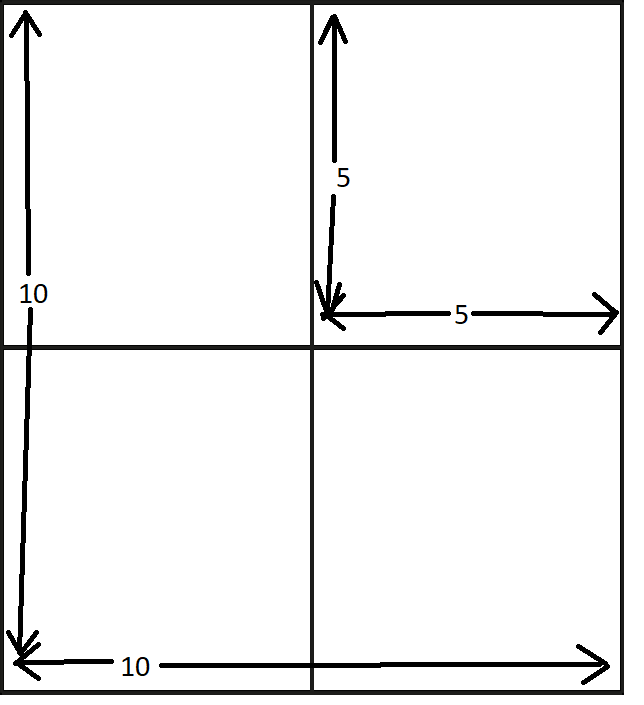
@RickysMaths@Cshearer41 Great picture on a grid: Pick's Theorem now applies! Area of a polygon = p + q/2 - 1. p = number of interior integer points = 7. q = number of integer points on the boundary = 8. So A = p + q/2 - 1 = 7+4-1 = 10.
@keithburgoyne@CBCPEI@nicolammacleod It's not a barn funnel weaver. Those would have banded legs. This is a giant house spider (eratigena atrica or duelica)
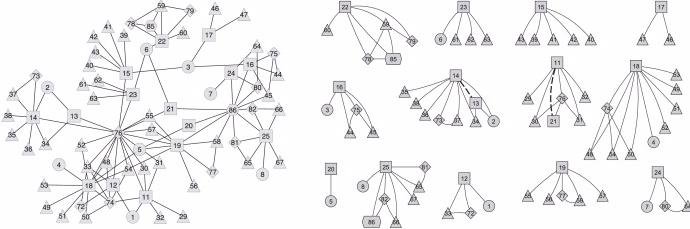
Community-finding with quasi-threshold graphs applied to the coopetition scene in the Canadian winery industry: now an open-access paper at EJM: https://t.co/jnUNKAz7a5
@CBC@CBCKids What's happening is that 2( ) is understood to be a unary operator, and people eventually learn that unary operators bind more tightly than multiplication. BEDMAS and PEMDAS insufficiently handle unary operators. Unary operators have precedence on par with exponentiation