He had already escaped the burning aircraft. He could have kept running. Instead, he turned back to save a man who could not escape.
On 16 March 1944, 20-year-old RAF trainee navigator Bill Foxley was aboard a Wellington bomber that crashed shortly after take-off from Castle Donington.
Bill made it out alive.
Then he heard a fellow crewman trapped inside the burning aircraft.
Without hesitation, he went back.
The flames had turned the bomber into an inferno. Bill reached his wireless operator and tried to pull him to safety. But as he escaped through the astrodome, the fire caught him. His crewmate did not survive.
Bill did, but the cost was devastating.
The fire destroyed much of his face and hands. He lost his right eye, and his remaining sight was severely damaged. At Queen Victoria Hospital in East Grinstead, surgeon Sir Archibald McIndoe and his team performed 29 operations over three and a half years, working painstakingly to repair the injuries that had changed Bill's life forever.
Yet some wounds could not be seen.
For years, strangers stared at his scars. On trains between Crawley and London, passengers sometimes approached the empty seat beside him, noticed his face and quietly moved away.
Imagine surviving a burning aircraft, enduring years of surgery, only to face another kind of pain in everyday life: being treated as though your appearance made you someone to fear.
Bill refused to let bitterness define him.
When people recoiled from his scars, he sometimes reassured them with a gentle sense of humour:
“It's all right. I'm not going to bite you.”
Even after everything he had endured, he could still offer kindness to people who did not know how to respond to him.
He returned to work, built a successful career as a facilities manager and continued running long distances well into his seventies. He also appeared in the 1969 film Battle of Britain, helping bring the experiences of badly burned airmen closer to public understanding.
But it was what he did for others that made his life especially remarkable.
As a member of the Guinea Pig Club, Bill supported fellow survivors whose lives had been transformed by devastating burns. His commitment extended to helping wounded servicemen and disabled people find opportunities to rebuild their lives.
Think about that for a moment.
The young airman who had once risked everything to save a trapped comrade spent decades helping others discover that life could still hold purpose, dignity and hope after unimaginable suffering.
He could not change that terrible night in 1944. He could not bring his crewmate back or erase the injuries he had carried for the rest of his life.
But he could decide what those injuries would mean.
Bill Foxley chose courage over bitterness, compassion over resentment and service over surrender.
His scars told the story of what he had survived. His actions told the story of who he was.
First, he walked back into the flames for another man.
Then, for the rest of his life, he helped others find their way forward.
Bill Foxley was far more than a survivor. He was a reminder that the truest measure of courage is not simply how much a person can endure, but how much kindness they can still give afterwards.
May his courage, his compassion and his extraordinary service never be forgotten.
Lest we forget.
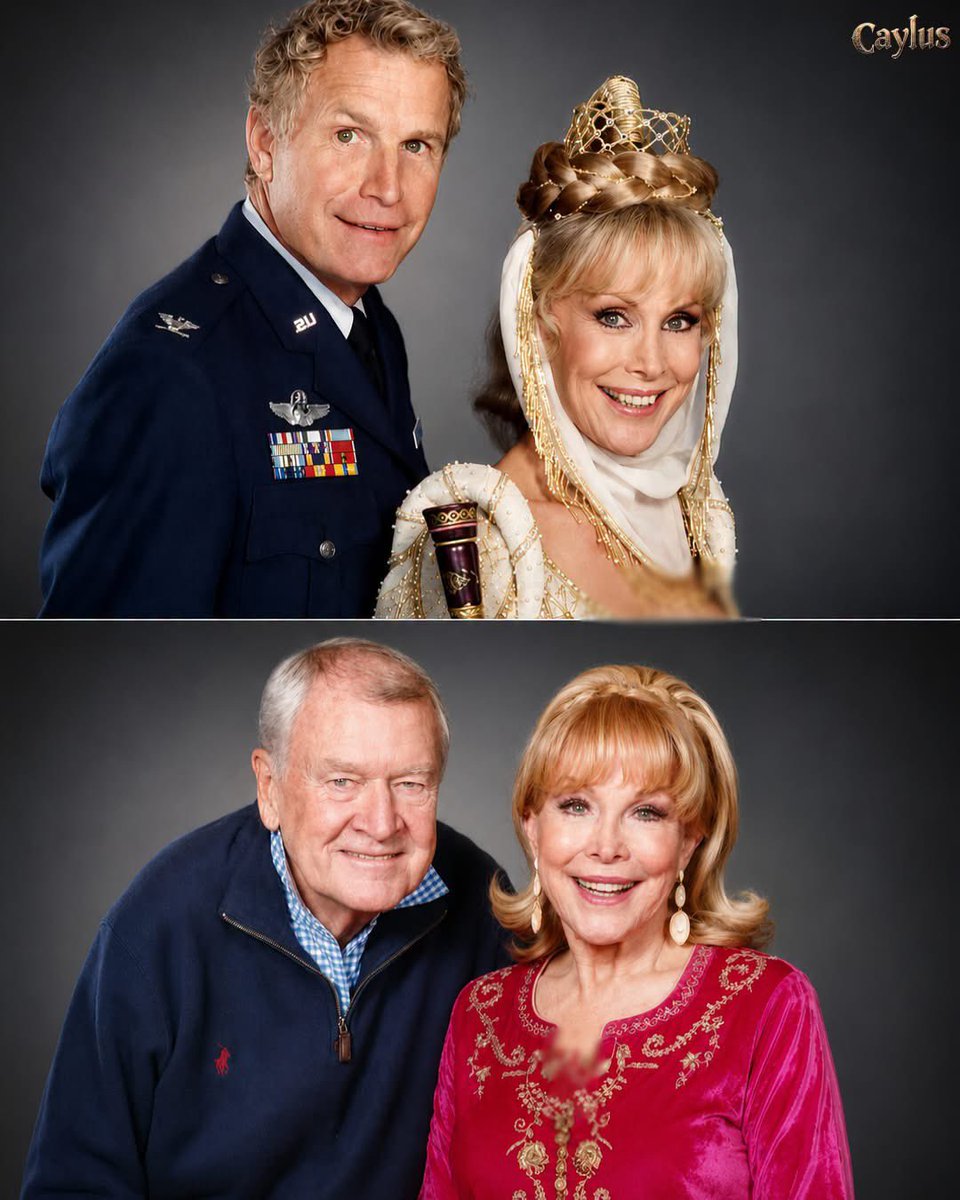
Bill Daily showed up to the set of *I Dream of Jeannie* every single day with the same easy grin and the same generous spirit.
He played Major Roger Healey.
The lovable sidekick who could turn almost any line into a laugh.
But fans rarely knew the best part.
The warmth he brought to the screen wasn't a performance.
It was simply who he was.
Over the years, cast and crew told the same story.
Bill Daily was one of the kindest people they had ever worked with.
He wasn't the star.
He never chased the spotlight.
Instead, he had a quiet gift.
He noticed people.
On the longest shooting days, when tempers grew short and exhaustion settled in, he became the steady presence everyone needed.
Not with big speeches.
Not with dramatic gestures.
Just a perfectly timed joke between takes.
A few encouraging words when someone was struggling.
A willingness to step aside so someone else could have their moment.
Barbara Eden remembered him that way for years.
After five seasons together, she often spoke about how he made the hardest days feel lighter and the work itself feel like fun.
In an industry known for oversized egos, Bill Daily carried none.
A friend once recalled something he believed.
Comedy only works when the people around you feel safe.
That simple idea shaped everything he did.
He didn't just make audiences laugh.
He created the kind of atmosphere where everyone else could do their best work too.
When Bill Daily passed away in September 2018 at the age of 91, the tributes came from every direction.
Fans remembered the laughter.
His fellow actors and crew remembered something even bigger.
Not the fame.
Not the punchlines.
The kindness.
The patience.
The quiet generosity that never needed applause.
Maybe that was the greatest role Bill Daily ever played.
Not the lovable sidekick millions watched on television.
But the gentle protector who made every room brighter simply by walking into it.
🇮🇩 During a sudden flood on the island of Sumatra, a touching moment was captured on video.
A Sumatran elephant is seen trying to rescue a tiger being swept away by a powerful current of muddy floodwaters.
These rare and emotional footage quickly went viral across Indonesian social media.
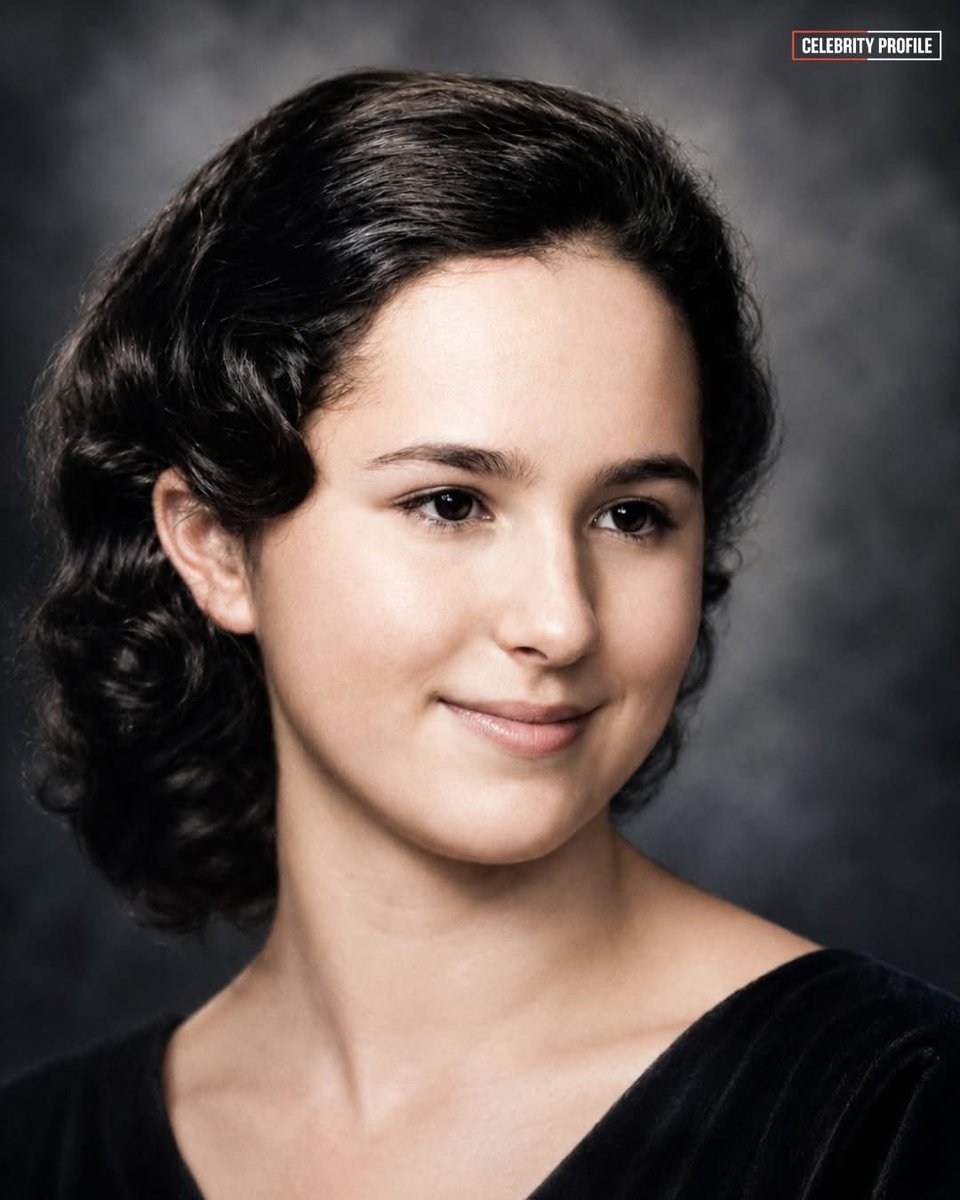
In 1937, a nineteen year old woman graduated summa cum laude in chemistry. She applied to fifteen graduate schools. Not one offered her funding.
She was told laboratories did not hire women. She never earned a PhD. She later received the Nobel Prize and helped save millions of lives.
Her name was Gertrude Belle Elion.
Born in New York City in 1918 to immigrant parents, Gertrude was brilliant from childhood. She skipped two grades, graduated high school at fifteen, and entered Hunter College during the Great Depression. Her family could only afford college because Hunter offered free tuition to women.
Then tragedy changed her life forever.
When Gertrude was fifteen, her beloved grandfather died painfully from stomach cancer. Watching doctors fail to save him gave her a purpose she never abandoned. She decided she wanted to fight disease through science.
She graduated from Hunter College in 1937 at just nineteen years old, but the scientific world had little interest in hiring women. Graduate schools rejected her requests for funding. Laboratories turned her away. Some employers openly admitted they did not want female chemists.
So she worked wherever she could while studying at night.
Everything changed in 1944 when she joined Burroughs Wellcome and began working with scientist George Hitchings. Together, they pioneered a revolutionary method called rational drug design — creating medicines by understanding disease at the molecular level instead of relying on trial and error.
Their discoveries transformed medicine.
Elion helped develop 6-mercaptopurine, one of the first successful treatments for childhood leukemia. Before it existed, most children diagnosed with leukemia died within months.
She later helped create azathioprine, the first major drug that made organ transplantation possible, along with groundbreaking antiviral medications that changed treatment for herpes and helped pave the way for AIDS therapies.
In 1988, Gertrude Elion received the Nobel Prize in Physiology or Medicine.
She was seventy years old.
And she still did not have a PhD.
The young woman fifteen schools rejected ended up reshaping modern medicine anyway.
In 1943, the Gestapo finally caught Raymond Aubrac — one of France's most wanted Resistance leaders. He was sentenced to death. His execution was days away.
His wife Lucie was six months pregnant.
Most people would have hidden. Would have grieved quietly and prayed for a miracle. Lucie Aubrac did something else entirely. She obtained forged identity papers, constructed a cover story, and walked straight into the office of Klaus Barbie — the man history would remember as the Butcher of Lyon — and convinced him to grant her a visit with the condemned man.
She wasn't there to say goodbye.
She was memorizing guard positions. Counting minutes. Mapping the route the prison truck would take.
On October 21, 1943, that truck rolled through the streets of Lyon carrying Raymond and other prisoners toward what should have been the end. Lucie had spent weeks quietly assembling a team of Resistance fighters, planning an ambush with the precision of a military operation. When the truck reached the ambush point, the team struck — fast, coordinated, and without hesitation.
In the chaos of gunfire and confusion, Raymond Aubrac was pulled free.
Lucie — visibly, unmistakably pregnant — had organized every detail of his liberation.
They went into hiding. Weeks later, Lucie gave birth to their daughter in a safe house while German forces searched for them across France. When liberation finally came, the Aubracs didn't merely survive — they rebuilt.
Raymond became a celebrated engineer and entered public life. Lucie became a historian, pouring decades into ensuring that the women of the French Resistance — so often unnamed, so easily forgotten — were written permanently into the record. They raised three children. They traveled the world. They argued and laughed and grew old together.
When journalists asked Lucie, years later, what had compelled her to risk everything that October day, she didn't hesitate.
"He was my husband. What else would I do?"
Lucie Aubrac passed away in 2007 at the age of 94. Raymond — who had once needed a commando team to be freed from a German prison — lived on until 2012, reaching 97 years old. In his final years, he continued speaking publicly about the Resistance, about memory, about the obligation to tell the truth.
They had been married for 64 years.
Not a love story built on grand gestures or perfect circumstances. A love story built in occupied France, in safe houses and forged documents and a prison truck ambush on a Lyon street — forged in fire, and never broken.
True love doesn't wait for rescue. Sometimes, it does the rescuing
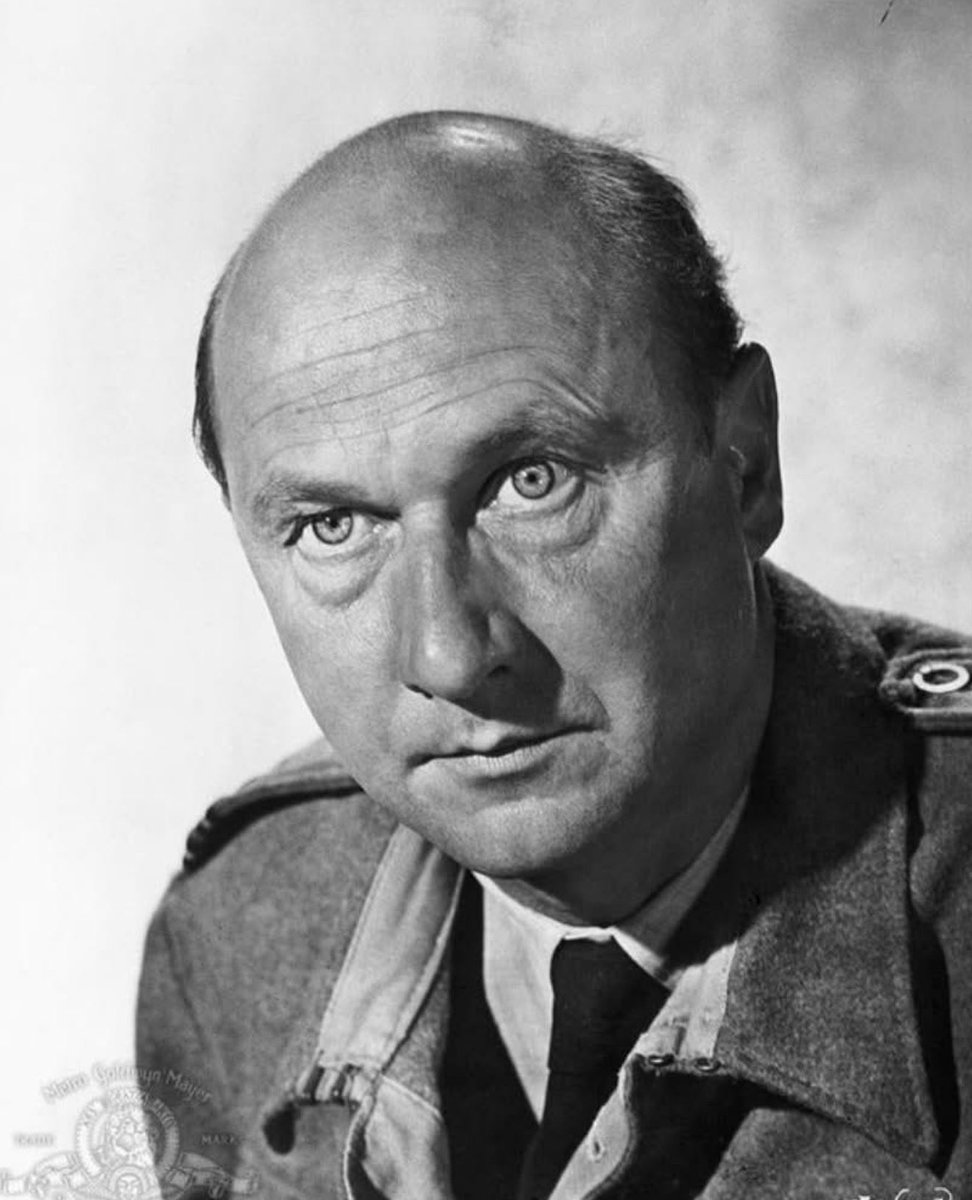
British actor Donald Pleasence, a pacifist, spent the 1st 6 months of World War 2, as a conscientious objector.
He changed his mind and enlisted in the Royal Air Force. He flew 50+ raids over occupied Europe.
Tragedy struck when his plane was shot down over France on August 31, 1944. He was thrown into the Nazi prisoner of war camp, Stalag Luft 1.
As a P.O.W., Donald Pleasence was beaten and mentally tortured by sadistic Nazi guards, while dreaming of the day that would bring him freedom.
That day came in June 1945, when he was recovered from the P.O.W. camp and discharged with the rank of flight lieutenant.
While others were licking their wounds at home, Pleasence knew that the only way he would recover from his World War Two horrors was to get back to work.
Returning to the stage almost immediately, Pleasence starred alongside Olivier and Vivian Leigh in Caesar and Cleopatra & Antony and Cleopatra
in London, New York and Sydney. He went on to appear in 60+ films, 175+ TV credits.
His role, ironically, as a P.O.W. in “The Great Escape”/1962 suddenly brought him to the attention of moviegoers worldwide.
A low-key hero, Mr. Pleasence never publicized/touted his war record or the horrors incurred, therein.
Modern man has a severe case of amnesia—he’s forgotten the immense wisdom of the past.
Luckily, it can be rediscovered through great literature.
12 old books that will make you wiser… 🧵(thread)