@AlboMP 🤣🤣🤣🤣 Albos Law. The surcharge is abolished but where do you think businesses will get that back? From the same coffee now $0.50c more expensive
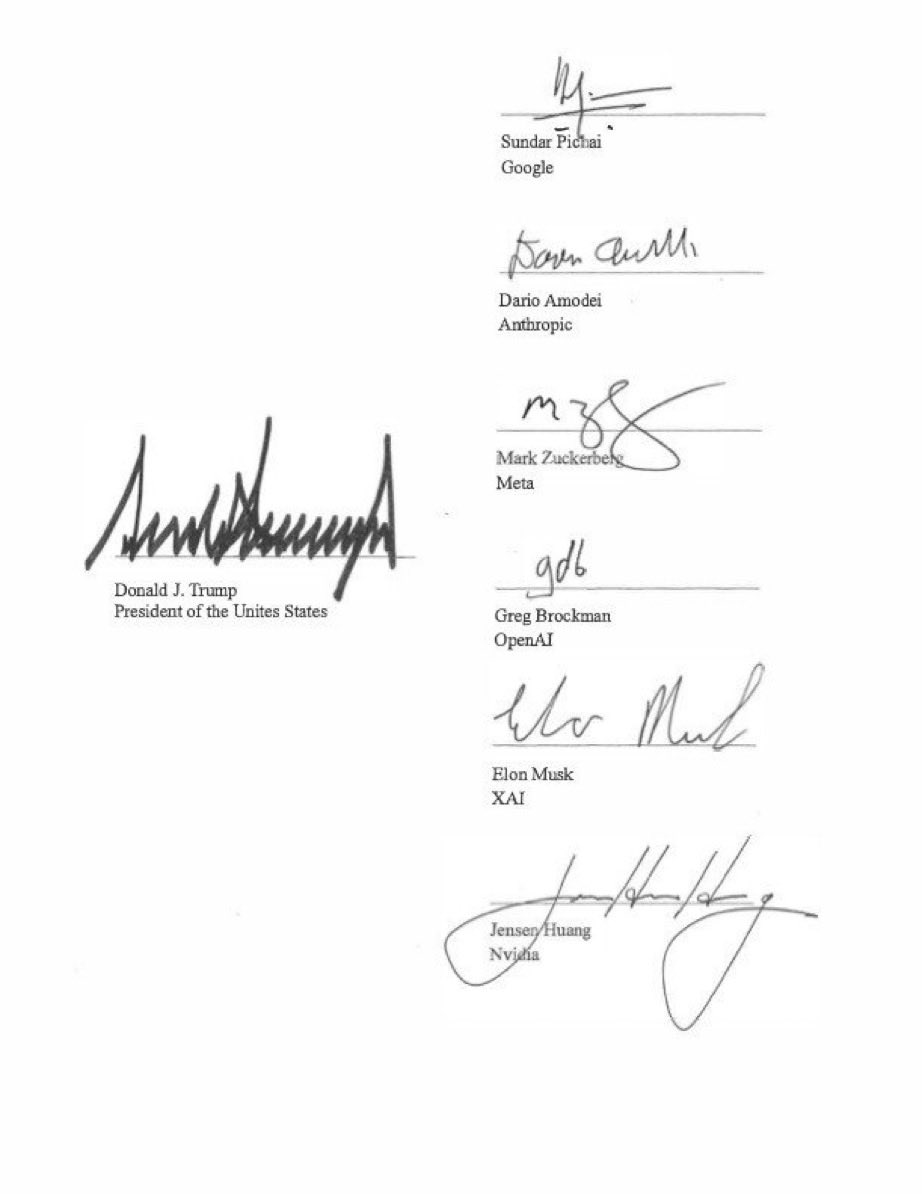
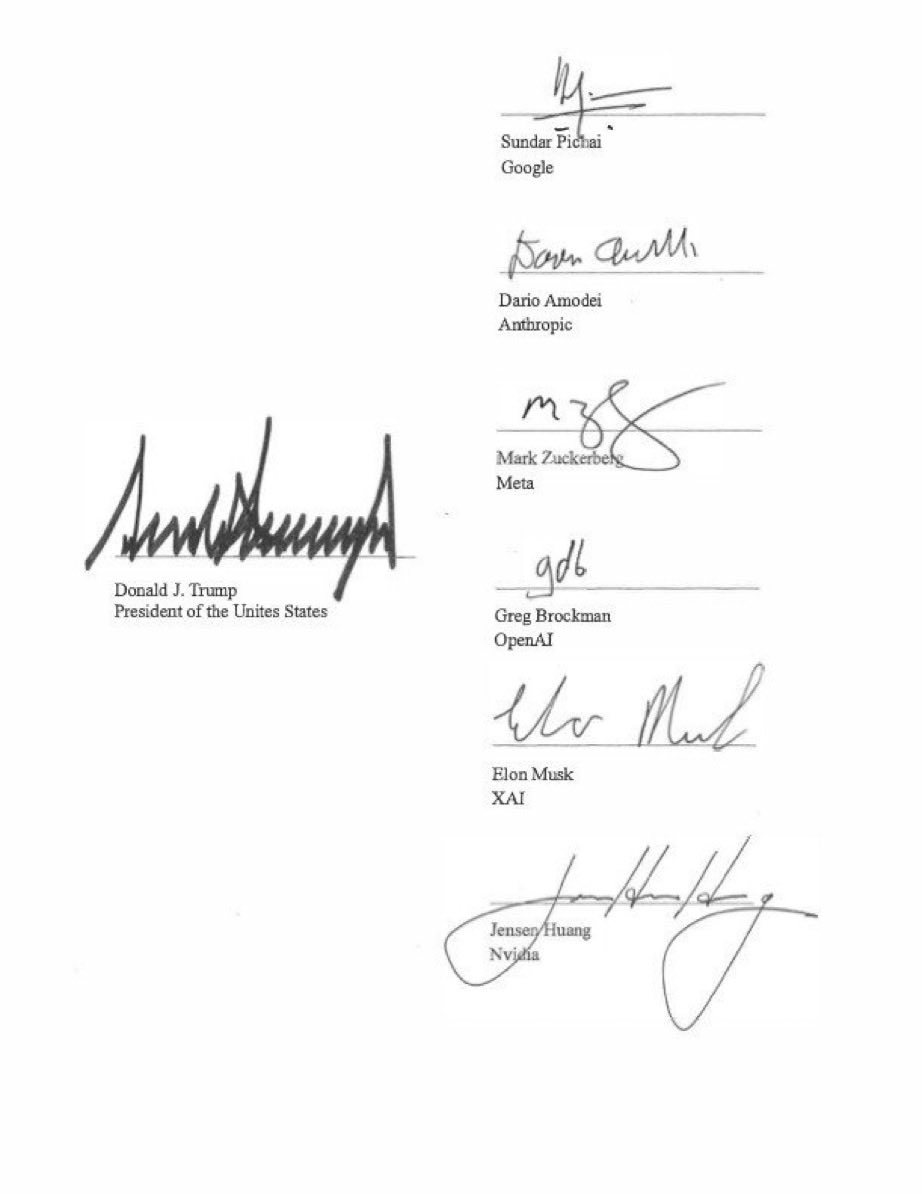
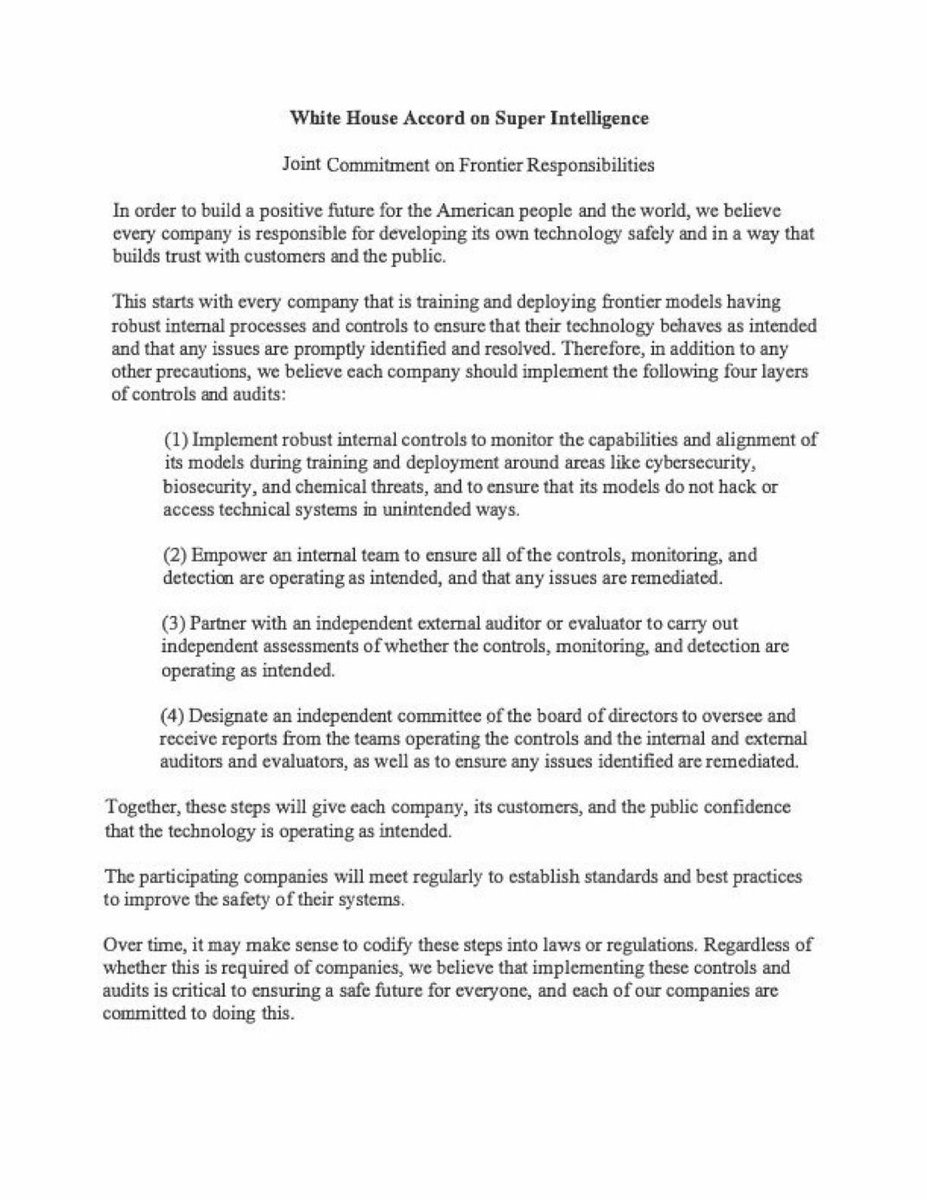
Great to meet today with @POTUS, @JDVance, @SpeakerJohnson and Administration + tech leaders. Important conversation and we signed today the White House Accord on Super Intelligence.
As I shared today, Google has invested hundreds of billions in the last two years alone, with more to come, across the entire stack, to deliver benefits for America and the world. We’re working to build products that deliver real value for people and businesses, invest in local communities, and build trust in the technology.
Industry also has to innovate responsibly. Google’s focused on building the right way, with appropriate testing, evaluations, red-teaming, and other safeguards against misuse and misalignment – and releasing models or products only after they’ve been thoroughly reviewed.
We are committed to working with other industry leaders to establish norms and build public confidence. The White House Accord and the Joint Commitment on Frontier Responsibilities signed today is a solid basis for moving forward - it contains real tangible steps to promote safe development, while delivering the economic and scientific benefits of this technology.
Only President Trump could convene all the leaders of the top companies developing chips, data centers and frontier models for Super Intelligence. This new Industrial Revolution has already created a million new jobs and is spurring a bigger infrastructure build-out than the railroads, canals and grid combined. I was honored to witness history as the leaders of the frontier lab companies signed the White House Accord on Super Intelligence, accepting responsibility for the safe development of their products and imposing new internal controls and external audits. This is far better than waiting years for some international agreement that would probably never happen. President Trump continues to ensure that U.S. remains the technology leader while putting Americans first.
Last month I wrote about how we can build a positive and safe future for everyone: https://t.co/eoLGVY8yad
Every lab has the responsibility and incentive to move at the pace required to train its models safely, and the ability to take its own actions to ensure that happens.
The reality is:
- People won't want to use agents that are misaligned with them and that don't do what they ask, so labs have a strong natural incentive to make their models more aligned.
There is a lot of debate about slowing progress on capabilities until alignment catches up. My view is that trust and alignment are quickly becoming the most important capabilities that will differentiate agents and models. Any lab that doesn't focus on alignment will fall behind.
- Labs face significant liability if their models cause harm, so they have a strong incentive to prevent this as well.
Meta delayed shipping Muse for several months to focus on safety and security. We didn't call for everyone else to do this before we would. We just did it as part of our day-to-day work because it was clearly the right thing for people and for us. I'm proud of the security foundations we've built.
- Engaging independent evaluators and advisors is industry best practice. MSL already does this today in several areas because it helps produce better work. Other labs can just do this too. In general, it would be helpful for there to be a larger and more diverse ecosystem of evaluators.
- Committing the significant majority of compute towards serving people rather than racing towards recursive self-improvement is one of the best ways to ensure we develop this technology safely. Meta has made this commitment and other labs can do this as well.
I believe the key to building a positive future for everyone is maintaining the right balance of power. This is within our power to do.
Twenty-five years ago, a woman stood in the hole an airliner had punched through the North Tower and waved for a hundred minutes.
She is in dozens of photographs and several video clips. People have been arguing about her for a quarter century. Her name, almost certainly, was Edna Cintrón.
She was 46. She worked as an assistant billing administrator at Marsh & McLennan, on the 97th floor.
Flight 11 hit that building at 8:46 and tore open floors 93 through 99. It went through her company. Marsh lost 295 employees and 63 consultants that morning, more than any other firm in the North Tower.
Minutes after the impact, people on the street and photographers on rooftops started noticing movement in the gash itself. A woman had made it to the torn edge of the floor slab, where the aluminum had peeled the wall open and there was outside air. She was leaning against a piece of the ruined exterior column, and she was waving her right arm.
She kept doing it.
Here is the part that is hard to sit with. Nobody was coming. All three stairwells in the North Tower were severed at impact. The roof doors were locked and the smoke made a helicopter landing impossible. Not one person at or above the 92nd floor of that building survived, 1,355 people in total, and that was already true at 8:46, before she ever reached the opening.
She had no way of knowing that. So she stood there in the wind, 1,300 feet up, and signaled for help to a city that could see her perfectly and could not reach her.
Witnesses and footage put her still there, still waving, until roughly ten seconds before the tower came down at 10:28.
She was never formally identified. Her remains were never recovered, and the identification rests on video and photographic analysis and on the people who knew her recognizing her. Her husband William believed it was her. They had been through a lot together, including a period without a home, and she had carried him through his drinking.
So the honest way to say it is this. We are nearly certain who she was, and we are completely certain what she did, which was refuse to stop asking for help for a hundred minutes on the worst morning in American history.
Her name was Edna Cintrón.